Global sugar market fluctuations
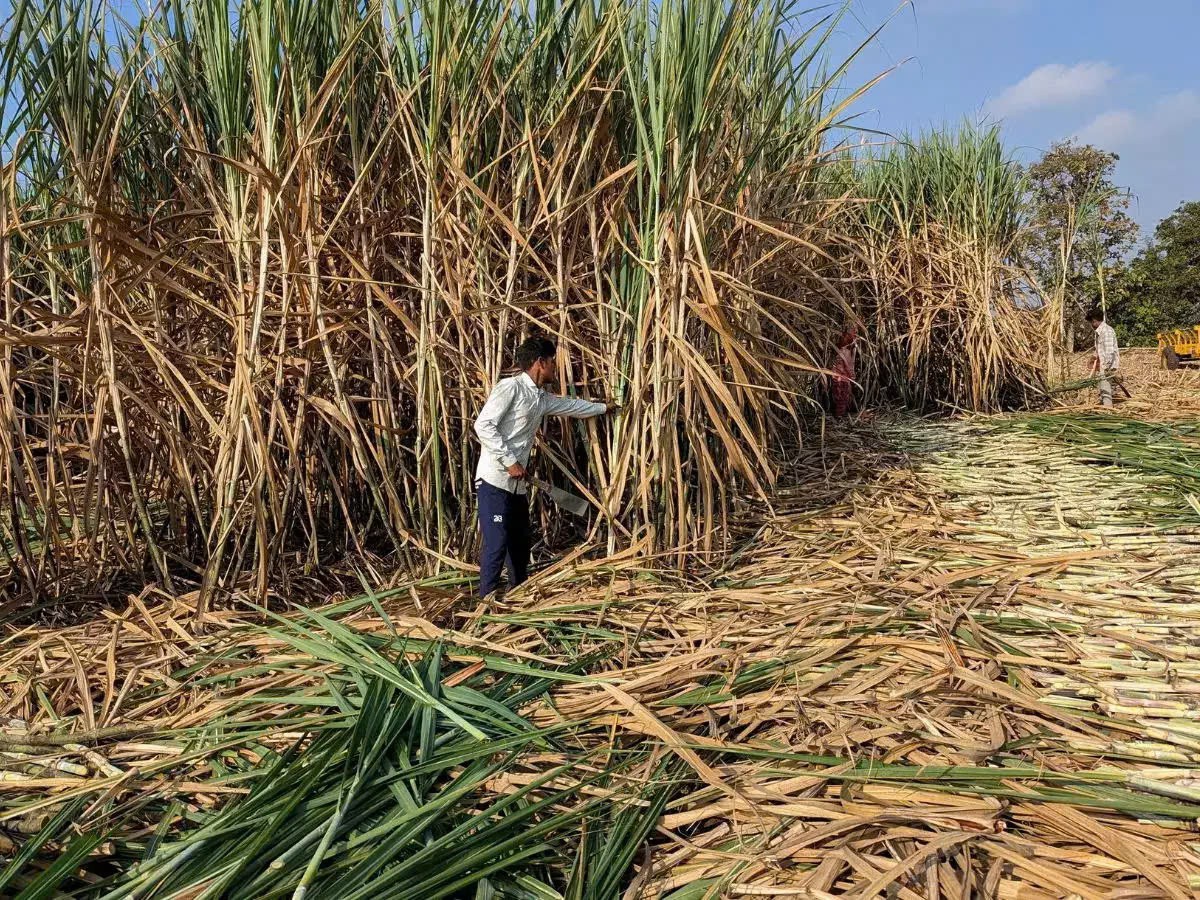
In the early months of 2025, the global sugar market has experienced significant volatility as major producers such as India, Thailand, and Brazil face supply difficulties. According to the International Sugar Organization (ISO), India's sugarcane output fell by 12% in the first two months of 2025 compared to the same period last year due to severe droughts in key production areas Maharashtra and Karnataka.
 |
| India's sugar output fell by 12% in the first two months of 2025 due to severe droughts in Maharashtra and Karnataka. (Photo: The Financial Express) |
Similarly, in Brazil—the world’s largest sugar exporter—below-average rainfall has slowed the growth of sugarcane crops, which is expected to impact upcoming harvest yields.
The declining supply from these key producers has driven global sugar prices upward. ISO data shows that the average global sugar price in February 2025 reached $530.71 per tonne, higher than January’s $496.37 per ton. However, this upward trend has not been sustained.
Despite the continued high global sugar prices, the Vietnamese market has moved in the opposite direction. While international prices trend upward, domestic sugar prices have fallen sharply, reflecting significant challenges for the local industry.
Vietnam's sugar industry: Oversupply leads to price declines
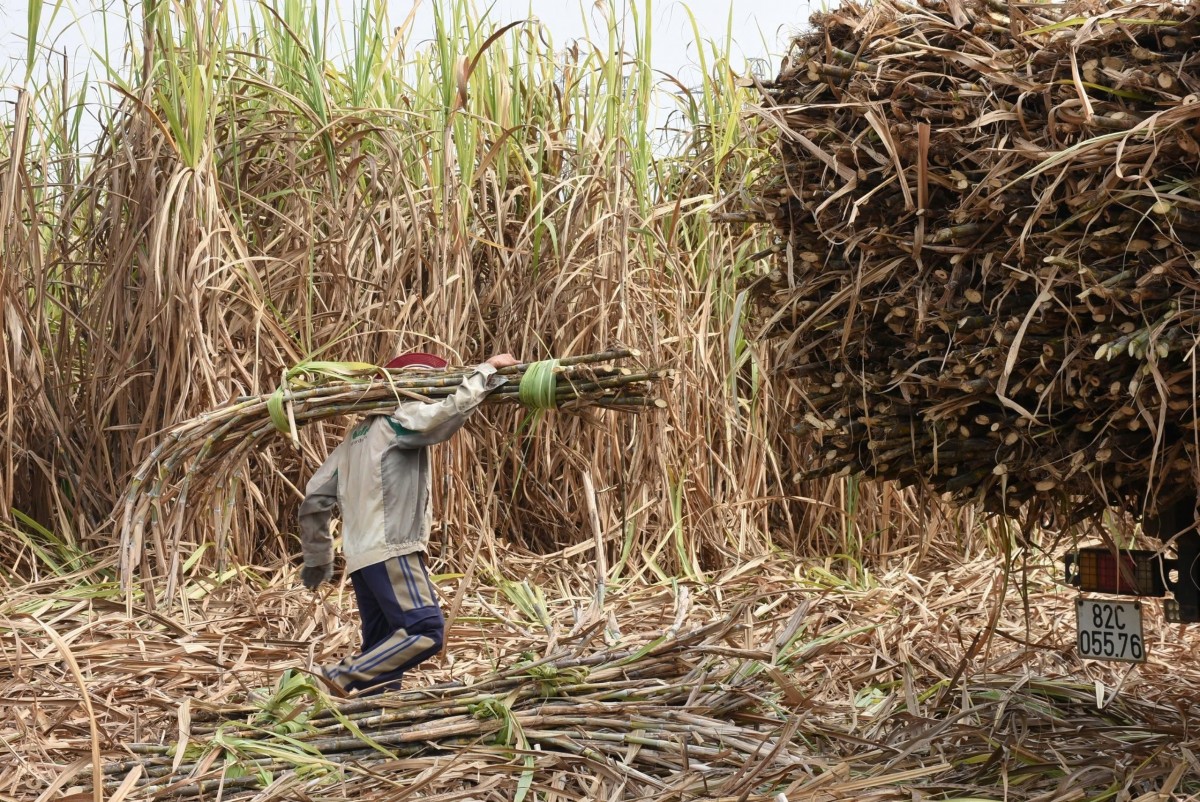
According to the Vietnam Sugar and Sugarcane Association (VSSA), as of early March 2025, the price of domestically produced sugar has dropped by an average of 1,600 VND/kg compared to early February, reflecting an oversupply issue. Data from VSSA indicates that local sugar mills have crushed 5.08 million tons of sugarcane, producing approximately 476,000 tons of sugar in early 2025. Some mills have had to cease operations early due to raw material shortages, yet high carryover stock from the previous season continues to put pressure on the market.
Another notable challenge is the rising market share of high-fructose corn syrup (HFCS), which offers a lower-cost alternative. According to data from the General Department of Customs under the Ministry of Finance, Vietnam imported 43,557 tonnes of HFCS in February 2025, up from 40,334 tons in the same period last year. The growing preference of food and beverage manufacturers for HFCS over cane sugar is adding further pressure on the domestic sugar industry.
|
| Domestic sugar prices have dropped by an average of 1,600 VND/kg, while global sugar prices remain high. (Photo: Viet Ha) |
In addition to HFCS, the local sugar industry is also facing increased competition from imported sugar within the ASEAN region. Under the ASEAN Trade in Goods Agreement (ATIGA), the import tariff on sugar from ASEAN countries into Vietnam has been reduced to just 5%, enabling lower-cost Thai sugar to further expand its presence in the Vietnamese market.
Speaking to Newspaper of Industry and Trade, Dr. Nguyen Minh Phong, an economic expert and former Deputy Director and Head of Economic Research at the Hanoi Institute for Socio-Economic Development, commented: “In early 2025, Vietnam’s sugar industry is facing a dual challenge of domestic oversupply and intense competition from imported sugar.”
Despite rising global sugar prices due to production declines in India, Thailand, and Brazil, Vietnam’s domestic market has seen the opposite trend. According to experts, domestic sugar prices have declined due to weak consumer demand and high inventory levels. This indicates that the industry's challenges are not limited to production but also extend to market strategies and competitiveness.
Dr. Nguyen Minh Phong emphasized that Vietnam’s sugar industry is influenced not only by domestic supply-demand dynamics but also by global macroeconomic factors. In an era of deep economic integration, the industry must navigate trade commitments and global price fluctuations to achieve long-term stability and growth.
Solutions
Beyond issues of oversupply and competition from legally imported sugar, Vietnam’s sugar industry is also struggling with rampant smuggling. Despite enforcement efforts, smuggled sugar continues to enter the market through various routes, particularly along the southwestern border.
To address these challenges, the Ministry of Industry and Trade has implemented several protective measures for the domestic industry. These include maintaining anti-dumping and anti-subsidy tariffs on Thai sugar imports and enhancing market monitoring efforts to curb illegal sugar smuggling.
Speaking to Newspaper of Industry and Trade, MSc. Phung Thi Van Kieu, Deputy Head of Trade Research at the Institute for Strategic and Policy Research under the Ministry of Industry and Trade, emphasized the need for a long-term competitive strategy. One key solution is expanding sugar exports by leveraging free trade agreements (FTAs) such as CPTPP, EVFTA, and RCEP.
MSc. Phung Thi Van Kieu suggested that sugar producers should invest in modern processing technologies to improve product quality and meet strict export standards. Additionally, participating in international trade fairs and promotional programs would help businesses expand their market networks, particularly in major consumer markets such as the U.S., EU, and China.
“Export incentives, combined with government-backed financial support such as preferential loans and subsidies, could ease cost burdens and encourage investment in the sector”, MSc. Phung Thi Van Kieu stressed.
For the domestic market, economic expert Nguyen Minh Phong proposed a three-pronged strategy for sustainable industry development: value chain integration, technological investment, and expanding domestic consumption.
He noted that establishing long-term partnerships between farmers and processing enterprises is crucial to securing a stable raw material supply at competitive costs. “Without strong linkages across the production chain, the sugar industry will continue to face unstable supply and high costs, undermining its competitiveness”, Dr. Nguyen Minh Phong emphasized.
Additionally, mechanization and advanced technology adoption in sugarcane farming can enhance yield quality while reducing production costs.
Dr. Nguyen Minh Phong also underscored the importance of boosting domestic sugar consumption through modern retail channels and brand development. “Businesses must invest in marketing and consumer education to highlight the quality of locally produced sugar instead of allowing the market to be dominated by imported alternatives”, he explained.
Furthermore, appropriate tax policies and technical barriers should be enforced to curb sugar smuggling and protect local production. Dr. Nguyen Minh Phong believes that with the right combination of measures, Vietnam’s sugar industry can not only strengthen its position domestically but also establish a solid foundation for export growth.
| According to the Vietnam Sugar and Sugarcane Association (VSSA), by the end of February 2025, local sugar mills had produced 476,000 tonnes of sugar from a total sugarcane crush volume of 5.08 million tonnes. While some mills halted production early due to raw material shortages, high carryover stock from previous seasons continues to exert downward pressure on the market. With abundant supply but subdued post-Tet consumer demand, domestic sugar prices have dropped by an average of 1,600 VND/kg compared to early February 2025. Notably, refined white sugar (RS) is now priced at just 16,200 – 17,500 VND/kg, significantly lower than the global sugar price, which remains above $530 per tonne. |