Amid a sharp decline in export rice prices, Vietnam’s Ministry of Industry and Trade is rolling out a series of coordinated measures aimed at expanding markets and enhancing the value of Vietnamese rice.
Flexible management to stabilize the rice market
In the first four months of 2026, rice exports remained a key area of attention amid mixed developments in Vietnam’s trade picture. According to statistics from the Customs Department under the Ministry of Finance, Vietnam exported 3.37 million tonnes of rice during the period, earning USD 1.58 billion.
Although export volume declined only slightly by 1.4% compared to the same period in 2025, export turnover fell 10.3% due to a nearly 10% drop in export prices.
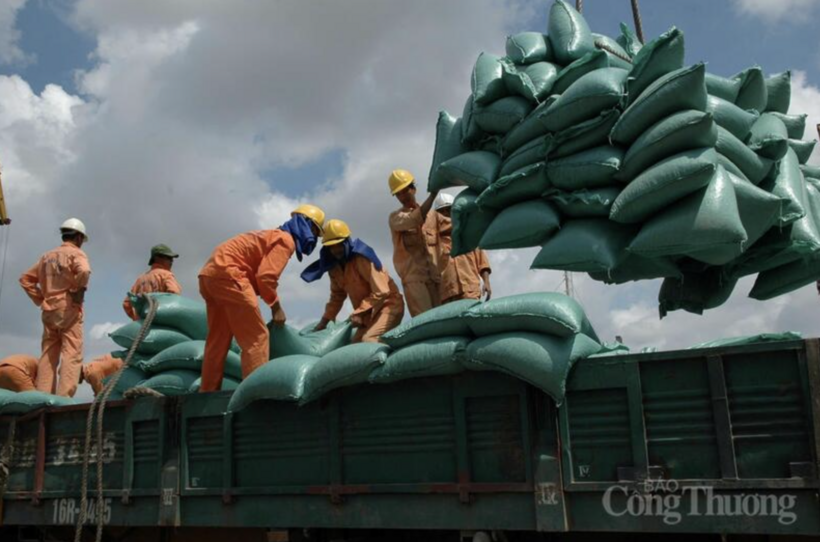
The rice export landscape is showing a mix of positive and challenging signals. Photo: Can Dung.
However, the market has recently shown positive signs. In the first half of May 2026, rice exports reached 473,000 tonnes worth USD 220 million, bringing total export value since the beginning of the year to USD 1.8 billion as of May 15.
Domestic exporters said accelerated purchasing activities from Southeast Asian partners have helped revive rice trading.
Notably, the Philippines continued to be the largest consumer market for Vietnamese rice. Amid concerns that El Niño could affect domestic agricultural production, the country may need to import nearly 5 million tonnes of rice in 2026.
In April 2026 alone, the Philippines imported more than 510,000 tonnes of rice from Vietnam worth around USD 225 million, accounting for 46.4% of Vietnam’s total rice export volume for the month.
Rice exports to the Philippines in the first four months of the year reached 1.69 million tonnes valued at more than USD 740 million, up 14.1% in volume and 1.6% in value year-on-year. The Philippines currently accounts for more than 50% of Vietnam’s rice export volume and nearly 47% of total export turnover.
From May 1 to May 11, as many as 23 out of 25 vessels docking at Ho Chi Minh City and My Thoi ports to load export rice cargoes were bound for the Philippines, with total shipments estimated at around 168,650 tonnes. This indicates that import demand from the market remains very high.
As average export rice prices have fallen to their lowest levels in nearly five years, the Ministry of Industry and Trade faces a dual task: promoting exports while ensuring food security and maintaining domestic market stability.
In March 2026, the ministry issued Directive No. 08/CT-BCT on strengthening measures to promote rice production and exports under the new circumstances. The directive was issued in line with the Prime Minister’s instructions under Official Dispatch No. 21/CĐ-TTg on rice production and consumption management.
The directive emphasizes that rice export management must go hand in hand with domestic market stability, food security and improving production and business efficiency in a sustainable manner.
The ministry requested its affiliated units, provincial and municipal Departments of Industry and Trade, the Vietnam Food Association and rice exporters to strictly implement government directives while proactively coordinating the deployment of comprehensive solutions from central to local levels.
One notable focus is strengthening market monitoring and support for businesses. The Agency of Foreign Market Development and Vietnam Trade Offices abroad have been tasked with closely tracking supply-demand developments, prices and import policies in key markets, while promptly providing information, risk warnings and support for enterprises in resolving issues arising during transactions.
The Ministry of Industry and Trade is intensifying trade promotion and bilateral exchanges with traditional import partners such as Malaysia, Indonesia and the Philippines. This is seen as a necessary move as the global rice market continues to face volatility driven by weather conditions, geopolitical factors and growing food protectionism in many countries.
On March 24, 2026, in Can Tho City, the Ministry of Industry and Trade coordinated with the municipal People’s Committee to organize the 2026 Rice Export Promotion Conference.
A key highlight of the conference was the launch of a digital reporting system serving the management of rice export activities in accordance with ministry regulations.
The system is expected to improve management efficiency, enhance data transparency and support enterprises in handling related procedures. As the market increasingly demands traceability, transparency and faster policy responses, digital transformation in rice export management is viewed as an essential step.
Expanding markets and enhancing the value of Vietnamese rice
Beyond short-term measures, the Ministry of Industry and Trade is also implementing long-term tasks aimed at improving the competitiveness of Vietnam’s rice sector.
At a recent working session between Minister of Industry and Trade Le Manh Hung and the Agency of Foreign Trade, Nguyen Anh Son, Director General of the agency, said the ministry would continue reviewing and improving the legal framework governing import-export activities in a comprehensive, synchronized and transparent direction.
The ministry is taking the lead in drafting a new import-export strategy through 2030 with a vision toward 2045.
For the rice sector, the ministry will continue implementing the rice market development strategy according to schedule, coupled with efforts to improve quality and added value.
One major priority is maximizing the benefits of free trade agreements (FTAs). In parallel, the ministry is promoting negotiations with partners such as the EU and the United Kingdom to expand tariff quotas, thereby creating more room for Vietnamese rice to access high-value markets.
From a market perspective, the ministry will continue organizing trade promotion activities in traditional and potential markets including the Philippines, China, Africa and the EU in order to capitalize on rising import demand.
Alongside market expansion, improving the quality and value of Vietnamese rice is becoming increasingly important. The Ministry of Industry and Trade will coordinate with the Ministry of Agriculture and Environment to strengthen traceability, increase added value in export products and meet international green standards as well as environmental, social and governance (ESG) requirements.
Logistics development is regarded as a crucial link in reducing costs and enhancing the competitiveness of Vietnamese rice. In 2026, the ministry will implement projects under the Vietnam Logistics Services Development Strategy for the 2025–2035 period with a vision toward 2050, while also organizing the Vietnam Logistics Forum 2026 and trade missions seeking cooperation opportunities in logistics services.
As the global rice market enters a new phase of competition, the Ministry of Industry and Trade’s orientation goes beyond merely increasing export volume. The overarching priority is to build a transparent and sustainable rice sector that can better adapt to market fluctuations while raising the value of Vietnamese rice on the global trade map.
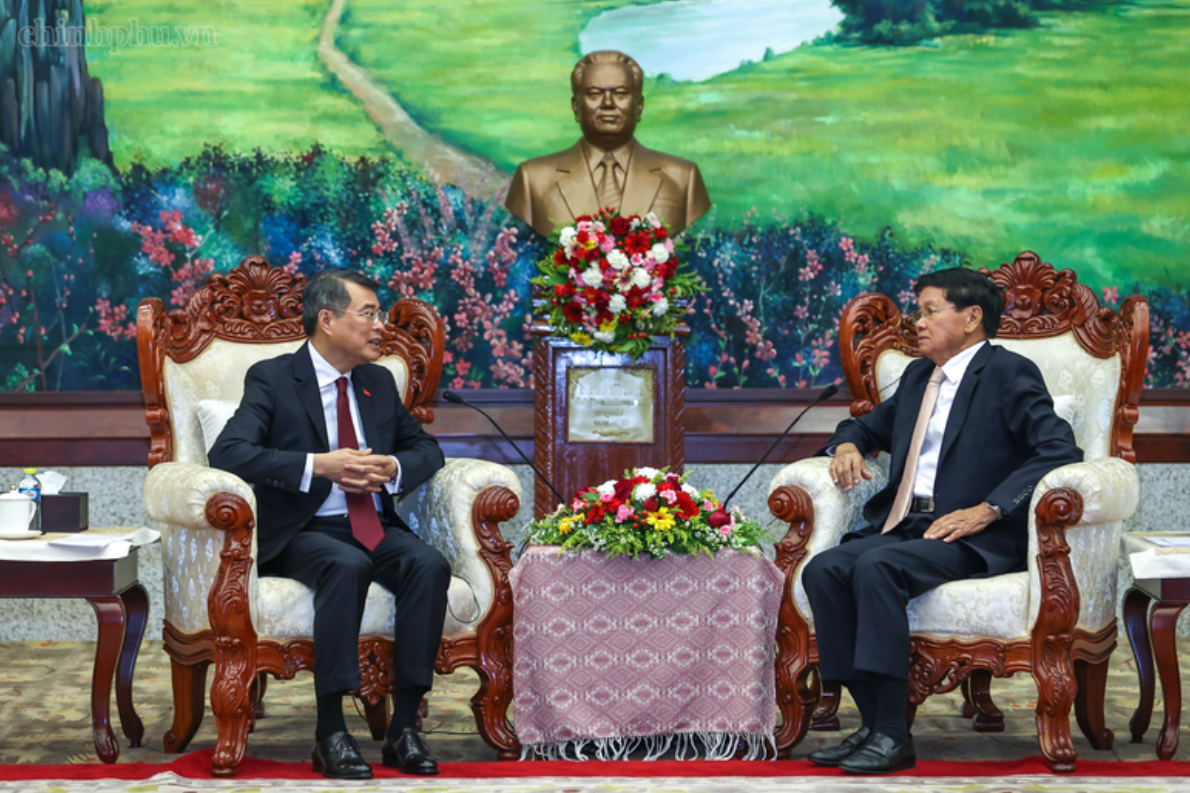
Prime Minister Le Minh Hung on October 8 paid a courtesy call on Lao General Secretary and President Thongloun Sisoulith in Vientiane as part of his on-going official visit to Laos.
The two sides expressed their delight at the positive developments in the bilateral relations in recent years, noting that there remains significant room for greater cooperation and complementarity, particularly in trade, investment and economic ties. They also held extensive discussions on strategic directions to further deepen and strengthen bilateral relations in a more substantive and practical manner.
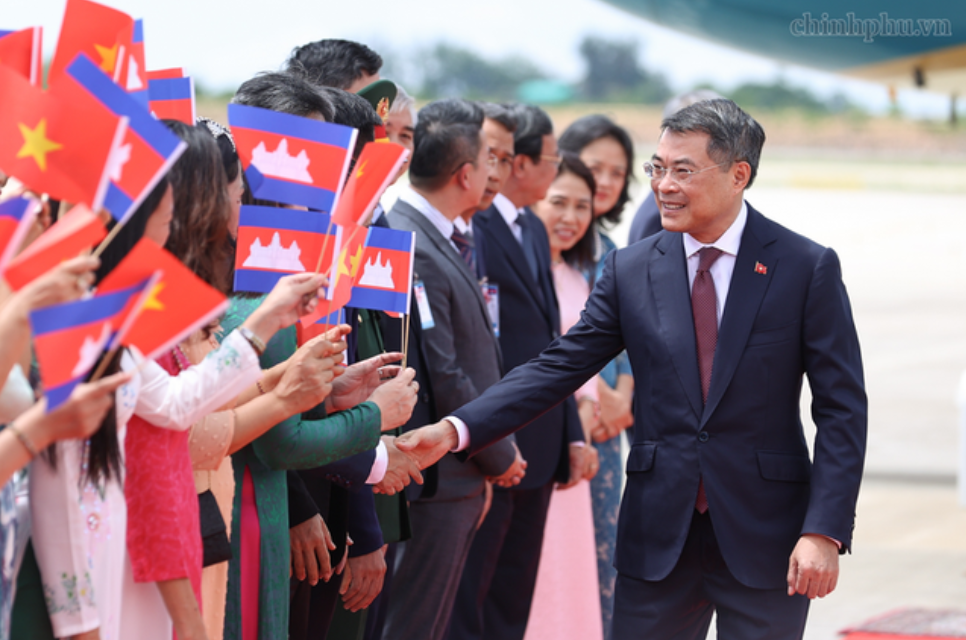
Prime Minister Le Minh Hung arrived in Phnom Penh on Friday afternoon, starting his two-day official visit to Cambodia at the invitation of Cambodian counterpart Hun Manet.
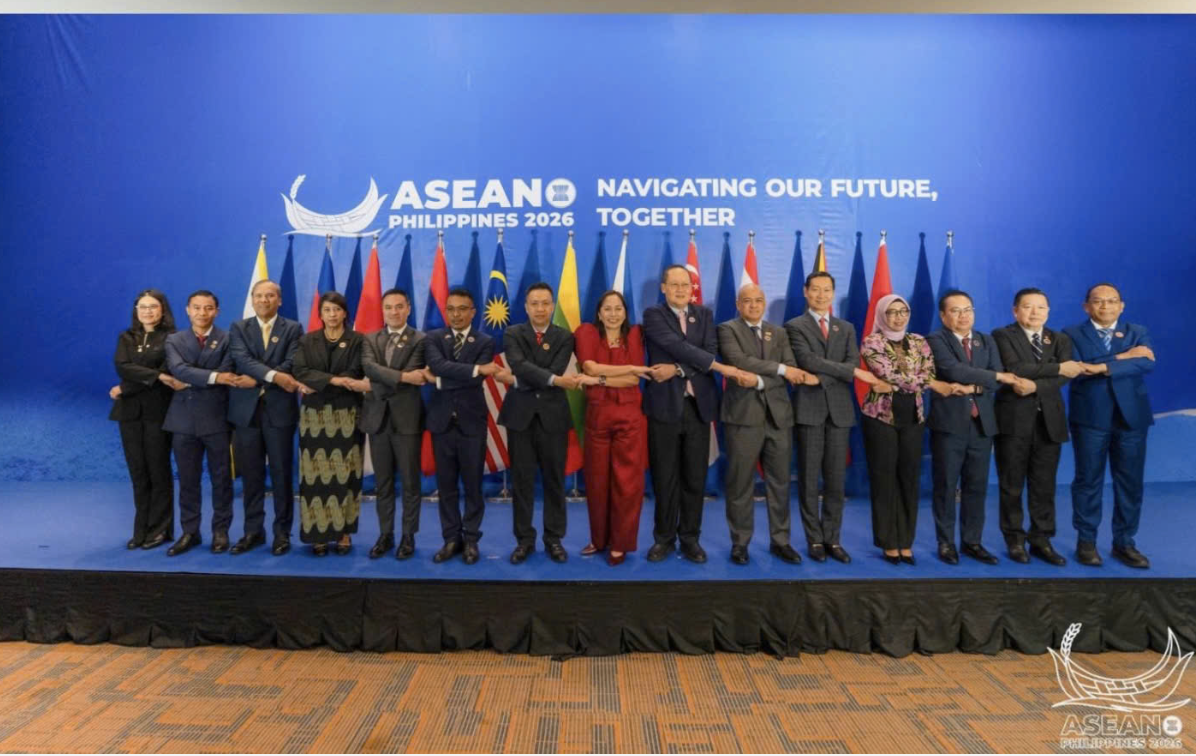
On 7 October 2026, the 44th ASEAN Ministers on Energy Meeting (AMEM 44) was held in Manila, the Philippines, under the chairmanship of Sharon S. Garin, Secretary of the Department of Energy of the Philippines. The meeting brought together energy ministers from ASEAN Member States, the Secretary-General of ASEAN, the ASEAN Centre for Energy, and representatives of ASEAN energy sector bodies and specialised networks. Deputy Minister of Industry and Trade Nguyen Viet Son led the Vietnamese delegati
A new MoIT circular requires commodity exchanges and clearing centers to share real-time trading data and complete system connectivity with regulators nationwide now