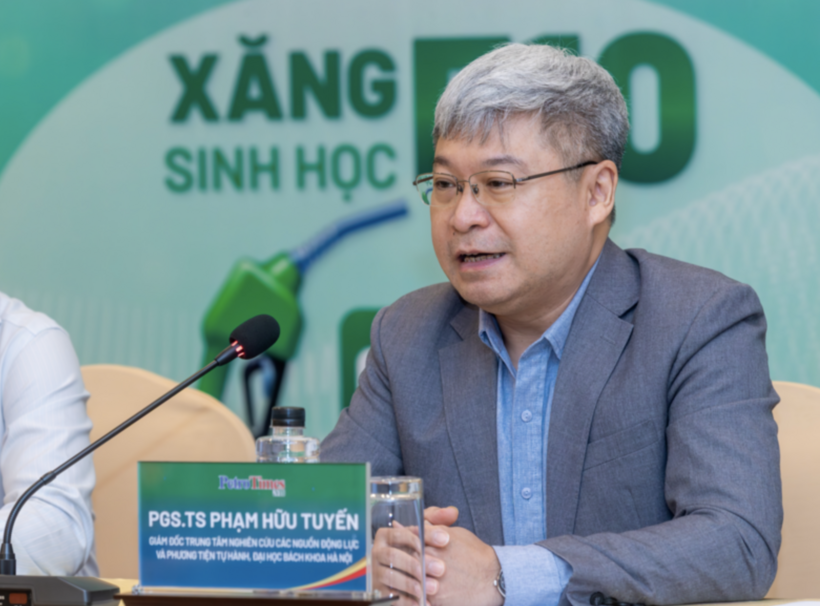
Assoc. Prof. Dr. Pham Huu Tuyen said E10 biofuel gasoline does not negatively affect vehicles, while helping reduce emissions and operating costs thanks to cleaner and more efficient combustion.
Consumers have raised concerns over whether the use of E10 biofuel gasoline could affect the safety and performance and efficiency of vehicles. Assoc. Prof. Dr. Pham Huu Tuyen, Director of the Center for Research on Power Sources and Autonomous Vehicles at Hanoi University of Science and Technology, shared his insights on the issue.
Assoc. Prof. Dr. Pham Huu Tuyen.
- Assoc. Prof. Dr. Pham Huu Tuyen, with more than a decade of research on E10 gasoline, could you explain what benefits consumers may gain from using E10 in terms of vehicle performance, engine durability and operating costs?
Assoc. Prof. Dr. Pham Huu Tuyen: First of all, it is important to understand that E10 biofuel gasoline consists of around 10% ethanol and 90% conventional gasoline. The 10% ethanol blending ratio is relatively low, yet sufficient to improve certain fuel properties. Specifically, ethanol contains oxygen, which helps the combustion process inside the engine become more complete and cleaner. As a result, combustion efficiency is improved, contributing to better engine performance.
Some argue that that ethanol has a lower energy content than conventional gasoline, and therefore blending it may reduce fuel energy content, leading to higher fuel consumption.
In practice, the difference in calorific value is not significant, amounting to only a few percentage points, and is offset by the more efficient combustion process inside the engine. Studies and tests show that when using E10 gasoline, engine power output and fuel consumption are generally equivalent to those of conventional gasoline. In some cases, fuel efficiency may even improve thanks to more optimized combustion.
A clear advantage of E10 gasoline is reduced emissions. Harmful substances such as carbon monoxide (CO) and certain unburned organic compounds are significantly cut. This not only contributes to environmental protection but is also better for public health.
Under current support policies, E10 gasoline is often cheaper than conventional gasoline, helping consumers reduce vehicle operating expenses. More importantly, E10 gasoline has been widely used around the world for decades in countries such as the United States, Brazil and Thailand. Practical experience shows that this fuel does not negatively affect engine durability and is fully compatible with vehicles currently in circulation.
- The nationwide deployment of E10 gasoline is expected to help ease supply and market management pressures. If implemented rapidly and on a large scale, could E10 pose any technical risks to vehicles?
Assoc. Prof. Dr. Pham Huu Tuyen: Regarding whether widespread use of E10 gasoline affects vehicles, it can be affirmed that, technically, E10 gasoline does not cause adverse impacts on vehicle operations.
As noted earlier, when E10 gasoline replaces conventional gasoline, indicators such as engine power, operational efficiency and emissions remain largely unchanged. The transition to E10 gasoline, including grades equivalent to RON95, fundamentally does not affect engine performance.
However, as with conventional gasoline, vehicle users still need to fully comply with maintenance and servicing requirements recommended by manufacturers to ensure stable and durable operation. In reality, for any type of fuel, vehicle manufacturers provide specific maintenance schedules. Therefore, when switching to E10 gasoline, users simply need to continue following these recommendations to maintain vehicle quality and lifespan.
E10 gasoline represents an important transitional solution to gradually reduce dependence on fossil fuels while improving air quality in the short term. As Vietnam moves toward carbon neutrality and green transportation goals, E10 serves as a practical solution that can utilize the existing vehicle infrastructure while still delivering positive environmental impacts. Therefore, E10 gasoline can be adopted immediately without creating technical risks for vehicles.
- Could you share some successful international models in biofuel development and lessons that Vietnam could apply?
Assoc. Prof. Dr. Pham Huu Tuyen: Many successful biofuel development models have emerged worldwide, notably in the United States, Brazil and Thailand, countries that have built relatively complete ecosystems from production to consumption.
One important common factor among countries that have successfully developed biofuels is the availability of abundant and stable feedstock supplies. This is the key factor determining large-scale production capacity.
In the United States, ethanol is mainly produced from corn, a crop with very large output. In Brazil, the primary feedstock is sugarcane, while in Thailand cassava is commonly used. Securing feedstock supplies gives these countries a major advantage from the outset, particularly in controlling production costs.
Biofuel prices depend heavily on feedstock costs. When feedstock supplies are abundant, production costs become more reasonable, allowing biofuels to remain competitive with conventional gasoline. In addition, these countries have introduced strong support policies, including tax incentives, subsidies and consumption promotion mechanisms. As a result, biofuel prices can compete with traditional fuels, encouraging consumers to adopt them.
Another important factor is the involvement of vehicle manufacturers. Automakers often clearly announce engine compatibility with biofuels, helping consumers feel more confident in using them. This contributes to building sustainable market trust.
Vietnam can draw several important lessons. First, it needs to establish synchronized and stable policies, including price support mechanisms and incentives for enterprises producing and distributing biofuels. Second, it should develop sustainable feedstock zones linked to domestic agriculture in order to proactively secure ethanol supplies. Third, investment in distribution infrastructure and stronger public communication are needed to help consumers better understand and trust biofuel use.
Public awareness and social responsibility among consumers are also important. Biofuels not only meet transportation needs but also help reduce emissions, limit environmental pollution and protect public health. As awareness improves, biofuel use will become increasingly widespread.
In addition, Vietnam should promote research into new technologies, particularly second-generation ethanol production from agricultural by-products, in order to reduce pressure on farmland and enhance environmental efficiency. If these solutions are implemented comprehensively, Vietnam can fully develop a sustainable biofuel industry that both ensures energy security and contributes to emission reduction and green transportation goals.
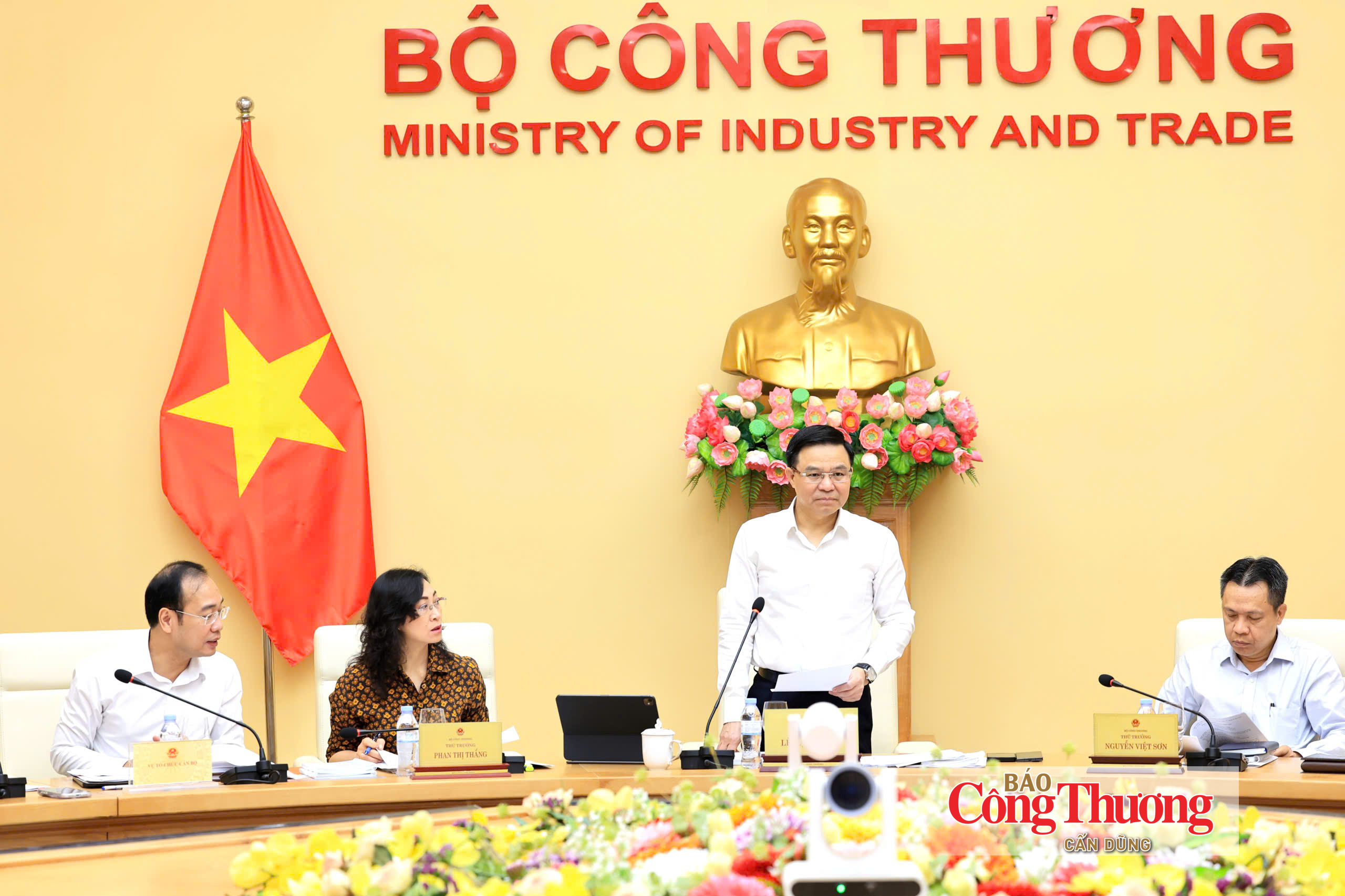
Deputy Minister of Industry and Trade Luong Hoang Thai emphasized that building the national brand is a driving force for improving Viet Nam’s competitiveness and international standing.
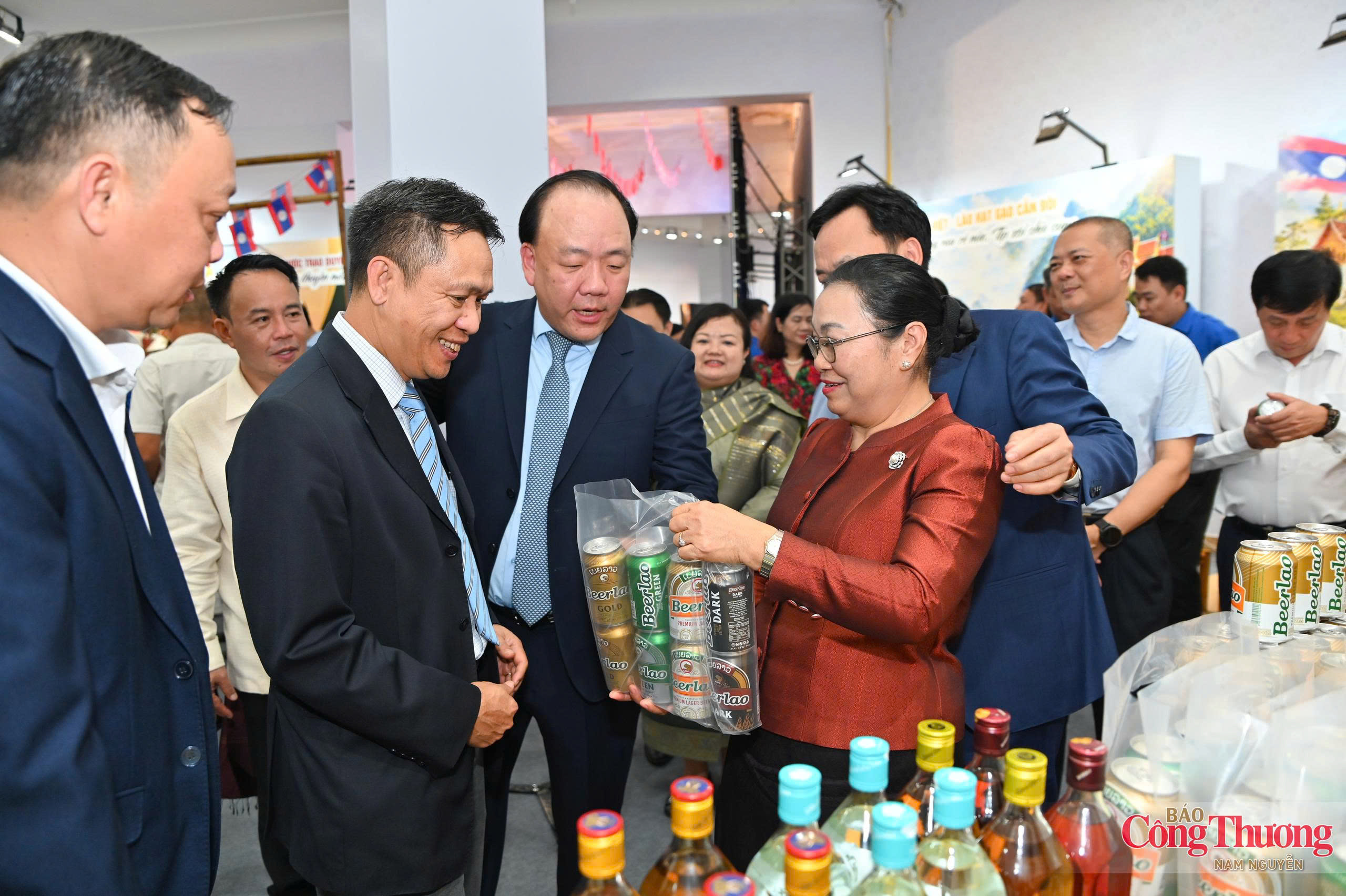
The official visit to Laos by Prime Minister Le Minh Hung is expected to inject fresh momentum into bilateral relations, with economic, trade and investment cooperation continuing to serve as a core pillar.
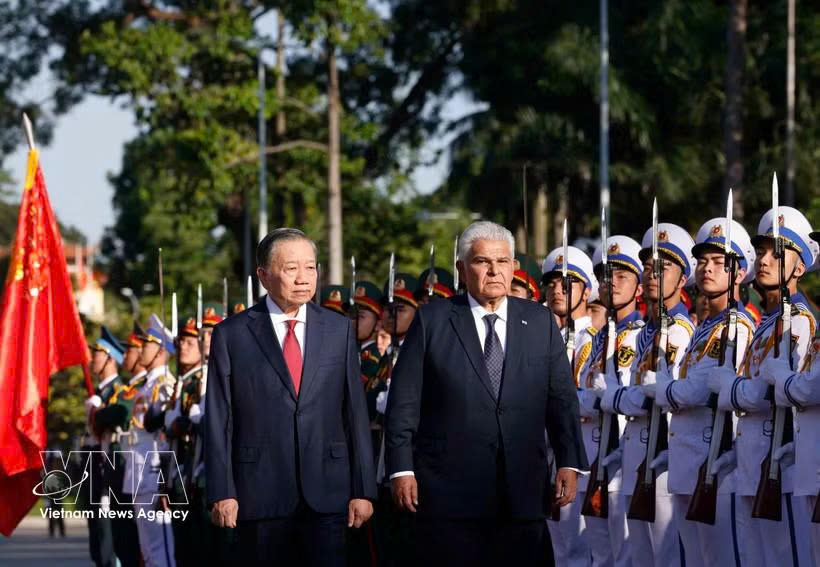
The Panamanian President’s visit is expected to contribute to further deepening and making the traditional friendship and cooperation between the two nations more substantive and effective.
On October 2, the Ministry of Industry and Trade (MoIT) held a working session between Minister of Industry and Trade Le Manh Hung and research institutes, universities and colleges under the Ministry to review their recent operations and identify solutions to better harness the potential, advantages and collective strengths of the Ministry’s education and research institutions. Minister of Industry and Trade Le Manh Hung chaired the meeting.
On October 5 in Ha Noi, Deputy Minister of Industry and Trade Nguyen Viet Son held a working session with the Viet Nam Department of Geology and Minerals.
On October 2, the Ministry of Industry and Trade (MoIT) held a working session between Minister of Industry and Trade Le Manh Hung and research institutes, universities and colleges under the Ministry to review their recent operations and identify solutions to better harness the potential, advantages and collective strengths of the Ministry’s education and research institutions. Minister of Industry and Trade Le Manh Hung chaired the meeting.
Industry and Trade Newspaper would like to introduce a podcast series on the implementation of the Politburo's Resolution No. 57 in the Industry and Trade sector.
The Industry and Trade Newspaper introduces a podcast series on the implementation of Politburo Resolution No. 57-NQ/TW dated December 22, 2024, on breakthroughs in the development of science, technology, innovation and national digital transformation in the Industry and Trade sector.
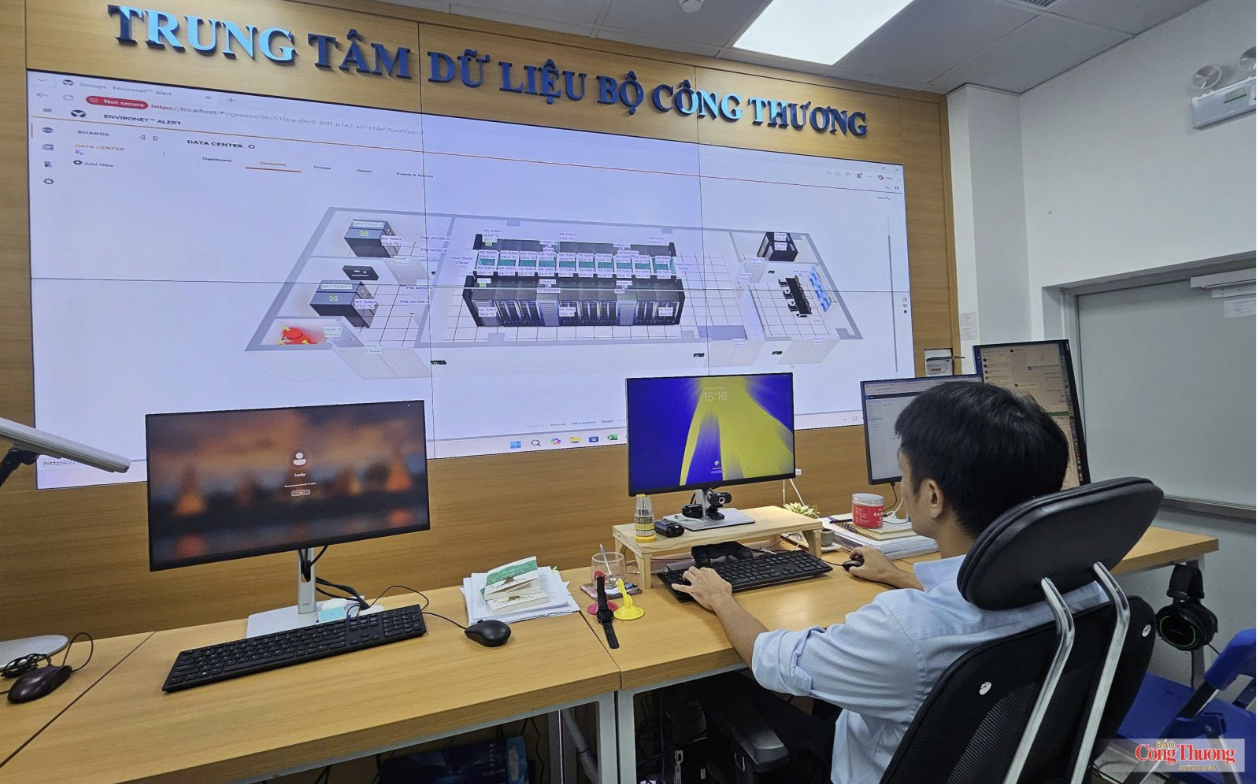
The Ministry of Industry and Trade is accelerating digital transformation to modernise management, improve public services, strengthen the competitiveness of businesses.
The Ministry of Industry and Trade is expanding international cooperation in science and technology, focusing on research, innovation and technology transfer.