Decisions at the 14th National Party Congress are set to shape Vietnam’s growth model, resilience and global position for at least the next decade, experts say.
Amid a multipolar, uncertain and fiercely competitive global environment, decisions adopted at the 14th National Congress of the Communist Party of Vietnam are expected to shape the country’s development trajectory for at least the next decade.
In an interview with the Newspaper of Industry and Trade, Le Dang Doanh, economic expert and former president of the Central Institute for Economic Management (CIEM), shared his expectations and recommendations regarding the growth model, international integration and the roles of different economic sectors.
The Congress sets the goal of achieving an average GDP growth rate of 10% or higher for the 2026 - 2030 period, with GDP per capita reaching about USD 8,500 by 2030.
Shaping the growth model for at least the next decadeHow do you assess the significance of the 14th National Party Congress in the current global context?
Le Dang Doanh: The 14th National Party Congress carries special significance. It is not merely a routine political event, but a strategic moment in which Vietnam chooses its development path amid profound global volatility, intensifying competition and growing uncertainty.
The orientations and decisions adopted at the Congress will shape the country’s growth model, resilience capacity and position in global value chains for many years to come. That is why the Congress has become a focal point of social expectations for a faster, more sustainable and more independent economy.
What are your expectations regarding the major orientations on green growth and sustainable development at this Congress?
Le Dang Doanh: I believe the 14th National Party Congress will pave the way for comprehensive reforms in institutions, science and technology, digital transformation, green growth and sustainable development. Notably, the action programme to implement the Congress’s Resolution contains many breakthrough elements, clearly identifying responsible actors, roadmaps, resources and final objectives.
General Secretary To Lam has clearly outlined key tasks and guiding principles, reflecting strong determination for reform. The most important task now is early implementation, turning resolutions into concrete actions, particularly in key areas such as science and technology, the digital economy and the green economy.
Industry and trade taking the lead, integration aligned with stronger internal capacityAs a key pillar of the economy, what breakthroughs should the industry and trade sector pursue in the coming period?
Le Dang Doanh: The industry and trade sector encompasses the most advanced and core productive forces of the economy, including both the state and private sectors. I expect the sector to take the lead in implementing Party tasks, developing pioneering models that can be reviewed and replicated.
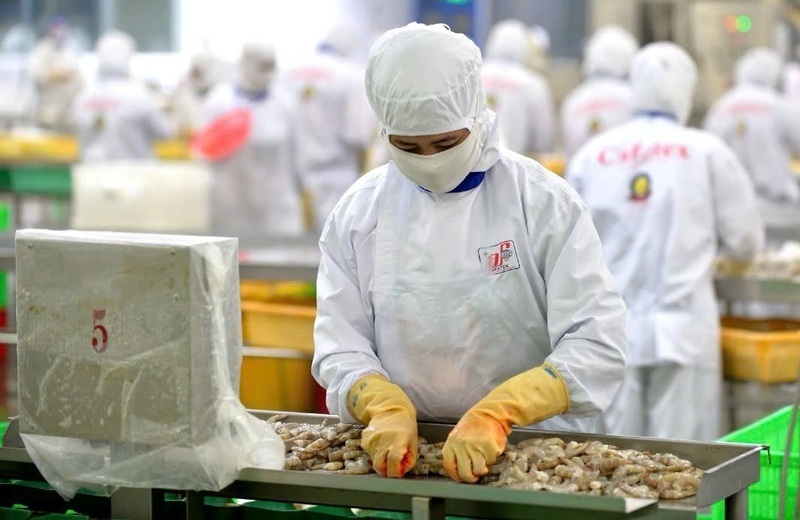
In particular, the sector should strengthen linkages with agriculture, forming deep-processing value chains to increase value added for Vietnamese agricultural products, instead of relying mainly on raw material exports.
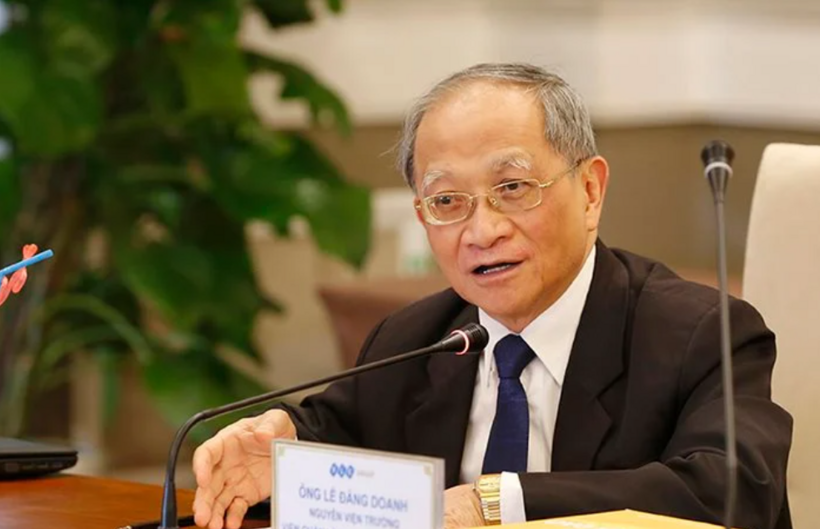
Le Dang Doanh, an economist and former director of the Central Institute for Economic Management (CIEM). Photo: N.H
Vietnam has signed 17 free trade agreements. What challenges arise in the new phase of integration?
Le Dang Doanh: Although Vietnam has signed 17 FTAs, in reality, foreign-invested enterprises still capture the largest benefits, accounting for about 71 - 72% of total export turnover. This indicates that linkages between FDI enterprises and domestic firms remain limited.
In the coming period, greater focus should be placed on connecting FDI enterprises with large Vietnamese private firms and with sectors such as agriculture, fisheries and processing industries. This approach can promote growth while protecting the environment and strengthening the economy’s internal capacity.
Digital economy, green economy and linkages among economic sectors
The Congress sets a target of average GDP growth of 10% per year or higher during 2026 - 2030. What is the key to achieving this goal?
Le Dang Doanh: An economic growth target of over 10% for the 2026–2030 period is very ambitious and requires major breakthroughs. In a context where globalization faces obstacles and trade barriers are increasing, Vietnam’s economic policies must be highly flexible.
In external trade, in addition to maintaining traditional markets, Vietnam should proactively tap new markets such as the Middle East, with its Halal standards, and South America, while effectively leveraging resources from partners such as Japan. Market diversification will help reduce risks and create greater space for sustainable growth.
How do you assess the role of the digital economy and the green economy in the new growth model?
Le Dang Doanh: The digital economy and green economy are irreversible trends. The digital economy leads to digital government, digital enterprises and digital citizens, helping enhance transparency across activities and thereby contributing to more effective anti-corruption efforts.
I believe citizens should be encouraged to use the internet and digital platforms to participate in policy consultation and feedback in a frank and constructive manner. What matters is the establishment of clear regulations on information disclosure and citizens’ right to oversight. When transparency is strengthened, social trust will be reinforced.
The Politburo has recently issued a new resolution on the state-owned economy. What should be done for this sector to truly play a leading role?
Le Dang Doanh: The state-owned economy controls critical arteries of the national economy, such as energy, telecommunications, mineral resources and land management. Correctly affirming the role of this sector is essential.
However, for the state-owned economy to truly lead, there must be close coordination between state-owned enterprises and universities and research institutes, enabling scientific innovations and inventions to be rapidly applied in production and business. Science and technology have been identified as key drivers; now concrete policies are needed to turn this into reality.
What are your expectations regarding coordination between the state-owned and private sectors in the coming period?
Le Dang Doanh: I strongly hope for timely, substantive and close linkages between state-owned and private enterprises. These two sectors should cooperate and complement each other, rather than operating in isolation. If done well, this will become a crucial driver for enhancing national competitiveness and building a solid foundation for Vietnam as it enters a new era of national advancement.
With trade hitting USD 930 billion in 2025, Vietnam’s economic integration enters a new phase focused on quality, green exports and deeper global positioning.
Vietnam’s canned tuna exports fell 8% in 2025 as the EU dropped sharply, while the US held steady and Middle East - North Africa markets posted strong growth.
Deputy Prime Minister Bui Thanh Son set growth targets for four energy pillars, urging double-digit breakthroughs and 14th National Congress Resolution execution
Prime Minister Pham Minh Chinh urged sweeping reforms to accelerate Hanoi’s urban railway projects, targeting over 600km by 2045, while ensuring quality and safety.
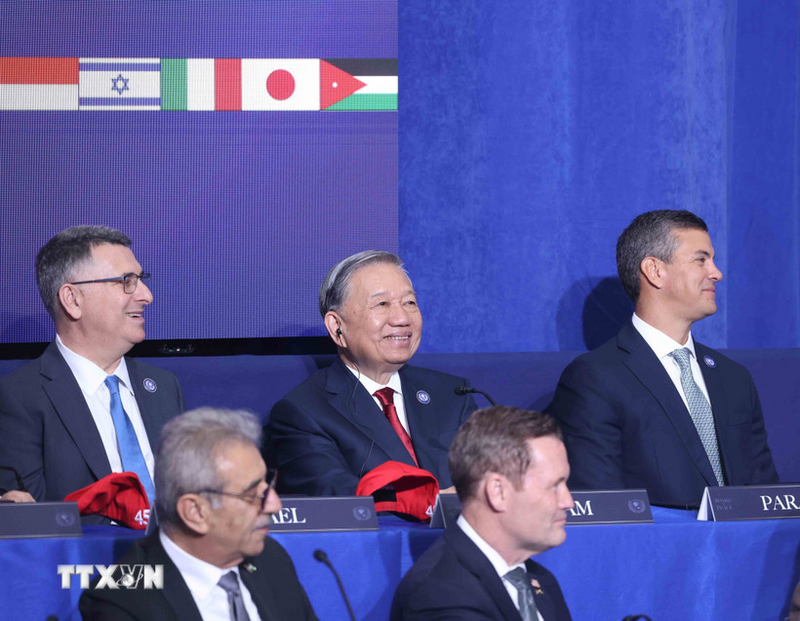
Vietnam’s General Secretary To Lam attended the Gaza Peace Council’s inaugural meeting in Washington, D.C., outlining commitments to peacekeeping and reconstruction.
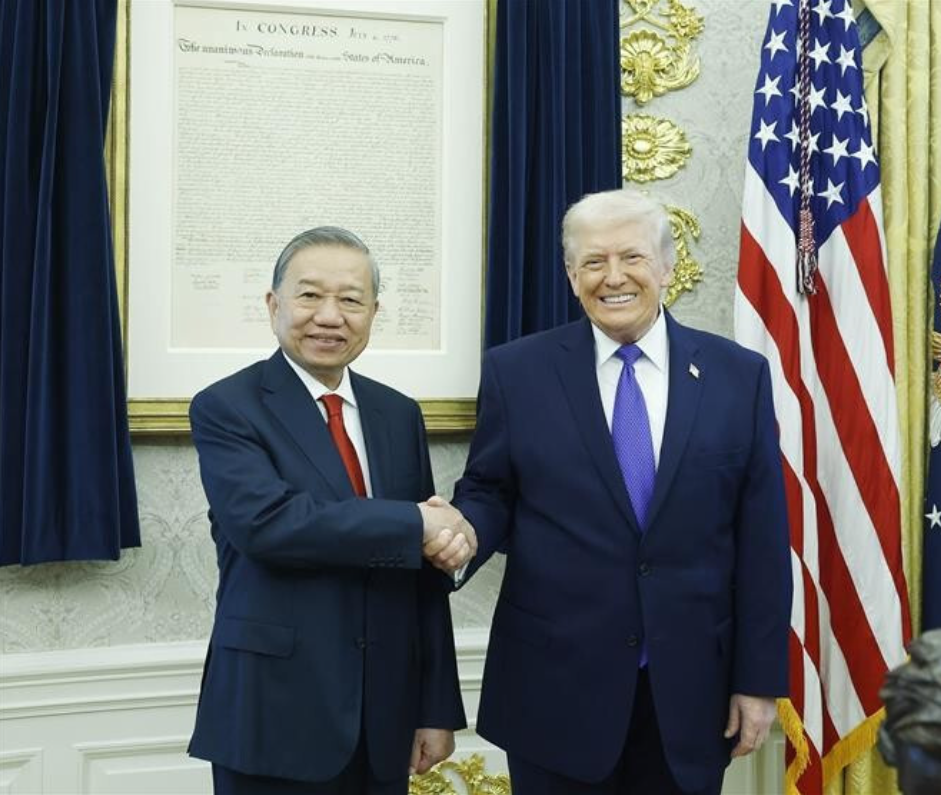
General Secretary To Lam held talks with US President Donald Trump at the White House on bilateral ties and regional and international issues of shared concern.