The EU rolls out CATCH and revised catch certificates from 2026, adding mandatory digital submission and new control requirements for seafood exports.
CATCH: A platform digitalising the entire certification process
CATCH has been designed to fully digitalise the seafood certification process, preventing illegally caught products from entering the EU market. The platform streamlines administrative procedures, allowing non-EU countries and importers to validate and sign documents online in a more convenient manner. Users must register for an EU Login account and obtain approval from the competent authority in accordance with their operational or managerial roles.
Seafood consignments exported to the EU will be subject to digital catch certification requirements under the CATCH system from 2026
Alongside the transition to a paperless working environment, key documents such as processing statements, catch certificates and non-manipulation documents (NMD) are updated under new data standards. Additional information is required, including IMO vessel numbers and fishing coordinates. The system also supports multilingual searches and provides instructional videos to assist users during the transition period.
Under the roadmap, the application of CATCH will become mandatory for many seafood export procedures to the EU after the transitional period ends in early 2028.
The EU has begun rolling out a series of changes to its seafood catch certification programme, with the CATCH system becoming a compulsory tool for importers.
Three key milestones businesses must note
From January 10, 2026, several major changes will take effect. The revised Catch Certificate (CC) will apply, requiring more detailed vessel identification (IMO/UVI number), fishing gear, voyage duration (“from - to”) and fishing area. The revised Processing Statement (Annex IV - PS) will be introduced and must include a unique identification number issued by the competent authority.
The Non-Manipulation Document (NMD) will become mandatory for consignments transiting through a country that is neither the flag State nor the processing country, particularly where shipments are split. From this date, submission of documents via the CATCH system will be compulsory for all importers into the EU. Administrative arrangements with seven non-EU countries (including Norway, Canada and the United States) will cease to apply, and the concerned countries will transition to EU-standard documentation.
From January 10, 2027, the revised Simplified Catch Certificate (SC) will come into force. The eligibility criteria will also be adjusted, limiting application to vessels under 12 metres not using towed gear or under 8 metres using towed gear.
January 10, 2028 will mark the end of the transitional period. All countries, without exception, must use the revised templates, including the standard CC, the simplified SC and the PS. Older certificate templates will no longer be accepted by CATCH.
During the transition, catch certificates and processing statements validated before January 10, 2026 under the old templates will remain valid for imports into the EU until January 10, 2028. However, any document validated after January 10, 2026 must use the revised template, even if the products were caught prior to that date. Notably, no transitional period applies to the NMD; it is mandatory for all documents declared or signed after January 10, 2026.
Non-Manipulation Document (NMD): An additional layer of transit controlThe NMD is a new template established by the European Commission to ensure consistent enforcement of regulations for seafood consignments entering the EU that transit through third countries. It will become mandatory from January 10, 2026 for all documents declared or signed after that date, with no transitional arrangements.
Under the regulation, the NMD is required for consignments transported to the EU via a country that is neither the flag State nor the processing country. If a shipment is split in the transit country, each sub-consignment must have its own NMD validated by the competent authority of that country. Where consignments are not split, the use of an NMD is voluntary and may replace individual transport documents. The NMD is mandatory only for the final leg of the journey to the EU and may be issued by the last transit country following export from the flag State or processing country.
The NMD confirms that the consignment has not undergone any operation other than unloading, reloading or preservation activities, and that the products have remained under the supervision of the competent authority in the transit country. The transit country determines which authority is responsible for signing Box 8 of the NMD. A bill of lading cannot substitute for the NMD, as it does not confirm that the goods were under official supervision.
Within the CATCH system, operators may generate the NMD electronically, and competent authorities can validate it directly on the platform, ensuring a fully paperless process. The NMD is integrated into exporters’ workflow; EU operators may submit it and EU Member State authorities may validate it online. Its application enhances transparency and traceability, ensuring that goods are not substituted or unlawfully altered during transit to the EU market.
Adjustments to the Simplified Catch Certificate (SC)
The SC template has been revised to align with CATCH implementation and harmonise with changes to the standard certificate. Effective January 10, 2027, amendments include: simplified contact details of the validating authority in Box 1 (telephone and email only); mandatory vessel information in Box 3, including vessel name, national registration number, specific catch volume per vessel and date of catch (landing date may be used); exporter contact details in Box 4 limited to address and/or telephone number; revised transport details annex in Box 10 to align with the standard certificate; and updated importer declaration in Box 11 to reflect the latest IUU regulatory changes.
Information in Box 3 is mandatory for each fishing vessel. For paper submissions, the vessel list may be attached as an annex but must contain all required data fields. The new simplified template applies only to third-country fishing vessels under 12 metres not using towed gear or under 8 metres using towed gear. Old SC templates validated before January 10, 2027 will remain valid for imports into the EU until January 10, 2028.
The FTA Vietnam - EFTA creates new opportunities for Vietnamese businesses while encouraging stronger competitiveness, compliance and sustainable development.
Ministry of Industry and Trade removed more than 9,000 infringing products and blocked over 2,000 online stores in a nationwide crackdown on counterfeit goods.
Sustainable production and consumption are becoming business imperatives as companies invest in greener technologies, circular design and digital transformation.
Vietnam's domestic market remained resilient in the first half of 2026 despite global turbulence, with inflation under control and retail sales continuing to grow.
From 29 June, Vietnam’s domestic carbon market officially entered its pilot phase, marking a transition from emissions management through administrative command-and-control measures to a market-based mechanism.
The FTA Vietnam - EFTA creates new opportunities for Vietnamese businesses while encouraging stronger competitiveness, compliance and sustainable development.
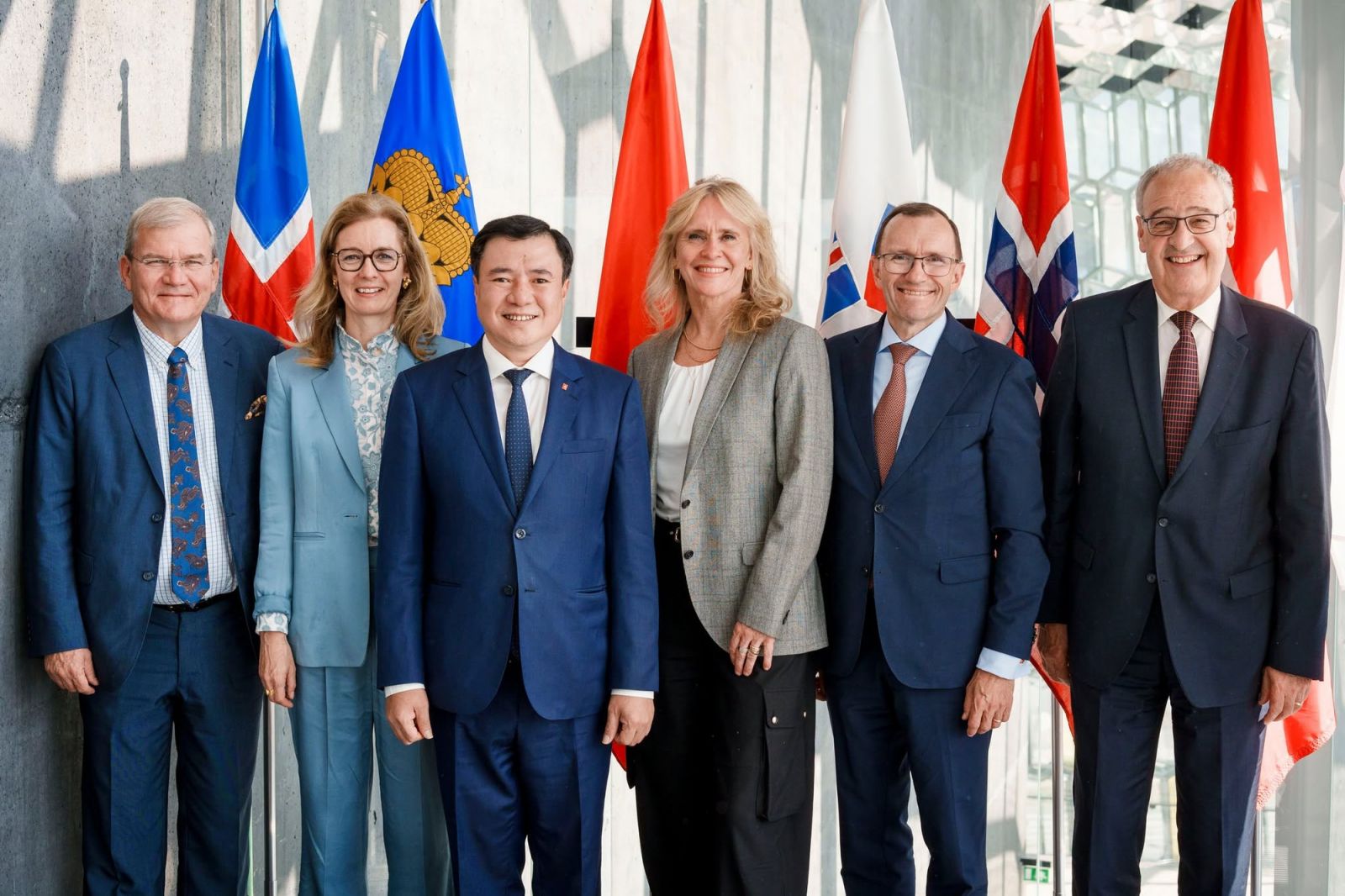
In an interview with the press regarding the Free Trade Agreement (FTA) between Vietnam and the European Free Trade Association (EFTA), Deputy Minister of Industry and Trade Nguyen Sinh Nhat Tan emphasized that the agreement will lay the foundation for economic relations between Vietnam and EFTA to enter a new stage of development.
At a second-quarter 2026 conference, the MoIT urged Vietnam's Trade Offices abroad to strengthen intelligence and help exporters adapt to changes and expand exports.
Vietnam and Israel discuss strengthening VIFTA implementation to expand trade, investment and cooperation, aiming to boost bilateral economic ties and market access.
More than 100 businesses attend the Vietnam-Japan Investment and Trade Cooperation Conference in Osaka to strengthen investment, trade and supply chain connectivity.