Vietnam maintains strong economic growth but faces structural bottlenecks in productivity, technology and sustainability, requiring reforms to improve quality today.
Sustaining high growth momentum, Vietnam among leading economies in the region
From an economy with a GDP size of only around USD 8 billion in 1986, Vietnam has made strong progress after nearly four decades of đổi mới (renewal). Economic growth has been maintained at high levels across various periods, rising from 4.4% per year in 1986 - 1990 to 8.2% per year in 1991 - 1995, and remaining broadly positive in subsequent decades.
Vietnam is the only Southeast Asian representative in the group of the 10 fastest-growing emerging economies.
By 2025, Vietnam’s GDP is estimated at around USD 514 billion, ranking 32nd globally and 4th in ASEAN. GDP per capita is estimated at around USD 5,026, officially placing the country in the upper-middle-income group. Macroeconomic balances have remained stable, with total trade turnover exceeding USD 930 billion, placing Vietnam among the world’s 20 largest trading economies. The private sector is increasingly affirming its role, contributing more than 50% of GDP and generating around 90% of jobs.
According to the latest World Economic Outlook report of the International Monetary Fund (IMF), Vietnam is the only Southeast Asian representative in the top 10 fastest-growing economies, with a projected growth rate of 6.4% in the 2024–2029 period. The IMF assessed that Vietnam is entering a strong growth cycle, becoming one of the most dynamic emerging economies, thereby opening significant space for attracting foreign investment and promoting economic development.
Trade activities continue to be a bright spot in the early months of 2026. As of mid-April, total import-export turnover reached more than USD 297 billion, up 24.5% year-on-year. Of which, exports reached USD 144.6 billion, up 20.3%, with many key product groups posting strong growth such as electronics, machinery and equipment.
The FDI sector continues to play a leading role, accounting for about 80% of export turnover and more than 72% of import turnover. This reflects Vietnam’s attractiveness in global supply chains, while also raising concerns over the economy’s autonomy.
Addressing structural bottlenecks in growth quality
Despite notable achievements, experts argue that Vietnam’s growth quality has yet to meet sustainable development requirements. Speaking at the National Scientific Conference “Vietnam’s Economy in 2025 and Outlook for 2026,” Associate Professor, Dr. Bui Quang Tuan, Vice President of the Vietnam Economic Association, noted that while improvements are undeniable, growth quality still falls short of expectations when measured against scientific criteria and sustainability requirements.
One key reason is the slow pace of economic restructuring. In principle, a sustainably developing economy must shift rapidly towards industrialisation and modernisation, in which the industrial and services sectors play a leading role.
However, in reality, during the 2020–2025 period, the share of the services sector in GDP increased by only about 1 percentage point, a modest rise compared to requirements. In industrialised economies, services typically account for more than 60% of GDP. Meanwhile, the agricultural sector declined from around 14.7% to 11.6%, but this shift remains insufficient to create significant structural change.
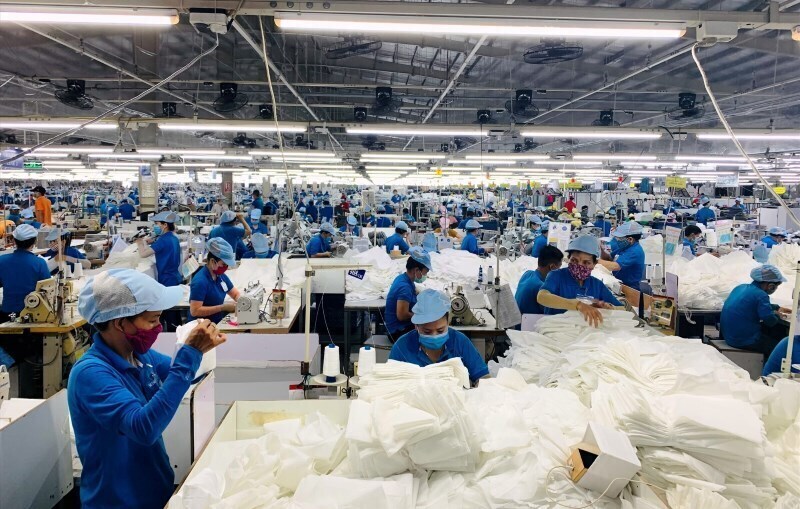
Beyond inter-sectoral shifts, internal restructuring within sectors has also fallen short of expectations. According to Bui Quang Tuan, restructuring in industry, agriculture and services towards higher value added remains slow. The economy still relies heavily on exports and the FDI sector, with a dominant model of processing and assembly. Meanwhile, development requirements call for deeper participation in higher value-added stages of global value chains such as research, design and product commercialisation.
The localisation rate, technological mastery, and domestic value added remain limited. This reflects a lack of clear transformation in intra-sectoral structures towards higher growth quality.
Another notable bottleneck is low investment in science, technology and innovation. Despite high credit growth, capital flows have mainly gone into real estate and short-term sectors rather than long-term foundations such as technology or digital transformation.
Previously, spending on science and technology accounted for only about 0.5% of GDP, and at times was not fully disbursed. The target of raising this to around 2% of GDP has yet to be achieved, while the global average stands at about 2.2% of GDP. This gap indicates a weak foundation for productivity- and innovation-driven growth.
According to Bui Quang Tuan, total factor productivity (TFP), a core driver of growth quality, has not played its expected role. In fact, in recent years, TFP has recorded negative growth, reflecting the reality that the economy still depends on extensive growth factors.
In addition, the relationship between high growth targets and sustainable development is posing significant challenges. Economic growth continues to be accompanied by rising emissions. Vietnam’s emissions intensity per unit of GDP is currently about 45% higher than the regional average, while emission growth is estimated at around 60% per year, alarming figures.
Meanwhile, resources for green growth remain limited. Green credit accounts for only about 4.2% of total outstanding loans, while the proportion of workers in green sectors is only about 3.6%. The transition towards a sustainable development model is still progressing slowly.
To improve growth quality, Bui Quang Tuan stressed the need for a comprehensive approach, accelerating economic restructuring, strengthening internal capacity, increasing investment in science, technology and innovation, and linking growth with digital transformation and green growth. This is seen as a key pathway for Vietnam not only to maintain high growth, but also to enhance quality, productivity and long-term competitiveness.
Polish Prime Minister Donald Tusk will pay an official visit to Viet Nam from October 24 to 26 as the bilateral trade continues to grow, creating opportunities for deeper cooperation.
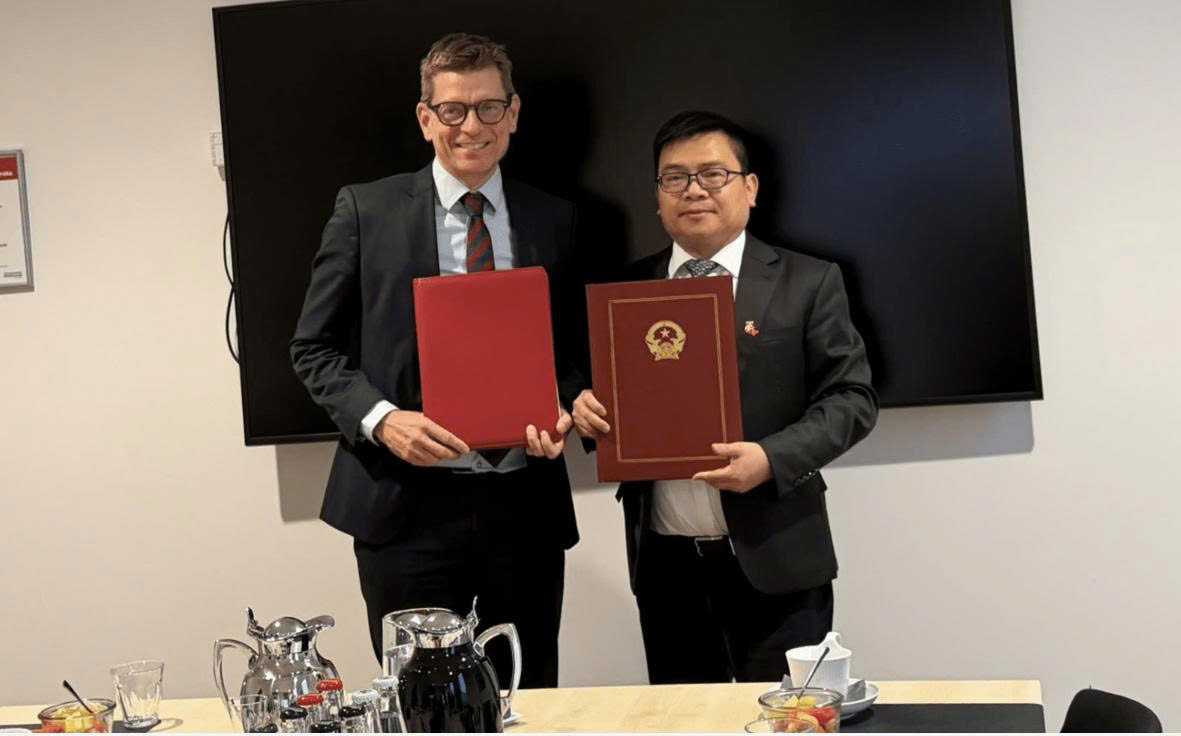
Deputy Minister Truong Thanh Hoai met with LEGO and Carlsberg in Denmark on October 20 to discuss green investment and sustainable manufacturing in Viet Nam.
For more than three decades, Ms. Dang Thi Thanh Huong has quietly shaped the legacy of Dong Phuong Cake & Confectionery, a brand rooted in tradition, craftsmanship.
Viet Nam and Denmark have signed an MoU on energy cooperation to strengthen bilateral ties and advance collaboration in renewable energy and the green transition.
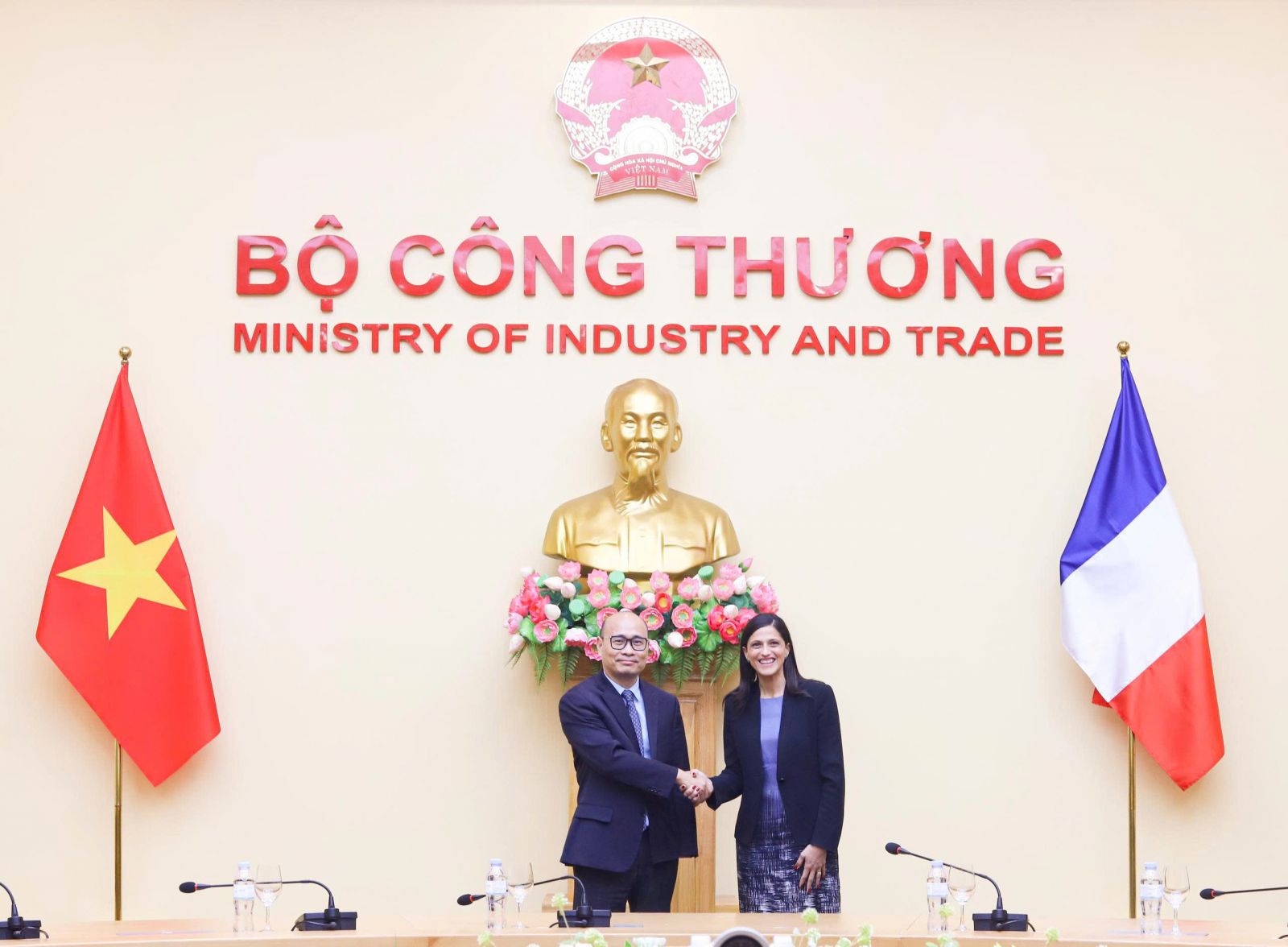
Deputy Minister Luong Hoang Thai met French Minister Delegate Eleonore Caroit on October 19 to discuss ways to strengthen Viet Nam - France cooperation.
Facing the challenges of renewable energy transmission, CWEA suggests off-grid consumption approaches and opportunities for global supply chain cooperation.
In the seven months of 2026, industry, retail sales and imports and exports all posted strong growth. The Ministry of Industry and Trade (MoIT) continues to roll out solutions to contribute to achieving the double-digit growth target.
In the first six months of 2026, Viet Nam’s total merchandise import and export turnover reached USD 549.69 billion, up 27.1% year on year. Exports increased by 21%, while imports rose by 33.4%. The country recorded a merchandise trade deficit of USD 16.65 billion. These figures underscore Viet Nam’s determination to further expand the presence of Vietnamese goods and brands in international markets.
Moonfolks has officially entered the Vietnamese market, aiming to connect the country’s rapidly growing digital economy with broader opportunities across Southeast Asia and support Vietnamese businesses in expanding internationally.