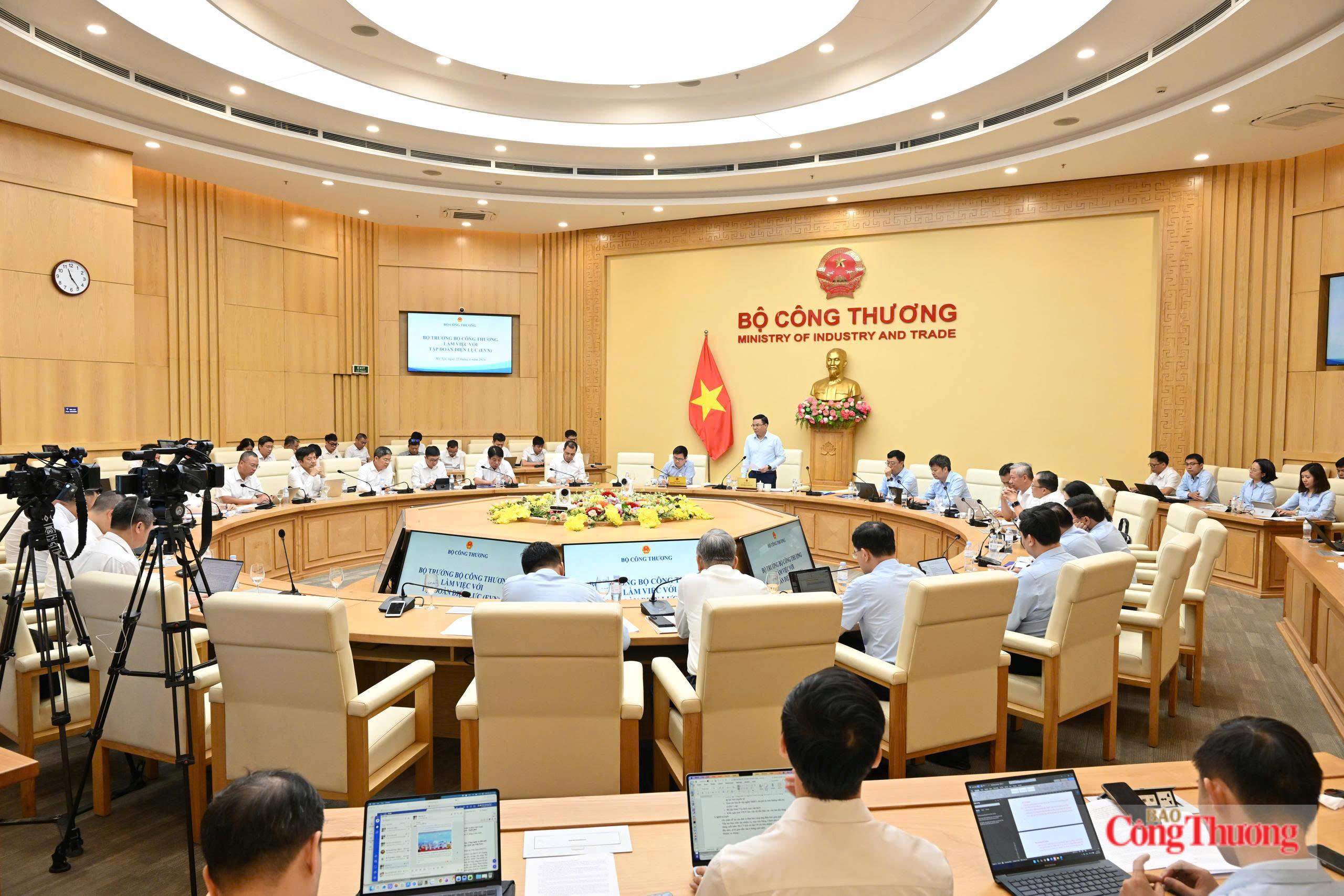
Deputy Minister of Industry and Trade Nguyen Hoang Long held a working session with Dak Lak on power generation and grid projects under revised Power Plan VIII.
On the afternoon of May 20, a Ministry of Industry and Trade delegation led by Deputy Minister Nguyen Hoang Long held a working session with the Dak Lak provincial People’s Committee on the implementation of power generation and grid projects under the revised Power Plan VIII.
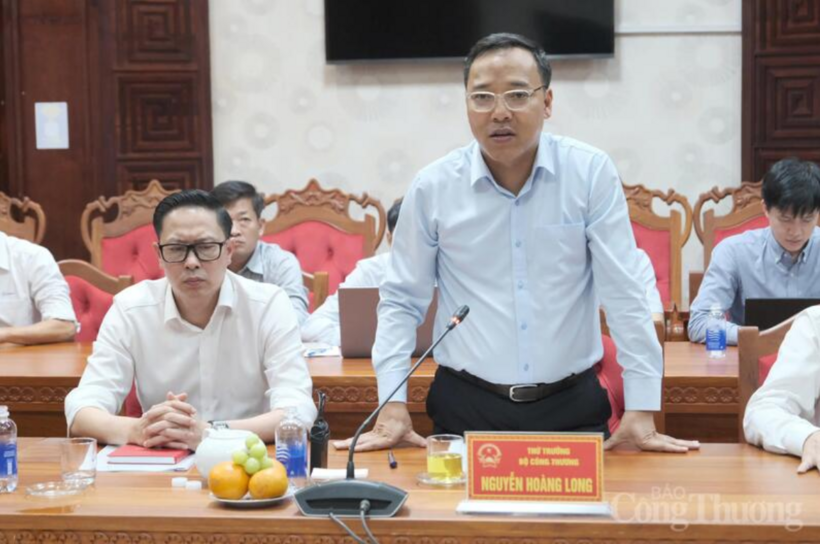
Deputy Minister Nguyen Hoang Long works with Dak Lak on the implementation of the revised Power Plan VIII. Photo: Le Son
Attending the meeting on behalf of Dak Lak were Vice Chairman of the provincial People’s Committee Truong Cong Thai, Director of the provincial Department of Industry and Trade Nguyen Thi Thu An, and leaders of relevant departments and agencies.
Significant potential for an energy hub in the Central Highlands
Reporting at the meeting, Nguyen Thi Thu An, Director of the Dak Lak Department of Industry and Trade, said that under the revised Power Plan VIII, the province has been assigned 125 power generation projects with a combined capacity of more than 14,036MW. Of these, during the 2025 - 2030 period, there are 91 renewable energy projects with a total capacity of around 7,823MW, while an additional 34 projects with more than 6,213MW are planned for the 2031 - 2035 period.
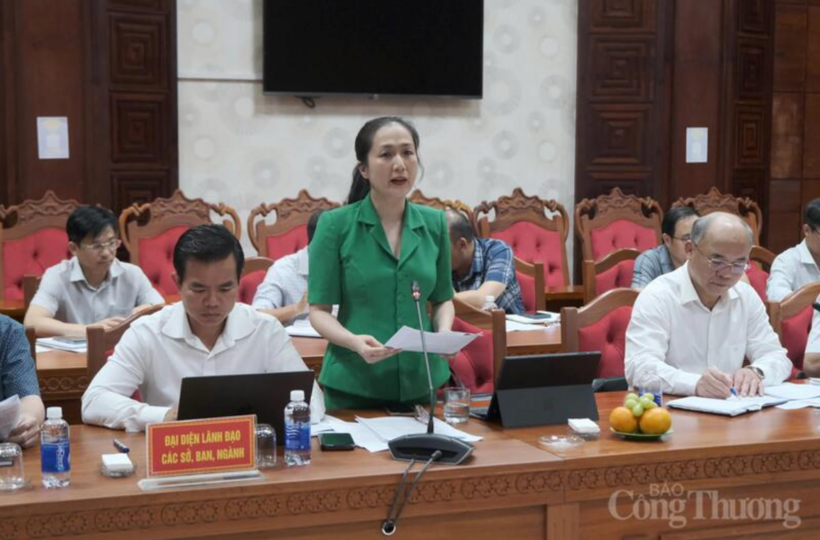
Nguyen Thi Thu An, Director of the Dak Lak Department of Industry and Trade, delivers a report to the working delegation. Photo: Le Son
Regarding the power grid, Dak Lak has been planned in a synchronized manner with nine 500kV substations, 13 500kV transmission lines, 26 220kV substations, 40 220kV transmission lines, and multiple 110kV substations and transmission lines to evacuate capacity from power generation projects. To date, the province has approved investment policy for 15 power generation projects with a total capacity of 892.5MW, mainly wind and solar power projects. Among them, four wind power projects: Cu Ne 1, Cu Ne 2, Krong Buk 1 and Krong Buk 2, with a combined capacity of 200MW have basically completed construction and are expected to be put into operation in 2026. However, the implementation process has continued to face many difficulties and obstacles.
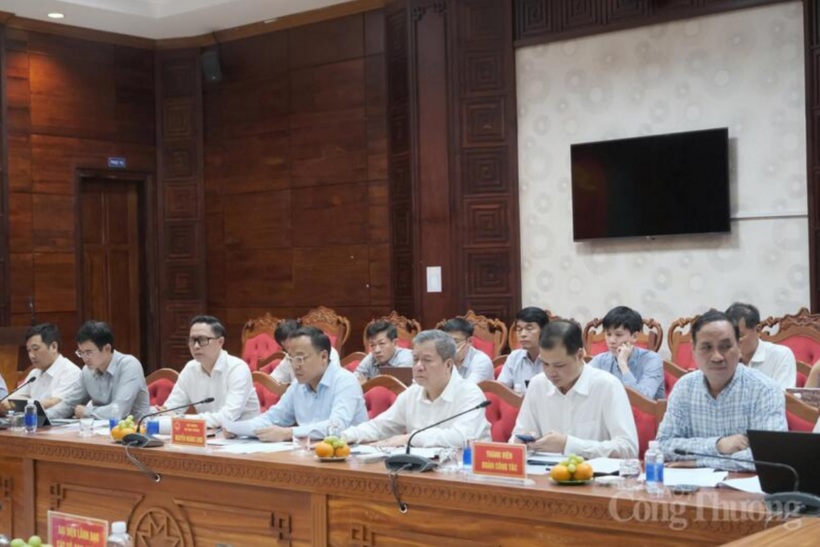
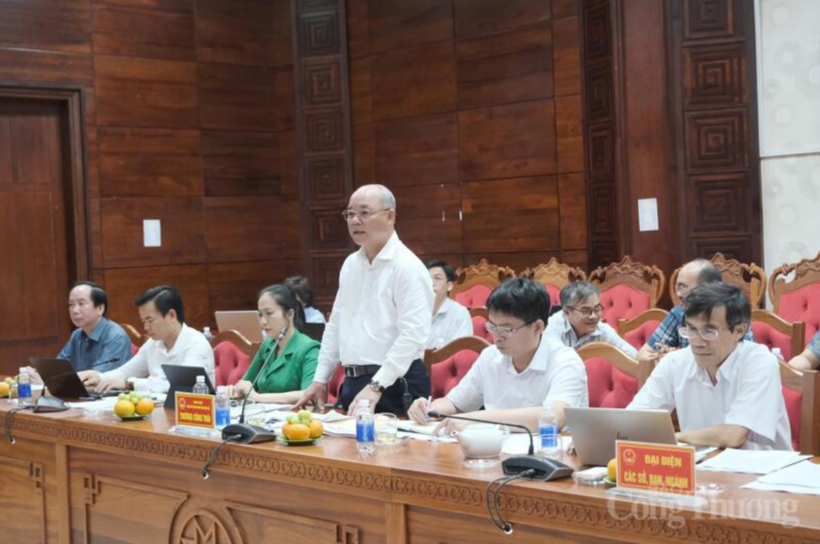
Delegates attend the working session. Photo: Le Son
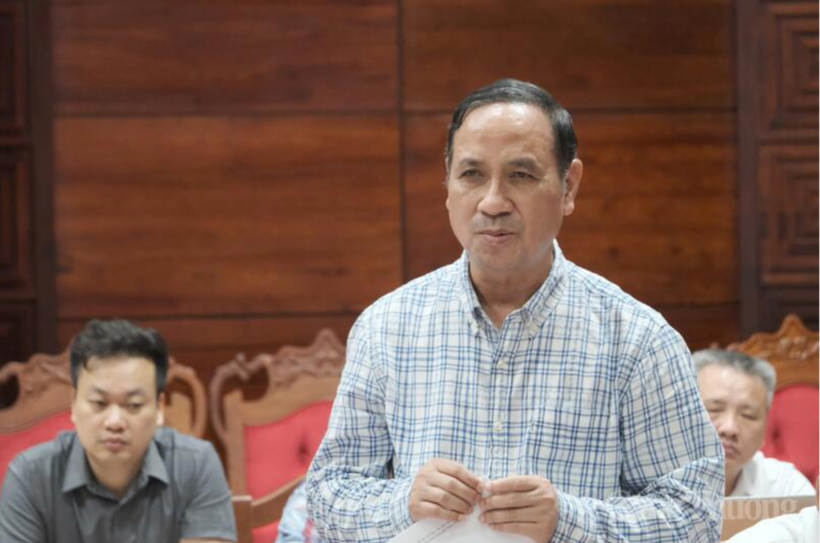
Bui Van Kien, Deputy General Director of the National Power Transmission Corporation, delivers remarks at the working session. Photo: Le Son
At the meeting, Dak Lak Vice Chairman Truong Cong Thai affirmed that the province would mobilize all resources to accelerate site clearance, identifying this as a key bottleneck that must be prioritized for resolution in order to promote both public investment and non-budget investment.
According to the provincial leadership, Dak Lak will settle projects facing obstacles within local authority in order to put them into operation soon, creating conditions for investors that have already disbursed large amounts of capital. At the same time, the province is considering incorporating offshore wind power projects with a scale of more than 2,000MW, oil refining and petrochemical activities, and petroleum storage systems into provincial planning, with a view to gradually developing the area into an energy hub in the future.
Truong Cong Thai, Vice Chairman of the Dak Lak People’s Committee, delivers remarks at the working session. Photo: Le Son
The provincial People’s Committee has also assigned the Department of Industry and Trade to conduct a comprehensive review of related tasks and clearly assign responsibilities to each leader and official, demonstrating strong determination in implementing projects and readiness to capitalize on special mechanisms and policies from the central level. Next week, the locality is expected to submit provincial planning to the provincial People’s Council for approval and report to the provincial Party Committee Standing Board on plans to address existing difficulties and obstacles.
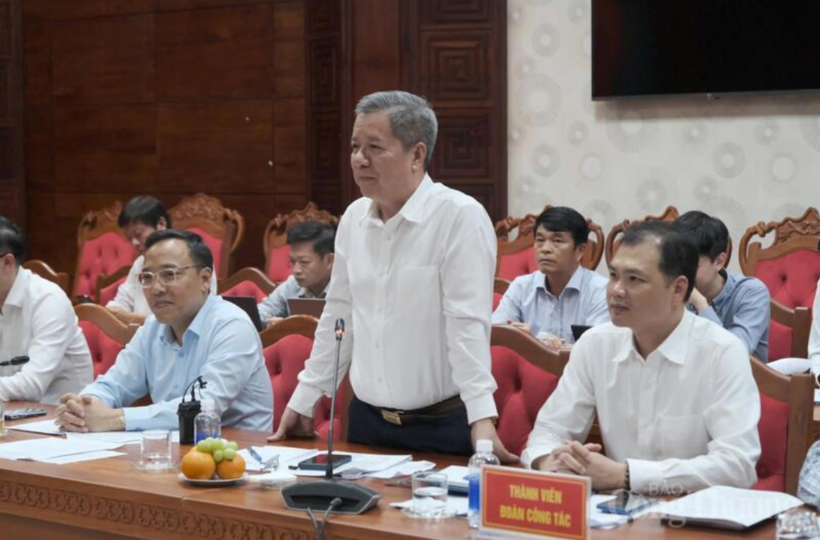
Bui Quoc Huy, Deputy Director of the Electricity Authority under the Ministry of Industry and Trade, delivers remarks at the working session. Photo: Le Son
No power shortages under any circumstances
Concluding the meeting, Deputy Minister Nguyen Hoang Long stressed that the implementation of the national power development plan, including the revised Power Plan VIII, is a task of a “mandatory” nature, directly linked to ensuring energy security, economic security and national security. According to the Deputy Minister, amid rising electricity demand, climate change and increasingly pressing energy transition requirements, power shortages must not be allowed to occur under any scenario, especially in the period from now until 2030.
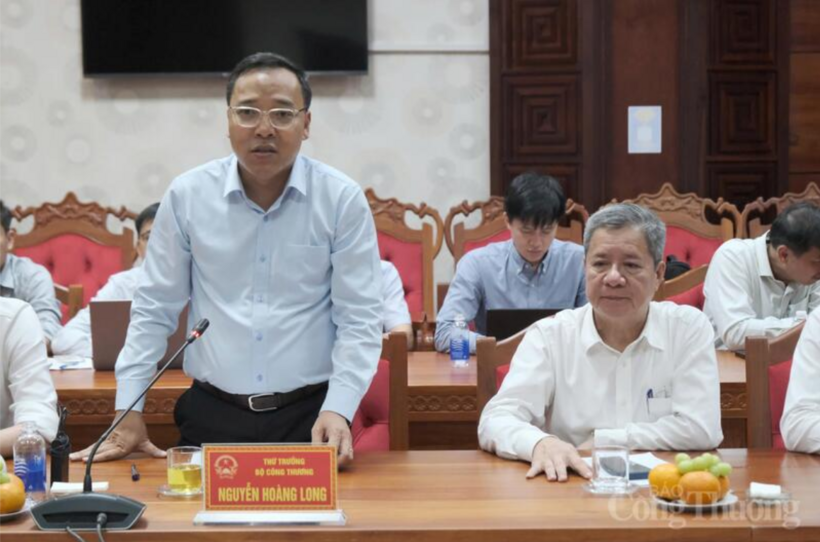
Deputy Minister Nguyen Hoang Long delivers concluding remarks at the working session. Photo: Le Son
Deputy Minister Nguyen Hoang Long said that in recent years, the Politburo, the National Assembly and the Government have issued a number of resolutions and special mechanisms to remove bottlenecks in the power sector. Many of these contain breakthrough provisions, such as stronger decentralization to localities, flexible forms of investor selection, and direct contractor appointment for urgent and key energy projects. However, while mechanisms are already in place, the key issue now lies in implementation, requiring proactiveness, determination and a high sense of responsibility from local authorities.
According to the Deputy Minister, for projects already included in the planning, localities need to quickly complete investment procedures, site clearance and investor selection in accordance with legal regulations, avoiding prolonged delays that could result in lost development opportunities. Adjusting project timelines is necessary and normal, but this must be based on a realistic assessment of investors’ capacity, commitments and implementation ability to ensure the feasibility and overall effectiveness of the planning.
Regarding the transmission system, the Deputy Minister requested relevant units, particularly Vietnam Electricity and the National Power Transmission Corporation, to maximize resources and absolutely avoid delays in substation and transmission line projects. This is a key factor determining the ability to evacuate capacity from renewable energy projects; delays would lead to waste of social resources and undermine investor confidence.
Regarding offshore wind power development, Nguyen Hoang Long said that under current regulations, projects in the 2025 - 2030 period with a total capacity of around 6,000MW fall under the authority of the Prime Minister for investment policy approval, while projects in the 2031 - 2035 period with a scale of around 11,300MW will be decentralized to provincial-level People’s Committees where connection points are located. This places a requirement on localities to proactively prepare infrastructure, land resources, site clearance and significantly improve the investment environment if they wish to attract large-scale projects.
The Deputy Minister cited practical examples, saying that coastal localities such as Quang Ninh and Hai Phong are competing vigorously to attract offshore wind power projects, even offering special support mechanisms. Therefore, localities that move quickly, act decisively and prepare well will have a significant advantage in attracting strategic investors.
According to the Deputy Minister, an offshore wind power project, once implemented, is not simply a power project but can also lead to the formation of an entire economic ecosystem, including industrial parks, data centers, logistics, technical services and even high-tech agriculture. This is an important driver for regional economic growth and sustainable economic restructuring.
Deputy Minister Nguyen Hoang Long affirmed that the Ministry of Industry and Trade will continue to accompany localities, promptly addressing difficulties and obstacles within its authority, while reporting issues beyond its authority to the Government. However, he also noted that amid strengthened inspection and supervision from the central level, if localities fail to ensure implementation progress, projects may be withdrawn or responsibilities reviewed in accordance with regulations.
The Ministry of Industry and Trade’s direct working session with Dak Lak this time is expected to contribute to positive progress in accelerating projects under the revised Power Plan VIII, thereby contributing to the goal of ensuring national energy security.
The Vietnam Institute of Strategy and Policy for Industry and Trade and Lao counterpart review the implementation of a bilateral cooperation agreement.
The Vietnam Institute of Strategy and Policy for Industry and Trade and Lao counterpart review the implementation of a bilateral cooperation agreement.
A seminar in Tokyo connected Vietnamese and Japanese businesses, providing market insights and promoting trade, investment and supply chain cooperation.
Prime Minister Le Minh Hung chairs thematic meeting on Resolution 57, urging breakthrough mechanisms, decentralisation and innovation-led growth reforms in Vietnam.
Amid rising electricity demand and increasingly complex weather conditions, Vietnam is stepping up efforts to ensure a stable power supply for economic growth.
Vietnam has promulgated two new ordinances to improve judicial procedures, accelerate digital transformation and enhance the consistency and accessibility of laws.