Ambassador Nguyen Minh Tam emphasized that Vietnam - Laos trade is on course for USD 10 billion, driven by deepening strategic and economic integration.
Border market fairs in 2026 are expected to promote cultural exchange and strengthen solidarity between the two countries, while efforts continue to reinforce “strategic connectivity” to ensure the sustainable development of Vietnam - Laos relations. The Ministry of Industry and Trade of Vietnam and the Ministry of Industry and Commerce of Laos have maintained close cooperation.
Close coordination between the two ministries plays a pivotal role
Ambassador, could you share an overview of the effectiveness of Vietnam - Laos economic cooperation in recent years, particularly collaboration between the two ministries of industry and trade?
Ambassador Nguyen Minh Tam: In recent years, under the close attention and decisive direction of the senior leaders of the two Parties and countries, Vietnam - Laos economic and trade cooperation has continued to be strengthened and has made positive progress. It has achieved substantive results, deepened steadily, and is gradually becoming a key pillar of the great friendship, special solidarity, comprehensive cooperation, and strategic connectivity between the two nations.
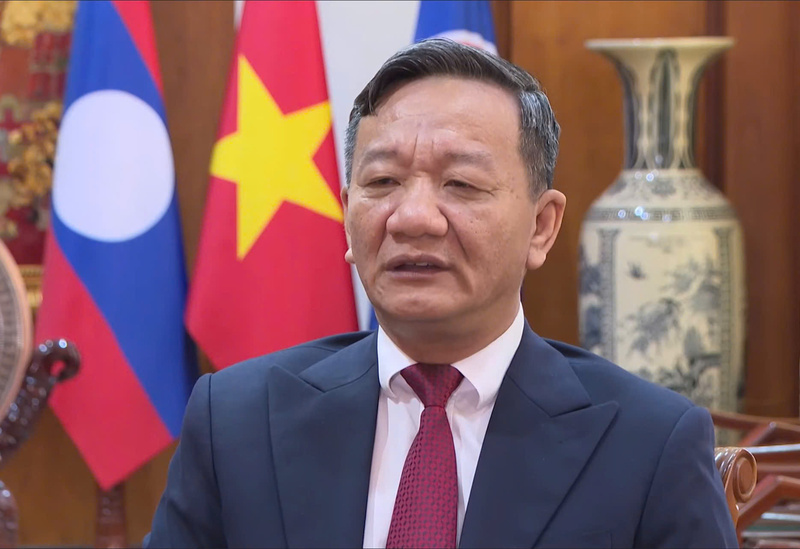
Nguyen Minh Tam, Vietnam’s Ambassador to Laos.
In terms of investment, Laos is currently the largest overseas investment destination for Vietnam, with 288 projects and total registered capital of USD 6.24 billion. Vietnam ranks second among countries and territories investing in Laos.
On trade, bilateral turnover has maintained strong growth in both scale and structure, rising from about USD 1.1 billion in 2015 to USD 2.25 billion in 2024. In 2025, it reached approximately USD 3 billion, up 32.7% year-on-year. The structure of traded goods has become increasingly diverse. Vietnam exports machinery and equipment, construction materials, chemicals, and processed agricultural products to Laos, while importing electricity, coal, fertilizers, minerals, timber, and agricultural products. This reflects not only growing trade volume but also improving quality, aligned with each country’s development needs.
These results owe much to the close coordination between the two ministries. The two sides have jointly improved legal frameworks and implemented mechanisms and policies to promote trade cooperation. They have maintained regular exchanges through intergovernmental committee meetings, investment promotion conferences, bilateral consultations, and specialized working groups, promptly addressing business difficulties.
A key milestone was the signing and implementation of the new Vietnam - Laos Trade Agreement in April 2024, the Border Trade Agreement, and cooperation arrangements in coal and electricity. These have created a favorable legal framework, expanded incentives, and supported stable and sustainable bilateral trade growth.
Energy cooperation remains a highlight. The two ministries have actively coordinated in electricity production, transmission, and trading. Laos has significant power generation potential, while Vietnam’s demand for electricity continues to grow. On the basis of mutual benefit, both sides have expanded cooperation, helping ensure Vietnam’s energy security and providing Laos with stable revenue. Many energy projects invested in by Vietnamese enterprises in Laos, such as Xekaman 3 hydropower, Truong Son wind power, and Savan 1 wind power, have delivered effective results, contributing to local economic development and social welfare.
Trade promotion and business connectivity have also been strengthened. The Ministry of Industry and Trade of Vietnam has organized trade fairs, exhibitions, and Vietnamese product weeks in Laos, creating opportunities to promote goods, expand markets, and enhance business linkages. The annual Vietnam - Laos Trade Fair has supported investment and trade and enabled enterprises to meet and explore cooperation opportunities. Information exchange programs, as well as experience sharing in market management, quality standards, and industrial development, have been implemented regularly, improving policy management capacity in both countries.
Cooperation in trade infrastructure and logistics, particularly in border areas, has also played an important role. Improved customs clearance conditions, extended operating hours, strengthened border management, and enhanced border trade have reduced logistics costs, shortened transport times, and facilitated import–export activities. This has helped bilateral trade maintain stable growth and improved overall economic efficiency.
These achievements clearly demonstrate the effectiveness of close and trustworthy coordination between the two countries, particularly the coordinating role of the two ministries of industry and trade. They also provide a solid foundation for stronger and more sustainable bilateral economic relations, contributing to socio-economic development in both countries and further strengthening the great friendship, special solidarity, comprehensive cooperation, and strategic connectivity between Vietnam and Laos.
Diversifying trade promotion activities
Given such potential, what trade promotion activities have been implemented to deepen bilateral trade? How do you assess their effectiveness in strengthening economic cooperation in the new context?
Ambassador Nguyen Minh Tam: Vietnam - Laos trade cooperation has a tradition spanning more than 60 years, built on the close and enduring ties carefully nurtured by the two Parties, governments, and peoples. Both countries possess significant potential to expand trade and investment cooperation, creating broad opportunities for businesses to strengthen linkages, explore markets, and pursue sustainable, long-term development.
In recent years, Vietnam and Laos have implemented numerous trade promotion activities at various levels and in diverse forms, helping deepen bilateral economic, investment, and trade cooperation.
First, in implementing bilateral agreements and commitments, the two governments regularly organize investment and trade promotion events such as conferences, seminars, trade fairs, and exhibitions. These events allow businesses to promote products, connect with partners, expand distribution networks, and strengthen economic cooperation.
Notable examples include annual investment promotion conferences chaired by the prime ministers of both countries on the sidelines of intergovernmental committee meetings; the annual Vietnam - Laos Trade Fair held in Vientiane since 2007; the Vietnam - Laos business connectivity and product promotion fair organized by the two defense ministries in Vientiane in November 2025; and the 13th Vietnam - Laos Border Trade Development Conference held in Quang Ninh Province on November 7, 2025.
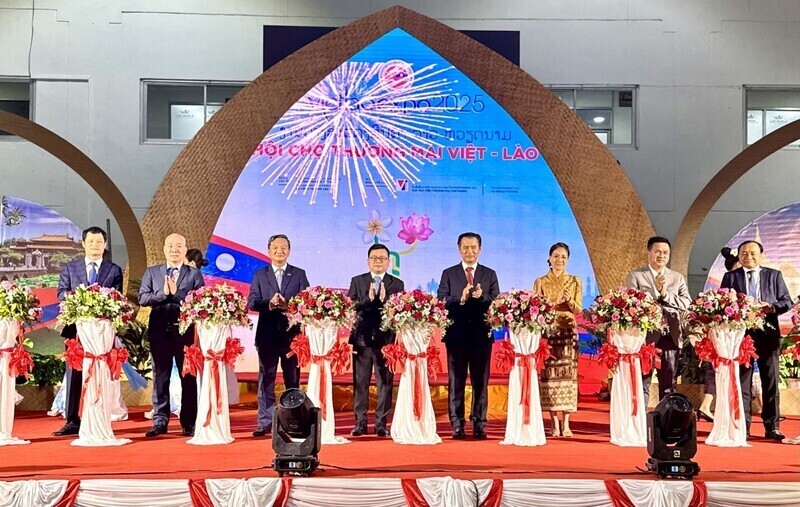
Vietnam - Laos Trade Fair 2025 held in July 2025. Photo: VGP
These trade promotion events have attracted hundreds of enterprises and a wide range of products. They have enabled businesses to showcase agricultural products, processed foods, pharmaceuticals, consumer goods, construction materials, and industrial products, while also negotiating and signing cooperation agreements.
Investment promotion forums and economic dialogues have drawn policymakers, government representatives, and business leaders, providing opportunities to address enterprise concerns and improve the investment climate. Many issues related to border infrastructure, customs procedures, and cross-border management have been effectively resolved, facilitating goods circulation, particularly in border provinces that account for a significant share of bilateral trade.
Second, as Vietnam’s representative mission in Laos, the Vietnamese Embassy in Laos, together with trade and investment promotion offices, has closely coordinated with ministries, agencies, and local authorities in both countries to support businesses in accessing market information, policies, and partners. Numerous activities have connected enterprises, introduced cooperation opportunities, and helped resolve difficulties for Vietnamese businesses operating in Laos. Lao enterprises and businesses from the Vietnamese community have also been supported in accessing the Vietnamese market more deeply.
Third, the two countries have reviewed, updated, and implemented bilateral economic, trade, and investment agreements, improving the business environment and strengthening the legal framework. Simplified procedures, enhanced policy coordination, and business support have helped bilateral trade grow rapidly and steadily.
Vietnam - Laos trade targets USD 10 billion
Despite progress, many believe economic cooperation still has untapped potential. What are the main bottlenecks, and what solutions will help achieve the target of USD 5 billion and eventually USD 10 billion in bilateral trade, as agreed during the December 2025 meeting between General Secretary To Lam and Sonexay Siphandone?
Ambassador Nguyen Minh Tam: Vietnam - Laos economic cooperation has made positive progress in recent years, with bilateral trade reaching about USD 3 billion in 2025. However, given the special political relationship and vast cooperation potential, economic ties have not yet fully matched expectations.
Three major bottlenecks currently affect the speed and quality of bilateral economic growth.
First, transport and logistics connectivity remains incomplete, particularly key north-south and east-west routes linking the two countries and connecting Laos to Vietnam’s seaports. Logistics costs remain high, reducing competitiveness, especially for low- and medium-value goods.
Second, trade flows are not yet organized along value chains and remain fragmented and small-scale. Vietnamese distribution and retail networks in Laos are still limited, and business linkages in production, processing, and consumption remain weak, preventing full utilization of complementary advantages.
Third, border procedures and payment mechanisms, though improved, still lag behind evolving trade requirements, particularly amid the rise of digital and cross-border commerce.
To achieve the USD 10 billion trade target, several breakthrough measures are needed.
Priority should be given to developing modern economic corridors linked to strategic routes such as the Hanoi–Vientiane expressway and the Vung Ang - Vientiane railway, along with industrial clusters and logistics centers along these corridors. Effective use of Vung Ang Port will provide Laos with stable sea access, significantly reducing transport costs and transit time.
Smart border gates and electronic customs systems must also be developed to streamline goods flows, reduce informal costs, and enhance transparency in border trade.
Market approaches must evolve. Vietnamese enterprises need more systematic market research in Laos, stronger branding, expanded distribution networks, and a shift from exporting what they produce to supplying what the market demands.
Encouraging local currency payments through the banking systems of both countries will reduce exchange rate risks and facilitate trade, especially in border and local commerce.
With strong political commitment from the leadership of both countries and coordinated efforts from ministries, local authorities, and businesses, the goal of raising bilateral trade to USD 5 billion and ultimately USD 10 billion is entirely achievable.
Trade and investment promotion activities between Vietnam and Laos have helped promote products, strengthen brand recognition, and enable businesses and consumers in both countries to access new offerings. These activities not only support enterprises in tapping market potential but also build trust, align interests, and implement high-level economic commitments, further deepening Vietnam - Laos economic cooperation.
The FTA Vietnam - EFTA creates new opportunities for Vietnamese businesses while encouraging stronger competitiveness, compliance and sustainable development.
Ministry of Industry and Trade removed more than 9,000 infringing products and blocked over 2,000 online stores in a nationwide crackdown on counterfeit goods.
Sustainable production and consumption are becoming business imperatives as companies invest in greener technologies, circular design and digital transformation.
Vietnam's domestic market remained resilient in the first half of 2026 despite global turbulence, with inflation under control and retail sales continuing to grow.
From 29 June, Vietnam’s domestic carbon market officially entered its pilot phase, marking a transition from emissions management through administrative command-and-control measures to a market-based mechanism.
The FTA Vietnam - EFTA creates new opportunities for Vietnamese businesses while encouraging stronger competitiveness, compliance and sustainable development.
In an interview with the press regarding the Free Trade Agreement (FTA) between Vietnam and the European Free Trade Association (EFTA), Deputy Minister of Industry and Trade Nguyen Sinh Nhat Tan emphasized that the agreement will lay the foundation for economic relations between Vietnam and EFTA to enter a new stage of development.
At a second-quarter 2026 conference, the MoIT urged Vietnam's Trade Offices abroad to strengthen intelligence and help exporters adapt to changes and expand exports.
Vietnam and Israel discuss strengthening VIFTA implementation to expand trade, investment and cooperation, aiming to boost bilateral economic ties and market access.
More than 100 businesses attend the Vietnam-Japan Investment and Trade Cooperation Conference in Osaka to strengthen investment, trade and supply chain connectivity.