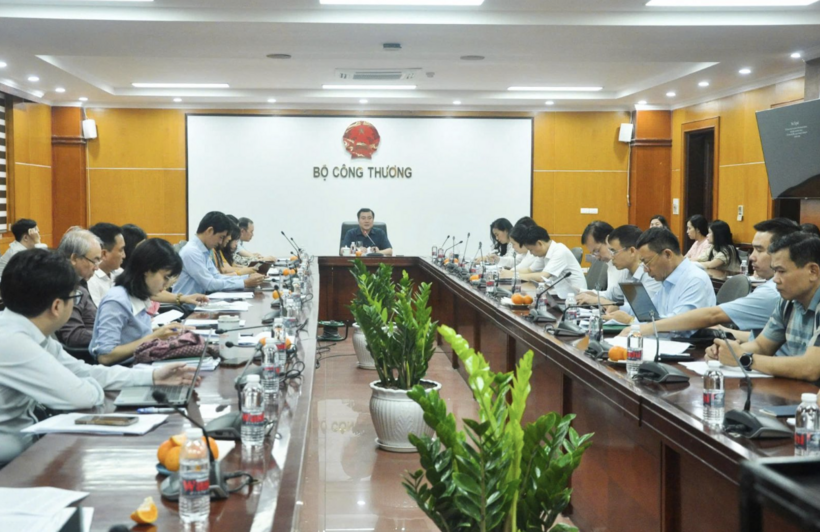
On the morning of April 9, a regular meeting of the Domestic Market Steering Team for the first quarter of 2026 was held in Hanoi. The meeting was chaired by Deputy Minister of Industry and Trade Nguyen Sinh Nhat Tan, with the participation of members of the Domestic Market Steering Team.
Domestic market under significant pressure
Reporting at the meeting, Le Thi Hong from the Agency for Domestic Market Surveillance and Development noted that the first quarter of 2026 witnessed profound fluctuations in global commodity markets, with the most dominant factor being geopolitical tensions in the Middle East. Iran’s closure of the Strait of Hormuz in early March created an unprecedented shock to the global energy supply chain, triggering widespread repercussions for prices, logistics, and international trade.
Q1 2026 Meeting of the Domestic Market Steering Team
The surge in crude oil prices is a clear illustration. WTI crude exceeded USD 112 per barrel, while Brent crude at one point reached USD 120 per barrel, the highest level in nearly four years, reflecting supply disruptions and mounting market concerns. At the same time, the Russia-Ukraine conflict continues to drag on, disrupting around 40% of Russia’s oil export capacity and further intensifying supply pressures.
Beyond energy, the fertilizer market has also been affected. International urea prices rose by 60-80% compared to pre-conflict levels, and in some markets nearly doubled. The primary reason lies in the Middle East’s significant share in global fertilizer production and transportation, with the Strait of Hormuz serving as a critical artery.
Amid these external shocks, Vietnam’s domestic market in Q1 2026 generally maintained relative stability, particularly during the peak Lunar New Year period.
Goods supply was well-prepared, diverse, and sufficient to meet rising consumer demand. The effective implementation of market stabilization programs, coupled with strengthened inspection and control measures, helped prevent abnormal price fluctuations in the first two months of the year.
However, from early March, the impact of the Middle East tensions began to filter into the domestic market. Rising fuel prices pushed up transportation and input costs, affecting multiple categories including agricultural inputs, construction materials, and consumer goods.
In response, the Ministry of Industry and Trade proactively convened meetings with associations, businesses, and local authorities on March 17, 2026 to assess impacts and propose solutions. Recommendations were subsequently consolidated and submitted to relevant ministries and agencies for coordinated handling. Thanks to timely intervention, the supply of essential goods remained secured by the end of Q1, although prices of some items had increased.
A notable bright spot was the continued recovery in market demand. Total retail sales of goods and consumer service revenue in Q1 reached approximately VND 1,903 trillion, up 10.9% year-on-year, the highest increase in the past three years. Excluding price factors, growth still stood at around 7%, indicating that domestic consumption is gradually becoming a key pillar of economic growth.
Le Thi Hong added that in major localities such as Hanoi, Ho Chi Minh City, and Da Nang, trade and service activities maintained stable growth momentum, with the service sector expanding faster than retail trade.
Local authorities act to stabilize supply
At the meeting, a representative of the Hanoi Department of Industry and Trade stated that preparations for goods supply during the Lunar New Year and early months of the year were implemented early, on a large scale, with participation from numerous distribution enterprises. Total retail sales of goods and consumer service revenue in the city in Q1 reached approximately VND 252 trillion, up 11.2% year-on-year, with retail sales alone exceeding VND 163 trillion, up 10%.
The meeting is chaired by Deputy Minister Nguyen Sinh Nhat Tan.
More importantly, beyond growth figures is the capacity to ensure supply under all circumstances. For sensitive commodities such as petroleum, Hanoi maintains demand at around 150,000 cubic meters per month, supported by a network of over 450 retail outlets and supply primarily sourced from major wholesalers. The city has proactively worked with enterprises to secure continuous supply and prevent disruptions.
In Ho Chi Minh City, the country’s economic engine, the market picture is even more pronounced, with total retail sales and service revenue growing by approximately 13.3% to nearly VND 475 trillion; retail sales alone increased by 14.9%. Purchasing power surged during the Lunar New Year, particularly in food and beverage services (up over 20%), reflecting sustained consumer confidence.
Meanwhile, Da Nang, the economic hub of central Vietnam, also recorded positive trade growth. Total retail sales and consumer service revenue in Q1 exceeded VND 66 trillion, up 16.2% year-on-year, while retail sales rose by as much as 18.3%. A plentiful supply of goods, especially food and foodstuffs, played a key role as a “buffer” in curbing price increases.
Effective policy management
Nguyen Thu Oanh, Head of the Services and Price Statistics Department under the Statistics Office of the Ministry of Finance, assessed that the economic and market landscape in the first three months of the year maintained a positive growth trajectory, reflecting effective governance by the Government, ministries, sectors, and local authorities.
According to Oanh, GDP growth in Q1 2026 reached 7.83% year-on-year, higher than in Q1 2025. This is a noteworthy result amid global economic volatility, demonstrating that Vietnam’s economy has maintained relatively solid stability.
“All three sectors of the economy recorded positive growth. Agriculture, forestry, and fisheries expanded by 3.58%; industry and construction by 8.92%; and services by 8.18%. This reflects balanced development and effective coordination across sectors,” she emphasized.
Specifically, during the first two months of the year, domestic prices remained relatively stable, with fuel prices even trending lower compared to the same period last year, contributing to inflation control.
However, from late February, as global oil prices surged, pressure quickly spilled over into the domestic market. “We are genuinely concerned about price developments in the coming period, especially as global energy prices rise and are transmitted rapidly into the domestic economy,” Oanh said.
Data show that in March 2026 alone, the transportation group rose by 12.85% month-on-month, the highest increase among all categories of goods and services. The sharp rise in fuel prices directly impacted the CPI and spilled over into many other sectors.
In this challenging context, Oanh highly valued the Government’s management role, particularly in the petroleum sector. Fuel price management has been conducted proactively and flexibly, combining tools such as the price stabilization fund and cyclical adjustments, thereby helping to slow the transmission of global prices into the domestic market. As a result, despite strong global price fluctuations, the impact on domestic CPI has been contained, avoiding major shocks to the economy.
Looking ahead, Oanh warned of several factors that may continue to exert pressure on inflation, notably global energy price volatility, with fuel and input costs remaining at elevated levels.
In addition, rising logistics and transportation costs, along with potential adjustments to state-managed service prices such as healthcare, are expected to add further pressure to the overall price level.
“Adjusting public service prices is necessary, but it will directly affect the CPI. Moreover, the recovery of consumption and tourism, as well as accelerated public investment, may also create inflationary pressure in the coming period,” she analyzed.
Nevertheless, she expressed confidence in Vietnam’s ability to keep inflation under control. “With the Government’s experience in policy management and the available tools, we believe inflation can still be kept at an appropriate level. I lean toward a positive scenario, but close monitoring of market developments remains essential,” she stressed.
Addressing the Myanmar - Viet Nam Business Forum, Deputy Prime Minister Nguyen Van Thang said the two sides should expand the space for cooperation and leverage their respective resources to support the self-reliant and resilient development of each country, contributing to the implementation of agreements reached by the senior leaders of the two countries.
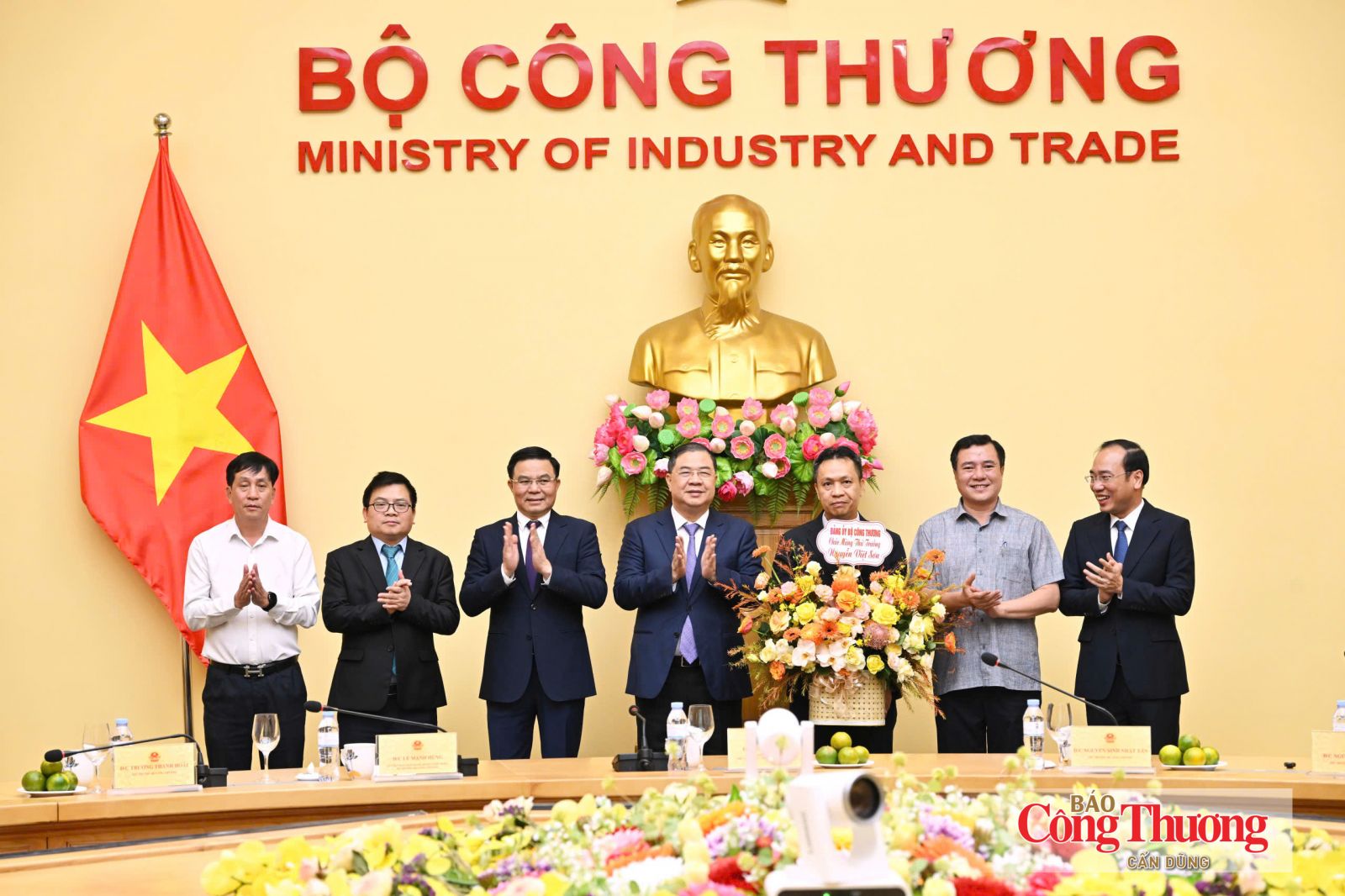
On the afternoon of September 6, at the headquarters of the Ministry of Industry and Trade (MoIT), Politburo member and Standing Deputy Prime Minister Pham Gia Tuc handed over the Prime Minister's decision appointing Nguyen Viet Son as Deputy Minister of Industry and Trade.
The iDEA and TikTok Shop launched the “Beyond Vietnam” initiative to help Vietnamese businesses build digital export capabilities and expand global market access.
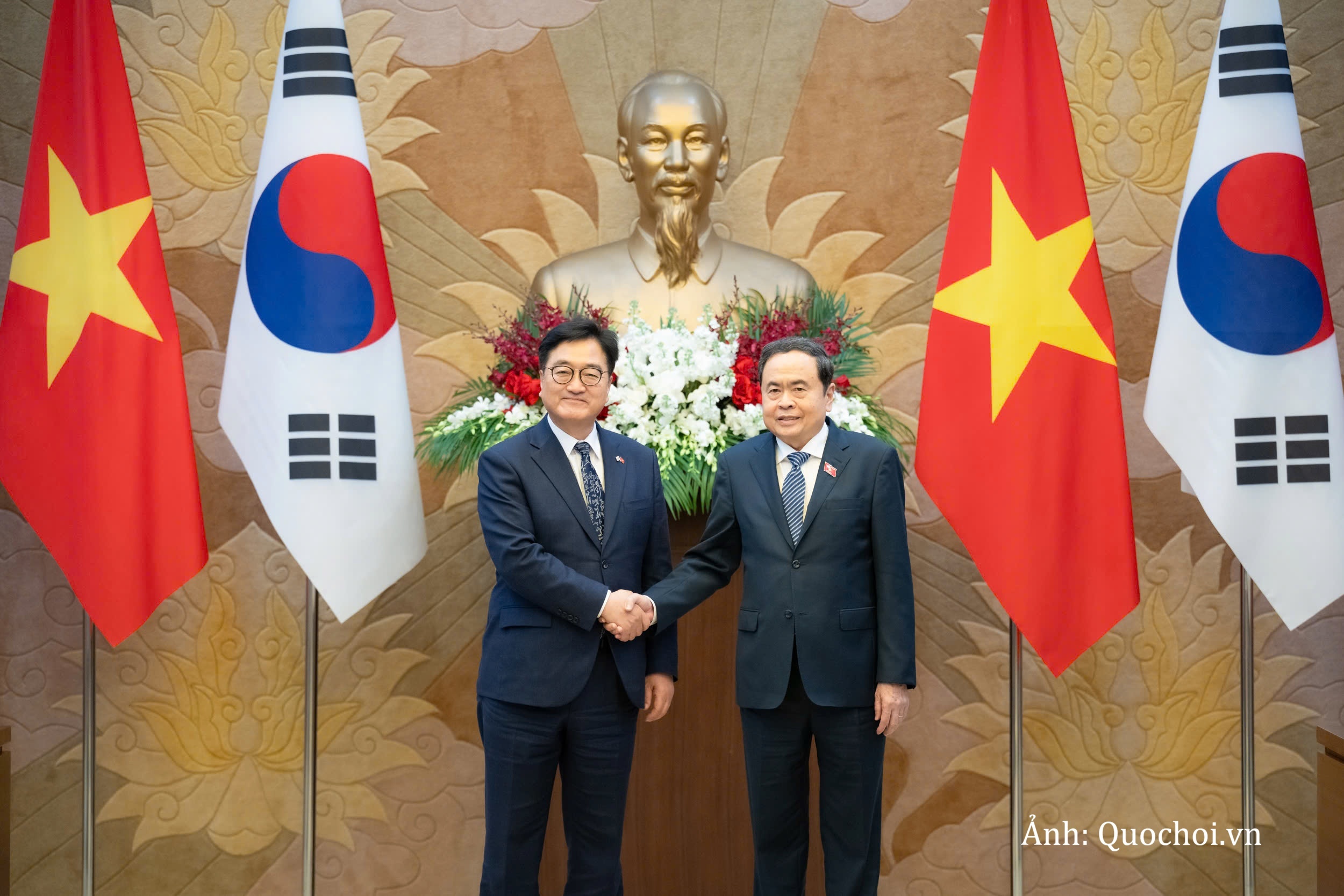
As Viet Nam and the Republic of Korea (RoK) work towards the goal of raising bilateral trade to USD 150 billion, the National Assemblies of the two countries have an important role to play in improving institutions and removing bottlenecks.
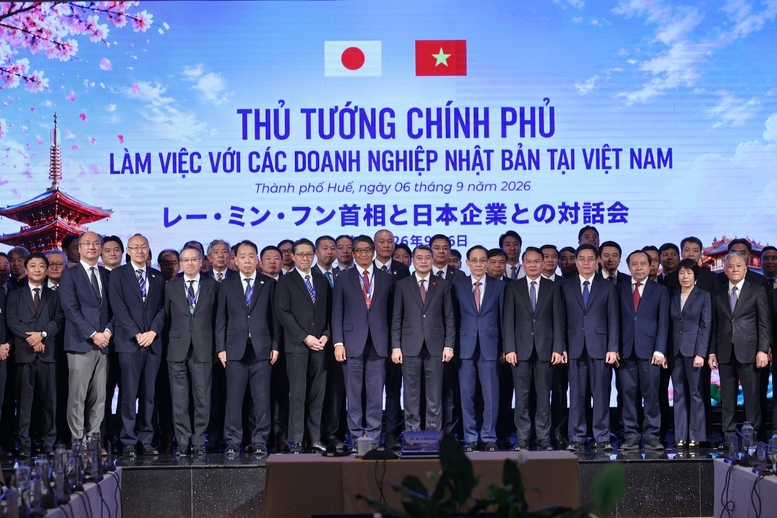
Chairing a meeting with Japanese businesses on the morning of September 6, Prime Minister Le Minh Hung called for Viet Nam - Japan investment ties to shift decisively from a relationship between “investors and investment destinations” toward a partnership for joint development and co-creation, involving joint research, innovation, production, and effective participation in and affirmation of their positions and roles in global value chains.
The iDEA and TikTok Shop launched the “Beyond Vietnam” initiative to help Vietnamese businesses build digital export capabilities and expand global market access.
Tourism Malaysia reaffirmed its commitment to the Vietnamese market at ITE HCMC 2026, promoting the extended Visit Malaysia 2026 - 2027 campaign and expanding tourism cooperation.
Viet Nam Trade Office in Argentina is boosting business links to expand cooperation in timber, minerals and investment, opening new opportunities for firms in both countries.
Vitafoods Asia 2026 in Thailand highlighted the growing presence of Vietnamese health and nutrition products, opening new opportunities for global market expansion.
Viet Nam is addressing key bottlenecks and improving durian quality to boost exports, with the sector targeting USD 4 billion in export turnover this year.