The DHL Global Connectedness Report 2026 forecasts that Vietnam will continue to rank among the economies with the most promising trade growth prospects.
Ample room for growth
Released on March 10, the DHL Global Connectedness Report 2026 highlights that international trade and foreign direct investment (FDI) remain central pillars of Vietnam’s economic development.
Thanks to nearly four decades of persistent economic opening and integration, Vietnam has steadily strengthened its position within the global trading system.
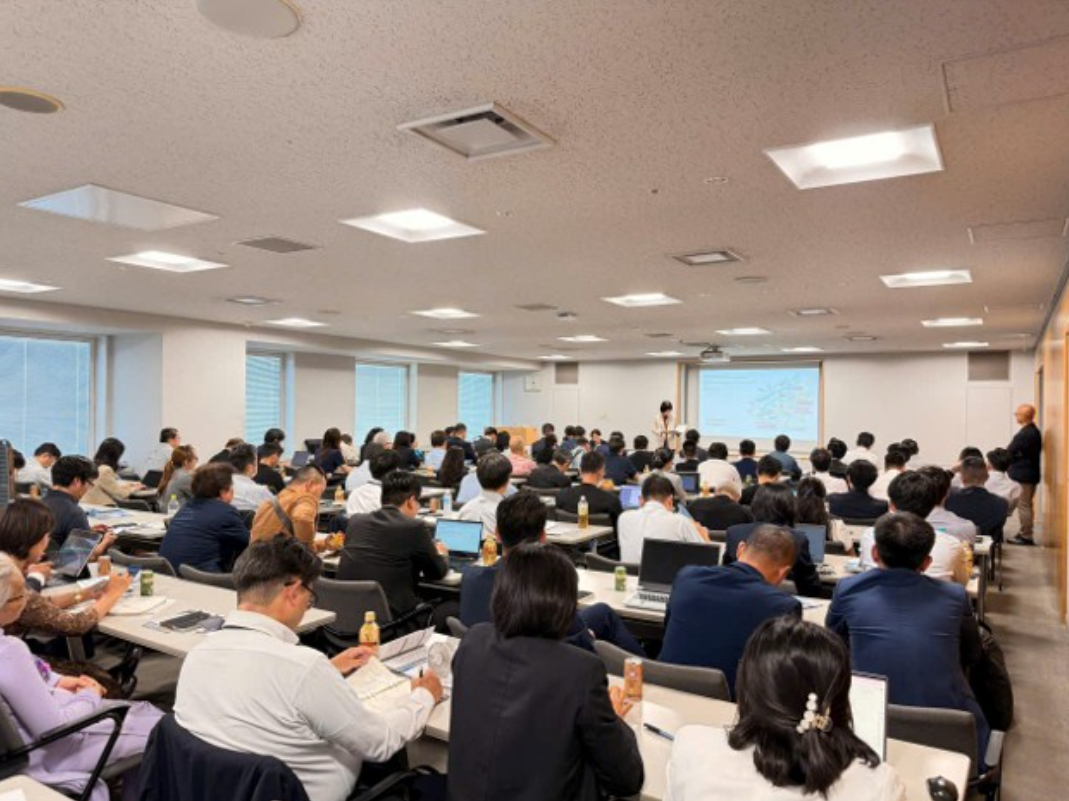
The DHL Global Connectedness Report 2026 was released on March 10. Photo: DHL
According to the report, when Vietnam launched its economic reform program in 1986, GDP per capita stood at just around USD 420 (in 2024 prices), placing the country among the poorest in the world. However, alongside economic reforms and expanding international integration, per capita income rose to approximately USD 4,700 by 2024.
This transformation has been closely tied to the rapid expansion of international trade.
Between 1986 and 2024, Vietnam’s goods exports as a share of GDP surged from 9% to 87%, reflecting the country’s increasingly deep integration into global supply chains.
Vietnam has also actively participated in international economic cooperation frameworks while building an extensive network of free trade agreements. New-generation trade deals such as the Comprehensive and Progressive Agreement for Trans-Pacific Partnership (CPTPP), the Regional Comprehensive Economic Partnership (RCEP), and free trade agreements with the European Union and the Eurasian Economic Union have opened vast market opportunities for Vietnamese goods.
During the 2025 - 2029 period, four Asian economies India, Vietnam, Indonesia, and the Philippines are projected to rank among the world’s top 30 economies in terms of both trade size and growth.
Notably, Vietnam is forecast to rank fifth globally in terms of trade growth scale during this period.
Updated projections released in early 2026 further reinforce the positive outlook. Vietnam is expected to record the world’s fourth-largest absolute increase in goods trade between 2026 and 2030, trailing only China, India, and the US.
In terms of growth pace, Vietnam’s trade volume is projected to expand at a compound annual growth rate of about 6%, ranking 24th globally.
According to Professor Steven A. Altman, Director of the DHL Globalization Initiative and lead author of the Global Connectedness Report 2026, Vietnam’s trade expansion is closely linked to its ongoing economic reforms and openness to international integration.
“Vietnam is among the countries where rapid growth in per capita income has gone hand in hand with trade expansion since the launch of the Doi Moi reforms in 1986,” Altman noted.
Professor Steven A. Altman, Director of the DHL Globalization Initiative. Photo: DHL
He added that Vietnam’s goods exports currently account for the world’s sixth-highest share of GDP, while the number of its export markets ranks fifth globally, underscoring the country’s deep integration into the international trading system.
“Vietnam’s trade growth prospects for the 2026 - 2030 period are particularly noteworthy. The country is projected to achieve the world’s fourth-largest absolute trade growth while maintaining an annual growth rate of around 6%,” Altman said.
New opportunities in global supply chains
Beyond its trade growth outlook, Vietnam has also been recognized as one of the economies that has improved the most in terms of global economic connectedness over the past two decades.
According to the DHL Global Connectedness Report 2026, Vietnam’s global connectedness score rose by 6.5 points between 2001 and 2025, placing the country among the world’s ten most improved economies.
The index measures how strongly economies are connected through four pillars: trade, investment, information flows, and the movement of people.
This improvement reflects Vietnam’s increasingly deep integration into the global economic system from expanding trade and attracting foreign direct investment to participating more deeply in global supply chains.
According to John Pearson, Chief Executive Officer of DHL Express, while the world may appear more polarized than before, fundamental economic connections continue to endure.
“The world may look more fragmented, but it is not truly decoupling. International trade is like a flow of water it finds ways to keep moving even when obstacles or disruptions arise,” Pearson said.
John Pearson, Chief Executive Officer of DHL Express. Photo: Phuong Trang
According to DHL representatives, Vietnam currently possesses several key advantages that could further strengthen its role within global trade networks.
A young workforce, competitive costs, a strategic geographic location, and an improving logistics infrastructure are all important factors.
“Vietnam is a highly promising market, particularly when considering the continued strong growth of FDI inflows. With its geographic advantages and improving logistics infrastructure, Vietnam is well positioned to expand its role in global supply chains,” a DHL representative noted.
According to data from Vietnam’s Ministry of Industry and Trade, with total import-export turnover reaching nearly USD 3.8 trillion during the 2021 - 2025 period, Vietnam has risen into the world’s top 15 trading economies.
This provides an important foundation for the country to pursue its goal of reaching $1 trillion in total trade turnover as early as 2026.
Positive forecasts from international organizations suggest that Vietnam is entering a new phase in its journey of global economic integration. Amid a rapidly evolving global trade landscape, the Vietnamese economy is increasingly asserting its role as a dynamic manufacturing and trading hub, characterized by strong adaptability and substantial room for growth in the coming decade.
The FTA Vietnam - EFTA creates new opportunities for Vietnamese businesses while encouraging stronger competitiveness, compliance and sustainable development.
Ministry of Industry and Trade removed more than 9,000 infringing products and blocked over 2,000 online stores in a nationwide crackdown on counterfeit goods.
Sustainable production and consumption are becoming business imperatives as companies invest in greener technologies, circular design and digital transformation.
Vietnam's domestic market remained resilient in the first half of 2026 despite global turbulence, with inflation under control and retail sales continuing to grow.
From 29 June, Vietnam’s domestic carbon market officially entered its pilot phase, marking a transition from emissions management through administrative command-and-control measures to a market-based mechanism.
The FTA Vietnam - EFTA creates new opportunities for Vietnamese businesses while encouraging stronger competitiveness, compliance and sustainable development.
In an interview with the press regarding the Free Trade Agreement (FTA) between Vietnam and the European Free Trade Association (EFTA), Deputy Minister of Industry and Trade Nguyen Sinh Nhat Tan emphasized that the agreement will lay the foundation for economic relations between Vietnam and EFTA to enter a new stage of development.
At a second-quarter 2026 conference, the MoIT urged Vietnam's Trade Offices abroad to strengthen intelligence and help exporters adapt to changes and expand exports.
Vietnam and Israel discuss strengthening VIFTA implementation to expand trade, investment and cooperation, aiming to boost bilateral economic ties and market access.
More than 100 businesses attend the Vietnam-Japan Investment and Trade Cooperation Conference in Osaka to strengthen investment, trade and supply chain connectivity.