Not only reducing plastic and solid waste, “trash-for-gifts” models also raise public awareness, turning small actions into lasting habits for sustainable living.
From small actions to broader changes in the community
Amid the increasing volume of domestic waste, particularly in major urban areas, the search for solutions that are both practical and accessible to the public has become an urgent requirement. In recent years, many localities have implemented “trash-for-gifts” models, initially delivering positive outcomes in both environmental protection and raising public awareness.
Residents participate in exchanging recyclable waste for plants at an environmental event. Photo: Green Life
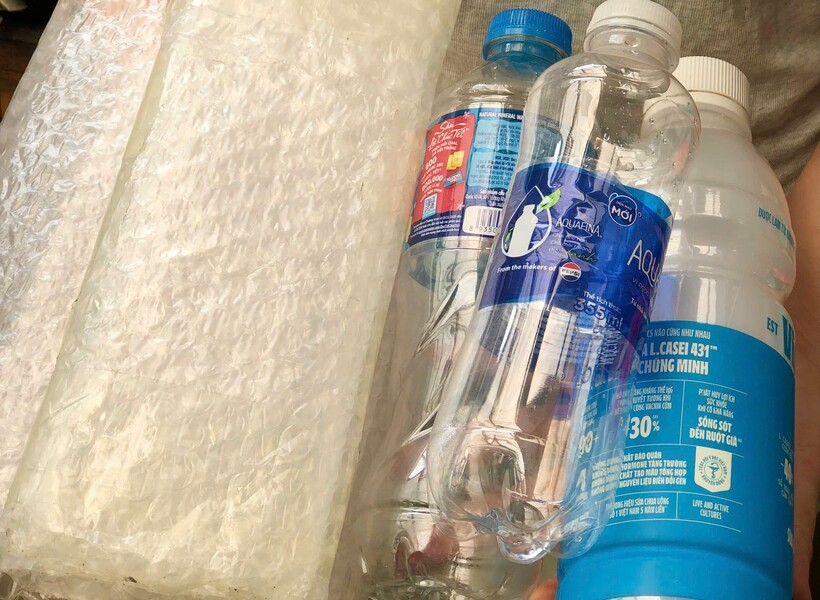
At collection points, residents can bring items such as plastic bottles, paper, metal and used packaging to exchange for plants or environmentally friendly products. This approach not only creates incentives for participation through small rewards but also helps people better understand the value of waste sorting at source.
Notably, many models have expanded their scope to include hard-to-handle waste, including used batteries, a type of hazardous waste if not properly collected and treated. “exchange batteries for plants” programmes have therefore attracted significant attention from the public, especially young people in urban areas.
In Hanoi, the Green Life project is one of the pioneering groups implementing the “trash-for-gifts” model in a structured manner, combining on-site activities with communication efforts to raise awareness. With the participation of a large number of students, the project aims to foster waste-sorting habits and promote a sustainable lifestyle within the community.
Established in 2018, Green Life has become one of the most active environmental initiatives in Hanoi. In addition to waste collection activities, the project maintains regular environmental events every weekend, making it easier for residents to access and participate.
According to information provided by the project, after more than five years of operation, Green Life has organized over 450 environmental events, collected more than 600 tonnes of waste and attracted hundreds of thousands of participants. These figures demonstrate the significant reach of the model in mobilizing community involvement in environmental protection.
Information on activity schedules is publicly announced on the project’s social media platforms, enabling residents to proactively arrange their time and gradually develop the habit of participating in environmental activities. Programmes such as “bringing plants to the streets” or “exchange plastic for plants” have encouraged people to bring recyclable waste in exchange for greenery, thereby improving living spaces and raising awareness of reducing plastic waste.
Programmes such as “bringing plants to the streets” or “exchange plastic for plants” have encouraged people to bring recyclable waste in exchange for greenery, thereby improving living spaces and raising awareness of reducing plastic waste. Photo: Green Life.
At these events, with around 3kg of waste such as plastic bottles, paper or metal, participants can exchange for plants such as succulents or cacti. Volunteers directly guide residents in initial waste sorting before transferring it to appropriate treatment units. As a result, waste is not only collected but also properly sorted and recycled by material type.
Beyond field activities, the project has also strengthened communication on social media, providing knowledge on waste sorting and recycling, particularly plastic waste. The combination of communication and hands-on experience has made environmental protection messages more accessible and relatable to the public, especially the younger generation.
A representative of Green Life said that environmental events are held regularly on weekends and schedules are announced at the beginning of each month on online platforms, allowing residents to proactively follow and gradually form the habit of participating in environmental activities. At these events, the project also introduces recycled, eco-friendly products and plants to generate funding for its operations.
From small actions such as bringing a few plastic bottles or a bag of used paper to collection points, many people have gradually formed the habit of sorting waste in their daily lives. This is considered an important starting point in changing consumption behavior, reducing plastic waste and moving toward a sustainable lifestyle within the community.
Spreading awareness: A foundation for sustainable change
While “exchange plastic for plants” activities contribute to reducing domestic waste, particularly plastic waste, “exchange batteries for plants” programmes focus on collecting and properly treating hazardous waste. This combination reflects a trend toward expanding environmental models in a more comprehensive manner, covering various types of waste in daily life.
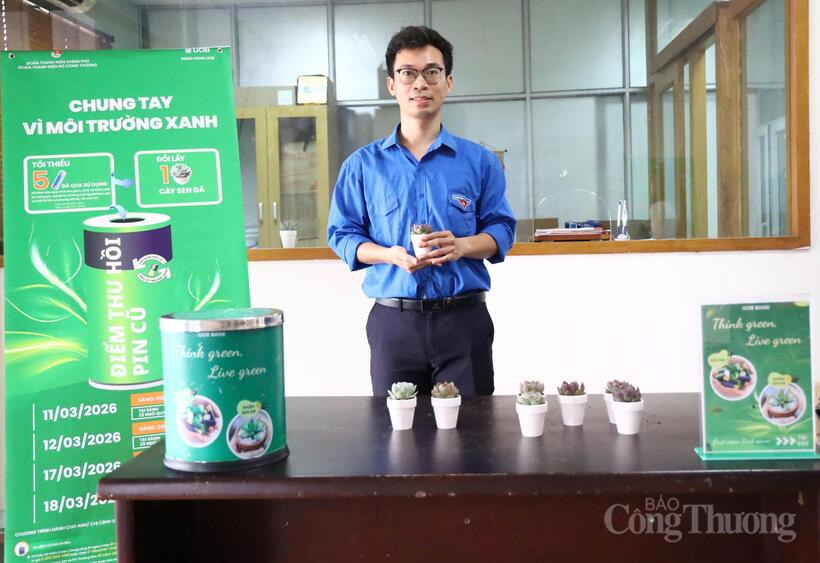
In March 2026, the Ho Chi Minh Communist Youth Union of the Ministry of Industry and Trade organized the “exchange used batteries for green plants” programme at its affiliated units. Accordingly, thousands of used batteries were exchanged. The activity also helped raise awareness among youth union members, employees and students within the industry.
Accordingly, the programme not only contributes to the proper collection and treatment of hazardous waste but also creates opportunities for participants to better understand the impacts of used batteries on the environment and human health. Directly bringing used batteries to exchange for plants has helped transform awareness into concrete action, gradually forming habits of sorting and properly handling hazardous waste in daily life.
Hoang Tuan Anh, a youth union member of the Youth Union of the National Research Institute Of Mechanical Engineering, said that the “exchange batteries for plants” model is a practical activity that helps raise environmental awareness among staff and employees. According to him, the programme has received positive responses, with many participants joining enthusiastically, reflecting growing concern for the classification and treatment of hazardous waste.
Hoang Tuan Anh, a youth union member of the Youth Union of the National Research Institute Of Mechanical Engineering, said that the “exchange batteries for plants” model is a practical activity that helps raise environmental awareness among staff and employees. Photo: Le Van.
“This is a very meaningful activity, helping people develop the habit of sorting used batteries instead of disposing of them into the environment. It not only contributes to environmental protection but also promotes a more eco-friendly lifestyle,” Hoang Tuan Anh said.
Expressing expectations for long-term effectiveness, he noted that the programme should be maintained once or twice a year in order to gradually turn waste classification, especially hazardous waste, into a daily habit. “If maintained regularly, such activities will contribute to building a greener, cleaner environment and create positive impacts on the community,” he added.
From simple and accessible models such as “trash-for-gifts”, environmental awareness is gradually spreading throughout the community. When waste sorting at source, reducing plastic waste and properly handling solid and hazardous waste become regular practices, this represents not only a change in daily habits but also a significant shift in public awareness.
On October 13, the Agency of Foreign Trade under the Ministry of Industry and Trade (MoIT) held a conference in Dong Thap province to disseminate Government Decree No.365/2026/ND-CP dated September 23, 2026, on rice export and import business, and Circular No.65/2026/TT-BCT dated October 1, 2026, issued by the Minister of Industry and Trade, detailing certain provisions and measures for implementing Decree No.365/2026/ND-CP.
On October 13, Deputy Minister of Industry and Trade Luong Hoang Thai held a working session with MEDEF International, a French business organization, and representatives of French corporations operating in various sectors, including energy, industry, transport, construction and infrastructure development, food and beverages, and services, at the Ministry of Industry and Trade's headquarters.
On October 14, Deputy Minister of Industry and Trade Luong Hoang Thai received and held a working session with a delegation from Hamburg, Germany, led by the city's First Mayor Peter Tschentscher at the Ministry of Industry and Trade's headquarters.
The Copyright Office is working closely with relevant agencies to develop plans for inspections and enforcement action against copyright and related rights infringements in the digital environment.
Viet Nam’s cultural industries are poised for growth as development targets become clearer, the digital content market expands and technology creates new ways.
Viet Nam, the EU, and Germany have launched a forestry project to restore and sustainably manage natural forests, advancing green growth and climate resilience.
From 29 June, Vietnam’s domestic carbon market officially entered its pilot phase, marking a transition from emissions management through administrative command-and-control measures to a market-based mechanism.