EU digital catch rules: Key notes for seafood exporters
19:05 | 23/03/2025 14:47 | 24/02/2026Trade
The EU rolls out CATCH and revised catch certificates from 2026, adding mandatory digital submission and new control requirements for seafood exports.


A key driver of growth
The reports on the documents submitted to the 14th National Party Congress clearly stated that science, technology, innovation and digital transformation must truly become the key drivers of growth; serve as the foundation for enhancing productivity and competitiveness; function as tools to improve governance efficiency and national self-reliance while safeguarding national defense and security; and act as means to create new business models, new jobs and new sources of added value.

At the 14th National Party Congress.
Priority is placed on developing strategic technologies and accelerating a comprehensive national digital transformation. This begins with improving digital infrastructure and digital data, building a digital government, digital economy, digital society and digital citizens; ensuring cybersecurity and data safety; promoting application and widespread digital skills, narrowing the digital divide; and creating an enabling environment for experimentation, innovation encouragement and the protection of creativity.
An innovation ecosystem linked with enterprises, research institutes and universities should be developed, with science and technology integrated into every sector, every field, every locality and every enterprise.
To achieve breakthroughs in technology, the process must start with people and institutions. Subjectivism and voluntarism must be avoided. Appropriate mechanisms are required, including policies to attract and value talent; product-based evaluation mechanisms; flexible financial arrangements; public–private partnership mechanisms; and mechanisms for commissioning scientific tasks aligned with development needs.
Science and technology must be brought into daily life, serving the people, raising labour productivity, reducing social costs and promoting economic growth.
A strong shift in development thinking
Sharing with reporters from the Newspaper of Industry and Trade, National Assembly Deputy Truong Xuan Cu, representing the Hanoi delegation, said that the Party’s identification of science, technology, innovation and digital transformation as the central driving forces of development marks a highly significant advance in the country’s development thinking.
This is not merely a continuation of previous guidelines, but an elevation in awareness and action requirements, at a time when the traditional growth model has gradually revealed its limitations.

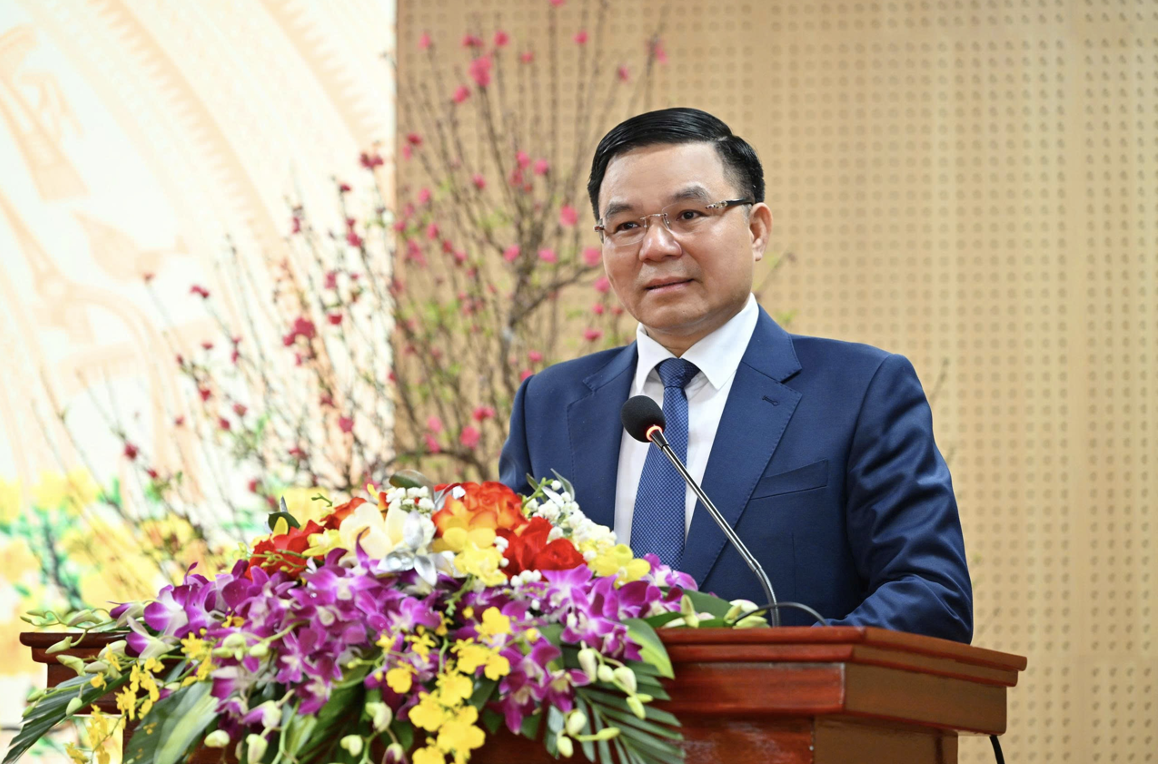
National Assembly deputy Truong Xuan Cu, representing the Hanoi delegation.
The orientation not only creates strong confidence and motivation for the scientific community and businesses, but also affirms the political determination to make science, technology and digital transformation genuine pillars of rapid and sustainable development in the new stage.
According to Truong Xuan Cu, amid deepening international integration and increasingly intense strategic competition, without relying on science and technology, Vietnam will struggle to improve labour productivity, enhance the competitiveness of the economy, and achieve breakthrough development.
Therefore, science and technology should be regarded as a direct resource for growth, closely linked with production, business activities and governance, rather than remaining confined to research or slogans.
The development of science and technology, digital transformation and innovation also opens up new development space for the economy, particularly through the formation of new business models, new industries and new jobs. This holds great significance for economic restructuring, improving growth quality and increasing domestic value added.
More importantly, mastering science and technology is directly linked to national self-reliance and self-strengthening, thereby consolidating internal strength and enhancing the long-term competitiveness of the economy. In practice, countries that treat science, technology and innovation as development drivers have all achieved strong advances.
“In Vietnam, many technology enterprises and research organisations have proactively grasped trends and gradually mastered technologies across various sectors and fields, thereby affirming that Vietnamese intellect is fully capable of accessing and conquering modern technological domains,” Truong Xuan Cu stressed.
Referring to the reports on the documents submitted to the 14th National Party Congress, which state that “to achieve technological breakthroughs, it is essential to start with people and institutions, and to have mechanisms to attract and value talent,” Truong Xuan Cu said that people, particularly high-quality science and technology human resources, are the decisive factor in creativity, technological mastery and development.
For talents to fully realise their potential, it is crucial to establish appropriate, substantive and competitive mechanisms, ranging from working environments and remuneration to autonomy in research and application deployment.
Building effective mechanisms to attract and value talent not only helps draw and retain outstanding scientists, but also creates strong momentum for innovation, thereby generating technological breakthroughs and enhancing national self-reliance and the long-term competitiveness of the economy.
Previously, Resolution No. 57-NQ/TW of the Politburo also emphasised that the development of science, technology, innovation and digital transformation has become a decisive factor in national development, a prerequisite and the best opportunity for Vietnam to achieve prosperity and strength in the new era - the era of the nation’s rise.
19:05 | 23/03/2025 14:47 | 24/02/2026Trade

19:05 | 23/03/2025 14:47 | 24/02/2026Cooperation

19:05 | 23/03/2025 14:45 | 24/02/2026Trade
19:05 | 23/03/2025 14:44 | 24/02/2026News and Events

19:05 | 23/03/2025 20:40 | 23/02/2026Trade