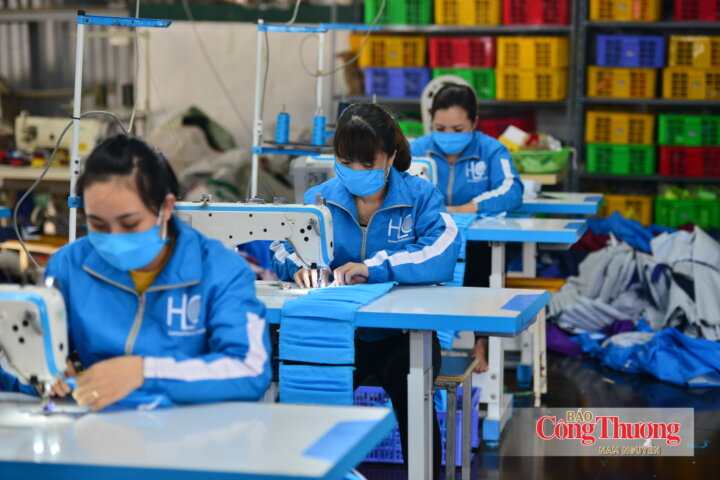
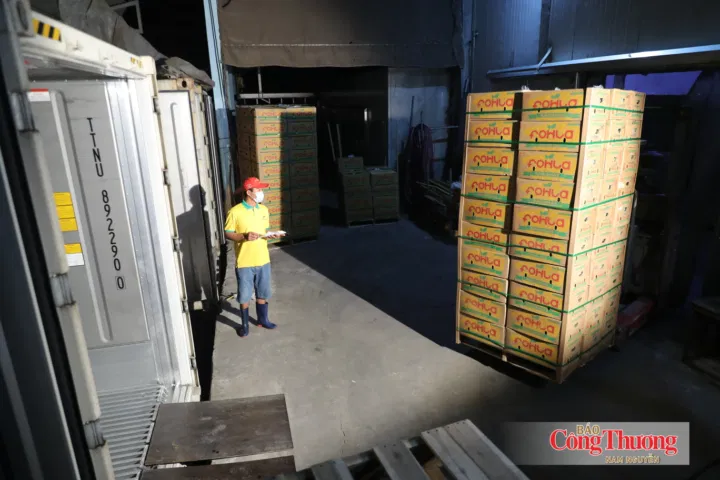
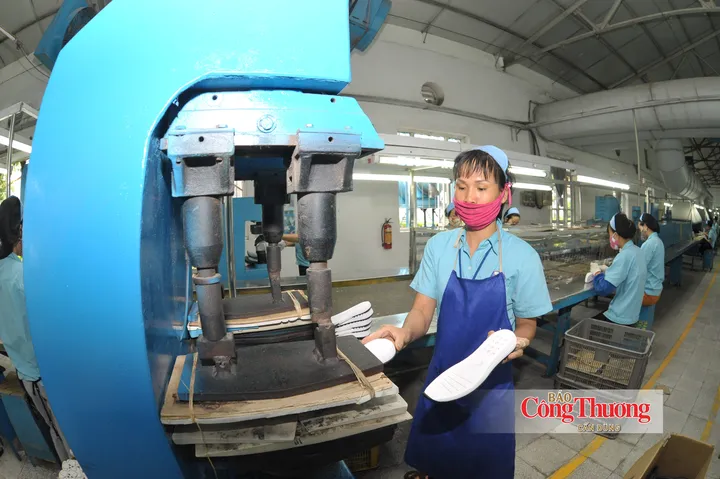
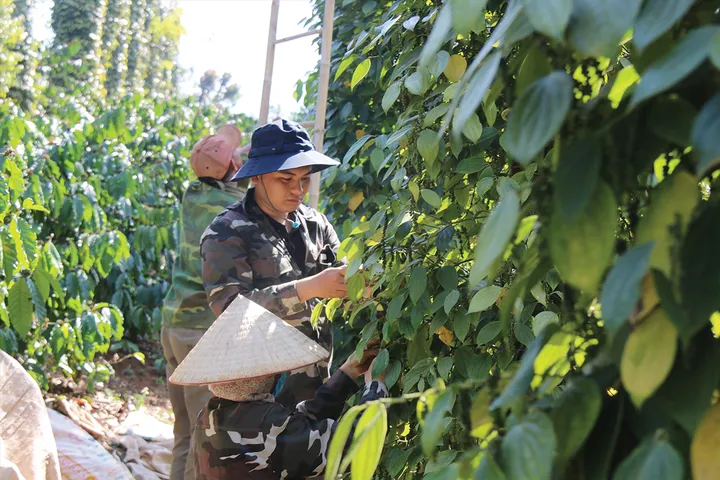
Mexico has imposed additional import tariffs of 5–35% on 185 tariff lines. However, Vietnamese goods can still benefit from preferential treatment under the CPTPP. To capitalise on this advantage, businesses are advised to fully understand rules of origin, control raw material sources and establish transparent traceability systems.
Tariff advantages create more room for Vietnamese exports
Mexico is emerging as a promising market for Vietnamese goods in Latin America. Since the Comprehensive and Progressive Agreement for Trans-Pacific Partnership (CPTPP) took effect, trade relations between the two countries have gained fresh momentum, particularly through tariff preferences for goods meeting the agreement's rules of origin.
However, Mexico's trade policy is undergoing adjustments. The country has announced a new presidential decree, effective from April 24, 2026, imposing additional import tariffs of 5–35% on 185 tariff lines. Notably, the new policy maintains exemptions for goods originating from countries that have signed free trade agreements (FTAs) with Mexico. Products fully meeting the relevant rules of origin will continue to enjoy preferential treatment under existing commitments.
For Viet Nam, this represents an important advantage, as both countries are CPTPP members. While goods from countries without an FTA with Mexico are subject to additional tariffs, Vietnamese exports have an opportunity to retain preferential tariff treatment provided they comply with origin requirements.
According to Ngo Chung Khanh, Deputy Director-General of the Agency for Foreign Market Development and Multilateral Trade under the Ministry of Industry and Trade, Mexico's most-favoured-nation (MFN) tariffs on many imported products, including agricultural goods, footwear and textiles and garments, are relatively high. Meanwhile, Vietnamese goods enjoy preferential tariffs under the CPTPP. By the seventh year of the agreement's implementation, many Vietnamese export products to Mexico have become eligible for zero or very low tariff rates.
Ngo Chung Khanh, Deputy Director-General of the Agency for Foreign Market Development and Multilateral Trade under the Ministry of Industry and Trade.
Thus, the advantage for Vietnamese goods lies not only in the preferential tariffs committed under the CPTPP but also in the ability to avoid the additional import duties Mexico applies to goods from countries without FTAs.
As Mexico prepared to introduce its new tariff policy, the Ministry of Industry and Trade proactively informed provincial and municipal Departments of Industry and Trade and business associations so that enterprises could study the changes and prepare to capitalise on the opportunities.
In terms of product structure, textiles and garments, footwear and wooden products are among Viet Nam's strong export sectors and warrant particular attention. These are also product groups covered by Mexico's new tariff measures. For the spice sector, a tariff differential of around 10% can also have a significant impact on competitiveness.
Controlling origin and tracing products back to raw material areas
Tariff preferences only deliver their intended benefits when goods comply with CPTPP rules of origin. According to Ngo Chung Khanh, businesses must first accurately determine the Harmonised System (HS) code of their products to identify the applicable tariff rates. They should then examine the specific rules of origin for each product and assess whether their current production processes can meet the requirements. Origin criteria vary across product groups. For textiles and garments, for example, businesses need to pay particular attention to the yarn-forward rule.
For the Mexican market, Ngo Chung Khanh also advised textile and garment businesses to study the bilateral letters exchanged between the two sides. These documents establish coordination mechanisms for information provision, the management of textile and garment products and several related matters. Exporters are responsible for providing business data and information. Failure to fulfil these obligations may raise concerns on the Mexican side and lead to measures affecting trade activities.
Another important requirement is to establish a reliable system for record-keeping and traceability. Origin verification should not stop at direct suppliers but needs to extend further down the supply chain, covering second-, third- and even fourth-tier suppliers.
This is also an issue to which Nguyen Thi Huyen, General Director of Vinasamex Cinnamon and Star Anise Manufacturing and Export Joint Stock Company, has paid particular attention in developing the company's cinnamon and star anise production and export chains.
Nguyen Thi Huyen, General Director of Vinasamex Cinnamon and Star Anise Manufacturing and Export Joint Stock Company.
According to the Vinasamex representative, since 2013, the company has focused on developing a value chain-based business model, with traceability as a key objective to meet the requirements of high-end markets. It currently works directly with 4,007 farming households, manages 7,700 hectares of raw material areas and holds approximately 17 international certifications, including organic certifications for markets such as the United States under USDA standards, Europe, Japan, Switzerland and the Republic of Korea.
However, establishing a traceability system is not something that can be accomplished in a short period. It has been a process spanning more than 10 years. Vinasamex began by working directly with farmers and coordinating with local authorities to raise awareness and encourage their participation in the supply chain.
Each year, the company organises around two to three training courses for farming households, selecting those with stronger knowledge and skills to become group leaders and serve as internal control officers within the value chain.
Data on all 4,007 farming households has been incorporated into a farm data management system, recording cultivated land areas, the number of plants, annual harvest volumes and activities taking place in growing areas.
When farmers sell raw materials to the company, another layer of control is implemented to determine whether the materials have actually been harvested from the registered growing areas and whether their quality meets the required standards. Parameters such as pesticide residues, chemical content and active ingredients in products are all checked. Each production stage at the factory is also documented, creating a closed-loop control system.
When products are sold to customers, each shipment is assigned a unique identification code. Using this code, the company can trace production dates, identify the number of farming households supplying the raw materials and determine the specific plots of land from which the products were harvested.
Developing this system has also involved considerable challenges. According to Nguyen Thi Huyen, around 80–85% of the farmers in the company's supply chain are from ethnic minority communities, and many are unable to read or write. Maintaining paper records is therefore difficult, and documents may be incomplete or lost, creating risks when foreign experts conduct assessments and request supporting records.
To address these challenges, the company has applied enterprise resource planning (ERP) technology to origin traceability. Around five to six years ago, Vinasamex began using CheckVN software and also received support from the Ministry of Agriculture during implementation. The software was customised to meet the company's specific system requirements and operational needs.
Notably, instead of limiting traceability to first-tier suppliers, Vinasamex requires traceability to extend to fourth-tier suppliers, thereby helping control potential risks arising at deeper levels of the supply chain.
From origin compliance to securing export orders
Having tariff advantages and meeting rules of origin are important conditions, but they are not sufficient to guarantee that businesses can secure orders in Mexico. Actual business operations require enterprises to understand the market, identify the right customers and accurately assess their supply capacity.
Drawing on Vinasamex's experience, Nguyen Thi Huyen said businesses should start by identifying the HS codes of their products. This provides the basis for accessing information on markets, tariffs, competitors and import requirements.
Businesses can use international websites such as the International Trade Centre (ITC) to research markets. Through ITC, enterprises can look up Mexico's annual import volumes for individual products, average import prices, supplying countries and the position of Vietnamese goods among suppliers. In addition, businesses need to identify the needs and characteristics of different customer groups to assess whether Vietnamese products can meet their requirements.
Supply capacity is another important issue. According to the Vinasamex representative, some businesses manage to identify a market and approach potential customers but lack the capacity to fulfil orders once they are secured. Even when they can meet the required volumes, businesses may still lose orders if they fail to satisfy specific quality standards or customer certification requirements.
Therefore, alongside researching markets and tariff preferences, enterprises must make advance preparations in terms of output, quality, certifications and their ability to control raw material sources.
Transparent origin documentation and effective raw material control will help businesses make better use of CPTPP preferences and boost exports to Mexico.
Vinasamex's experience in CPTPP markets shows that tariff preferences can have a significant influence on decisions to select suppliers. The agreement not only provides tax benefits for customers but also creates incentives for Vietnamese businesses to upgrade their operational capabilities, organise production along value chains and exercise better control over product origin.
For Mexico, initial signals have also raised expectations among Vietnamese spice exporters. Vinasamex has begun attracting interest from Mexican customers, who have made enquiries and expressed interest in purchasing spices and essential oils from Viet Nam.
From a regulatory perspective, representatives of the Agency for Foreign Market Development and Multilateral Trade noted that Mexico is a market deserving particular attention from Vietnamese businesses. The country imports approximately USD 690 billion worth of goods annually, while Viet Nam's current export turnover to Mexico stands at only around USD 6.2 billion. Even if exports continue to grow, Vietnamese goods would still account for just over 1% of the Mexican market.
The large import market indicates considerable untapped potential. However, to capitalise on these opportunities, businesses need to offer high-quality products with clearly established brands and prepare plans to respond to policy changes.
Ngo Chung Khanh advised businesses against relying on a single market and encouraged them to proactively diversify their export destinations. Making effective use of Viet Nam's network of approximately 20 FTAs will help enterprises expand their markets while providing additional options when difficulties arise in any particular market.
Goods origin is a decisive link in determining businesses' ability to benefit from CPTPP preferences. Accurately identifying HS codes, understanding rules of origin, controlling raw material sources, maintaining complete documentation and establishing traceability systems extending to production areas are essential requirements for businesses. Only by transparently demonstrating product origin and fully complying with the agreement's provisions can enterprises turn tariff advantages into genuine competitive strengths, gradually securing more orders and expanding their market share in Mexico.
The CPTPP offers significant tariff advantages for Vietnamese footwear in Mexico. However, to fully capitalise on these preferences, businesses need to exercise strict control over the origin of raw materials, maintain transparent documentation and take a proactive approach to organising their supply chains from the production stage.
The RCEP offers new trade opportunities, but mastering its rules of origin is essential to securing tariff benefits and boosting export competitiveness.
The 11th CPTPP Council Meeting delivers significant outcomes, underscoring Viet Nam's proactive, innovative and leadership role during its 2026 CPTPP Chairmanship.
The Newspaper of Industry and Trade presents a podcast series on the implementation of Politburo Resolution No. 57-NQ/TW in the industry and trade sector.
The CPTPP offers significant tariff advantages for Vietnamese footwear in Mexico. However, to fully capitalise on these preferences, businesses need to exercise strict control over the origin of raw materials, maintain transparent documentation and take a proactive approach to organising their supply chains from the production stage.
Mexico has imposed additional import tariffs of 5–35% on 185 tariff lines. However, Vietnamese goods can still benefit from preferential treatment under the CPTPP. To capitalise on this advantage, businesses are advised to fully understand rules of origin, control raw material sources and establish transparent traceability systems.
The EVFTA offers Vietnamese footwear tariff advantages in the E.U. market. To capitalize on these opportunities sustainably, businesses need to secure material supplies, strengthen production capacity and meet green requirements.
Tariff preferences under free trade agreements (FTAs) are creating new opportunities for Vietnamese pepper exports. However, businesses need to proactively meet rules of origin requirements.