The RCEP offers new trade opportunities, but mastering its rules of origin is essential to securing tariff benefits and boosting export competitiveness.
With 15 economies accounting for approximately 30% of global GDP and population, the Regional Comprehensive Economic Partnership (RCEP) opens up a vast trading space, enabling Vietnamese businesses to expand into new markets, access sources of raw materials, participate more deeply in regional supply chains and benefit from tariff preferences.
However, to turn the opportunities offered by the agreement into tangible competitive advantages, businesses need to understand and master its rules of origin, particularly the RCEP's specific cumulation mechanism.
In an interview with Newspaper of Industry and Trade, Associate Professor and PhD Ngo Tri Long, an economic expert at the Vietnam Association of Financial Consultants, discusses the advantages, challenges and solutions to help businesses make effective use of the agreement.
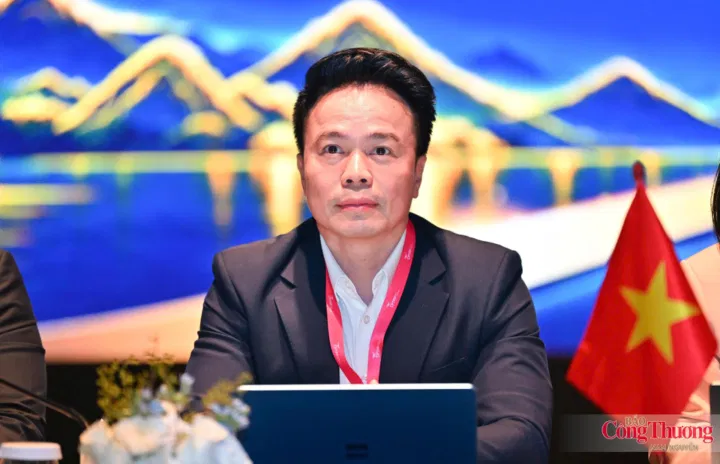
Associate Professor and PhD Ngo Tri Long, economic expert at the Vietnam Association of Financial Consultants.
Broader market access, but advantages remain underutilized
- The RCEP has opened up a large-scale market and production space, creating opportunities for Vietnamese businesses to expand exports and participate more deeply in regional supply chains. After nearly five years of implementation, how would you assess the ability of Vietnamese businesses to take advantage of the agreement's tariff preferences?
Ngo Tri Long: In international trade, there are cases in which Vietnamese businesses are fully capable of competing in terms of product quality, design and delivery schedules, yet may still lose customers simply because they fail to meet rules of origin requirements or choose an unsuitable tariff preference mechanism.
Notably, the amount of import duty saved by an overseas buyer can sometimes be enough to determine whether a contract succeeds or fails. This shows that, amid deeper international economic integration, competitiveness is determined not only at the factory level but also by businesses' ability to understand and apply international trade commitments.
Effective from January 1, 2022, the RCEP connects 10 ASEAN member states with China, Japan, South Korea, Australia and New Zealand, forming an economic bloc that accounts for approximately 30% of global GDP and population.
According to information published by the WTO and International Trade Center under the Vietnam Chamber of Commerce and Industry (VCCI), Vietnam's exports to RCEP markets reached approximately USD 172.1 billion in 2025, up 30.3% from 2021.
However, exports using RCEP certificates of origin (C/O) totaled only around USD 2.71 billion in 2025, equivalent to 1.6% of total exports to these markets.
This figure needs to be viewed objectively. The low rate of RCEP C/O utilization does not mean that all remaining export turnover failed to benefit from tariff preferences. Many businesses continue to use certificates of origin under previously established free trade agreements with ASEAN, China, Japan and South Korea, or opt for most-favored-nation tariff rates when these offer greater cost advantages.
Nevertheless, this rate also highlights the need to reassess businesses' ability to capitalize on the RCEP, particularly its rules on cumulation of origin, one of the agreement's most significant advantages.
The objective should not be to increase the use of RCEP C/Os at all costs, but to help businesses identify the most advantageous trade arrangements for each product, market and order.
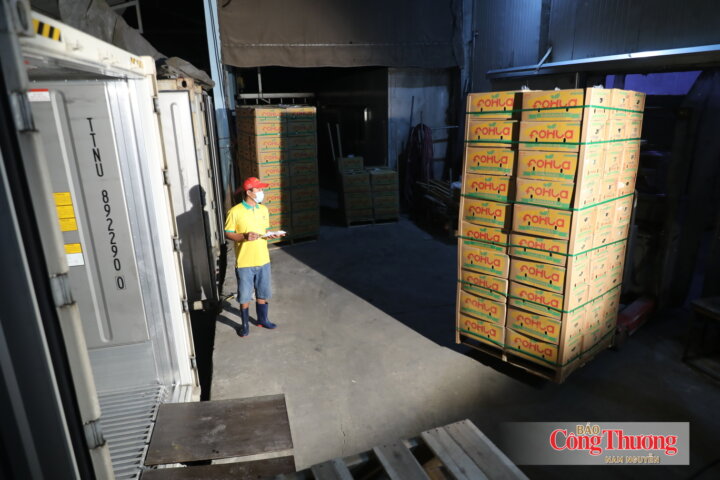
Businesses need to increase the value created in Vietnam in every exported product. Photo: Nam Nguyen
Cumulation of origin: RCEP's strategic advantage
- You have highlighted the cumulation of origin mechanism as one of the RCEP's key advantages. How should Vietnamese businesses make use of this mechanism?
Ngo Tri Long: If tariff reductions open the door to a market, rules of origin are the key that enables businesses to walk through it. What makes the RCEP distinctive is that it establishes a common framework for rules of origin among 15 economies, including major global centers for the supply of raw materials, components and technology.
Under Article 7 of Circular No. 05/2022/TT-BCT issued by the Ministry of Industry and Trade, which stipulates the rules of origin for goods under the RCEP, materials that meet the agreement's rules of origin in one member country may be treated as originating materials when used to manufacture goods in another member country.
This is particularly significant for Vietnam, where many industries still rely on imported raw materials and components.
For example, a Vietnamese textile and garment company may use fabric originating from China or South Korea under the RCEP, then manufacture the finished products in Vietnam for export to Japan. If the product-specific rules of origin and relevant conditions are met, those materials may be cumulated when determining the RCEP origin of the finished products.
Consider another hypothetical example. An exporter sells a product with a free-on-board (FOB) value of USD 100, of which USD 45 represents the value of non-RCEP-originating materials.
Under the indirect calculation method, the regional value content (RVC) would be 55%. If the product is eligible for a minimum RVC requirement of 40%, the business would meet this threshold, provided it also fully complies with the agreement's other requirements.
The RCEP therefore allows businesses to source materials from across the region rather than restricting procurement to a single country. This enables them to leverage regional strengths to optimize costs and meet origin requirements.
However, not all materials purchased from an RCEP member country automatically qualify for cumulation. The key condition is that the materials must genuinely meet the agreement's rules of origin and be supported by appropriate documentation.
Businesses need to pay particular attention to this requirement to avoid risks during origin verification.
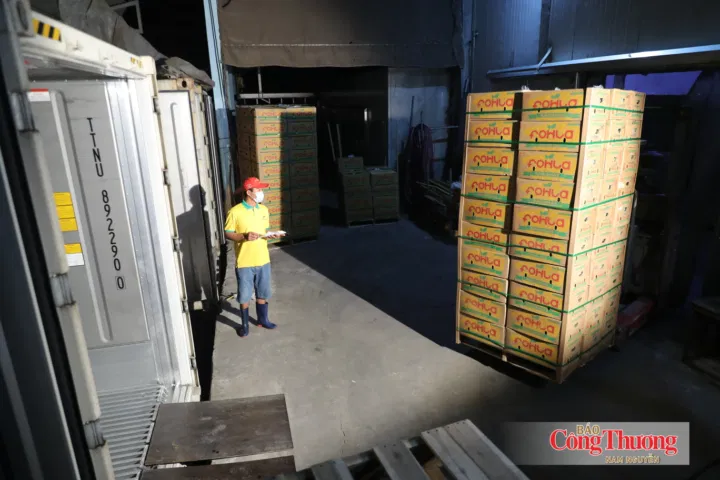
Vietnam's exports to RCEP markets reached approximately USD 172.1 billion in 2025.
Don't let a lack of understanding erode tariff advantages
- You have mentioned the risks involved in origin verification. In practice, what risks might businesses face if they do not understand and master the RCEP rules of origin?
Ngo Tri Long: One common weakness among businesses is that they still regard applying for a C/O as an administrative procedure to be completed after goods have been manufactured.
This approach needs to change fundamentally.
Origin management must begin at the supplier selection stage and extend to product design, material consumption planning, production organization and contract negotiations. Once goods have been manufactured without meeting the origin requirements, additional paperwork cannot replace the production processes that should have been carried out.
According to information released by the Ministry of Industry and Trade on a 2026 survey conducted by Foreign Trade University involving 1,360 import-export businesses, as many as 39.3% of respondents said they did not understand RCEP regulations. Meanwhile, 23.5% reported difficulties due to a lack of market information, while 19.6% were concerned about having to change their production and business processes to meet the requirements.
These figures reflect a paradox: opportunities for economic integration are expanding, but some businesses still have limited capacity to turn those opportunities into economic benefits.
Another issue is that the RCEP does not apply a uniform preferential tariff rate to all goods from every member country. Where tariff treatment differs, accurately determining a product's RCEP country of origin has a direct bearing on the applicable tariff rate.
Some products must also meet additional domestic value content requirements. Therefore, businesses need to know not only whether their goods qualify for RCEP origin, but also which country they are considered to originate from and what tariff rate will apply in the importing market.
Incorrect declarations may result in preferential treatment being denied, additional verification costs, losses for importers and damage to business relationships.
As countries step up efforts to combat origin fraud and impose trade defense measures, origin management must be considered an integral part of corporate risk management.
From tariff preferences to stronger domestic production capacity
- Based on your analysis, how should Vietnamese businesses make use of RCEP tariff preferences not only to increase exports but also to strengthen Vietnam's domestic production capacity?
Ngo Tri Long: The RCEP creates opportunities to access a wider range of raw material suppliers, but it also presents challenges for the goal of strengthening the economy's self-reliance.
If businesses simply use the cumulation mechanism to import more materials, continue processing and assembly, and export low-value-added products, export turnover may increase without a corresponding rise in the actual economic value retained domestically.
It is important to distinguish between meeting rules of origin to qualify for tariff preferences and increasing the value genuinely created in Vietnam.
A high regional value content does not necessarily mean a high Vietnamese value content. A product may qualify for RCEP origin by using materials from several member countries, while the value generated in Vietnam remains limited.
Therefore, the strategy for leveraging the RCEP must be integrated into efforts to develop supporting industries, upgrade technology, improve labor productivity and strengthen links between domestic businesses and foreign-invested enterprises.
Vietnam needs to use regional resources to build its own production capacity rather than turn the benefits of economic integration into prolonged dependence on external sources of raw materials and technology.
The goal is not simply to bring more Vietnamese goods to international markets, but also to increase the value created in Vietnam in every exported product.
To make more effective use of RCEP preferences in the coming years, coordinated efforts are needed from businesses, government agencies and trade support organizations.
First, businesses must proactively develop strategies for using free trade agreements. Before accepting each order, they should compare tariff rates, rules of origin, compliance costs and implementation timelines under the RCEP and other trade agreements. They should not choose a C/O based on habit.
Second, businesses need to establish origin management systems throughout their supply chains. They should monitor raw material sources, require suppliers to provide appropriate documentation, develop databases of production input norms and retain records for verification purposes.
Third, the Ministry of Industry and Trade should accelerate the digitalization of tools that help businesses look up tariff schedules, HS codes and product-specific rules of origin. Information should be presented in a simple, accessible format, with practical examples, particularly for small and medium-sized enterprises.
Fourth, the role of Vietnam's overseas trade offices, industry associations and trade promotion organizations should be strengthened in updating businesses on tariff policies, issuing risk alerts and helping them select markets.
Fifth, the implementation of the RCEP should be linked to the development of domestic supporting industries. Appropriate policies are needed to help Vietnamese businesses participate more deeply in supply networks for raw materials, components and intermediate goods, thereby gradually increasing domestic value in exported products.
The RCEP should be viewed not merely as a tariff-cutting agreement, but also as an opportunity for Vietnamese businesses to reorganize their supply chains and upgrade production capabilities.
As competition in international markets intensifies, businesses can no longer rely solely on cheap labor, low costs or existing preferential advantages. The ability to understand trade rules, organize production, manage rules of origin and master technology will form the foundation for long-term competitiveness.
Thank you very much!
Economic integration is not simply about gaining access to more markets in which to sell goods. More importantly, it is about strengthening the capacity to create value. Making effective use of RCEP rules of origin is a practical step toward turning integration opportunities into domestic capabilities and greater competitiveness for Vietnam's economy.
The CPTPP offers significant tariff advantages for Vietnamese footwear in Mexico. However, to fully capitalise on these preferences, businesses need to exercise strict control over the origin of raw materials, maintain transparent documentation and take a proactive approach to organising their supply chains from the production stage.
The RCEP offers new trade opportunities, but mastering its rules of origin is essential to securing tariff benefits and boosting export competitiveness.
The 11th CPTPP Council Meeting delivers significant outcomes, underscoring Viet Nam's proactive, innovative and leadership role during its 2026 CPTPP Chairmanship.
The Newspaper of Industry and Trade presents a podcast series on the implementation of Politburo Resolution No. 57-NQ/TW in the industry and trade sector.
The RCEP offers new trade opportunities, but mastering its rules of origin is essential to securing tariff benefits and boosting export competitiveness.
The Viet Nam - UAE Comprehensive Economic Partnership Agreement (CEPA) is helping to cut tariffs, expand market access and boost Viet Nam's exports of goods and services to the UAE.
The MOIT and the UAE Embassy held a conference to help Vietnamese firms make the most of the CEPA, which took effect in February 2026, to expand exports to the UAE.
Viet Nam is strengthening links between domestic food producers and retailers to expand distribution channels and boost the competitiveness of local products.