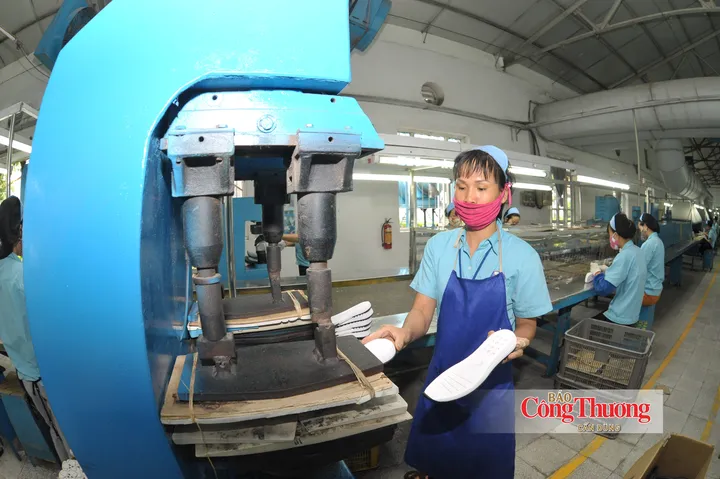
The CPTPP offers significant tariff advantages for Vietnamese footwear in Mexico. However, to fully capitalise on these preferences, businesses need to exercise strict control over the origin of raw materials, maintain transparent documentation and take a proactive approach to organising their supply chains from the production stage.
A reporter from the Newspaper of Industry and Trade spoke with Duong Phong Hoa, Head of the International Integration Division of the Vietnam Leather, Footwear and Handbag Association, about the opportunities, bottlenecks and solutions to help footwear and leather goods businesses meet CPTPP rules of origin when exporting to Mexico.
Duong Phong Hoa, Head of the International Integration Division of the Vietnam Leather, Footwear and Handbag Association.
CPTPP tariff advantages require strict origin control
- The CPTPP helps improve the competitiveness of Vietnamese footwear in the Mexican market. Mexico is imposing high tariffs on goods from countries that do not have FTAs with it. What advantages does the CPTPP offer Vietnamese footwear in this market?
Duong Phong Hoa: The CPTPP is clearly bringing significant advantages to Viet Nam's leather and footwear industry in the Mexican market, particularly in terms of tariffs, pricing and the potential to expand market share.
Before the CPTPP, Vietnamese footwear exports to Mexico were subject to the most-favoured-nation (MFN) import tariff rates. From 2026, Mexico has further increased import tariffs on goods from countries without free trade agreements (FTAs), with duties on some products reaching as high as 35%.
Meanwhile, under the CPTPP, many tariff lines for Vietnamese footwear products already enjoy zero tariffs. Many other product lines are also benefiting from tariff reductions according to the agreed schedules and specific tariff lines.
This represents a major advantage over Viet Nam's direct competitors that are not currently members of the CPTPP, including China, India and Indonesia. These are all major competitors and key rivals of Viet Nam's leather and footwear industry.
In recent years, Vietnamese footwear exports to Mexico have consistently increased. In 2025, Viet Nam's footwear exports to the market reached USD 737 million, up approximately 38% from 2024. Mexico has become a very important footwear market within the CPTPP bloc.
However, we should not regard this as an absolute competitive advantage. When exporting to Mexico, Vietnamese businesses need to pay particular attention to rules of origin, quality requirements, delivery schedules and their ability to build stable supply chains.
Tariff preferences are effective only when goods meet the agreement's requirements. Therefore, businesses cannot focus solely on the applicable tariff rates; they also need to exercise control from the outset over raw material sources and production arrangements. These are key factors in developing a sustainable presence for Vietnamese footwear in Mexico.
- What bottlenecks are footwear and leather goods businesses facing in terms of raw materials, supply chains and production organisation when seeking to benefit from the CPTPP to export to Mexico? Which solutions should be prioritised to improve their ability to meet rules of origin?
Duong Phong Hoa: In my view, the industry is currently facing three major bottlenecks.
First is its dependence on imported raw materials. At present, the leather and footwear industry imports approximately 50–60% of its materials, most of which come from countries outside the CPTPP, particularly China. This creates difficulties for businesses in complying with the agreement's rules of origin.
Second are bottlenecks in supply chains and product traceability. Vietnamese leather and footwear businesses, particularly small and medium-sized enterprises, are often slow to adopt digital technologies. Their capacity to manage information on raw material sources, suppliers and origin documentation remains limited.
Meanwhile, Mexico is stepping up customs inspections and requirements for origin transparency. If businesses fail to prepare complete documentation, their goods risk being denied preferential tariff treatment, thereby weakening their competitiveness.
This issue needs to be taken seriously. When businesses rely heavily on external sources of raw materials while their information management and traceability systems remain inadequate, they will face difficulties in proving the origin of their goods. This affects not only their ability to benefit from tariff preferences but also their export performance.
Third are limitations in production organisation and the ability to take a proactive approach to markets. Vietnamese leather and footwear businesses currently focus largely on contract manufacturing for major global brands. Approximately 80–90% of businesses operate under this model. As a result, they have relatively little autonomy in areas ranging from product design and raw material sourcing to management systems.
For the Mexican market in particular, the long geographical distance means logistics costs are relatively high compared with those for other markets. This affects businesses' export capacity, especially when handling small orders or orders requiring rapid delivery.
To address these limitations, I believe the leather and footwear industry should focus on several solutions.
First, supporting industries need to be developed, particularly domestic sources of raw materials. This is also an issue that we have repeatedly raised with the Government and the Ministry of Industry and Trade.
Second, businesses need to diversify their sources of supply within the CPTPP bloc. This approach would give them greater flexibility in selecting materials while improving their ability to meet the agreement's rules of origin.
Third, digitalisation should be accelerated to strengthen business management capacity, particularly in managing information on raw material sources, suppliers and origin documentation.
Finally, businesses need to take a more proactive approach to developing their design and marketing capabilities in overseas markets.
These solutions need to be implemented in a coordinated manner. Among them, developing raw material supply sources and improving traceability capacity are particularly important. They will help footwear businesses reduce their dependence on imports from outside the bloc and gradually gain greater control over compliance with rules of origin.
Origin compliance must be addressed from the design and contract-signing stages
Since the CPTPP took effect, Viet Nam's leather and footwear exports to Mexico have increased significantly.
- For a business preparing to export products to Mexico, what should it check first to determine whether it can actually benefit from CPTPP preferences? From the perspective of the leather and footwear industry, what recommendations would you offer to help businesses avoid risks related to product origin?
Duong Phong Hoa: I would emphasise that businesses need to check origin requirements from the product design stage and when selecting suppliers and signing contracts, rather than waiting until production has been completed before preparing the relevant documentation.
Businesses need to take a proactive approach from the outset, clearly identifying the preferences available for an order destined for Mexico and the conditions that must be met to qualify for them.
In practice, however, not every business does this. In many cases, when an order becomes available, businesses focus solely on securing and fulfilling it. Issues relating to tariffs, rules of origin and customs inspection requirements are not given adequate attention.
Therefore, I would stress that once a business has identified a target export market, it needs to prepare the necessary documentation from the beginning.
Origin verification should not be treated as a task to be carried out only when completing export procedures. Businesses need to assess the conditions for preferential treatment as early as the product design stage, when selecting raw material sources and signing contracts. With proper preparation from the outset, they will be better positioned to organise production and meet requirements relating to product origin.
This is particularly important for the leather and footwear industry, given its continued reliance on imported materials, most of which come from countries outside the CPTPP. Without effective control over supply sources and raw material information, businesses may encounter difficulties in proving origin, directly affecting their ability to benefit from tariff preferences in the Mexican market.
The Vietnam Leather, Footwear and Handbag Association, for its part, consistently supports businesses by updating them on tariff policies, organising training on rules of origin and connecting them with suppliers to facilitate exports to Mexico.
Through these activities, businesses can gain access to more information, knowledge and resources, enabling them to take a more proactive approach to meeting rules of origin, making use of CPTPP preferences and expanding their exports.
- Thank you very much for your time!
Since the CPTPP took effect, Viet Nam's leather and footwear exports to Mexico have increased significantly. However, achieving sustainable exports to this market, particularly amid rapid changes in Mexico's trade policies, requires domestic businesses to strengthen compliance, especially with regard to product origin, improve production capacity and participate more actively in intra-bloc supply chains.
The CPTPP offers significant tariff advantages for Vietnamese footwear in Mexico. However, to fully capitalise on these preferences, businesses need to exercise strict control over the origin of raw materials, maintain transparent documentation and take a proactive approach to organising their supply chains from the production stage.
The RCEP offers new trade opportunities, but mastering its rules of origin is essential to securing tariff benefits and boosting export competitiveness.
The 11th CPTPP Council Meeting delivers significant outcomes, underscoring Viet Nam's proactive, innovative and leadership role during its 2026 CPTPP Chairmanship.
The Newspaper of Industry and Trade presents a podcast series on the implementation of Politburo Resolution No. 57-NQ/TW in the industry and trade sector.
The CPTPP offers significant tariff advantages for Vietnamese footwear in Mexico. However, to fully capitalise on these preferences, businesses need to exercise strict control over the origin of raw materials, maintain transparent documentation and take a proactive approach to organising their supply chains from the production stage.
Mexico has imposed additional import tariffs of 5–35% on 185 tariff lines. However, Vietnamese goods can still benefit from preferential treatment under the CPTPP. To capitalise on this advantage, businesses are advised to fully understand rules of origin, control raw material sources and establish transparent traceability systems.
The EVFTA offers Vietnamese footwear tariff advantages in the E.U. market. To capitalize on these opportunities sustainably, businesses need to secure material supplies, strengthen production capacity and meet green requirements.
Tariff preferences under free trade agreements (FTAs) are creating new opportunities for Vietnamese pepper exports. However, businesses need to proactively meet rules of origin requirements.