EU digital catch rules: Key notes for seafood exporters
19:05 | 23/03/2025 14:47 | 24/02/2026Trade
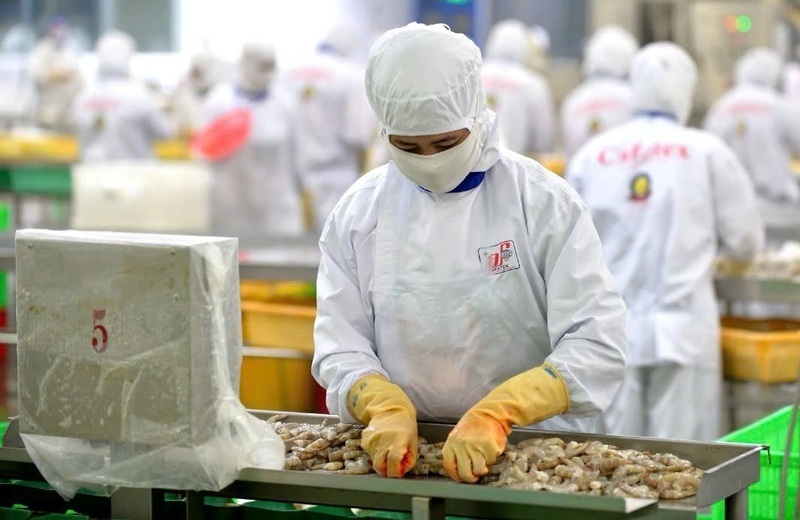
The EU rolls out CATCH and revised catch certificates from 2026, adding mandatory digital submission and new control requirements for seafood exports.


The Government has issued Resolution No. 01/NQ-CP on major tasks and solutions to implement the 2026 socio-economic development plan and state budget estimates.
Five overarching guiding viewpoints
The Resolution notes that in 2025, amid numerous external challenges and increasingly severe natural disasters, storms and floods exceeding historical levels, Viet Nam responded proactively, creatively, decisively, promptly and effectively in governance and administration, flexibly adapting to circumstances to “turn the situation around and shift the operating mode.”
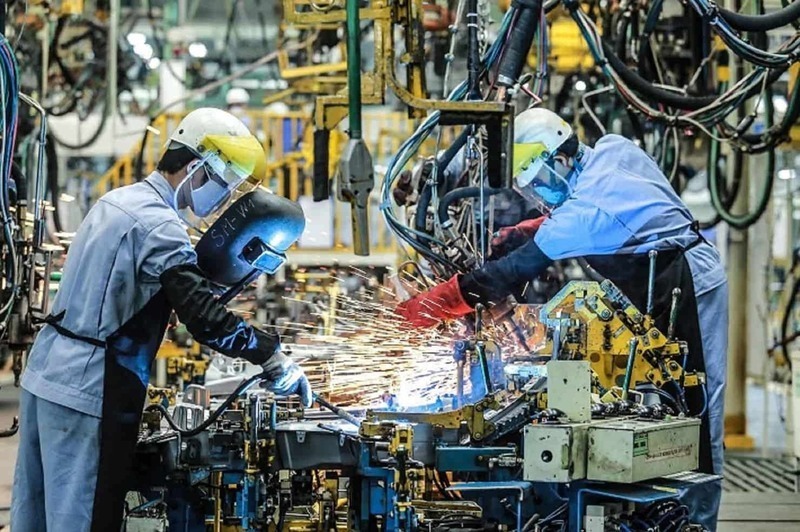
Striving for national GDP growth of 10% or higher in 2026 while maintaining macroeconomic stability. Illustrative photo.
As a result, socio-economic conditions in 2025 continued to record many impressive and commendable achievements, highly valued by the public and the international community, helping sustain reform momentum and create a solid springboard for rapid, sustainable, inclusive and comprehensive development as the country enters a new era.
The year 2026 holds special significance as the first year of a new development phase. It is the year of the 14th National Congress of the Party, the election of deputies to the 16th National Assembly and People’s Councils at all levels for the 2026-2031 term, and the first year of implementing the 2026-2030 five-year socio-economic development plan, with an ambition to achieve double-digit growth.
Meanwhile, the global situation is forecast to remain complex and unpredictable, with mounting risks. Domestically, opportunities and challenges will intertwine, though difficulties, especially external ones are expected to outweigh advantages. Non-traditional security issues, epidemics, natural disasters and climate change will continue to exert heavy impacts.
Against this backdrop, the Government requires ministries, sectors and localities to focus on steering and administering efforts to achieve national GDP growth of at least 10% in 2026, while firmly maintaining macroeconomic stability, controlling inflation and safeguarding major economic balances. This calls for harnessing unity, continuously fostering innovation and creativity, daring to think and act, strengthening confidence, self-reliance and strategic autonomy, and taking resolute, decisive action under the theme: “Discipline and responsibility; proactive effectiveness; innovation and creativity; accelerated breakthroughs; sustainable growth.”
Accordingly, five core guiding viewpoints are identified:
First, strictly grasp and implement resolutions of the Party and the National Assembly, especially the Resolution of the 14th National Party Congress, with the spirit that “when the Party has directed, the Government has unified, the National Assembly has agreed, the people have supported, the nation has expected and friends have assisted, the task is to act decisively, not retreat.”
Second, maintain momentum and pace while accelerating and breaking through; stay close to reality to identify and effectively leverage all opportunities and advantages; and respond promptly to emerging issues.
Third, fundamentally renew development thinking, governance methods and resource allocation; resolve immediate challenges to create growth momentum while implementing long-term strategic reforms to transform the growth model, with science and technology, innovation and digital transformation as the main drivers; develop all economic sectors and effectively combine resources for development.
Fourth, tighten discipline and order; continue renewing legislative thinking; accelerate the building and improvement of a synchronized institutional framework linked with decentralization and delegation of authority; strengthen supervision, inspection and oversight; remove bottlenecks; and intensify the fight against corruption, wastefulness and negative practices.
Fifth, place economic, social and environmental development at the center; build the Party as the key pillar; consider cultural development as the foundation; and ensure national defense, security and proactive diplomacy as essential, regular tasks.
Twelve priority tasks and solutions to achieve socio-economic development goals in 2026, the Government sets out 12 major tasks and solutions:
First, focus on synchronously improving institutions and laws, enhancing the effectiveness of law enforcement, and accelerating the reduction and simplification of administrative procedures to improve the business and investment environment.
Second, continue prioritizing growth while maintaining macroeconomic stability, controlling inflation and ensuring major balances, public debt and budget deficits within prescribed limits; proactively and effectively respond to global economic and trade fluctuations; and renew traditional growth drivers (investment, consumption and exports) while strongly tapping into new ones.
Third, further improve regulations on administrative apparatus organization; strengthen decentralization and delegation of authority; uphold accountability of heads of agencies; intensify the fight against corruption, wastefulness, negativity and group interests; and tighten administrative discipline linked with supervision, power control and efficient resource allocation.
Fourth, fundamentally transform the growth model toward productivity- and innovation-based growth. Place productivity improvement, human resource quality, science and technology, and innovation at the center of development strategy; restructure the economy toward green, digital and circular orientations; accelerate industrialization and modernization; and enhance competitiveness, autonomy and resilience.
Fifth, prioritize investment in modern, synchronized strategic infrastructure to underpin national competitiveness, especially key transport projects, national transport corridors, railways, international airports, seaports and energy systems; promote inter-regional projects, major urban infrastructure and digital infrastructure; and adjust planning to suit the new context.
Sixth, create breakthroughs in science and technology development, innovation and national digital transformation; focus on developing high-quality human resources, particularly in chips, semiconductors and artificial intelligence; and raise overall skill levels across society.
Seventh, promote comprehensive and synchronized development of cultural and social sectors, improve living standards and ensure social security.
Eighth, proactively adapt to climate change, prevent and mitigate natural disasters, strengthen resource management and environmental protection, and harmonize economic development with environmental preservation.
Ninth, strengthen regional linkages; effectively implement national, regional and provincial planning; and improve the quality of urbanization and the urban economy.
Tenth, consolidate national defense and security, firmly safeguard independence, sovereignty, unity and territorial integrity; continue building all-people defense and people’s security postures closely linked with strong public consensus; and ensure social order and safety.
Eleventh, implement comprehensive, effective and proactive diplomacy and international integration; maintain a peaceful and stable environment; mobilize resources for development; and enhance Viet Nam’s international standing and credibility.
Twelfth, further strengthen information and communications work to generate momentum, inspire innovation, encourage creativity, and improve the effectiveness of mass mobilization.
The Government assigns ministries, sectors and localities to urgently issue action programs and plans to implement the Resolution, develop sectoral and local growth scenarios, and take full responsibility before the Government and the Prime Minister for implementation outcomes.
19:05 | 23/03/2025 14:47 | 24/02/2026Trade
19:05 | 23/03/2025 14:47 | 24/02/2026Cooperation

19:05 | 23/03/2025 14:45 | 24/02/2026Trade
19:05 | 23/03/2025 14:44 | 24/02/2026News and Events
19:05 | 23/03/2025 20:40 | 23/02/2026Trade