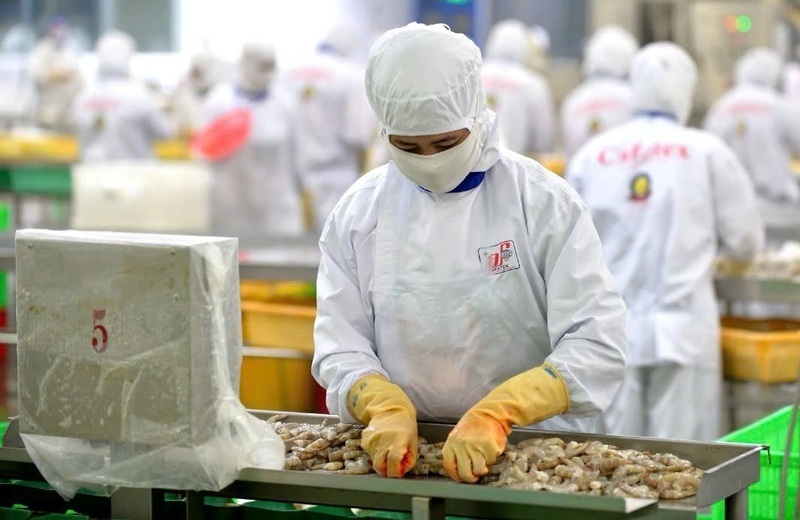
EU digital catch rules: Key notes for seafood exporters
19:05 | 23/03/2025 14:47 | 24/02/2026Trade
The EU rolls out CATCH and revised catch certificates from 2026, adding mandatory digital submission and new control requirements for seafood exports.


Economic fundamentals and breakthrough growth opportunities
With the guiding principle of “Unity - Democracy - Discipline - Breakthrough - Development,” the 14th National Congress of the Communist Party of Vietnam bears a historic responsibility to define “launch-pad” policies to successfully realize the country’s two centennial strategic goals.
The overarching objective is to safeguard peace and stability; achieve rapid and sustainable development; comprehensively improve living standards; strengthen strategic autonomy, self-reliance and confidence as the nation strides into a new era; successfully meet the target of becoming a developing country with modern industry and upper-middle income by 2030; and realize the vision of a peaceful, independent, democratic, prosperous, civilized and happy socialist Vietnam with high income by 2045. Vietnam aims to post average GDP growth of 10% per year or higher during 2026-2030, with GDP per capita reaching around USD 8,500 by 2030.
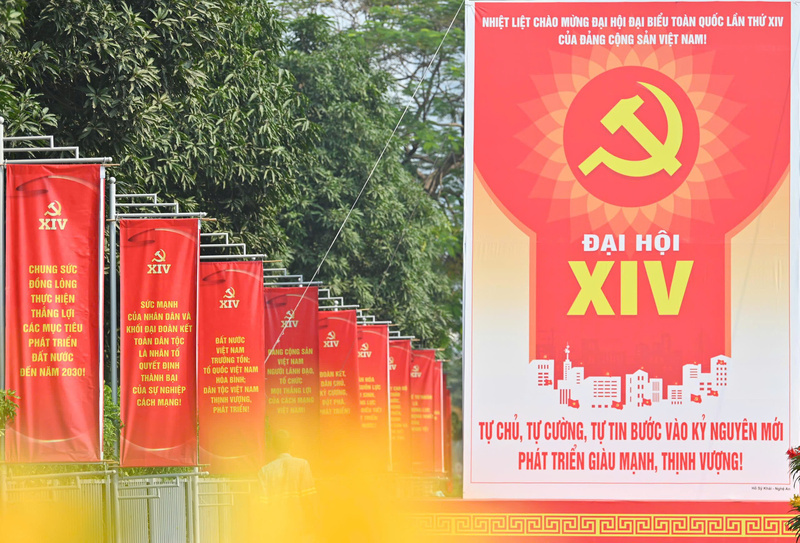
The 14th National Party Congress is expected to introduce multiple breakthrough solutions for socio-economic development. Photo: Nam Nguyen
Economic foundations
In an exchange with Industry and Trade Newspaper reporters, Dr. Nguyen Quoc Viet, Deputy Director of the Institute for Economic and Policy Research, said the draft documents of the 14th National Party Congress place national development aspirations at a new height, linked to two strategic milestones: the 100th anniversary of the Party and the 100th anniversary of the country’s founding in 2045.
According to him, the documents clearly convey the ambition to usher in a new era of national rise, toward building a prosperous, equitable and civilized society. In that spirit, setting a double-digit economic growth target of 10% or higher starting in 2026 represents a very strong political commitment.
“Of course, this is an extremely high level of determination by the Party, the State and society as a whole. However, it is not a subjective aspiration; it is grounded in the substantive development foundations of Vietnam’s economy in recent years,” Dr. Nguyen Quoc Viet emphasized.
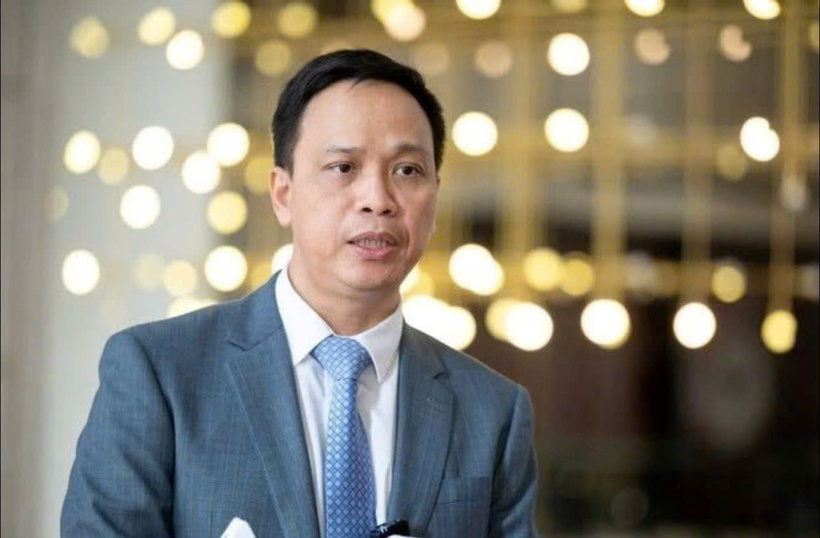
Dr. Nguyen Quoc Viet, Deputy Director of the Institute for Economic and Policy Research.
Analyzing the macroeconomic picture, Dr. Nguyen Quoc Viet noted that after the post-Covid-19 recovery, Vietnam’s economy has been assessed very positively by the international community. Vietnam now ranks among the world’s 33 largest economies and is one of the top 15 countries globally in terms of trade openness and scale.
Notably, total import-export turnover in 2025 reached approximately USD 930 billion, underscoring Vietnam’s increasingly clear position in global value chains. “These figures show that Vietnam’s economic scale is expanding and its role as an important link in international trade and investment is becoming more firmly established,” he said.
According to Dr. Nguyen Quoc Viet, Vietnam has emerged as a “magnet” for international capital flows and investment funds. In addition to newly registered capital, both disbursed foreign direct investment (FDI) and additional capital have recorded notable increases recently, reflecting growing investor confidence in Vietnam’s business environment and growth prospects.
Many foreign investors have also expressed a desire to deepen their presence in the domestic market through mergers and acquisitions, thereby expanding their long-term footprint and closer integration with the local economy. “This demonstrates that Vietnam’s internal economic strength has been significantly reinforced, particularly in the context of deep integration, as the country has signed 17 free trade agreements, including numerous new-generation bilateral and multilateral FTAs,” he analyzed.
Momentum from the private sector
Alongside integration and external economic drivers, Dr. Nguyen Quoc Viet highlighted the increasingly prominent role of the domestic private sector. In 2025 alone, many large private enterprises and groups registered sizeable investment projects and additional capital, focusing on key areas such as new technologies and strategic infrastructure.
These projects are significant not only in terms of capital scale but also in laying a fundamental foundation for technological innovation and restructuring Vietnam’s development model in the new phase.

If major orientations in the documents of the 14th Party Congress are effectively implemented, Vietnam has a solid basis to achieve higher and more sustainable growth in the coming period. Illustrative photo.
Citing observations from the past five years, Dr. Nguyen Quoc Viet said the share of corporate income tax contributions from the private sector has increased markedly compared to the pre-Covid-19 period. Meanwhile, the contribution share of the FDI sector has stagnated and slightly declined, even as total state budget revenue continued to rise strongly.
“This indicates that private enterprises, including individuals and household businesses, are contributing an ever-greater share to the state budget. The internal strength of the private sector has recovered and is gradually meeting expectations of becoming a key growth driver,” the expert stressed.
He also pointed out that improvements in infrastructure systems and essential connectivity are opening up new growth drivers for the economy. These drivers stem both from external economic activities through trade and investment and from the domestic market, as demand and production capacity expand.
Notably, the strong recovery of tourism, coupled with a shift toward higher-quality and higher-value consumption during 2024-2025, has contributed positively to the rebound in domestic consumption. Visitors are staying longer, spending more and moving toward premium segments, an important factor in stimulating internal growth.
From this overall assessment, Dr. Nguyen Quoc Viet affirmed: “The double-digit growth target set by the 14th Party Congress from 2026 onward has a clear practical foundation. It is not merely political determination but is built upon the internal strength, position and growth drivers already formed within Vietnam’s economy.”
Enhancing growth quality
According to Dr. Nguyen Quoc Viet, the Party has charted the right course by aiming to build a strong nation on the basis of high economic growth combined with improved growth quality. This balanced approach reconciles the aspiration for rapid development with the requirement for sustainability amid global uncertainties.
He recommended avoiding subjective or overly hasty thinking in pursuing high growth. Pilot policies and the engagement of the private sector in major strategies and projects should be implemented based on market signals, harmonizing interests between the public and private sectors, while closely aligning with consumer demand.
“To achieve fast and sustainable growth, all policy decisions must be grounded in scientific calculation, caution, control and concrete impact assessments. Crude interventions in economic operations should be avoided, as they can increase risks and hinder long-term growth objectives,” Dr. Nguyen Quoc Viet emphasized. He added that the Government and ministries, sectors and localities should continue decisive governance while strengthening dialogue and listening to businesses, citizens and researchers.
Improving the legal framework, streamlining procedures, and enhancing transparency and accountability will enable both regulators and businesses to operate with greater confidence, thereby fostering a favorable environment for rapid and sustainable growth along a safe and sound trajectory.
During 2021-2025, despite facing more challenges than advantages, Vietnam’s economy maintained macroeconomic stability, controlled inflation, safeguarded major economic balances and sustained growth among the highest in the region. In 2025, GDP growth reached 8.02% (up from 7.09% in 2024); merchandise import-export turnover hit USD 930.05 billion, up 18.2% year-on-year and marking a record high; and realized FDI reached USD 27.62 billion, up 9% from the previous year also the highest level in the 2021-2025 period.
19:05 | 23/03/2025 14:47 | 24/02/2026Trade
19:05 | 23/03/2025 14:47 | 24/02/2026Cooperation

19:05 | 23/03/2025 14:45 | 24/02/2026Trade
19:05 | 23/03/2025 14:44 | 24/02/2026News and Events
19:05 | 23/03/2025 20:40 | 23/02/2026Trade