Geopolitical tensions are placing significant pressure on supply chains and exports. In context, the domestic market is seen as a crucial pillar supporting growth.
Domestic market: A strategic buffer as exports face headwinds
Complicated developments in geopolitical conflicts are exerting strong impacts on the global energy market, driving up transportation and logistics costs while affecting market sentiment. Global oil supply faces disruption risks amid potential disruptions to key transit routes such as the Strait of Hormuz, increasing uncertainties for international trade.
Under the Government’s target, in 2026, total retail sales of goods and consumer service revenues are expected to grow by 13 - 15%.
Against this backdrop, export activities of Vietnamese enterprises are inevitably under pressure from input costs, exchange rates, transportation, and weakening global demand.
Therefore, diversifying markets and reducing dependence on a number of traditional ones has become more urgent than ever. Alongside expanding new export destinations, effectively tapping the domestic market is considered a fundamental and sustainable solution.
Under the Government’s target, in 2026, total retail sales of goods and consumer service revenues are expected to grow by 13 - 15%. This is an ambitious goal given that growth in 2025 reached only 9.2%. However, challenges also imply room for expansion, as domestic consumption has long accounted for about 60% of GDP growth.
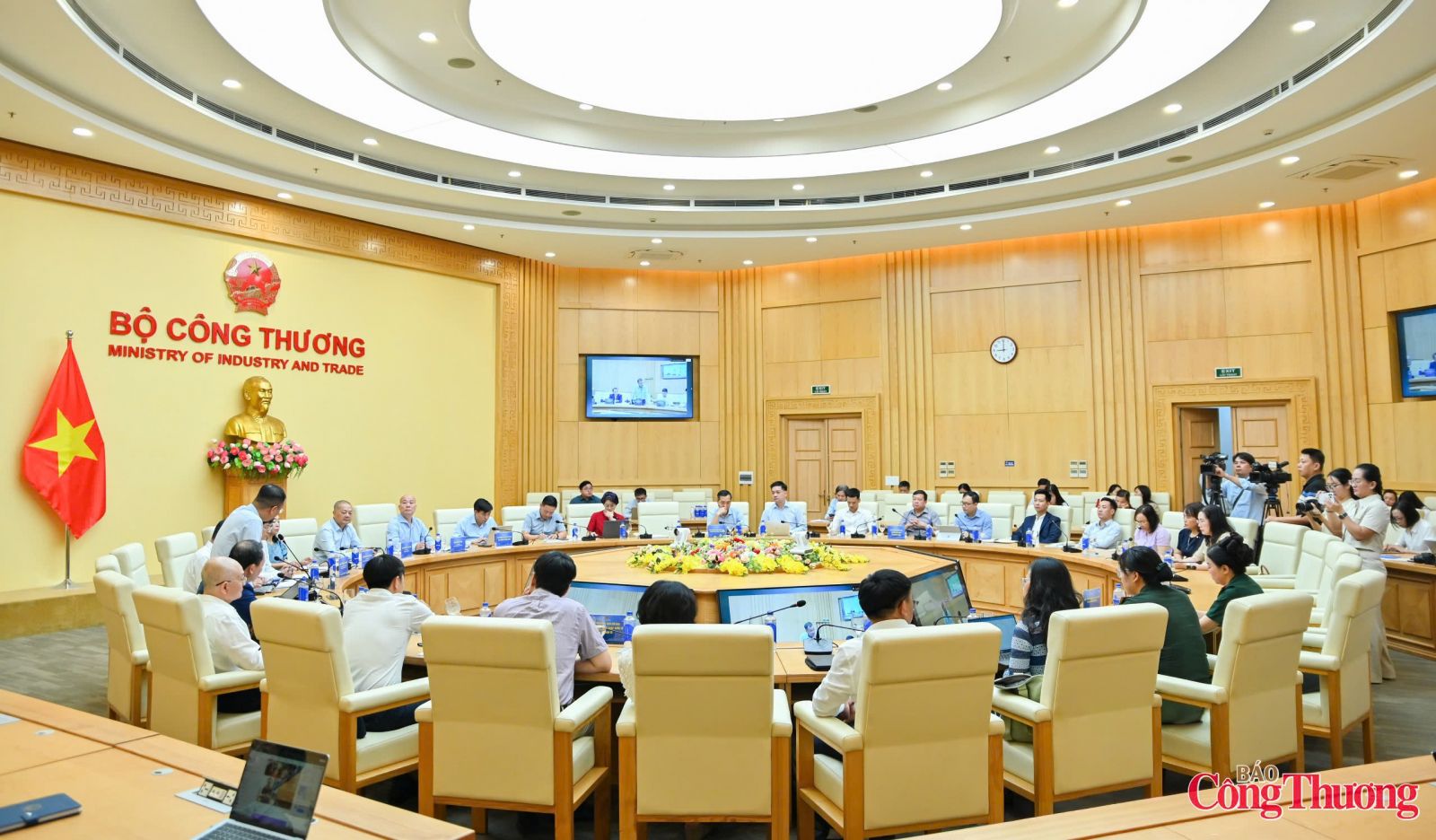
Speaking to the Newspaper of Industry and Trade at the recent launch of the “Vietnamese goods vitality” display and livestream space, Tran Huu Linh, Director of the Market Surveillance Agency under the Ministry of Industry and Trade (MoIT), said that following the issuance of Resolution No. 01/NQ-CP, the MoIT had formulated a detailed plan for implementation, with the agency assigned to take the lead in monitoring and executing measures to achieve the 13 - 15% retail growth target.
As exports are affected by geopolitical tensions, boosting domestic consumption is not merely a short-term measure but a long-term strategy. A strong domestic market will serve as a “buffer zone,” helping enterprises sustain production, stabilize cash flows, and maintain growth momentum amid external volatility.
In reality, after 15 years of implementing the campaign “Vietnamese people prioritize using Vietnamese goods,” consumer awareness and confidence in domestic products have improved markedly. Vietnamese goods are increasingly present in supermarkets, shopping malls, and convenience stores. Domestic enterprises have gradually enhanced product quality, built brands, and improved competitiveness.
However, to achieve double-digit growth in 2026, the domestic market will require stronger impetus in both policy and implementation.
Key pillars to achieve the 13 - 15% target
According to Director Tran Huu Linh, four major groups of solutions have been identified to realize the retail growth goal.
First, completing institutions and introducing breakthrough policies. Strong domestic market growth requires a flexible policy framework that creates new momentum. Authorities are drafting and submitting several important legal documents, including a decree on market development, a decree on petroleum trading, and regulations on fees, inspections, and administrative sanctions. The agency is also leading the drafting of the Law on Commodity Derivatives Trading, expected to be submitted to the National Assembly at its year-end session. These mechanisms aim to create a transparent and open business environment, promote goods circulation, and strengthen market confidence.
Second, developing and upgrading commercial infrastructure. Modern distribution systems such as supermarkets, shopping malls, and convenience stores will continue to be expanded. At the same time, more than 8,500 traditional markets are proposed to be upgraded toward a more modern, safe, and convenient model. The agency is also working with retailers to bring goods to remote, border, and disadvantaged areas, thereby expanding consumption space for businesses.
Notably, in the first six months of the year, proposals will be submitted for new commercial infrastructure models such as outlet centers and duty-free shops to attract spending from both residents and international tourists. This approach aims to boost domestic consumption while retaining spending that might otherwise flow abroad.
Third, stepping up demand stimulation programs. Promotion campaigns, discount programs, and concentrated sales months will continue to be rolled out. The campaign “Vietnamese people prioritize using Vietnamese goods” will be renewed to further strengthen confidence in domestic product quality. E-commerce and online sales are also viewed as key channels for market expansion, particularly as consumer behavior evolves rapidly.
Fourth, strengthening market surveillance and inspection. According to Director Tran Huu Linh, the market can only develop sustainably if it is healthy and transparent. Therefore, market surveillance forces will continue to intensify inspections and strictly handle trade fraud, counterfeit goods, and intellectual property violations. This not only protects consumers but also safeguards legitimate businesses.
In parallel, regarding petroleum, a critical input for the economy, the MoIT is closely monitoring global market developments, building response scenarios, and requiring key traders to strictly comply with minimum supply obligations and reserve requirements. The goal is to ensure stable supply and prevent disruptions in domestic supply chains amid global volatility.
Clearly, achieving the 13 - 15% growth target cannot rely on the efforts of a single agency. Director Tran Huu Linh emphasized the need for close coordination between trade policy and fiscal, monetary, interest rate, and exchange rate policies, as well as the involvement of ministries, sectors, localities, and especially the business community.
As households tend to increase savings or shift to gold and precious metals during periods of uncertainty, stimulating consumption remains a major challenge. However, with synchronized policies, a transparent market environment, stable supply, and high-quality goods, consumer confidence can be reinforced.
The FTA Vietnam - EFTA creates new opportunities for Vietnamese businesses while encouraging stronger competitiveness, compliance and sustainable development.
Ministry of Industry and Trade removed more than 9,000 infringing products and blocked over 2,000 online stores in a nationwide crackdown on counterfeit goods.
Sustainable production and consumption are becoming business imperatives as companies invest in greener technologies, circular design and digital transformation.
Vietnam's domestic market remained resilient in the first half of 2026 despite global turbulence, with inflation under control and retail sales continuing to grow.
From 29 June, Vietnam’s domestic carbon market officially entered its pilot phase, marking a transition from emissions management through administrative command-and-control measures to a market-based mechanism.
The FTA Vietnam - EFTA creates new opportunities for Vietnamese businesses while encouraging stronger competitiveness, compliance and sustainable development.
In an interview with the press regarding the Free Trade Agreement (FTA) between Vietnam and the European Free Trade Association (EFTA), Deputy Minister of Industry and Trade Nguyen Sinh Nhat Tan emphasized that the agreement will lay the foundation for economic relations between Vietnam and EFTA to enter a new stage of development.
At a second-quarter 2026 conference, the MoIT urged Vietnam's Trade Offices abroad to strengthen intelligence and help exporters adapt to changes and expand exports.
Vietnam and Israel discuss strengthening VIFTA implementation to expand trade, investment and cooperation, aiming to boost bilateral economic ties and market access.
More than 100 businesses attend the Vietnam-Japan Investment and Trade Cooperation Conference in Osaka to strengthen investment, trade and supply chain connectivity.