In a new development phase, Vietnam is prioritising economic and technology diplomacy to strengthen foreign relations and support rapid, sustainable growth.
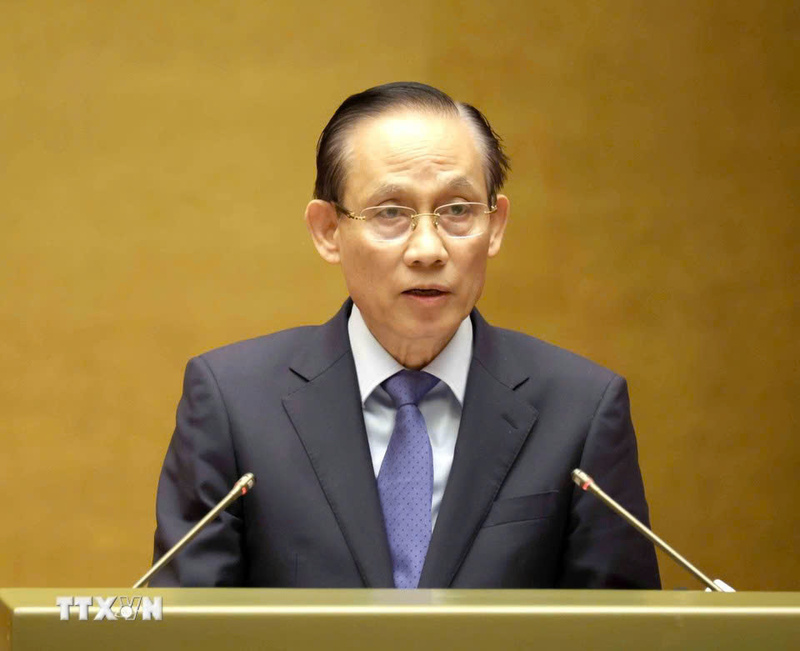
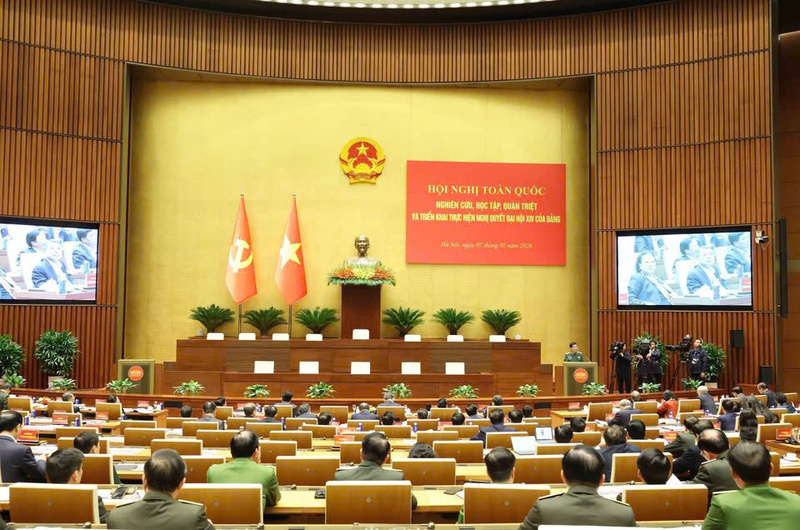
On February 7 in Hanoi, at the National Conference on studying, disseminating, and implementing the Resolution of the 14th National Congress of the Communist Party of Vietnam, Le Hoai Trung, a member of the Politburo and Minister of Foreign Affairs, delivered a thematic report entitled “Developing foreign affairs in the new era commensurate with the country’s historical stature, cultural identity, and international standing.”
New and salient aspects of foreign affairs work
Analyzing the foreign policy line defined by the 14th National Congress, Minister Le Hoai Trung affirmed that foreign affairs constitute an inseparable component of the Party’s overall strategy for national development. This line represents a continuation of the nation’s proud diplomatic traditions, carrying forward the core and enduring principles established at previous Party congresses, while also reflecting the major achievements recorded throughout the history of the Vietnamese Revolution, particularly the country’s new stature and strength after 40 years of Renewal.
Notably, the documents of the 14th National Congress embody significant innovations in strategic thinking and contain major breakthroughs aimed at meeting the requirements of national development in the new era, while adapting to profound, rapid, and complex changes in the regional and global landscape.
Le Hoai Trung, a member of the Politburo and Minister of Foreign Affairs, delivers a thematic report entitled “Developing foreign affairs in the new era commensurate with the country’s historical stature, cultural identity, and international standing.” Photo: VNA
According to the Minister of Foreign Affairs, the documents of the 14th National Congress reaffirm the consistent implementation of an independent, self-reliant, resilient, peaceful, friendly, cooperative, and development-oriented foreign policy, together with the multilateralization and diversification of external relations.
The supreme objective is to ensure the highest national and ethnic interests, on the basis of the fundamental principles of international law and the Charter of the United Nations, equality, and mutual benefit. At the same time, Vietnam proactively contributes to peace, friendship, cooperation, and development, acting as a friend, a reliable partner, and an active, responsible member of the international community.
In terms of principles, the Party remains steadfast in ensuring its leadership and the unified management of the State over foreign affairs activities. This work is carried out in a synchronized, comprehensive, and effective manner across all three pillars Party diplomacy, State diplomacy, and people-to-people diplomacy, including parliamentary diplomacy, defense diplomacy, public security diplomacy, and the external relations of localities.
The guiding approach is to continue upholding the pioneering role of foreign affairs in proactively preventing the risk of war, creating and safeguarding a peaceful and stable environment, firmly protecting the Fatherland early and from afar, while maximizing external resources and favorable conditions for national development.
Alongside these enduring core principles, Minister Le Hoai Trung underscored several new and particularly important highlights in the foreign policy line adopted at the 14th National Congress.
First, the documents emphasize the objective of “developing foreign affairs in the new era commensurate with the country’s historical stature, cultural identity, and international standing.” While foreign affairs and international integration have achieved many notable successes in recent years, there remains substantial room to further consolidate a broad and favorable external environment for the country. Faced with the urgent requirements of the new era and epochal changes worldwide, Vietnam’s foreign affairs must rise to a new level.
Second, the 14th National Congress introduces the concepts of “strategic autonomy” and “self-reliance.” These are critically important guiding viewpoints rooted in the Party’s major ideological foundations and the thought of President Ho Chi Minh. The Minister recalled President Ho Chi Minh’s teaching: “A nation that does not rely on its own strength but merely waits for others to help is not worthy of independence,” and “if one wishes others to help, one must first help oneself.”
This perspective is fully consistent with the laws governing the Vietnamese Revolution, affirming that internal strength plays a decisive role, while external strength derived from solidarity and international cooperation plays an important complementary role.
Third, the documents affirm that foreign affairs and international integration are both “critical” and “ongoing” tasks. Their “critical” nature lies in the fact that they are of paramount importance, directly linked to the survival, security, prosperity, and decline of the nation, intertwined with the history of national construction and defense, and serving as a key means of fulfilling the two strategic tasks of building and safeguarding the Fatherland.
Their “ongoing” nature requires that this work be carried out continuously throughout all stages of the revolution, implemented proactively, actively, systematically, and comprehensively across all areas from research, forecasting, and policy advisory to organization, implementation, inspection, and supervision.
This places demands on the regular, comprehensive, and absolute leadership of the Party, the unified management of the State, and the participation of the entire political system, with close coordination among the three pillars of national defense, security, and foreign affairs.
Promoting economic diplomacy and technology diplomacy
Regarding the requirements for developing foreign affairs in the new era, Minister Le Hoai Trung emphasized that foreign affairs must clearly reflect a new mindset and renewed national aspiration after 40 years of Renewal. The diplomatic sector must contribute to realizing the two centenary goals set by the Party, as well as President Ho Chi Minh’s aspiration for Vietnam to “stand shoulder to shoulder with the great powers of the five continents.” To be commensurate with the country’s historical stature, cultural identity, and international standing, foreign affairs in the new era must meet three major requirements.
First, they must help maintain a peaceful environment, identify and neutralize potential conflict risks at an early stage, and protect the Fatherland early and from afar. It is necessary to seize opportunities and consolidate a favorable external environment for the country, build durable, in-depth, stable, and substantive frameworks of relations with partners, and position the country in the most advantageous manner within the emerging world order.
The national conference on studying, disseminating, and implementing the Resolution of the 14th National Congress of the Party. Photo: VNA
Second, foreign affairs must proactively play a pioneering role “going ahead to open the way” in maximizing external resources and favorable conditions to serve national security and development interests. They must make tangible contributions to expanding development space and creating new opportunities for the three strategic breakthroughs and major national transformations. In particular, foreign affairs must directly contribute to achieving the target of economic growth of 10% or higher following the 14th National Congress.
Third, they must help enhance the country’s international standing, prestige, and image. Vietnam needs to mobilize support, trust, and partnership from international friends and partners commensurate with its greater role and standing, proactively and responsibly participate in addressing common regional and global issues, and contribute to building and safeguarding a fair and equitable international order based on international law.
This is both an international responsibility and a national and ethnic interest, in line with the guidance of Party General Secretary To Lam on “elevating and proactively expanding Vietnam’s contributions to the global revolutionary cause, to peace, cooperation, development, and the progress of humankind.”
Based on these strategic orientations, Minister Le Hoai Trung proposed that ministries, sectors, and localities focus on implementing five key groups of tasks to advance foreign affairs in the new era.
First, it is necessary to unify awareness across the entire political system regarding the objectives, tasks, role, and position of foreign affairs under the line of the 14th National Congress, particularly their “critical and ongoing” nature, to ensure unity of action. This includes widely disseminating the foreign policy line to Party committees at all levels; promptly studying, disseminating, and guiding the synchronized implementation of Regulation 392 on the unified management of foreign affairs activities from the central to the local level; and ensuring appropriate outreach to Vietnam’s overseas representative missions, as well as suitable forms of communication for the more than six million Vietnamese living abroad.
Second, the foreign policy line of the 14th National Congress must be urgently institutionalized and concretized. This requires focusing on completing Party regulations, reviewing, and refining the legal framework and State legal documents from the central to the local level governing foreign affairs and international integration.
Third, efforts must be intensified to formulate and implement a comprehensive foreign affairs strategy at a higher level across all three pillars and in all fields. The network of cooperative relations should be further expanded, not only with traditional partners such as countries and organizations, but also toward partners that Vietnam seeks to engage more actively, including major technology corporations, particularly in emerging fields such as artificial intelligence, quantum technologies, and semiconductors.
Development-oriented diplomacy must be strengthened, with economic diplomacy and technology diplomacy as the focus, to drive rapid and sustainable national development. With the spirit of “not wasting a single day or delaying a single week,” the diplomatic sector must deploy key areas in a timely, effective, and creative manner, including cultural diplomacy, while excelling in research, forecasting, and policy advisory work, ensuring that the country is never caught unprepared or off guard in any situation.
Fourth, resources must be allocated in a manner commensurate with the country’s new stature and strength. It is necessary to build a comprehensive, modern, and professional diplomatic service with a streamlined, strong, efficient, effective, and results-oriented organizational apparatus. Priority should be given to Party building and to developing a contingent of cadres who are both politically steadfast and professionally competent, with integrity, talent, discipline, the courage to think, act, and innovate, and a strong sense of responsibility before history and the people.
At the same time, thinking and methods must continue to be renewed in a more professional and modern direction, accelerating digital transformation and the application of science and technology in foreign affairs work.
Fifth, coordination must be further strengthened and made more effective and synchronized among Party bodies, ministries, sectors, localities, and among the forces engaged in foreign affairs work, including parliamentary diplomacy, defense diplomacy, public security diplomacy, local diplomacy, the business community, and the people nationwide in the implementation of international integration.
Minister Le Hoai Trung expressed confidence that under the comprehensive and direct leadership and guidance of the Party Central Committee, the Politburo, and the Secretariat, headed by Party General Secretary To Lam and with the coordination, support, and companionship of the entire political system, the business community, and the people, foreign affairs will make even greater contributions to the cause of national construction and defense.
Deputy Minister Truong Thanh Hoai urges Vinachem to develop two key labs meeting international standards to advance its role in strategic tech value chains.
The Hung Yen provincial Industrial Promotion Program for 2026-2030 supports enterprise digital transformation and boosts science technology application and innovation.
Deputy Minister Truong Thanh Hoai urges Vinachem to develop two key labs meeting international standards to advance its role in strategic tech value chains.
Prime Minister calls for stronger power conservation and rooftop solar expansion to ensure stable electricity supply and safeguard national energy security.