Viet Nam seeks to seize a new window of opportunity for supporting industry by removing bottlenecks and shifting from localization ratios to mastering capabilities.
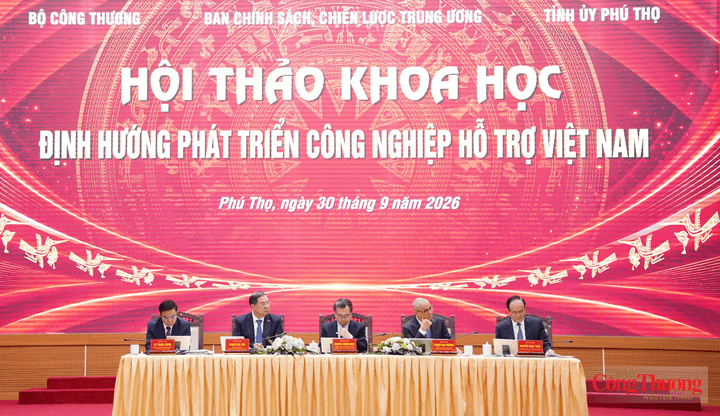
On the morning of September 30 in Phu Tho, the Commission for Policy and Strategy of the Central Committee of the Communist Party of Viet Nam (CPVCC), in coordination with the Ministry of Industry and Trade and the Phu Tho provincial Party Committee, held a national scientific conference entitled “Orientations for Viet Nam’s supporting industry development.”
The conference was attended and co-chaired by Nguyen Thanh Nghi, member of the Politburo, Secretary of the Party Central Committee and Chairman of the Commission for Policy and Strategy of the CPVCC; Pham Gia Tuc, member of the Politburo and Standing Deputy Prime Minister; Le Manh Hung, member of the Party Central Committee and Minister of Industry and Trade; Pham Dai Duong, member of the Party Central Committee and Secretary of the Phu Tho provincial Party Committee; and Nguyen Ngoc Tuan, Vice Chairman of the Commission for Policy and Strategy of the CPVCC.
Officials co-chair the national scientific conference on “Orientations for Viet Nam’s supporting industry development.”
The conference brought together more than 500 delegates representing central Party commissions, ministries and agencies; leaders of a number of provinces and cities; local departments and agencies; research institutes and educational institutions; experts and scientists; businesses and business associations; international organizations; and development partners.
The conference aimed to provide an objective and comprehensive assessment of the development of Viet Nam’s supporting industry in recent years; clarify theoretical and practical issues; accurately identify bottlenecks; and propose breakthrough and feasible guidelines, mechanisms and policies, thereby helping supporting industry truly become one of the key foundations of a modern, self-reliant and highly competitive national industry.
Supporting industry faces a new window of opportunity
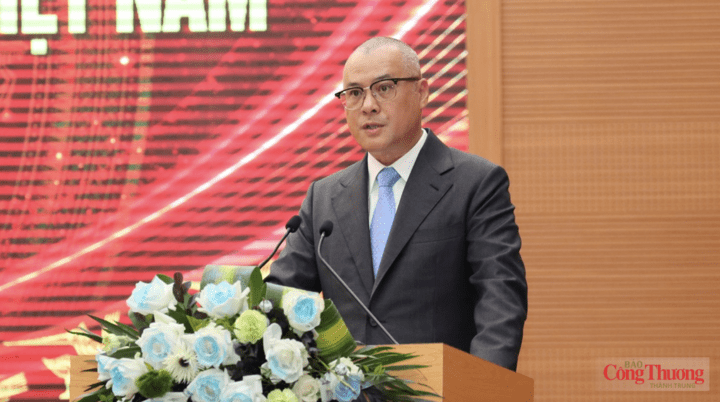
Pham Dai Duong, member of the Party Central Committee and Secretary of the Phu Tho provincial Party Committee, delivers remarks at the conference.
Delivering welcoming and opening remarks, Pham Dai Duong, member of the Party Central Committee and Secretary of the Phu Tho provincial Party Committee, highlighted the province’s strong transformation in the process of industrialization and modernization, as well as its proactive participation in domestic and regional supply chains. Phu Tho is striving to become a reliable link on the supporting industry map of northern Viet Nam.
With its position as a gateway connecting the northern midland and mountainous region, the Red River Delta and the Northwest; its increasingly interconnected network of expressways, national highways, railways and waterways; and considerable land available for industrial parks and clusters, the province has an initial foundation for stronger participation in supporting industry development, particularly in mechanical engineering and manufacturing, electronic components, supporting industries for automobiles and electric vehicles, and high-tech industries.
Highlighting three strategic and urgent issues for the current orientation of supporting industry development, namely the context and requirements of the new development stage; the State’s enabling role in promoting linkages and forming a national supporting industry business ecosystem; and the organization of development space to capitalize on local advantages, the Secretary of the Phu Tho provincial Party Committee stressed that developing supporting industry has been a requirement throughout the country’s industrialization and modernization process. As Viet Nam enters a new stage of development, supporting industry constitutes a crucial link determining strategic self-reliance and national competitiveness.
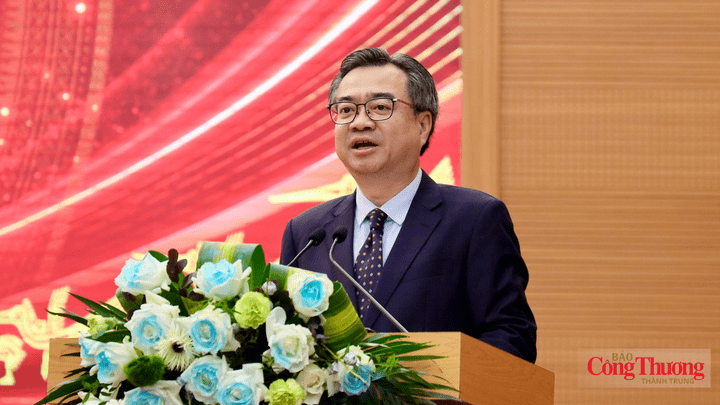
Nguyen Thanh Nghi, member of the Political Bureau, Secretary of the Party Central Committee and Chairman of the Commission for Policy and Strategy of the CPVCC, delivers remarks at the conference.
Delivering the keynote remarks, Nguyen Thanh Nghi, member of the Politburo, Secretary of the Party Central Committee and Chairman of the Commission for Policy and Strategy of the CPVCC, stressed that the 14th National Party Congress had identified an urgent need to renew the growth model and accelerate industrialization and modernization, with science and technology, innovation and digital transformation serving as key drivers for improving productivity, quality, efficiency, added value and the competitiveness of the economy. At the same time, it is necessary to properly balance self-reliance in domestic production with participation in global production networks and value chains.
According to Nguyen Thanh Nghi, under the new development requirements, supporting industry is not a secondary component of the industrial sector but one of the foundations for building national industrial capacity. The more developed supporting industry becomes, the stronger the economy’s internal capacity will be, the greater the value created and retained domestically, and the more resilient the economy will become to external fluctuations.
“The ultimate goal is to develop a system of Vietnamese enterprises with substantive capabilities and stable supply capacity, capable of mastering an increasing number of high-value stages and gradually becoming strategic suppliers, tier-one suppliers and system integrators. Supporting industry must thereby truly become one of the foundations of a modern industrial sector, helping improve productivity, added value and the competitiveness of the economy, strengthen self-reliance and resilience, and create a foundation for Viet Nam to participate more deeply and move higher up global value chains,” Nguyen Thanh Nghi stressed.
He noted that this is not merely a requirement for the supporting industry sector itself, but an important component of efforts to achieve the goal of making Viet Nam a developing country with modern industry and upper-middle income by 2030, while realizing the vision of becoming a developed, high-income country by 2045.
At the conference, delegates delivered presentations and took part in discussions focusing on orientations for supporting industry development through 2030, with a vision to 2045; science and technology, innovation, digital transformation and green transition; development policies; the innovation ecosystem; and practical experience from Phu Tho and businesses.
From “localization by ratio” to “mastering capabilities”
In his concluding remarks, member of the Politburo and Standing Deputy Prime Minister Pham Gia Tuc stressed that supporting industry forms the foundation of industrialization, determining the depth, resilience and degree of self-reliance of the industrial sector. It is also closely linked to economic security, strategic self-reliance and the goal of making Viet Nam a developed, high-income country by 2045.
The Standing Deputy Prime Minister noted that Viet Nam has established a foundation for supporting industry development, with a gradually improving policy framework, around 7,000 participating enterprises and positive results in several sectors. However, the sector remains “broad but not deep, numerous but not strong.”
Standing Deputy Prime Minister Pham Gia Tuc delivers remarks at the conference.
The Standing Deputy Prime Minister said Viet Nam is facing a “window of opportunity” for supporting industry development, while also needing to address bottlenecks related to markets, lead firms in supply chains, standards infrastructure, measurement, testing, human resources and coordination mechanisms. In particular, supporting industry needs to be developed for emerging sectors such as semiconductors, artificial intelligence, robotics, batteries and new energy.
The Standing Deputy Prime Minister highlighted five fundamental shifts that agencies, ministries and sectors need to make in their approach to supporting industry development. These include shifting from “localization by ratio” to “mastering capabilities”; from broad-based support by industry to a focus on specific chains, production stages, major national challenges and output effectiveness; from input incentives to results-based support that is conditional and time-bound; from a focus on “attracting FDI” to “using FDI effectively,” while strengthening linkages between FDI enterprises and Vietnamese businesses; and from activity-based management to results-based management. Budget resources must result in more qualified suppliers and greater domestic added value.
The Standing Deputy Prime Minister calls on agencies, ministries and sectors to fundamentally renew their approach to supporting industry development through five key shifts.
The Standing Deputy Prime Minister asked the Commission for Policy and Strategy of the CPVCC to coordinate with the Ministry of Industry and Trade and relevant agencies to consolidate the conference’s outcomes, continue research and propose recommendations to improve policies on supporting industry development.
For the Ministry of Industry and Trade, the standing agency of the Supporting Industry Development Program, the Standing Deputy Prime Minister requested that an action plan for the 2026 - 2028 period be issued before October 30, 2026, including a list of priority chains and subsystems, clearly assigned responsibilities, and review milestones after 12 and 24 months. The Ministry was also tasked with urgently completing the draft Law on Key Industries for submission to the Government.
The Ministry of Industry and Trade was asked to review the list of supporting industry products prioritized for development; coordinate with the Ministry of Finance to develop a set of statistical indicators for monitoring and evaluating supporting industry development outcomes; establish a database of supporting industry enterprises; and study Phu Tho province’s proposal to pilot an Industrial Development Support Center linked to a regional supporting industry data platform.
State-owned groups and corporations were asked to study roadmaps for localization and increased domestic procurement from now until around June 30, 2027.
Stressing that the conference could not stop at policy discussions, Standing Deputy Prime Minister Pham Gia Tuc emphasized the need for implementation with clearly assigned responsibilities, deadlines and specific results. No country can become a developed industrial nation through assembly alone. The Government will provide strong direction in the spirit that what has been stated must be implemented, and every assigned task must have a responsible entity, a deadline and measurable results.
The outcomes of the conference will be compiled into a comprehensive report to advise the Politburo and the Secretariat on guidelines and orientations for supporting industry development. They will also serve as a basis for reviewing, amending and supplementing relevant mechanisms, policies and development programs.
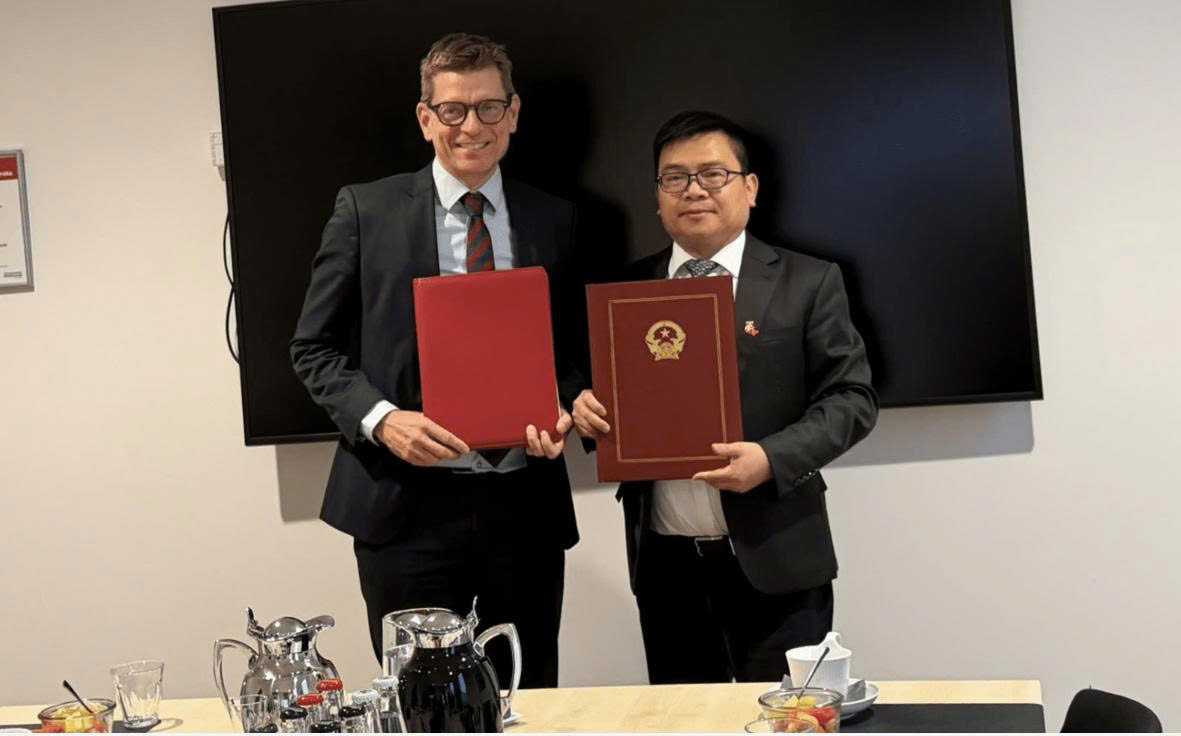
Viet Nam and Denmark have signed an MoU on energy cooperation to strengthen bilateral ties and advance collaboration in renewable energy and the green transition.
Deputy Minister Luong Hoang Thai met French Minister Delegate Eleonore Caroit on October 19 to discuss ways to strengthen Viet Nam - France cooperation.
The Viet Nam Economic News respectfully presents the full text of the Joint Statement on the Establishment of a Comprehensive Strategic Partnership between Viet Nam and Denmark.
Minister Le Manh Hung clarified proposals to repeal Commercial Law provisions and introduce new electricity pricing mechanisms, including for LNG-fired power.
Prime Minister Le Minh Hung urged Electricity Law amendments to ensure consistency, balance state, public and investor interests, and mobilize resources.
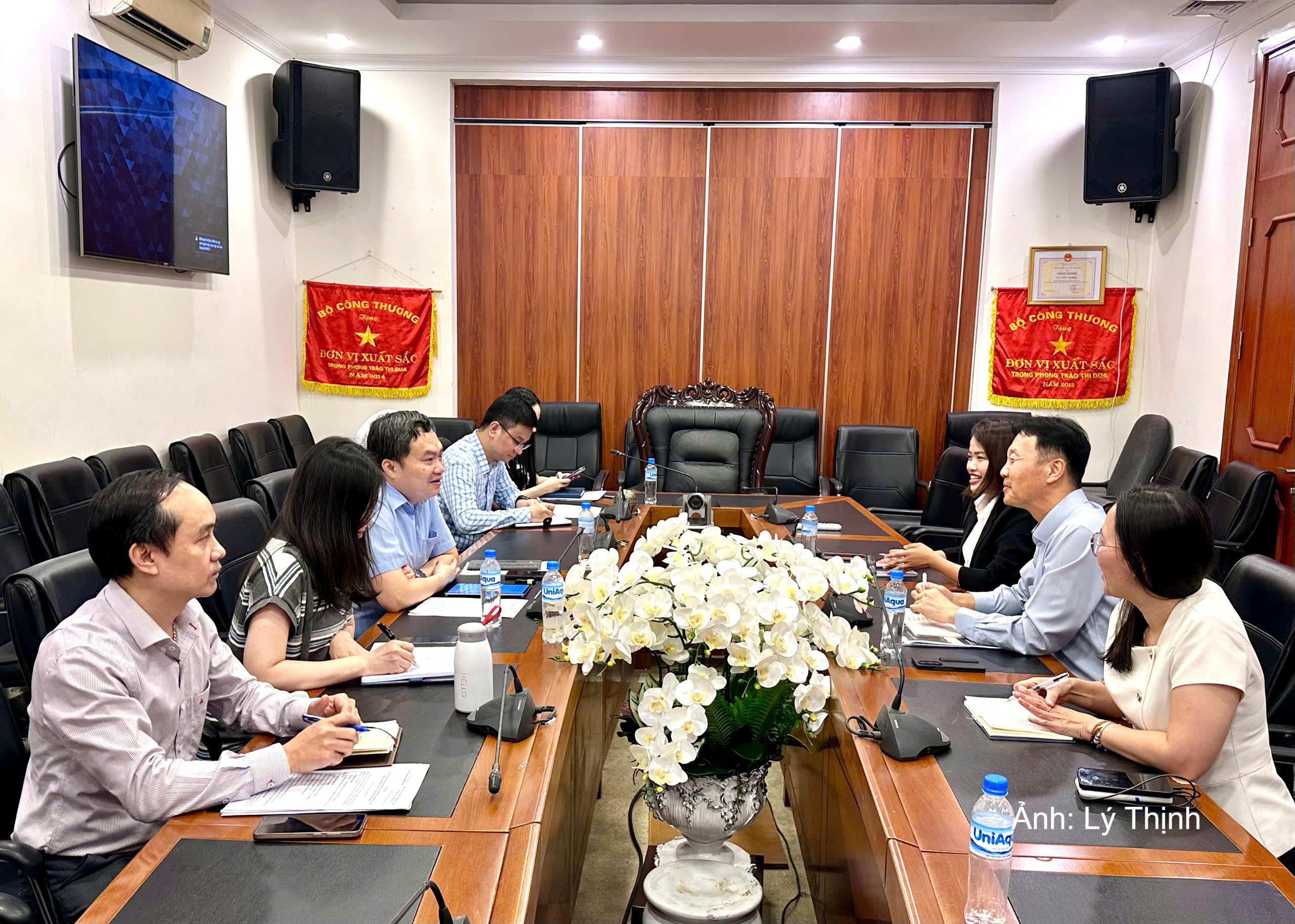
The Vietnam Industry Agency under the Ministry of Industry and Trade and Samsung Vietnam continue to strengthen cooperation in developing supporting industries, enhancing the capabilities of domestic enterprises and expanding opportunities for their participation in global supply chains.
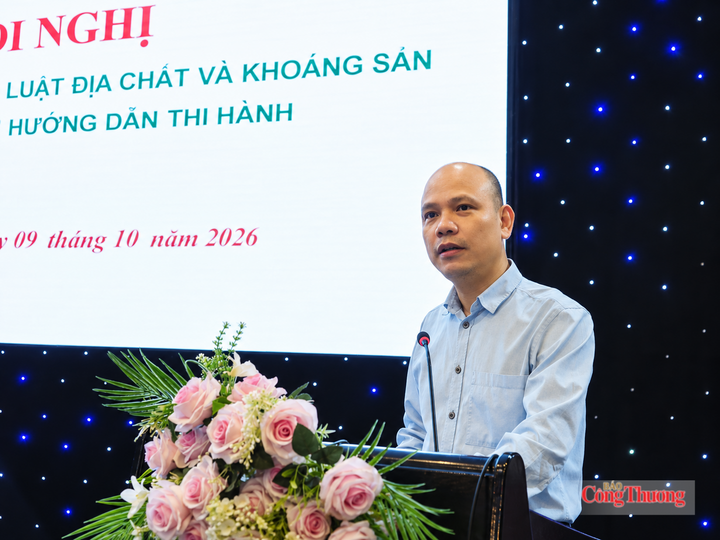
On October 9, the Viet Nam Department of Geology and Minerals, in coordination with the Thai Nguyen Department of Industry and Trade, held a conference in Thai Nguyen province to disseminate the Law on Geology and Minerals and its implementing regulations.
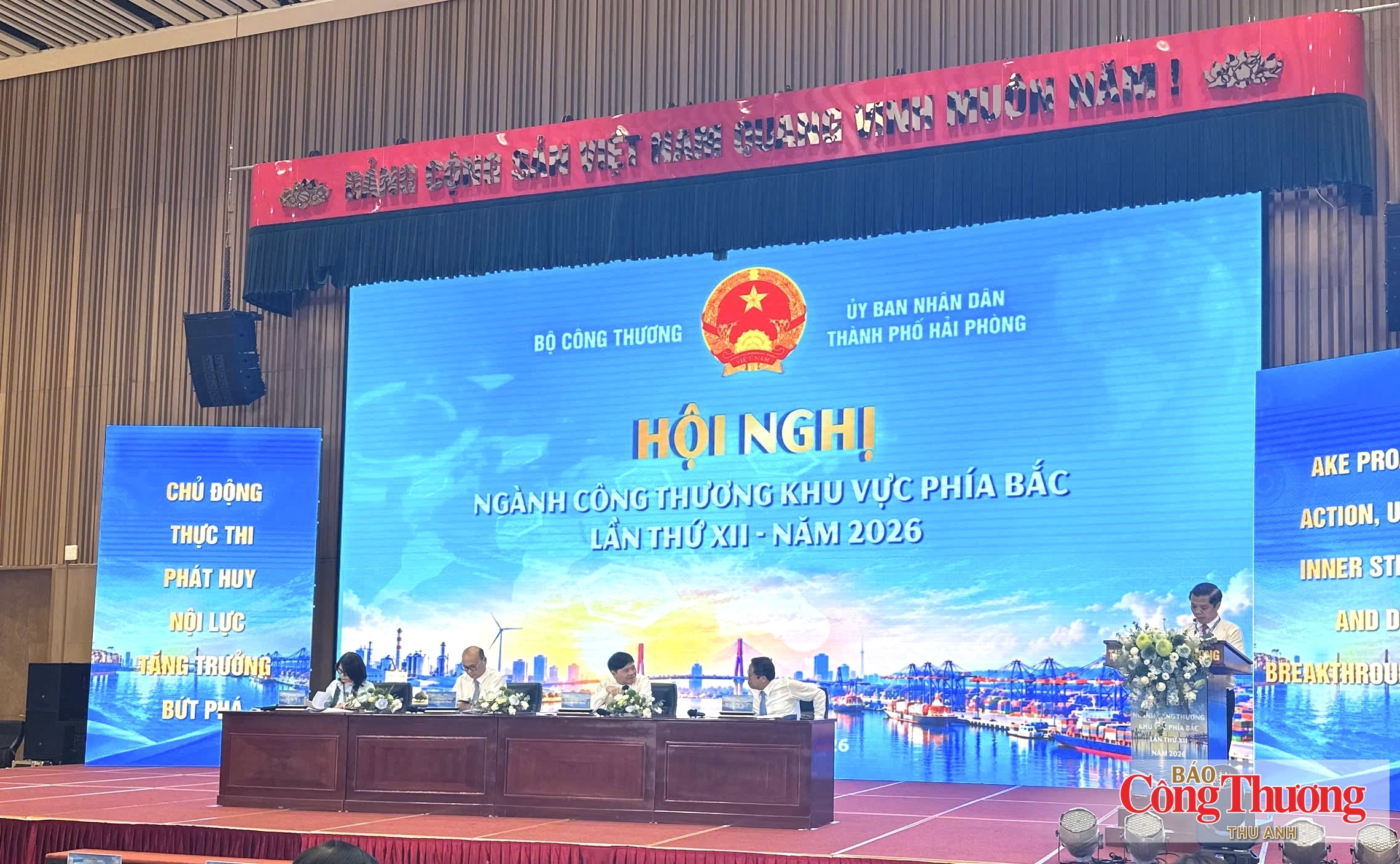
Northern localities are strengthening links in supporting industries, energy and logistics to build competitive value chains and create new growth drivers.
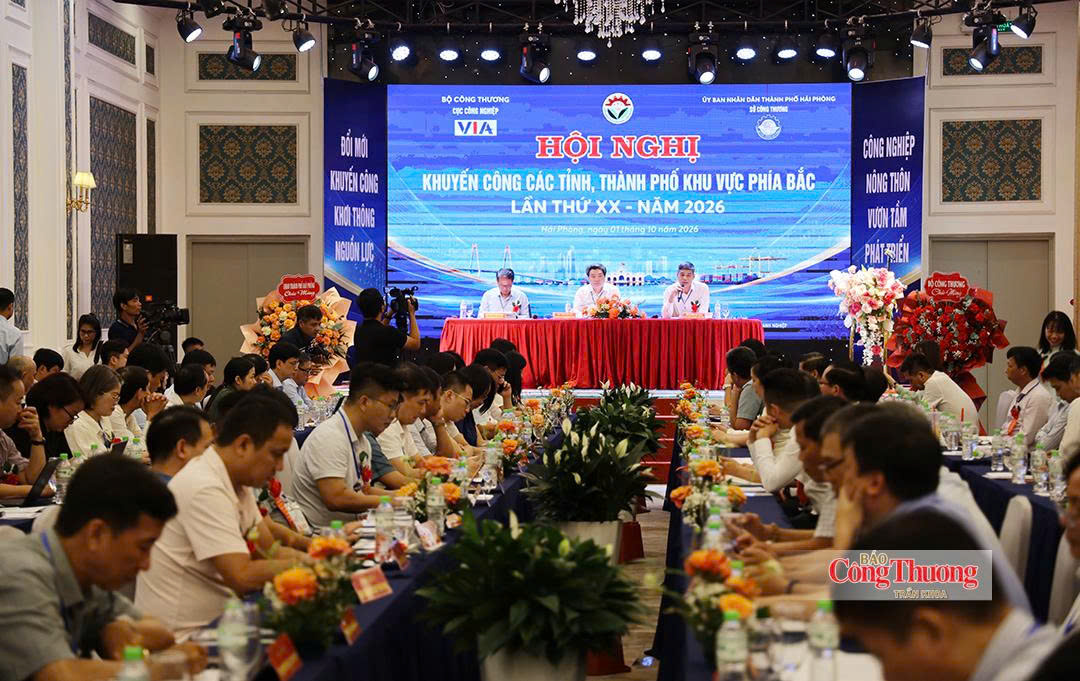
The 20th Industrial Promotion Conference for Northern Provinces and Cities in 2026 was held in Hai Phong City on October 1, with discussions focusing on renewing industrial promotion activities.
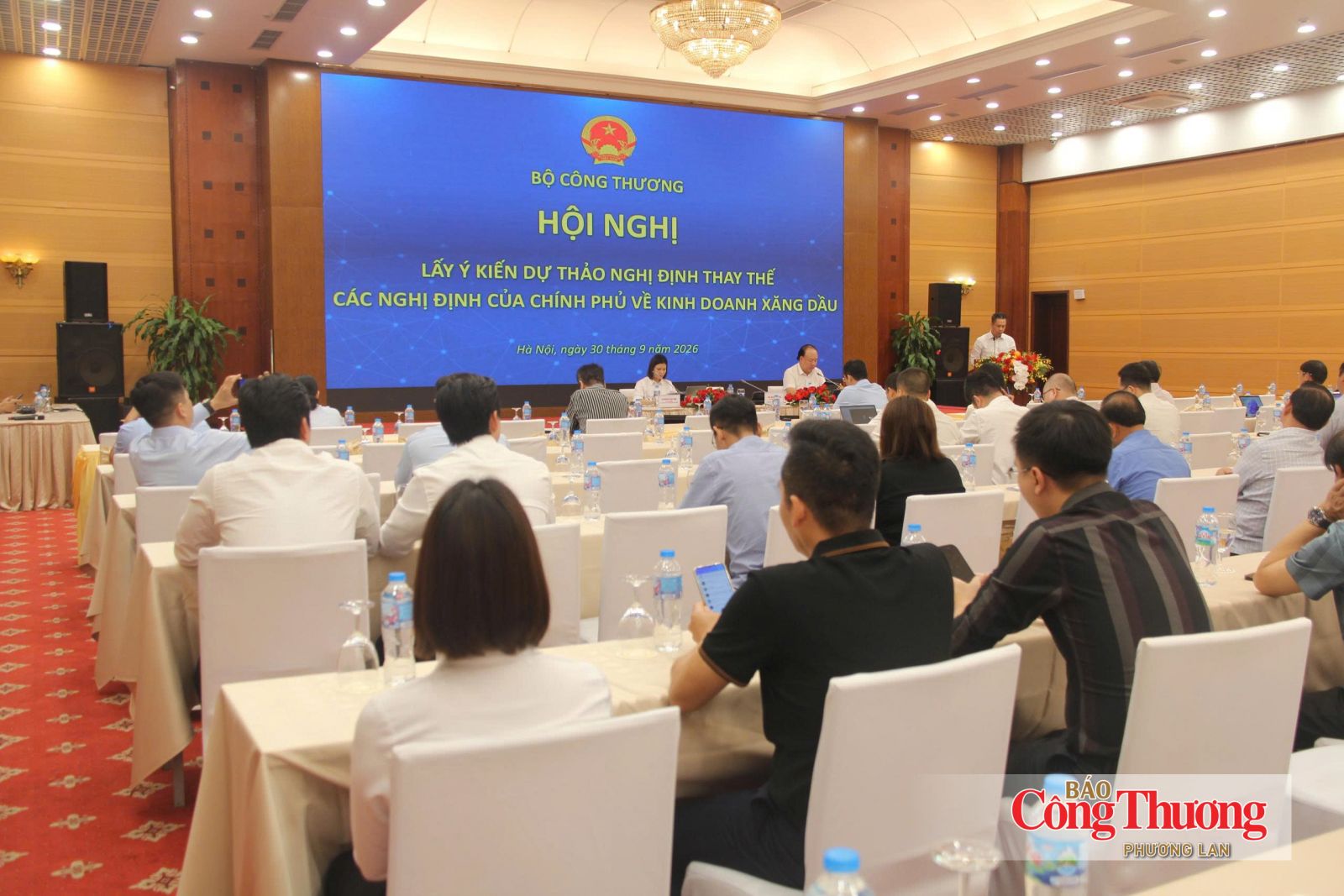
On September 30 in Ha Noi, the Ministry of Industry and Trade (MoIT) held a conference to gather broad feedback on a draft decree replacing the Government’s existing decrees on petroleum trading.