Minister Le Manh Hung clarified proposals to repeal Commercial Law provisions and introduce new electricity pricing mechanisms, including for LNG-fired power.
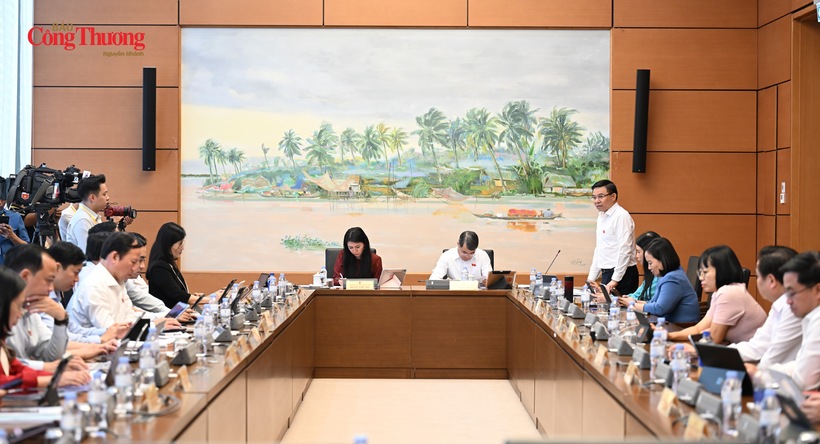
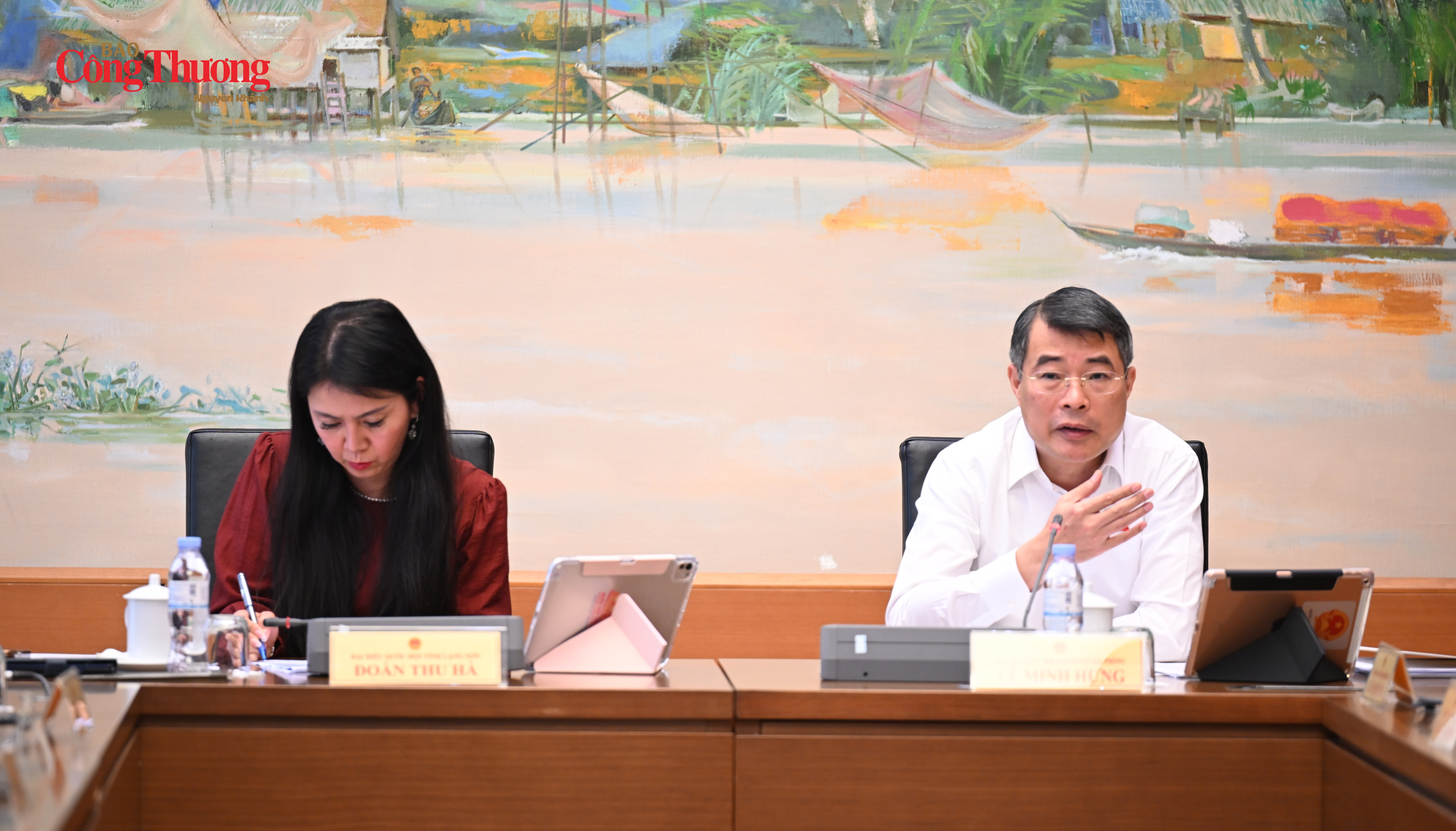
On the afternoon of October 20, at a discussion of Group 3 comprising National Assembly delegations from Hai Phong city and Ha Tinh and Lang Son provinces, Party Central Committee member and Minister of Industry and Trade Le Manh Hung, head of the agency responsible for drafting the proposed legislation, acknowledged deputies' comments and provided further clarification on several major issues concerning the draft Law amending and supplementing a number of articles of the Commercial Law, the Law on Competition, the Law on Foreign Trade Management and the Law on Protection of Consumer Rights, as well as the draft Law amending and supplementing a number of articles of the Electricity Law.
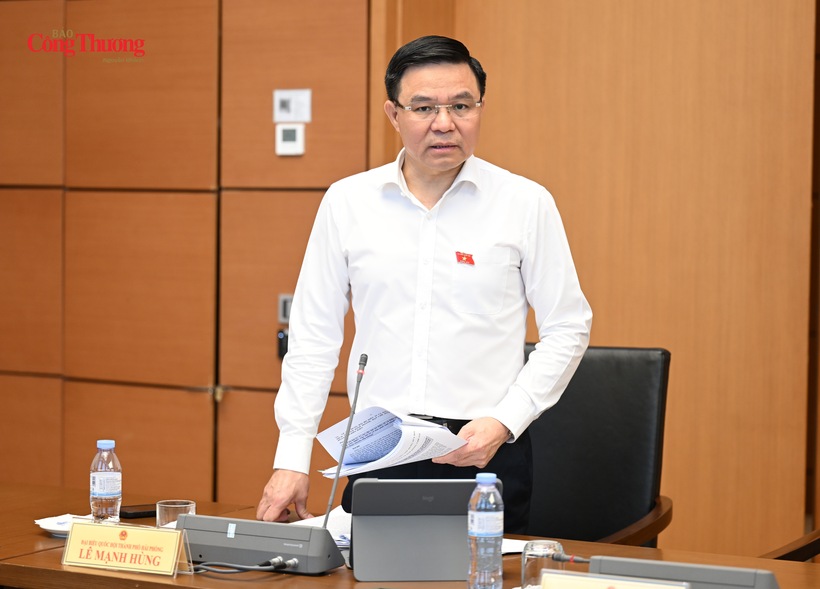
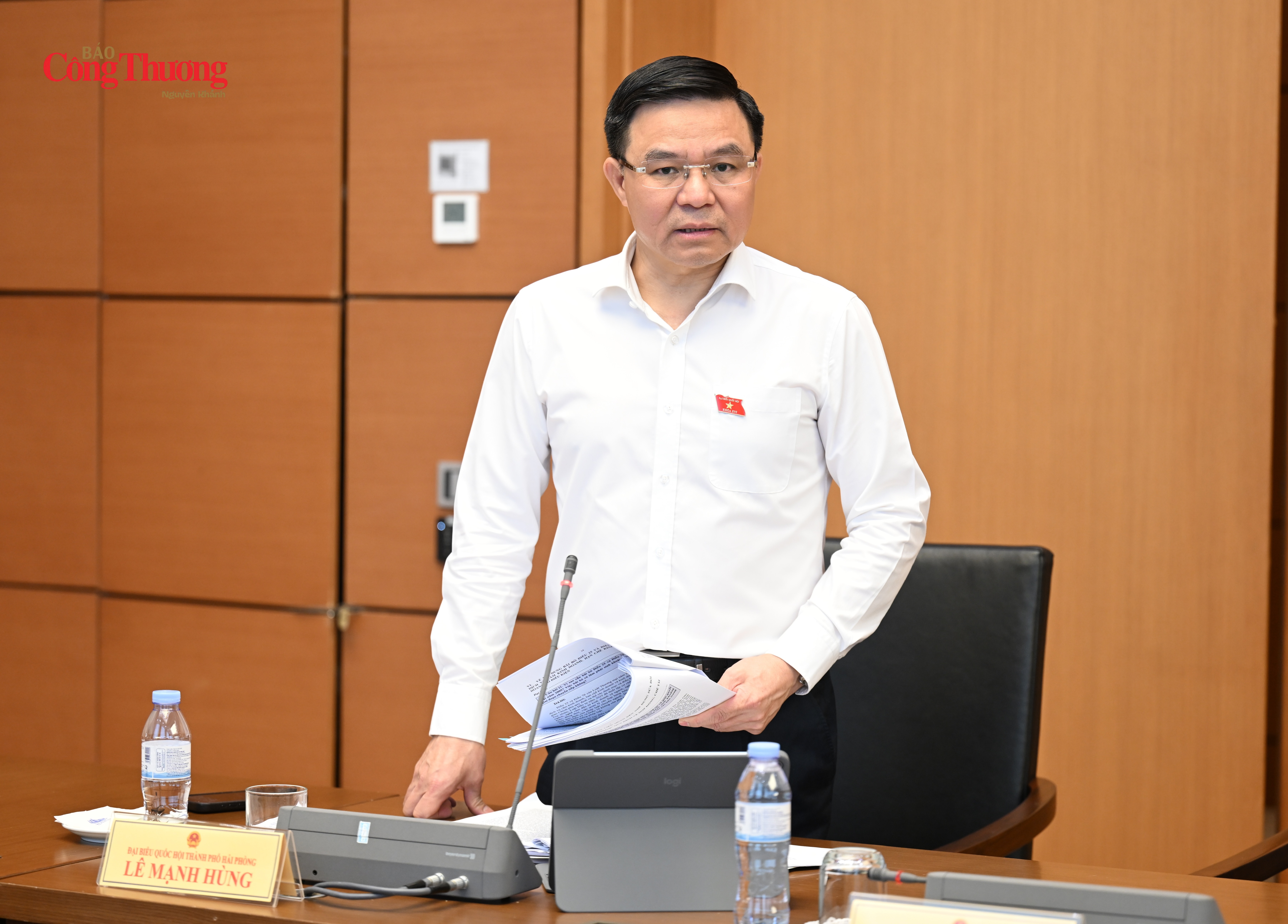
Party Central Committee member and Minister of Industry and Trade Le Manh Hung delivers remarks at the Group 3 discussion.
Minister Le Manh Hung stated that the process of amending the four laws governing commercial activities had consistently adhered to the core provisions previously submitted to the National Assembly. Following the discussion, the Ministry of Industry and Trade (MoIT) acknowledged several key concerns and provided further explanations on issues raised by deputies.
Two decades of the Commercial Law supporting international integration
Regarding the proposed amendments to and repeal of certain provisions of the Commercial Law, Minister Le Manh Hung noted that the legislation had a long history, having first been adopted by the National Assembly on May 10, 1997, before being revised through the 2005 Commercial Law, adopted on June 14, 2005.
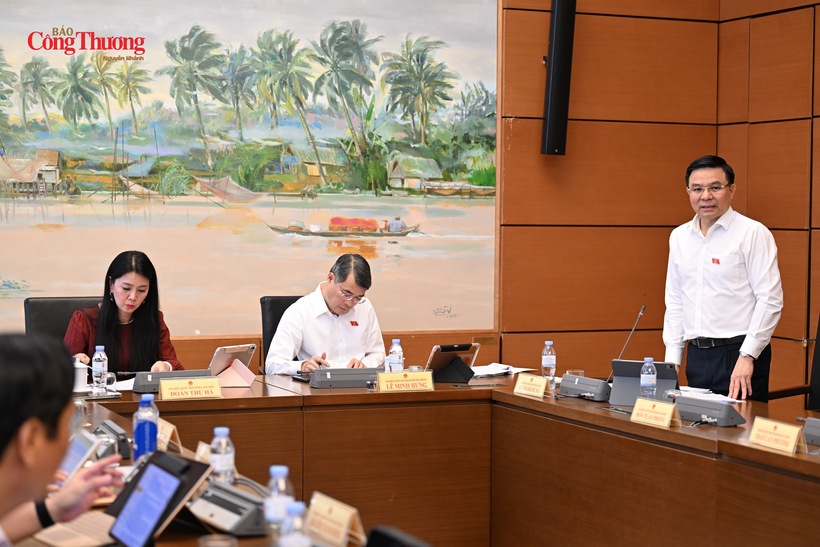
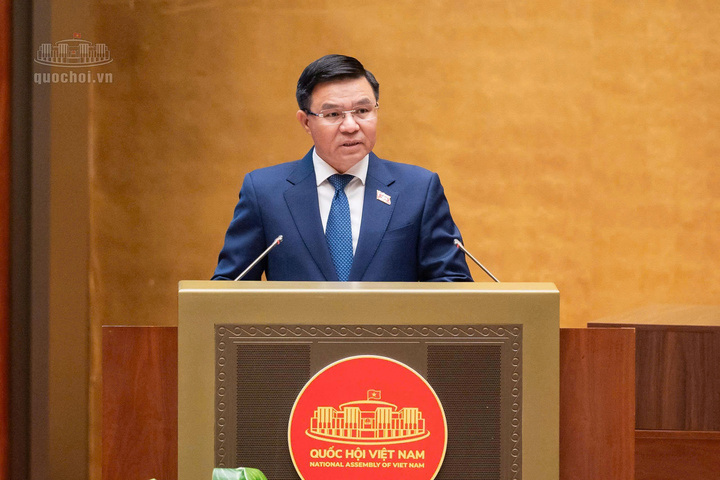
Minister of Industry and Trade Le Manh Hung delivers his remarks.
The Commercial Law has fulfilled its role and mission, making an important contribution to Viet Nam's successful international integration, particularly during the country's accession to the World Trade Organization (WTO), while also promoting the development of the domestic market.
Illustrating this progress, the Minister noted that total retail sales of goods and consumer service revenue stood at less than VND 480 trillion in 2005 but exceeded VND 7 quadrillion by 2025, representing an almost 15-fold increase. The law also contributed to the coordinated development of commercial activities.
According to the Minister, over the past two decades, numerous specialized laws have been developed and enacted on the basis of the Commercial Law, including the Law on Property Auction, the Law on Bidding, the Law on Advertising, the Law on Foreign Trade Management and the Law on Protection of Consumer Rights, as well as, notably, the 2015 Civil Code.
In essence, many provisions of the Commercial Law have been incorporated into other codes and specialized legislation, with detailed regulations tailored to individual sectors as they have evolved.
The Minister explained that the draft legislation amending the four laws in the commercial sector proposes repealing 139 of the Commercial Law's 324 articles. The decision not to undertake a comprehensive revision at this stage stems from the need to prioritize urgent obstacles, particularly overlapping provisions and inconsistencies concerning authority, while accelerating decentralization and delegation of powers to address practical difficulties in state management and business operations.
Repealing certain provisions will not affect commercial dispute resolution
Responding to concerns raised by National Assembly deputy Bui Xuan Hai of the Hai Phong delegation that the proposed repeal could affect the validity of arbitration agreements or create difficulties for international contracts for the sale of goods, Minister Le Manh Hung affirmed that removing certain provisions of the Commercial Law would not affect commercial transactions or the resolution of commercial disputes. These matters would continue to be governed by existing legal provisions.
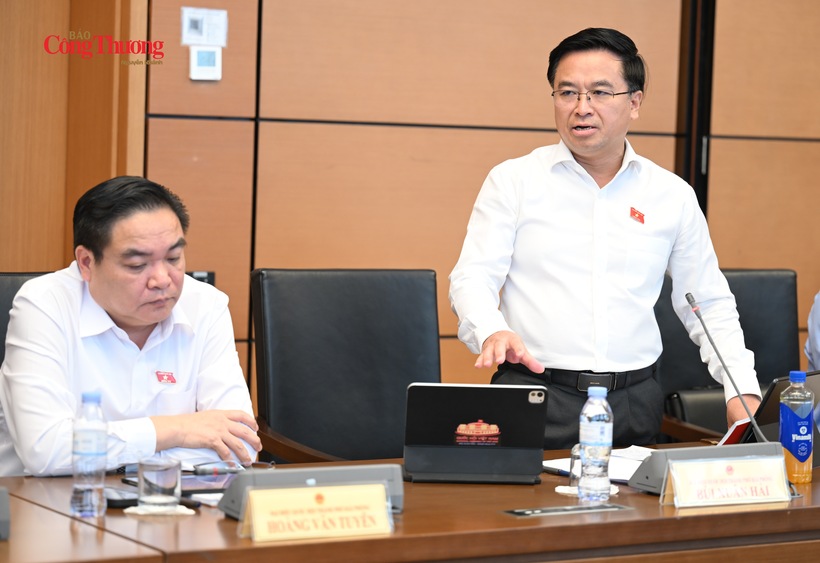
National Assembly deputy Bui Xuan Hai of the Hai Phong delegation.
Specifically, arbitration agreements, arbitral jurisdiction and procedures for resolving disputes through arbitration would continue to be governed by the Law on Commercial Arbitration.
For contracts falling within the scope of the 1980 Vienna Convention on Contracts for the International Sale of Goods (CISG), international commercial practices such as Incoterms and the provisions of the Convention and relevant trade usages would remain applicable, irrespective of the repeal of provisions under the Commercial Law.
Regarding amendments to the Law on Foreign Trade Management, particularly the allocation of responsibilities for certifying the origin of goods, an issue of concern to many deputies, the Minister stated that Articles 32, 34 and 35 clearly defined and allocated responsibilities among the relevant parties. The MoIT would continue reviewing, refining and supplementing provisions that had not yet been sufficiently clarified.
Electricity Law amendments driven by practical requirements
Turning to the draft Law amending and supplementing a number of articles of the Electricity Law, Minister Le Manh Hung explained that although Electricity Law No. 61/2024/QH15 had been adopted by the National Assembly only about two years earlier, amendments were necessary in response to pressing practical requirements.
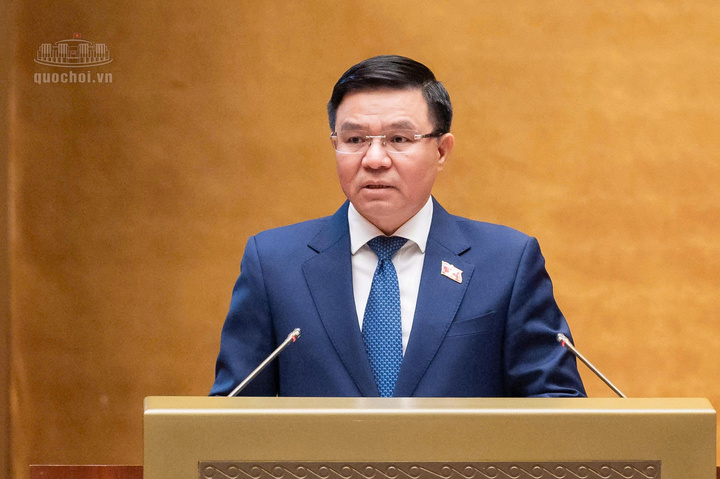
Minister Le Manh Hung explains that amendments to Electricity Law No. 61/2024/QH15 are necessary to address practical requirements, despite its adoption by the National Assembly only about two years ago.
First, the amendments seek to institutionalize Political Bureau Resolution No. 70-NQ/TW on ensuring national energy security. Second, they aim to incorporate into law the provisions of National Assembly Resolution No. 253/2025/QH15 on mechanisms and policies for national energy development during the 2026-2030 period. Third, they are intended to remove obstacles arising during the implementation of the revised Power Development Plan VIII, with the overarching objective of safeguarding national energy security and ensuring sufficient electricity supply for the economy.
The current amendments focus on four major groups of issues.
The first concerns updating and revising power development planning. In 2023, the Prime Minister issued Decision No. 500/QD-TTg approving Power Development Plan VIII, followed by Decision No. 768/QD-TTg in 2025 approving its revision.
However, as several deputies pointed out, implementation has encountered numerous difficulties, particularly in ensuring consistency between sector-specific and local planning amid adjustments to administrative boundaries and the implementation of decentralization and delegation of powers.
According to the Minister, the proposed amendments are therefore intended to address the need for greater consistency in planning and its implementation.
The second group of issues concerns the implementation of power projects included in approved development plans. Despite considerable efforts by the Government, ministries, sectors and local authorities, certain obstacles remain that must be resolved through legislative amendments.
As an example, the Minister explained that, following the approval of development plans, procedures for obtaining investment policy approval and implementing major projects at the local level continued to face significant difficulties. The processes of preparing investment policy proposals and obtaining written investor approvals involved overlapping stages, resulting in considerable delays.
Accordingly, the draft law introduces a classification of projects already included in approved development plans. Those meeting the prescribed conditions would be exempt from investment policy approval requirements and could instead rely on written investor approvals to establish their legal basis and proceed with implementation in accordance with the approved planning schedule.
The third group concerns negotiations over power purchase agreements (PPAs). In practice, even after investors have been selected, negotiations frequently become protracted because Electricity Law No. 61/2024/QH15 stipulates that the winning bid price for electricity serves only as a ceiling price, requiring the parties to continue negotiating.
The Minister acknowledged that the principal difficulty lies in determining an optimal price, as the interests of electricity buyers and sellers are often difficult to reconcile. Consequently, negotiations can extend over several years, with some projects having already entered commercial operation without a signed power purchase agreement.
The MoIT has advised the Government to propose that the National Assembly consider and approve a provision allowing the winning electricity bid price, determined through competitive bidding for investor selection, to serve as the basis for signing power purchase agreements.
According to the Minister, this approach would both mitigate potential risks and shorten the negotiation process.
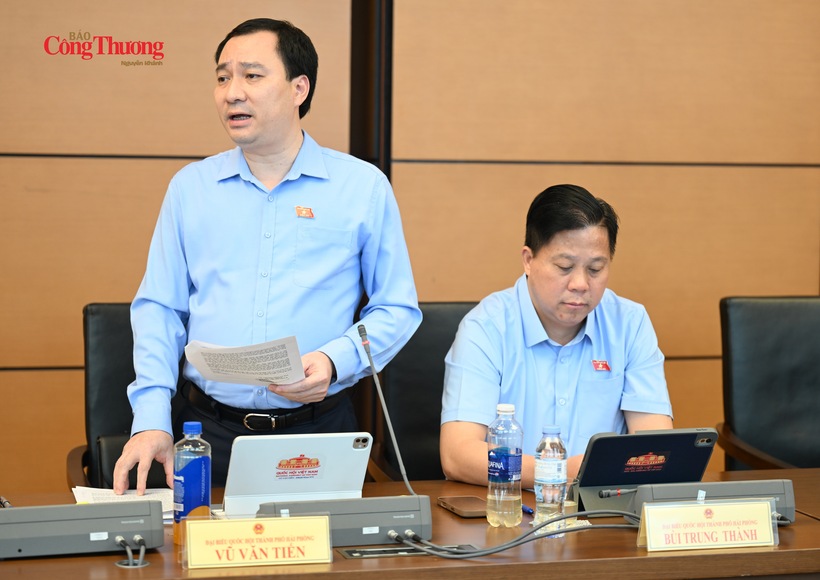
National Assembly deputy Vu Van Tien of the Hai Phong delegation.
The fourth group concerns policies to encourage the development of power generation sources, particularly gas-fired power, an issue raised by National Assembly deputy Vu Van Tien of the Hai Phong delegation.
The Minister explained that gas-fired power generation currently comprises two categories: plants using domestically produced natural gas and those using imported liquefied natural gas (LNG).
For plants using domestic natural gas, the policy is to maximize electricity generation in line with available gas supplies. The broader benefits include promoting exploration, extraction and development of the oil and gas industry, while generating substantial state revenue from domestic gas production. Beyond contributing to the state budget, these activities also support industrial development and job creation.
However, domestic gas supplies are insufficient to meet the demand for gas-fired power development, making imported LNG necessary. Under the revised Power Development Plan VIII, approximately 21 imported LNG-fired power projects, with a combined capacity of around 36,000 MW, are planned for the 2025-2035 period, including more than 23,000 MW during 2025-2030 alone. Mobilizing these power sources requires appropriate policy mechanisms.
The Minister observed that the existing provisions of Electricity Law No. 61/2024/QH15 and Decree No. 56/2025/ND-CP were not sufficiently attractive to investors.
The current minimum long-term contracted electricity output (Qc), set at 65%, has yet to provide adequate assurances, particularly given the substantial capital requirements of these projects and their important role in providing reserve generation capacity.
Electricity is dispatched entirely through the electricity market, based on price bids and dispatch schedules. Consequently, although Qc is stipulated by law, the actual volume of electricity dispatched depends entirely on bids submitted in the market.
Therefore, in the current draft, the MoIT has advised the Government to introduce a capacity price alongside the energy price.
The capacity price represents a payment to power generation sources for remaining available to generate electricity when required by the market. The mechanism is intended to safeguard investors' interests while avoiding a significant impact on the overall price level of the economy.
Minister of Industry and Trade Le Manh Hung: Provisions concerning offshore wind power development, renewable energy and related matters have been incorporated into the draft law in line with the energy transition and Viet Nam's commitments to green development.
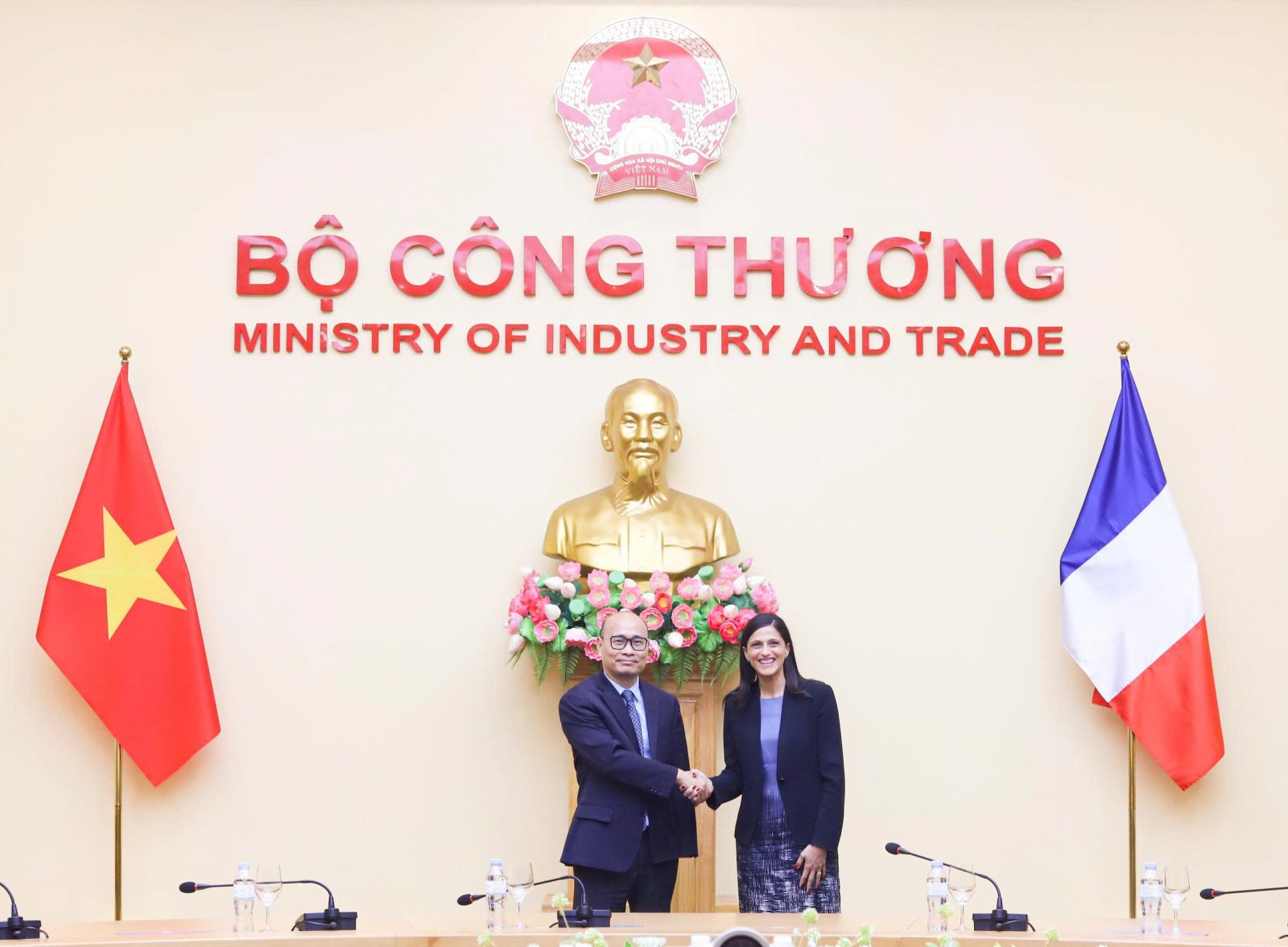
Deputy Minister Luong Hoang Thai met French Minister Delegate Eleonore Caroit on October 19 to discuss ways to strengthen Viet Nam - France cooperation.
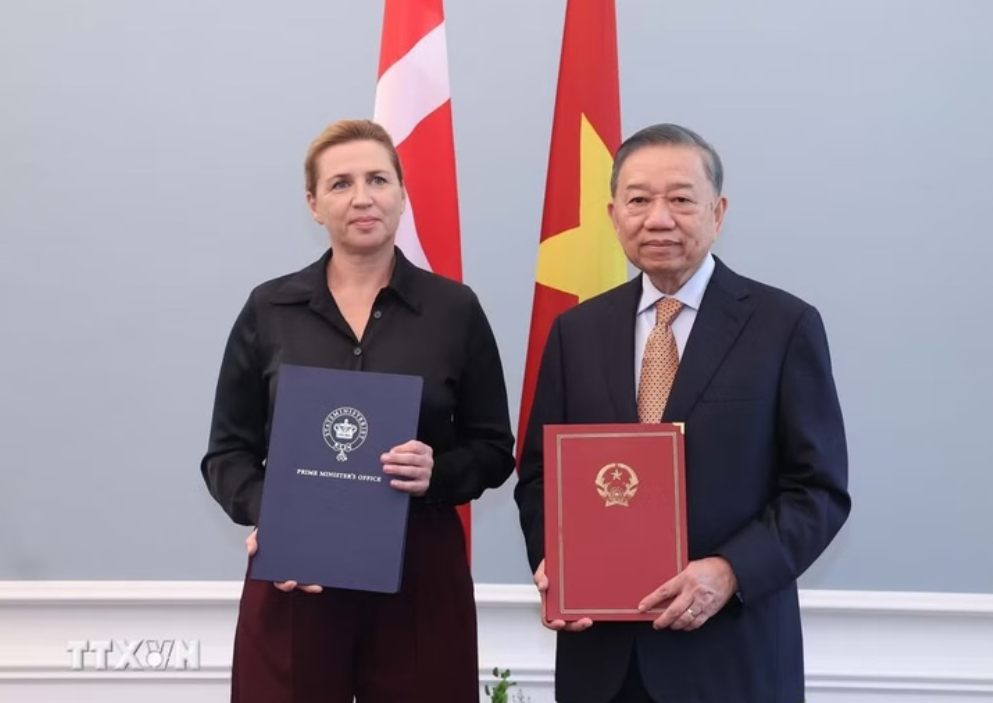
The Viet Nam Economic News respectfully presents the full text of the Joint Statement on the Establishment of a Comprehensive Strategic Partnership between Viet Nam and Denmark.
Minister Le Manh Hung clarified proposals to repeal Commercial Law provisions and introduce new electricity pricing mechanisms, including for LNG-fired power.
Prime Minister Le Minh Hung urged Electricity Law amendments to ensure consistency, balance state, public and investor interests, and mobilize resources.
On October 20, at the second session of the 16th National Assembly, Minister of Industry and Trade Le Manh Hung presented the Government's submission on the draft Law amending and supplementing a number of articles of the Electricity Law.
The Viet Nam Economic News respectfully presents the full text of the Joint Statement on the Establishment of a Comprehensive Strategic Partnership between Viet Nam and Denmark.
Prime Minister Le Minh Hung urged Electricity Law amendments to ensure consistency, balance state, public and investor interests, and mobilize resources.
On October 20, at the second session of the 16th National Assembly, Minister of Industry and Trade Le Manh Hung presented the Government's submission on the draft Law amending and supplementing a number of articles of the Electricity Law.
On October 20, Minister Le Manh Hung presented proposed amendments to four laws on commerce, competition, foreign trade management and consumer rights.
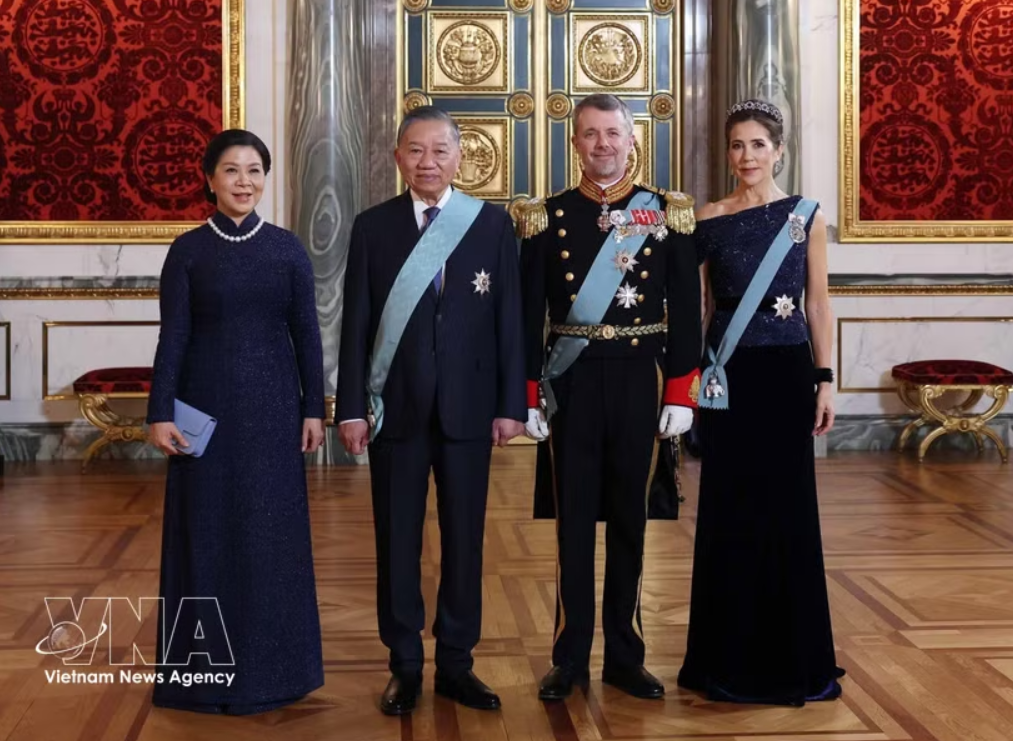
General Secretary of the Communist Party of Vietnam Central Committee and State President To Lam, his spouse and a high-ranking Vietnamese delegation attended a state banquet hosted by King Frederik X and Queen Mary in Copenhagen on the evening of October 19 (local time).