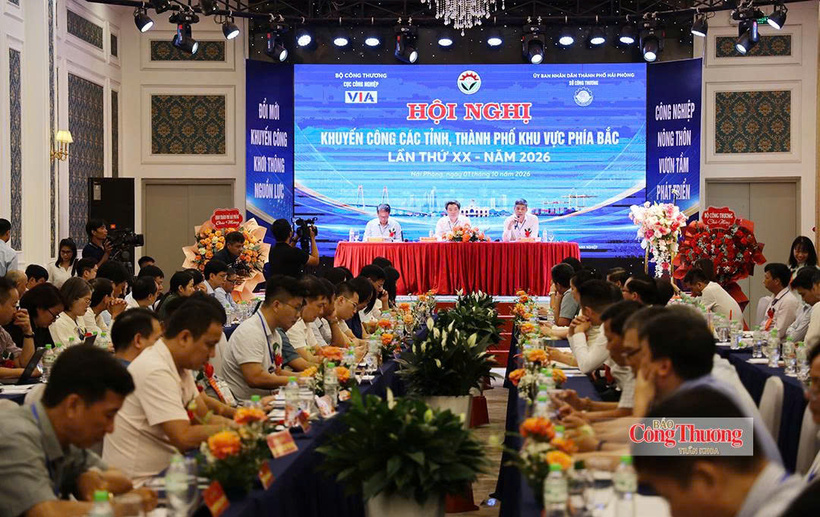
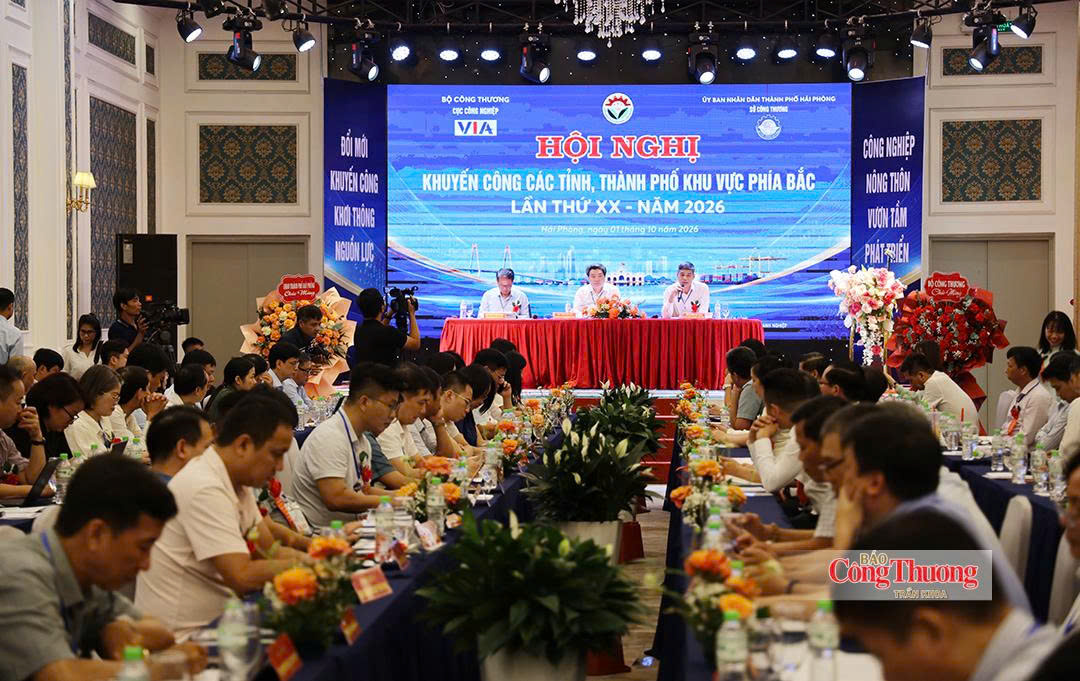
The 20th Industrial Promotion Conference for Northern Provinces and Cities in 2026 was held in Hai Phong City on October 1, with discussions focusing on renewing industrial promotion activities.
The conference was jointly organised by the Viet Nam Industry Agency under the Ministry of Industry and Trade (MoIT) and the Hai Phong Department of Industry and Trade.
The event was attended by leaders and representatives of the Viet Nam Industry Agency and other units under the MoIT; leaders of the Hai Phong Department of Industry and Trade; representatives of relevant departments, sectors and agencies; leaders of Departments of Industry and Trade and industrial promotion units from provinces and cities; as well as representatives of enterprises and rural industrial establishments nationwide.
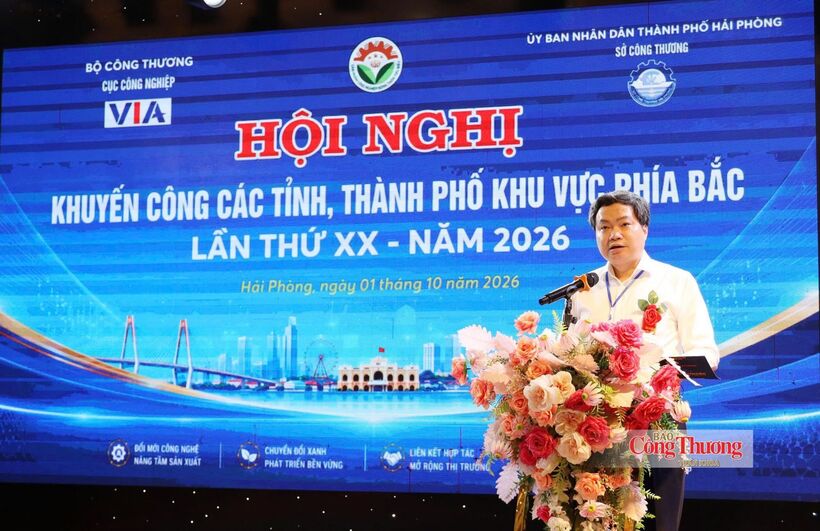
Tran Viet Hoa, Director-General of the Viet Nam Industry Agency under the Ministry of Industry and Trade, delivers remarks at the conference.
Industrial promotion must build growth capacity
At the opening of the conference, Tran Viet Hoa, Director-General of the Viet Nam Industry Agency under the MoIT, said the event took place as the entire Industry and Trade sector was accelerating efforts to fulfil the socio-economic development targets for 2026.
The conference, he said, was not only an opportunity to assess the results of industrial promotion activities in 2025 and the first nine months of 2026, but also a chance to gain a clearer understanding of the role of industrial promotion in industrial development policy, thereby identifying appropriate tasks and solutions for the period ahead.
Nguyen Van Thinh, Deputy Director-General of the Viet Nam Industry Agency, attends the conference.
According to Tran Viet Hoa, 2026 is also the first year of implementing the National Industrial Promotion Programme for the 2026-2030 period under Decision No.2646/QD-BCT dated September 23, 2025, issued by the Minister of Industry and Trade, while operating within a new legal framework established under the Government's Decree No.235/2025/ND-CP.
The Director of the Viet Nam Industry Agency said the northern region has considerable advantages in agro-forestry processing, minerals, craft villages, border-gate economy, logistics and industrial-service networks. The new space for connectivity offers further room to organise production along value chains, promote deep processing, technological innovation, digital and green transformation, and expand markets.
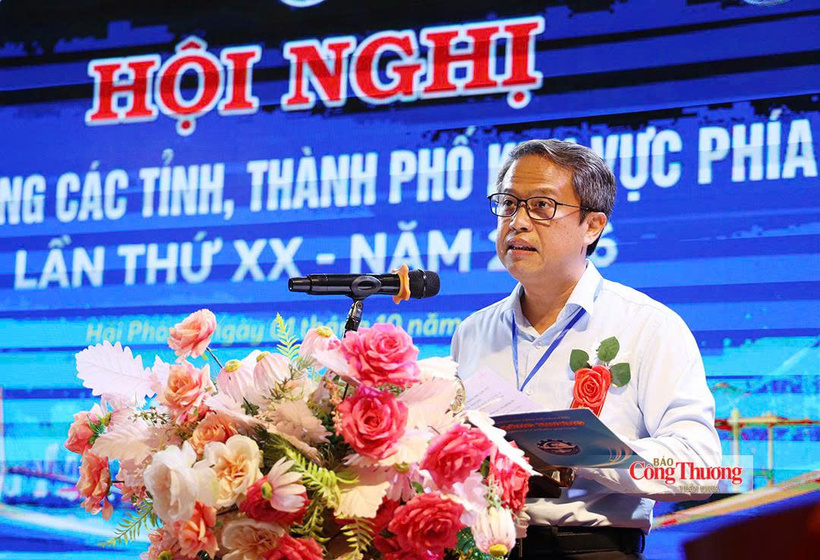
Nguyen Hoang Long, member of the Hai Phong Party Committee and Director of the Hai Phong Department of Industry and Trade, delivers remarks at the conference.
Although industrial promotion does not have a separate industrial production target, it contributes to industrial growth by creating additional production capacity, improving productivity, quality and added value, and mobilising social resources.
Amid efforts to achieve high growth and move towards double-digit industrial growth, industrial promotion needs to be placed within the broader framework of policy instruments designed to foster local industrial development. Accordingly, industrial promotion resources must play a guiding role, be directed towards key priorities, and contribute to creating new production capacity and enhancing the competitiveness of enterprises and rural industrial establishments.
Against this backdrop, the Director of the Viet Nam Industry Agency asked the conference to focus on three groups of issues.
First, it should objectively assess the results of industrial promotion activities in 2025 and the first nine months of 2026, looking beyond the number of projects or disbursement progress to clarify the effectiveness of support in terms of production capacity, productivity, quality, added value, markets and the amount of social capital mobilised.
Second, participants should exchange models and approaches capable of creating new momentum for local industrial growth, with priority given to technological innovation, digital transformation, green production, deep processing, market development and value-chain linkages.
Third, the conference should frankly identify bottlenecks in implementation, financial mechanisms, and the procedures for developing and managing projects in order to further improve relevant policies.
“The overarching approach is to shift from a mindset of allocating support resources to one of building growth capacity, with the State budget playing a guiding role, technology and productivity serving as drivers, and enterprises and rural industrial establishments acting as the central players,” Tran Viet Hoa emphasised.
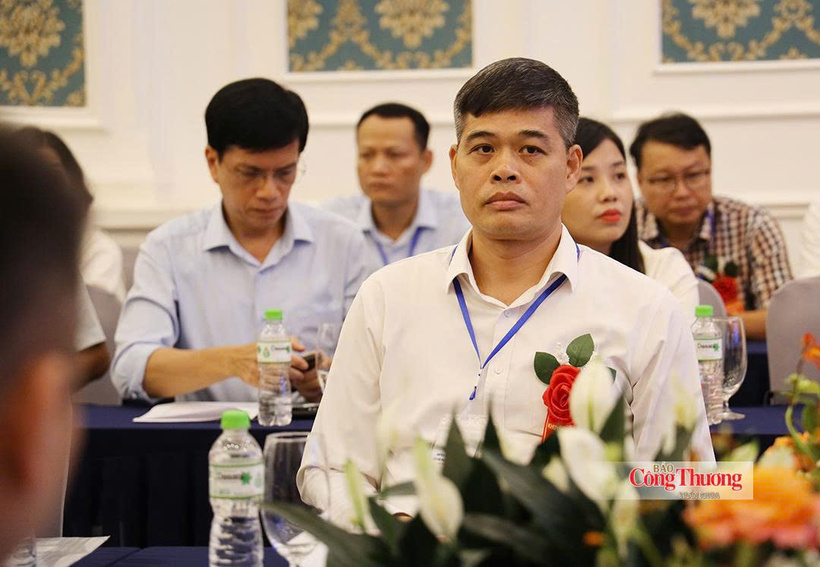
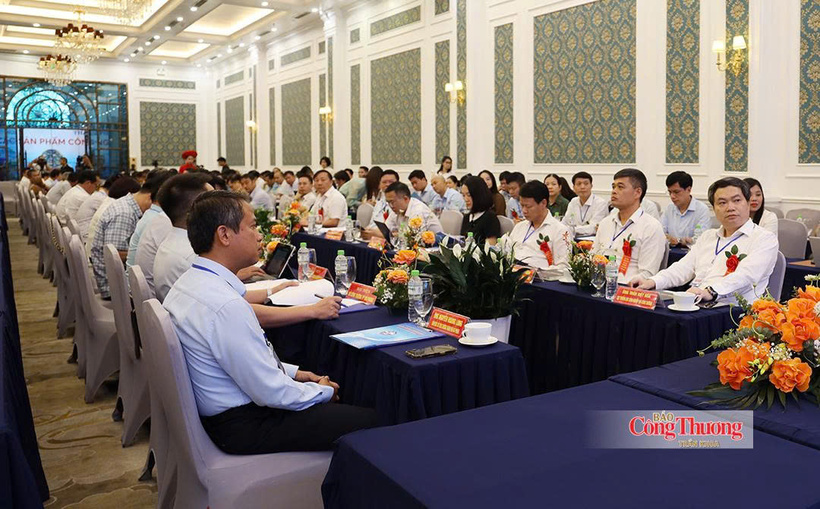
Delegates attend the event.
Renewing industrial promotion to drive rural industrial developmentAt the conference, Nguyen Hoang Long, member of the Hai Phong Party Committee and Director of the Hai Phong Department of Industry and Trade, said Hai Phong is a port city with a long tradition of industrial development and serves as one of the country's major industrial, commercial and logistics hubs.
In the first nine months of 2026, the city continued to maintain positive growth momentum. Its gross regional domestic product (GRDP) was estimated to have expanded by 12.08%, with the industrial sector growing by 14.27%. The index of industrial production rose by 15.23%, while processing and manufacturing increased by 15.47%.
Total retail sales of goods and services revenue reached VND 320.89 trillion, up 16.08%; export turnover was estimated at USD 43.72 billion, up 12.3%; and cargo throughput at local ports reached 156.3 million tonnes, an increase of 11.8% year on year.
With the country's third-largest industrial scale, Hai Phong identifies the development of rural industries and handicrafts as an important area that helps tap the potential of individual localities, create jobs and promote economic restructuring.
According to the Director of the Hai Phong Department of Industry and Trade, industrial promotion serves as a “bridge” connecting State policies with enterprises and production establishments, supporting technological innovation, improving productivity and product quality, and expanding markets.
Based on the MoIT's orientation for developing the industrial promotion programme for the 2026 - 2030 period, the city is undertaking strong reforms in industrial promotion activities, with a focus on key priorities and avoiding fragmented support. It is shifting from individual assistance to coordinated support, and from input-based assistance to management based on outputs and policy impacts.
Hai Phong has identified three key tasks: technology-oriented industrial promotion, focusing on equipment upgrades and automation to improve productivity and added value; industrial promotion linked with digital and green transformation, energy efficiency and circular production; and value-chain-based industrial promotion to strengthen linkages between rural industrial establishments and large enterprises, foreign-invested enterprises and supporting industries.
Representatives of local Departments of Industry and Trade also spoke highly of the contribution made by industrial promotion activities to industrial and local economic development. However, they noted that in the new context, industrial promotion activities need to continue evolving to better reflect practical conditions.
The 20th Industrial Promotion Conference for Northern Provinces and Cities in 2026 is jointly organised by the Viet Nam Industry Agency under the Ministry of Industry and Trade and the Hai Phong Department of Industry and Trade.
Hoang Anh Tuan, Deputy Director of the Bac Ninh Department of Industry and Trade, said urbanisation and the reorganisation of administrative units were creating new requirements for industrial promotion policies.
In 2025, using funding from national and local industrial promotion programmes, Bac Ninh supported dozens of rural industrial establishments in applying advanced machinery and equipment, improving packaging and labelling, conducting trade promotion activities, and participating in the selection of outstanding rural industrial products.
However, since September 20, 2026, when Bac Ninh became a centrally governed city and many communes were converted into wards, the scope of beneficiaries eligible for industrial promotion policies has also changed.
According to the representative of the Bac Ninh Department of Industry and Trade, many small production establishments, household businesses, cooperatives and enterprises associated with craft villages and traditional occupations remain in these wards, including Dong Ky, Phu Lang, Chu rice noodles, Bai Oi woodworking and Van Village liquor. These establishments remain in significant need of support for technological innovation, improved production conditions, and compliance with environmental, fire prevention and fighting, and safety requirements.
Based on this reality, Bac Ninh proposed further studying and refining Decree No.235/2025/ND-CP to make it more appropriate for areas undergoing urbanisation. It also proposed a transitional mechanism for areas recently converted from communes into wards to ensure that industrial promotion policies are not disrupted and remain accessible to production establishments facing significant difficulties.
Sharing this view, Nguyen Hoai Thuong, a representative of the Quang Ninh Department of Industry and Trade, proposed improving industrial promotion mechanisms in a more flexible manner to align with the two-tier local government model, allowing localities to proactively select implementing units, including permitting Departments of Industry and Trade to directly carry out industrial promotion activities.
She also proposed that the Ministry of Finance revise regulations on the preparation, allocation and assignment of industrial promotion funding estimates to ensure compatibility with the new organisational model.
Quang Ninh also proposed maintaining industrial promotion support policies for wards affected by the transition from province to city status for an appropriate period, while calling for the early issuance of relevant circulars and techno-economic norms to provide local authorities with a basis for implementing their 2027 plans.
Polish Prime Minister Donald Tusk will pay an official visit to Viet Nam from October 24 to 26 as the bilateral trade continues to grow, creating opportunities for deeper cooperation.
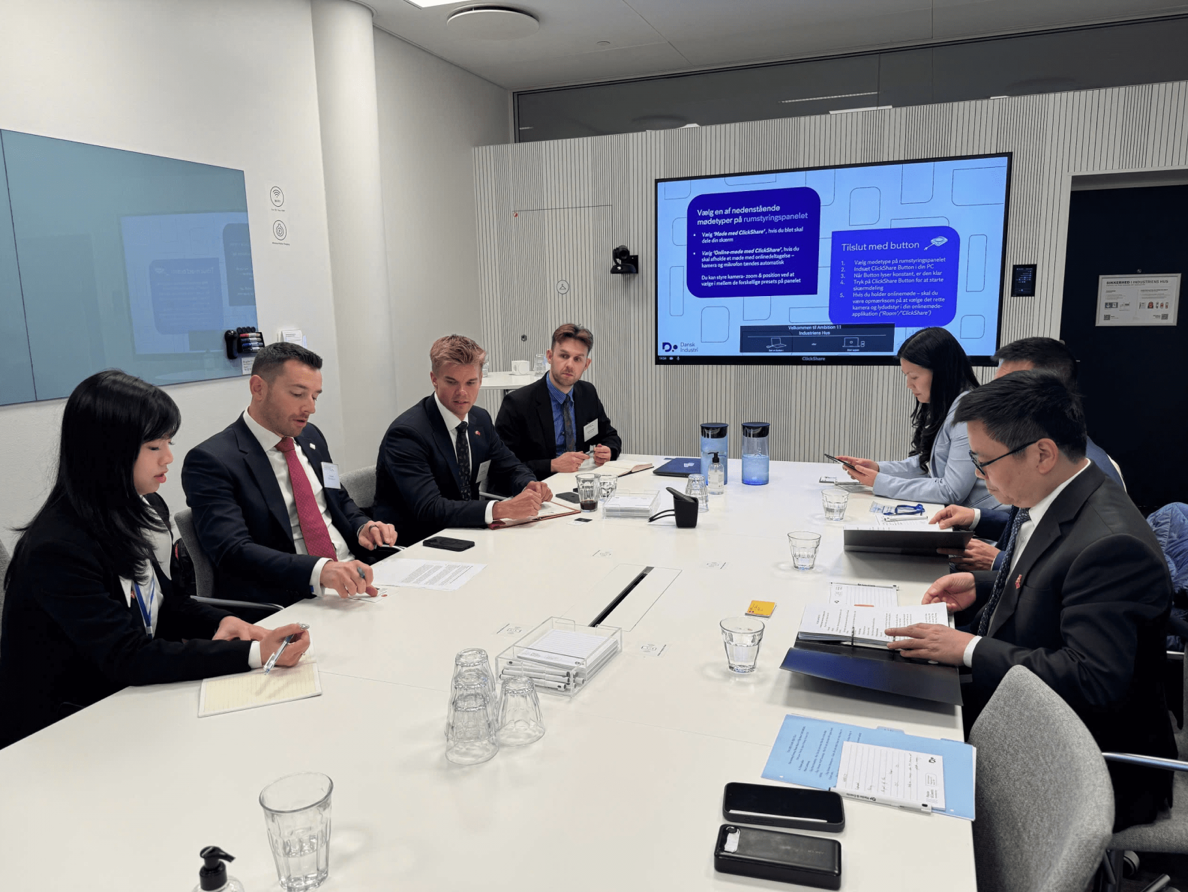
Deputy Minister Truong Thanh Hoai met with LEGO and Carlsberg in Denmark on October 20 to discuss green investment and sustainable manufacturing in Viet Nam.
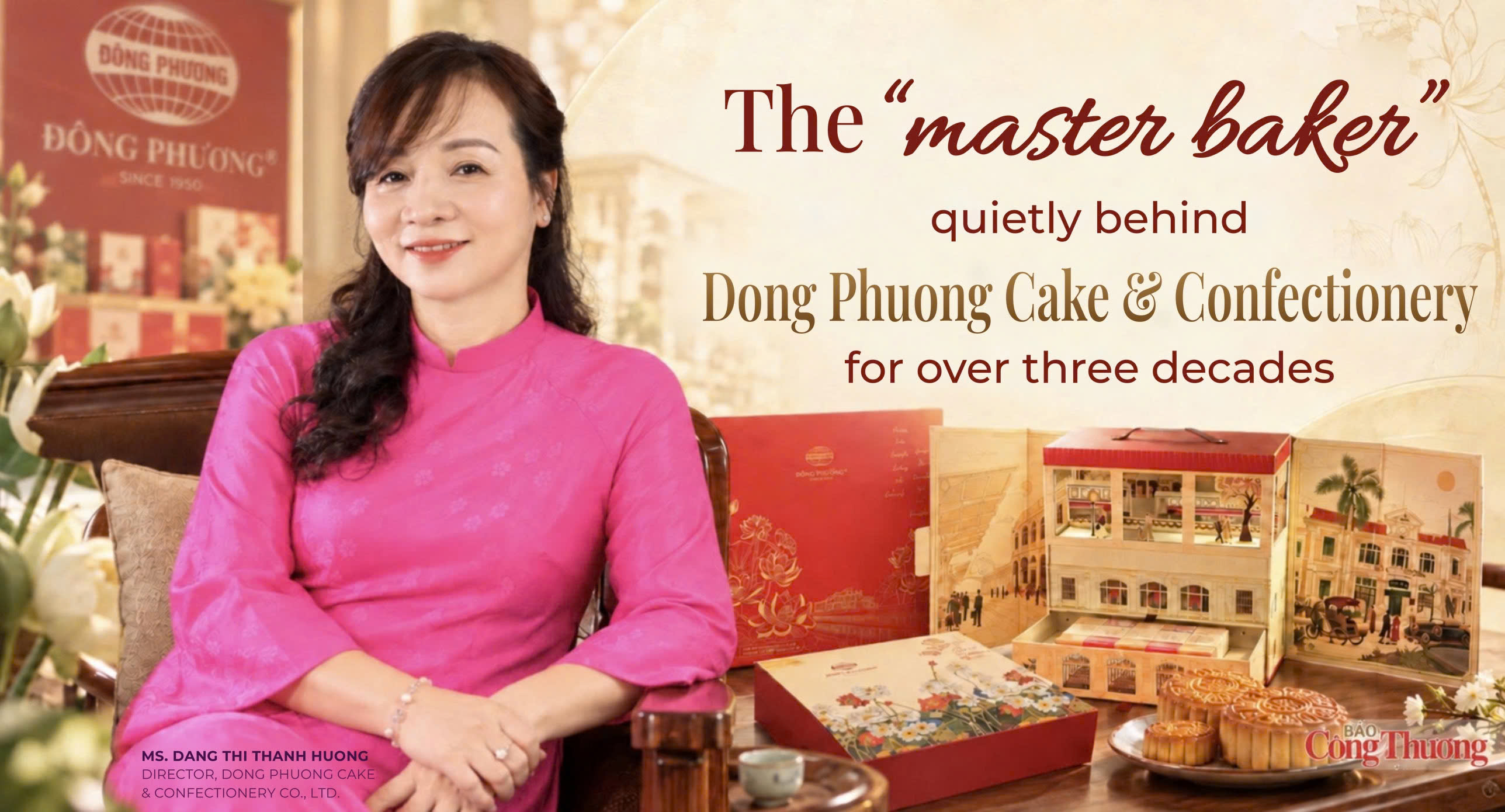
For more than three decades, Ms. Dang Thi Thanh Huong has quietly shaped the legacy of Dong Phuong Cake & Confectionery, a brand rooted in tradition, craftsmanship.
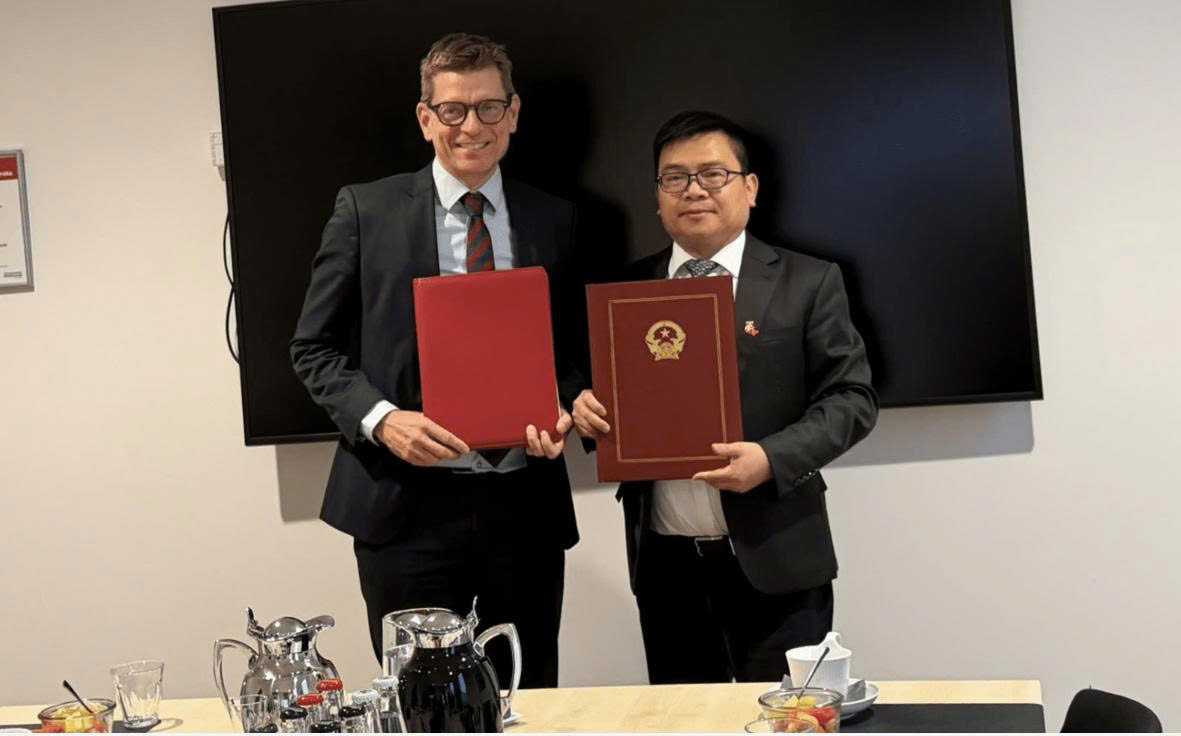
Viet Nam and Denmark have signed an MoU on energy cooperation to strengthen bilateral ties and advance collaboration in renewable energy and the green transition.
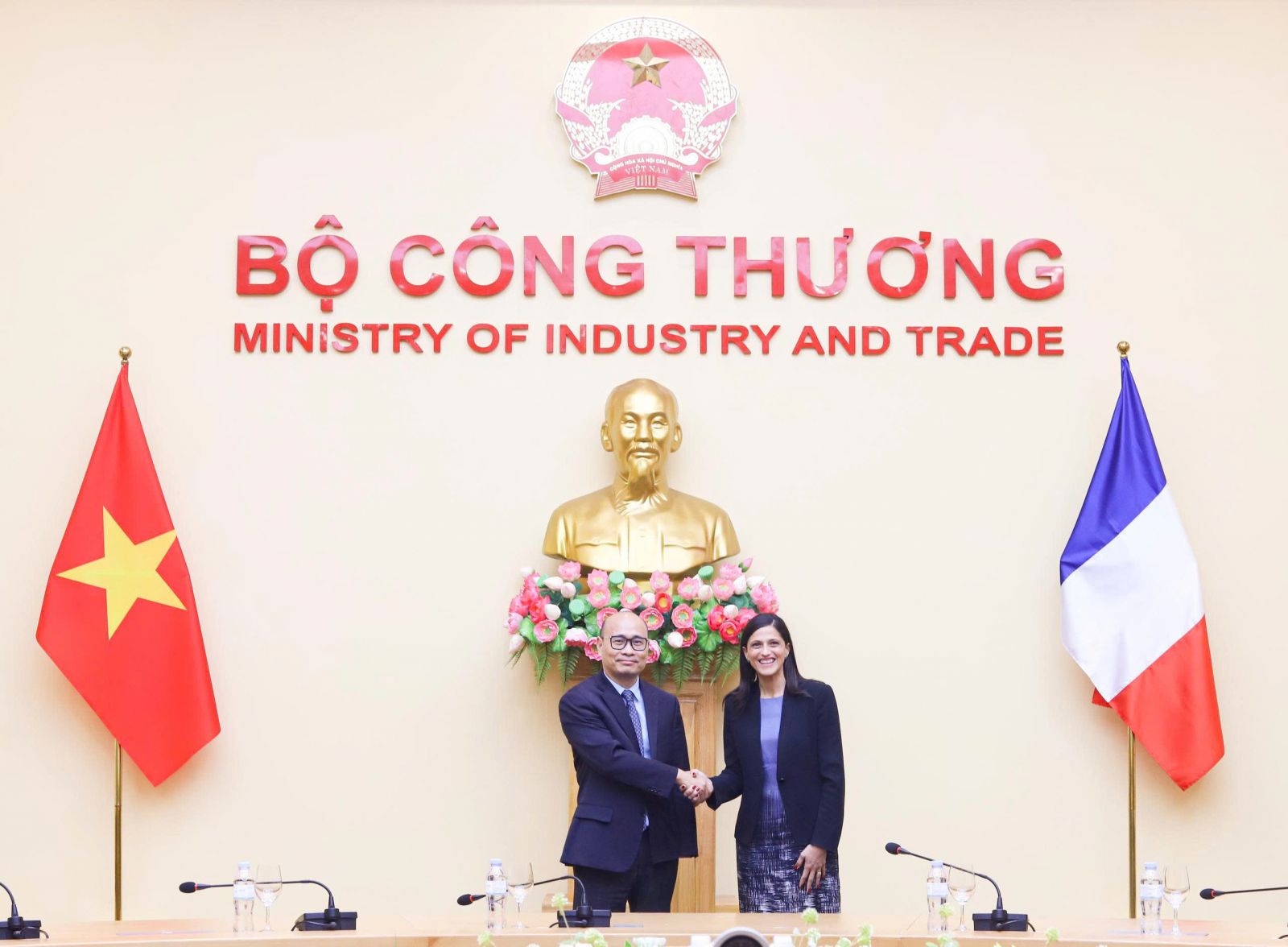
Deputy Minister Luong Hoang Thai met French Minister Delegate Eleonore Caroit on October 19 to discuss ways to strengthen Viet Nam - France cooperation.
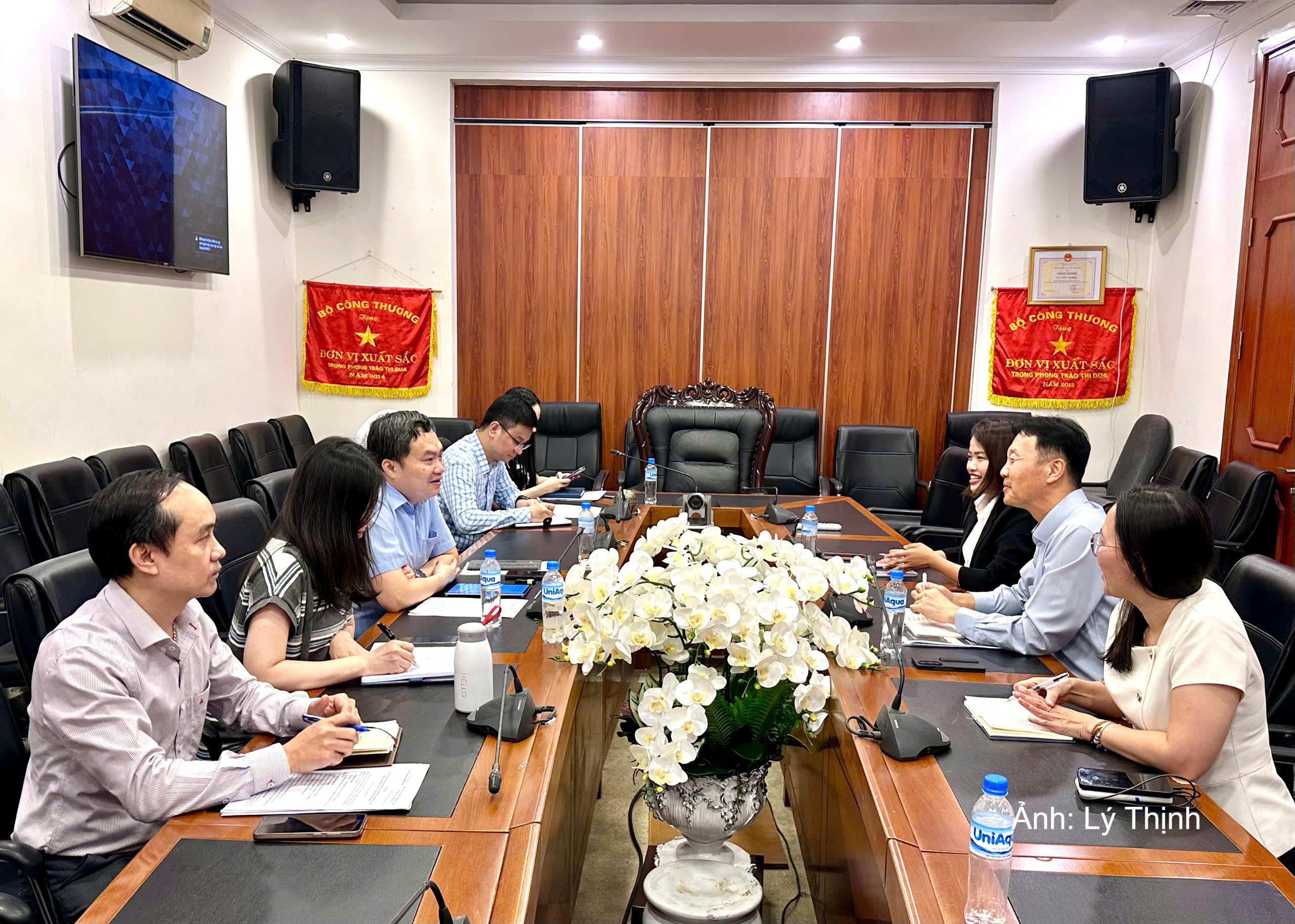
The Vietnam Industry Agency under the Ministry of Industry and Trade and Samsung Vietnam continue to strengthen cooperation in developing supporting industries, enhancing the capabilities of domestic enterprises and expanding opportunities for their participation in global supply chains.
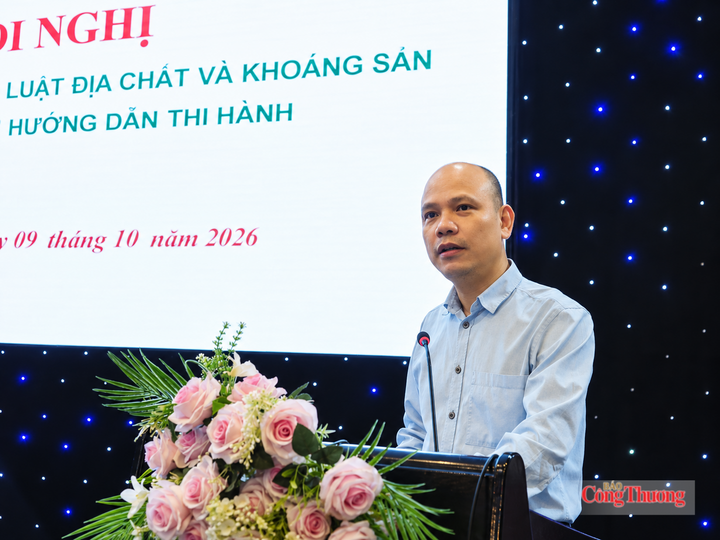
On October 9, the Viet Nam Department of Geology and Minerals, in coordination with the Thai Nguyen Department of Industry and Trade, held a conference in Thai Nguyen province to disseminate the Law on Geology and Minerals and its implementing regulations.
Northern localities are strengthening links in supporting industries, energy and logistics to build competitive value chains and create new growth drivers.
The 20th Industrial Promotion Conference for Northern Provinces and Cities in 2026 was held in Hai Phong City on October 1, with discussions focusing on renewing industrial promotion activities.
On September 30 in Ha Noi, the Ministry of Industry and Trade (MoIT) held a conference to gather broad feedback on a draft decree replacing the Government’s existing decrees on petroleum trading.