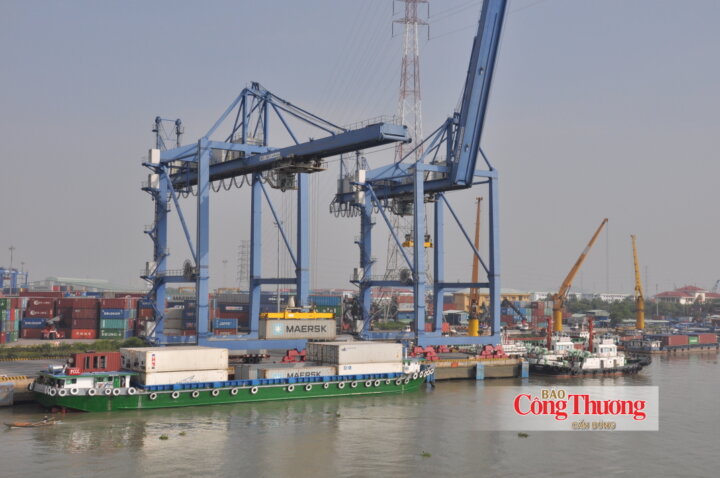
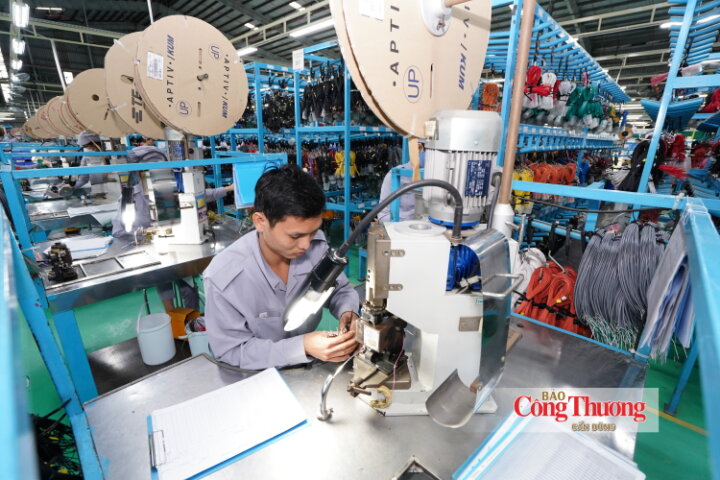
VEFTA's rules of origin set out specific requirements concerning materials, production processes, certification and verification. Businesses need to make thorough preparations to ensure compliance with these requirements.
Three criteria for determining origin and key changes businesses need to know
The Viet Nam–European Free Trade Association Free Trade Agreement (VEFTA) was officially signed in Ha Noi on October 18, 2026, between Viet Nam and the four member states of the European Free Trade Association (EFTA), namely Switzerland, Norway, Iceland and Liechtenstein, following 14 years of negotiations from May 2012 to July 2, 2026. It is Viet Nam's 18th free trade agreement (FTA) and is currently awaiting entry into force.
Rules of origin are among the key provisions of VEFTA. A thorough understanding of and compliance with these rules are essential not only for goods to qualify as originating under the Agreement but also for exporters and importers to complete origin certification and verification procedures when exporting.
VEFTA opens up opportunities for Vietnamese goods to gain deeper access to EFTA member markets.
Nguyen Hoang Ha, Deputy Head of the Origin of Goods Division under the Agency of Foreign Trade at the Ministry of Industry and Trade, said that VEFTA's rules of origin framework comprises 31 articles, divided into seven sections, together with four sub-annexes to the Agreement. Of these, Sub-annex 2F-a sets out product-specific rules of origin (PSR); Sub-annex 2F-b provides the VN-EFTA Certificate of Origin (C/O) form; Sub-annex 2F-c stipulates origin declarations; and Sub-annex 2F-d specifies the list of goods eligible for outward processing.
The commitments focus on four key areas: determination of origin, origin certification, origin verification and product-specific rules of origin. These are also the areas to which businesses should pay particular attention when organizing production, preparing documentation and carrying out export activities.
Regarding the criteria for determining origin, VEFTA establishes three basic categories. First, wholly obtained (WO) goods in a member country, as stipulated in Article 3. Second, goods sufficiently worked or processed from non-originating materials in accordance with Article 4 and the relevant product-specific rules of origin. Third, goods produced entirely (PE) from originating materials of one or more member countries.
Regarding wholly obtained goods, Nguyen Hoang Ha explained that the scope is relatively specific, covering minerals and natural resources extracted; plants, vegetables and fruits grown and harvested; animals born and raised, together with products obtained from them; and products obtained from hunting, fishing and aquaculture.
Notably, the provisions also cover goods obtained through cell culture; products under Chapters 29-39 obtained through fermentation; goods caught outside territorial waters by vessels meeting the prescribed conditions; and waste and scrap derived from wholly obtained products under Article 3.
Cell culture and fermentation are among the new aspects requiring attention. Businesses need to carefully consider their scope and specific conditions when determining origin. The origin of goods cannot be established solely on the basis of a product's name or the location where a particular production stage takes place. Instead, businesses must assess the goods against the Agreement's specific criteria.
Another notable provision is the expanded cumulation mechanism involving ASEAN and the EU. Under this mechanism, cumulation applies to non-agricultural materials originating in ASEAN and the EU. However, cumulation is not automatic and can only be applied when all relevant conditions under the Agreement are met.
Specifically, an eligible FTA must be in place between the relevant EFTA country, Viet Nam and the country supplying the materials. The materials must qualify as originating under the FTA between the supplying country and the member country where the final production process takes place. In addition, the production process carried out in Viet Nam or an EFTA country must go beyond simple working or processing.
For example, EU-originating components may be used in production in Viet Nam before the finished goods are exported to Switzerland. In this case, businesses may apply the cumulation mechanism only if all relevant conditions are satisfied.
The list of countries eligible for the cumulation mechanism will also be reviewed within three years from the Agreement's entry into force. Therefore, businesses should pay particular attention to the origin of materials, supporting documentation and applicable conditions, rather than automatically assuming that all materials purchased from ASEAN or the EU qualify for cumulation.
In addition, VEFTA allows certain processing operations to be carried out outside the territory of a member country for specific products listed in Sub-annex 2F-d. The maximum value added outside the territory is 10%, calculated on the ex-works price.
This mechanism provides greater flexibility for supply chains, taking into account practical needs and potential future benefits. However, businesses should note that the 10% limit does not apply universally to all products. Outward processing is permitted only for goods listed in Sub-annex 2F-d and must comply with the relevant conditions under Clause 3, Article 11 and Annex 2F of the Agreement.
Proactively proving origin, selecting the right rules and preparing documentation
Nguyen Hoang Ha stressed that product-specific rules of origin (PSR) are among the provisions requiring particular attention from businesses implementing VEFTA. These rules are based on the 2022 version of the Harmonized Commodity Description and Coding System (HS 2022) and are specified at the Chapter, heading or subheading level in Sub-annex 2F-a.
PSR cover various types of requirements, including changes in tariff classification (CC, CTH and CTSH), value limits, specific manufacturing processes, and conditions relating to chemical reactions, mixing and refining, as specified in the relevant notes.
A thorough understanding of rules of origin will help Vietnamese goods strengthen their access to these markets.
Notably, the symbol "ex" in PSR indicates that a rule applies only to a limited scope of products. Accordingly, the rule applies exclusively to the goods described in the corresponding entry and does not automatically cover all goods under the relevant heading or subheading.
For businesses, the first step is to accurately determine the HS code of their products under HS 2022 and then identify the corresponding rule of origin in Sub-annex 2F-a. Exporters must select the rule applicable to their goods. This selection should be based on the actual materials used and production processes, avoiding the incorrect application of rules or an overly broad interpretation of PSR entries marked with "ex".
Regarding origin certification, VEFTA establishes different mechanisms for goods exported from Viet Nam and those exported from EFTA countries. For goods exported from Viet Nam, businesses must obtain a VN-EFTA C/O issued by the competent authority. The self-certification of origin mechanism will be introduced in accordance with the implementation roadmap following notification by Viet Nam. Meanwhile, exporters in EFTA countries will apply self-certification of origin.
The VN-EFTA C/O form is similar in format to the C/O form used under the EU–Viet Nam Free Trade Agreement (EVFTA). However, the Agreement does not prescribe paper standards, thereby facilitating the use of electronic C/Os in PDF format bearing the stamp and electronic signature of the issuing authority or organization, together with a QR code. Businesses should take note of this provision when preparing and receiving origin documents, particularly as electronic certification is implemented.
In addition to meeting origin criteria and completing certification procedures, businesses should proactively prepare documentation for origin verification. Under VEFTA's mechanism, where reasonable doubts arise, the importing country will submit a written request for verification. The exporting country will then examine relevant documents and records and may conduct an inspection of the production facility. The verification results will be communicated to the importing country for consideration and a decision on whether preferential tariff treatment should be granted.
One point worth noting is that VEFTA does not provide for a mechanism under which the authorities of the importing country directly conduct origin verification at the production facilities of businesses in the exporting country. Verification is carried out in accordance with the mechanism stipulated in the Agreement through inspections conducted by the exporting country.
These provisions show that compliance with rules of origin is not merely a matter of completing documentation once goods are ready for export. Businesses need to pay attention from the outset to material sourcing, production organization, HS code classification and the corresponding PSR.
Particular care is required when using materials from ASEAN or the EU, or when certain processing operations are carried out outside the territory of a member country. The applicable conditions must be carefully examined in each case.
A thorough understanding of the rules of origin, proper selection of the relevant criteria and comprehensive preparation of supporting documentation are essential for businesses to comply with VEFTA commitments, proactively manage origin certification and verification procedures, and make effective use of the Agreement's preferential mechanisms.
VEFTA's rules of origin set out specific requirements concerning materials, production processes, certification and verification. Businesses need to make thorough preparations to ensure compliance with these requirements.
The CPTPP offers significant tariff advantages for Vietnamese footwear in Mexico. However, to fully capitalise on these preferences, businesses need to exercise strict control over the origin of raw materials, maintain transparent documentation and take a proactive approach to organising their supply chains from the production stage.
The RCEP offers new trade opportunities, but mastering its rules of origin is essential to securing tariff benefits and boosting export competitiveness.
The 11th CPTPP Council Meeting delivers significant outcomes, underscoring Viet Nam's proactive, innovative and leadership role during its 2026 CPTPP Chairmanship.
VEFTA's rules of origin set out specific requirements concerning materials, production processes, certification and verification. Businesses need to make thorough preparations to ensure compliance with these requirements.
The CPTPP offers significant tariff advantages for Vietnamese footwear in Mexico. However, to fully capitalise on these preferences, businesses need to exercise strict control over the origin of raw materials, maintain transparent documentation and take a proactive approach to organising their supply chains from the production stage.
Mexico has imposed additional import tariffs of 5–35% on 185 tariff lines. However, Vietnamese goods can still benefit from preferential treatment under the CPTPP. To capitalise on this advantage, businesses are advised to fully understand rules of origin, control raw material sources and establish transparent traceability systems.
The EVFTA offers Vietnamese footwear tariff advantages in the E.U. market. To capitalize on these opportunities sustainably, businesses need to secure material supplies, strengthen production capacity and meet green requirements.