The Netherlands offers strong opportunities for Vietnamese firms to enter manufacturing supply chains, but meeting strict market standards remains a major challenge.
The Netherlands offers significant opportunities for Vietnamese businesses to participate more deeply in manufacturing supply chains, but turning those opportunities into reality will require overcoming considerable challenges.
Exports surge, but supply capacity remains insufficient
In the first two quarters of 2026, Viet Nam’s total exports to the Netherlands across eight product groups related to the manufacturing industry reached approximately USD 4.65 billion, up nearly 36% from the same period in 2025.
Of the total, computers, electronic products and components generated nearly USD 2.2 billion, up 52%; machinery, equipment, tools and spare parts also reached nearly USD 2.2 billion, an increase of 7.8%; telephones and components amounted to nearly USD 670 million, up 15.6%; while means of transport and spare parts reached nearly USD 196 million, rising by 48%.
The Dutch market has strong demand for manufactured industrial products.
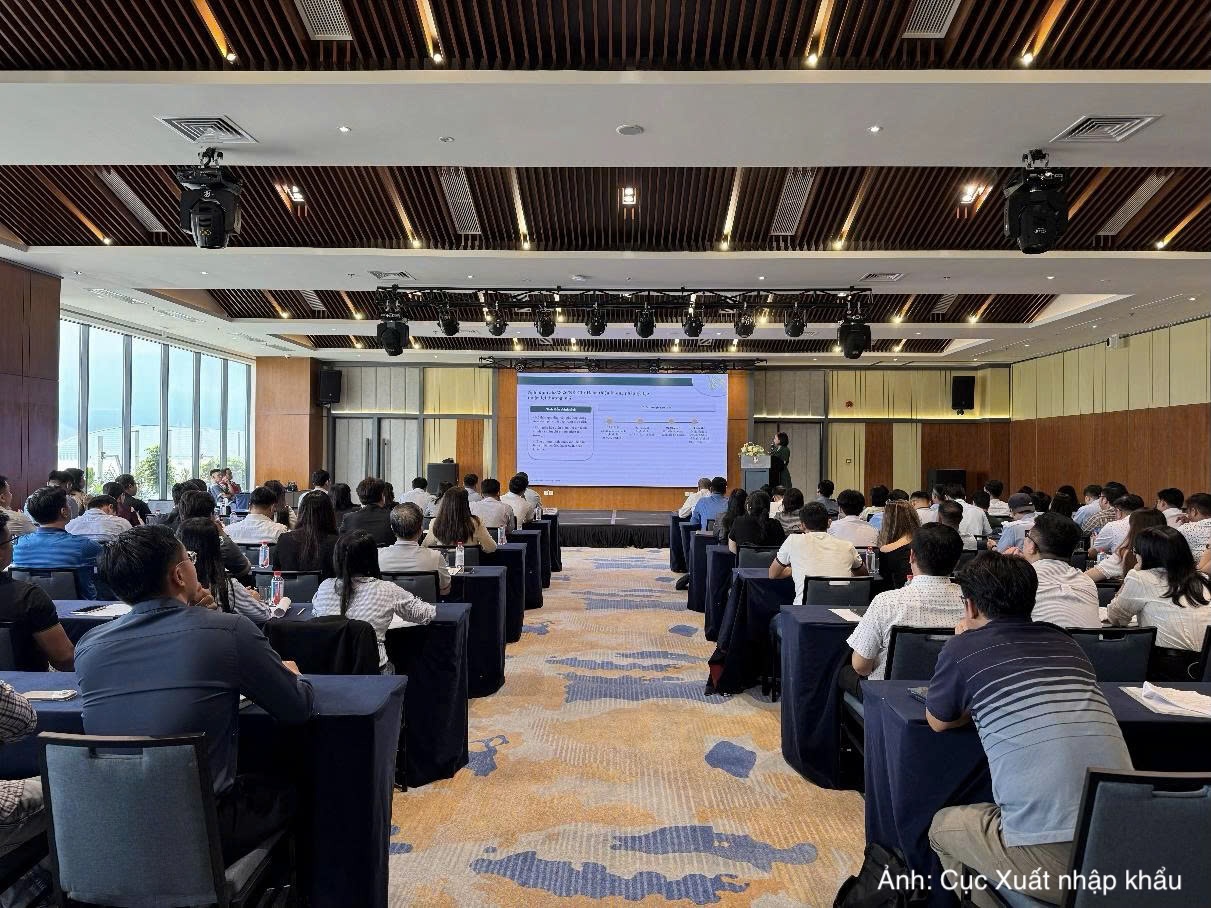
At a recent Viet Nam - Netherlands Manufacturing Industry Cooperation Workshop organised by the Viet Nam Trade Promotion Agency under the Ministry of Industry and Trade, Vo Thi Ngoc Diep, Commercial Counsellor at the Viet Nam Trade Office in the Netherlands, said demand in the Dutch market for industrial products, electronics and equipment from Viet Nam is increasing.
The export structure also shows that high-tech products capable of meeting stringent technical standards are recording positive growth. By contrast, energy-intensive and high-emission products are facing mounting pressure as the EU’s Carbon Border Adjustment Mechanism, or CBAM, takes effect. Notably, in the first six months of the year, Viet Nam’s iron and steel exports to the Netherlands fell by 6.8%, reaching only around USD 45 million.
For machinery, equipment, electrical and electronic products, the EU’s technical requirements are increasingly becoming mandatory conditions for market access. CE marking, which certifies compliance with requirements on safety, health and environmental protection, together with requirements on product safety and electromagnetic compatibility, is no longer unfamiliar to Vietnamese enterprises. However, systematically meeting these requirements remains a challenge for many businesses.
In particular, Regulation (EU) 2023/1230 on machinery will become mandatory from January 20, 2027. The new regulation introduces and clarifies additional requirements relating to control software, automated systems, artificial intelligence and the protection of machinery against risks that could affect safety functions.
“Dutch customers seeking precision engineering and electronic components often pay particular attention to technical tolerances, defect rates, batch-level traceability, design change management, drawing confidentiality, intellectual property rights and the ability to deliver on schedule,” Vo Thi Ngoc Diep added.
This means the Dutch market is not lacking in demand. However, to become long-term suppliers, Vietnamese businesses must demonstrate stable production capacity and effective risk control.
This is also a weakness of Viet Nam’s supporting industries. Pham Van Quan, Deputy Director of the Agency for Industry under the Ministry of Industry and Trade, said Viet Nam currently has around 7,000 supporting-industry enterprises, but it has yet to determine how many are actually participating in supply chains.
This indicates that although Viet Nam’s manufacturing industry has achieved considerable production scale, it still faces difficulties in moving beyond subcontracting to become suppliers capable of design, co-development of products and control over the entire production process.
Opportunities from Dutch industrial ecosystem
According to the representative of the Viet Nam Industry Agency, cooperation with the Netherlands is important because the country has a strong industrial ecosystem in semiconductors, precision machinery, automation, photonics, medical equipment and energy.
In particular, the Open Innovation model, which connects businesses, universities, research institutes and the Government in joint technology development, offers useful experience for Viet Nam.
Developing standardised capability profiles to prepare Vietnamese businesses for participation in Dutch supply chains.
For mechanical engineering businesses, the Netherlands is a demanding market, but one worth pursuing. Hoang Manh Trung, representative of the Viet Nam Association of Mechanical Industry (VAMI), said opportunities for Vietnamese enterprises lie in sectors where domestic production capabilities have begun to take shape, such as precision mechanical processing, mechanical modules, non-standard equipment, automation, energy, green supply chains and technical services.
“The Netherlands is a market with high standards and is not suitable for a fragmented, stand-alone sales approach,” Hoang Manh Trung said.
He added that instead of each enterprise independently seeking orders, Viet Nam should develop a model linking lead firms with satellite enterprises, forming clusters of capabilities to approach customers collectively.
For example, one company could undertake CNC machining, another could handle surface treatment, while another could be responsible for assembly and inspection. When linked into a supply chain, their combined supply capacity would be significantly greater than if each company operated independently.
The VAMI representative also proposed developing a standardised set of capability profile requirements so that Vietnamese enterprises are ready to participate in Dutch and European supply chains, while increasing support for certification, compliance, traceability and emissions reduction.
Meanwhile, Pham Hai Phong, Vice Chairman and Chief of Office of the Viet Nam Association for Supporting Industries (VASI), expressed the hope that Dutch businesses would participate more deeply in design, technology selection, and component development, gradually helping to create complete products in Viet Nam.
“Dutch companies operating in Viet Nam, such as Heineken, Van Oord and Damen-Song Cam, could also become ‘gateway customers’ for domestic supporting-industry enterprises. Demand for equipment, components and industrial products from these companies could help Vietnamese suppliers gradually demonstrate their capabilities and move further into supply chains,” the VASI representative said.
It is evident that current Viet Nam-Netherlands cooperation is focusing on such areas as precision mechanical and electronic components, machinery, smart manufacturing equipment and, in the longer term, semiconductors and the circular economy.
However, to turn these orientations into concrete outcomes, experts recommend that trade promotion shift from simply seeking orders to establishing connections based on actual capabilities.
It is necessary to select the right businesses, the right products and the right buyer requirements, while trade promotion must be accompanied by technical support. Before meeting potential partners, enterprises need to prepare English-language capability profiles, technical data, certifications, product samples and demonstrate their ability to fulfil trial orders.
In the long term, the core challenge remains upgrading internal capacity. Vietnamese enterprises need to shift from competing primarily on price to competing on quality, technology, reliability and delivery capability. For energy-intensive industries, emissions reduction must also become an integral part of production strategies.
The Netherlands could become a gateway for Vietnamese enterprises to participate more deeply in European supply chains. However, that gateway will open wider for businesses capable of meeting standards, ensuring data transparency, controlling quality and investing in long-term partnerships.
On October 13, the Agency of Foreign Trade under the Ministry of Industry and Trade (MoIT) held a conference in Dong Thap province to disseminate Government Decree No.365/2026/ND-CP dated September 23, 2026, on rice export and import business, and Circular No.65/2026/TT-BCT dated October 1, 2026, issued by the Minister of Industry and Trade, detailing certain provisions and measures for implementing Decree No.365/2026/ND-CP.
On October 13, Deputy Minister of Industry and Trade Luong Hoang Thai held a working session with MEDEF International, a French business organization, and representatives of French corporations operating in various sectors, including energy, industry, transport, construction and infrastructure development, food and beverages, and services, at the Ministry of Industry and Trade's headquarters.
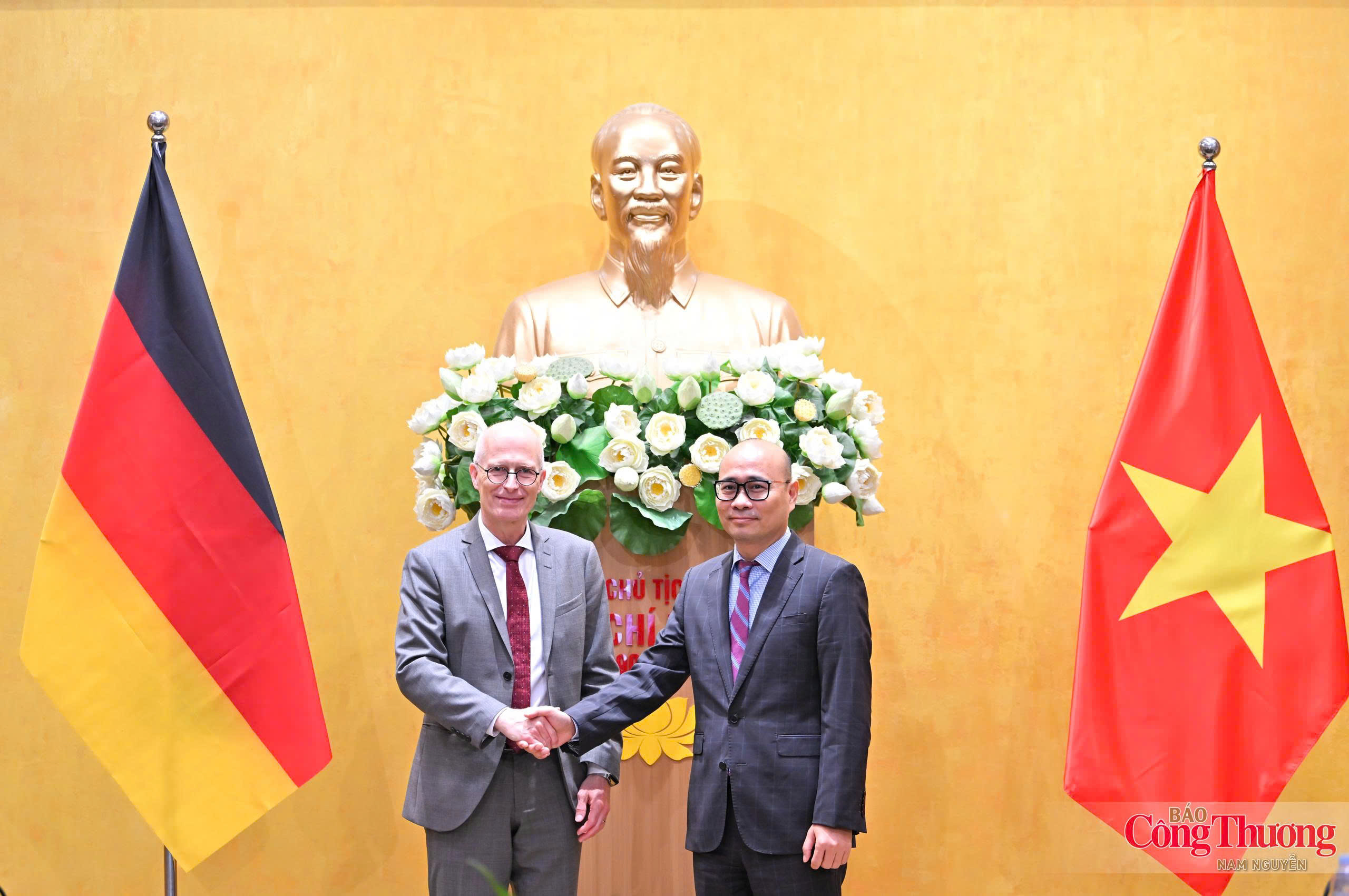
On October 14, Deputy Minister of Industry and Trade Luong Hoang Thai received and held a working session with a delegation from Hamburg, Germany, led by the city's First Mayor Peter Tschentscher at the Ministry of Industry and Trade's headquarters.
The Copyright Office is working closely with relevant agencies to develop plans for inspections and enforcement action against copyright and related rights infringements in the digital environment.
Viet Nam’s cultural industries are poised for growth as development targets become clearer, the digital content market expands and technology creates new ways.
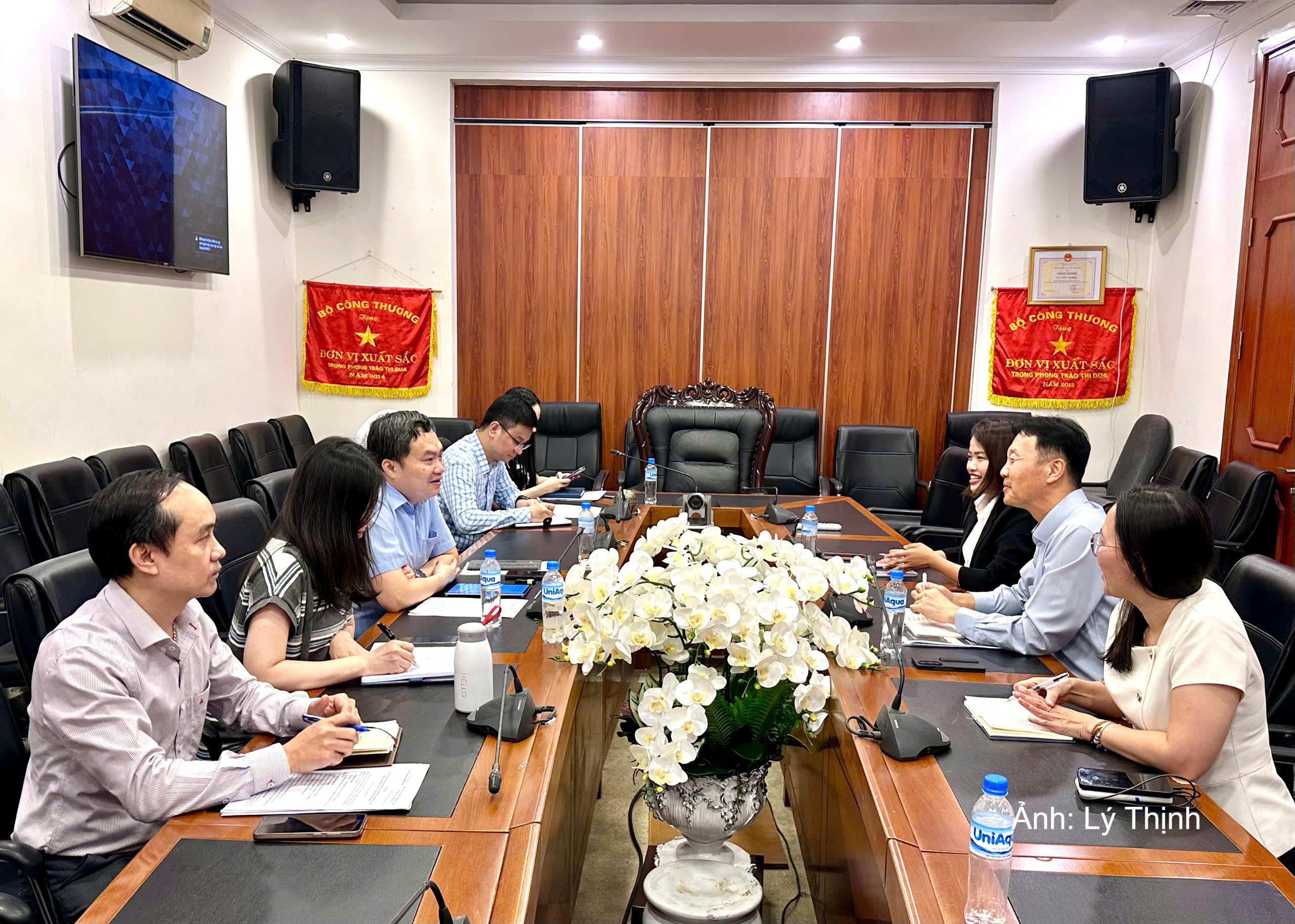
The Vietnam Industry Agency under the Ministry of Industry and Trade and Samsung Vietnam continue to strengthen cooperation in developing supporting industries, enhancing the capabilities of domestic enterprises and expanding opportunities for their participation in global supply chains.
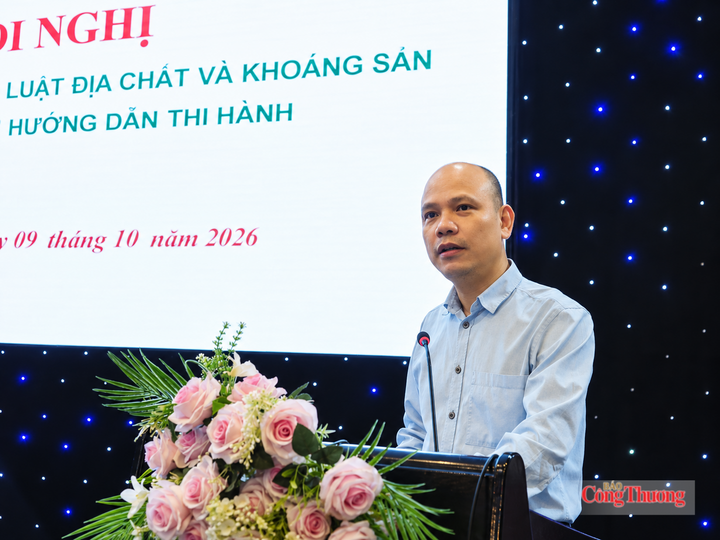
On October 9, the Viet Nam Department of Geology and Minerals, in coordination with the Thai Nguyen Department of Industry and Trade, held a conference in Thai Nguyen province to disseminate the Law on Geology and Minerals and its implementing regulations.
Northern localities are strengthening links in supporting industries, energy and logistics to build competitive value chains and create new growth drivers.
The 20th Industrial Promotion Conference for Northern Provinces and Cities in 2026 was held in Hai Phong City on October 1, with discussions focusing on renewing industrial promotion activities.
On September 30 in Ha Noi, the Ministry of Industry and Trade (MoIT) held a conference to gather broad feedback on a draft decree replacing the Government’s existing decrees on petroleum trading.