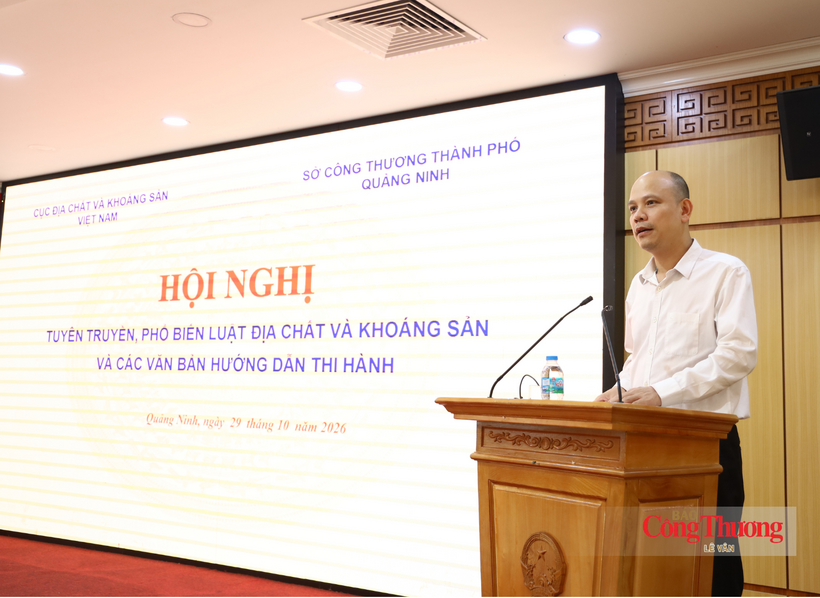
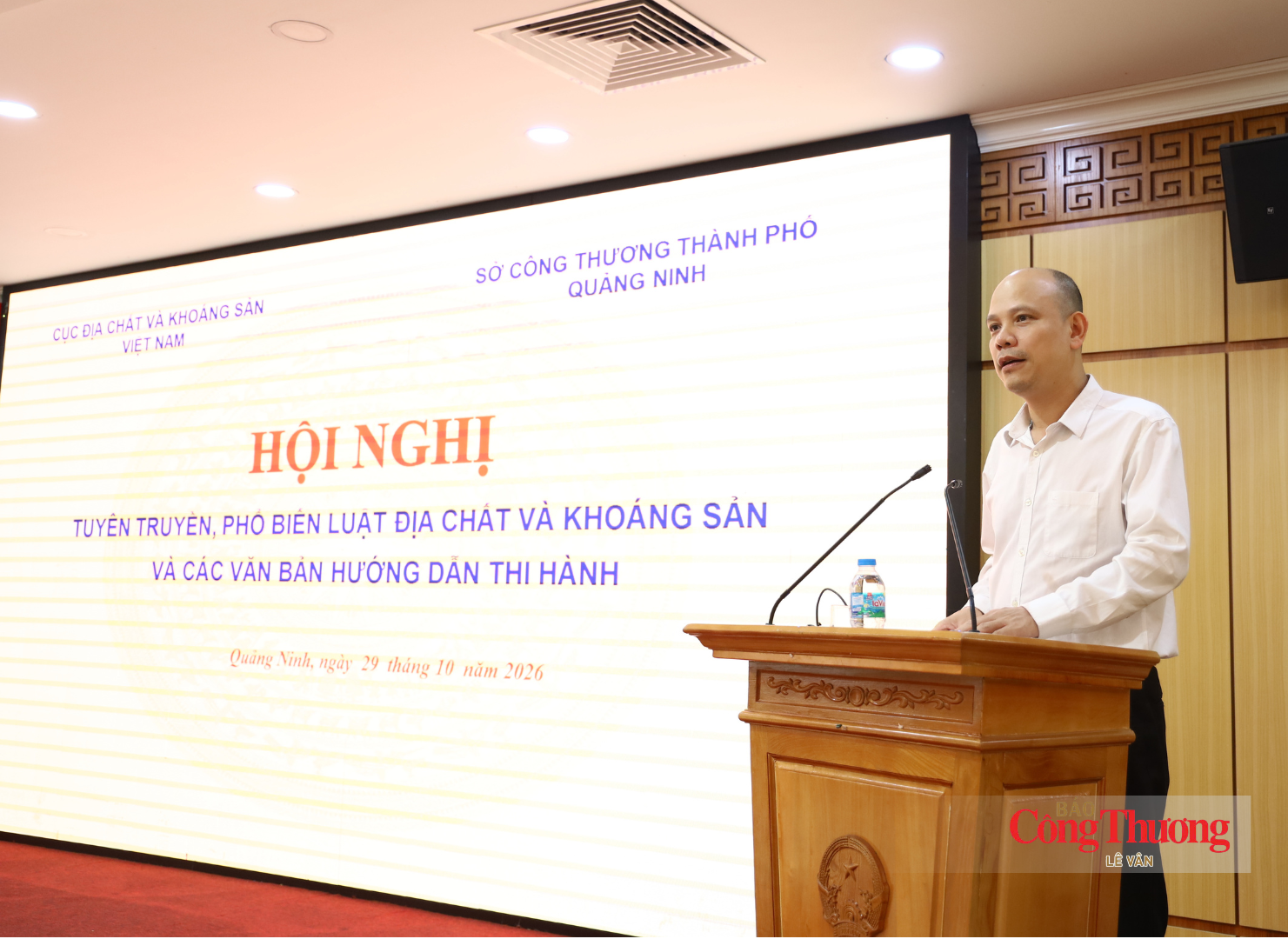
A conference on disseminating and raising awareness of geological and mineral laws and their implementing documents was held in Quang Ninh on the afternoon of October 29.
The conference was attended by leaders of the Viet Nam Department of Geology and Minerals under the Ministry of Industry and Trade (MoIT), representatives of the leadership of the Departments of Industry and Trade of Quang Ninh, Lang Son and Bac Ninh provinces, local authorities and enterprises operating in the geology and minerals sector.
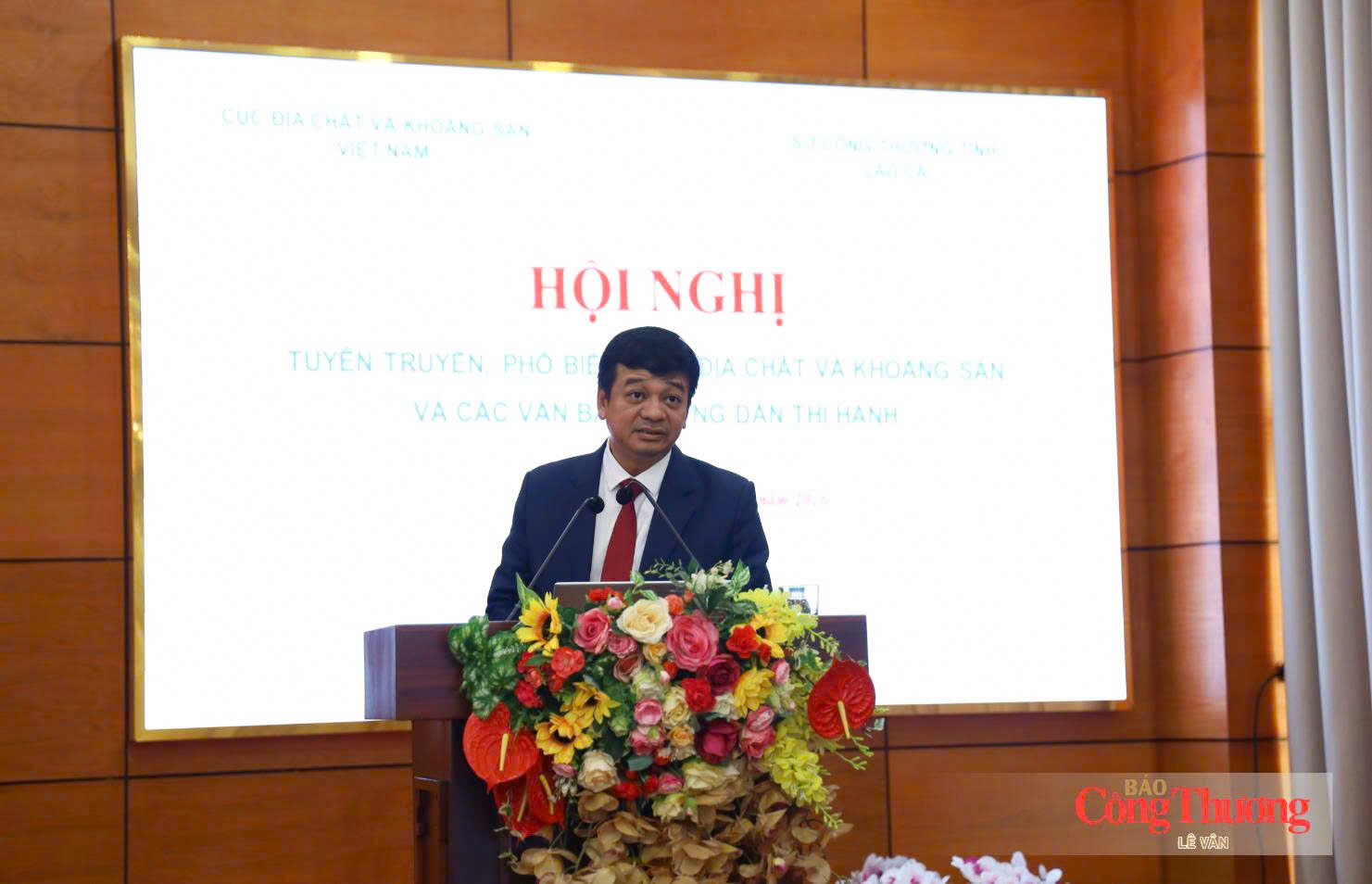
In his opening remarks, Tran Phuong, Deputy Director-General of the Viet Nam Department of Geology and Minerals, emphasized that the completion of the legal framework governing geology and minerals stemmed from practical requirements arising from the implementation of the 2010 Law on Minerals. Particular attention was given to obstacles encountered in mineral exploration and extraction, as well as the need to ensure supplies of construction materials for infrastructure and transport projects.
Deputy Director-General of the Viet Nam Department of Geology and Minerals delivers remarks at the conference.
Against this backdrop, the legal and policy framework governing geology and minerals has been continuously reviewed and revised. The Law on Geology and Minerals No.54/2024/QH15, which took effect on July 1, 2025, established a legal foundation for state management in this sector. Subsequently, Law No.147/2025/QH15, amending and supplementing a number of articles of the Law on Geology and Minerals and taking effect on January 1, 2026, further underscored the need to update implementing regulations to ensure consistency in their enforcement.
According to Tran Phuong, the implementation of the new regulations requires management agencies and local authorities to clearly understand their assigned powers and responsibilities, correctly apply the relevant legal documents at each point in time, and ensure compliance with implementation deadlines. The Viet Nam Department of Geology and Minerals is also ready to coordinate with and support local authorities in addressing difficulties and obstacles arising during implementation.
Strengthening oversight of mineral extraction activities
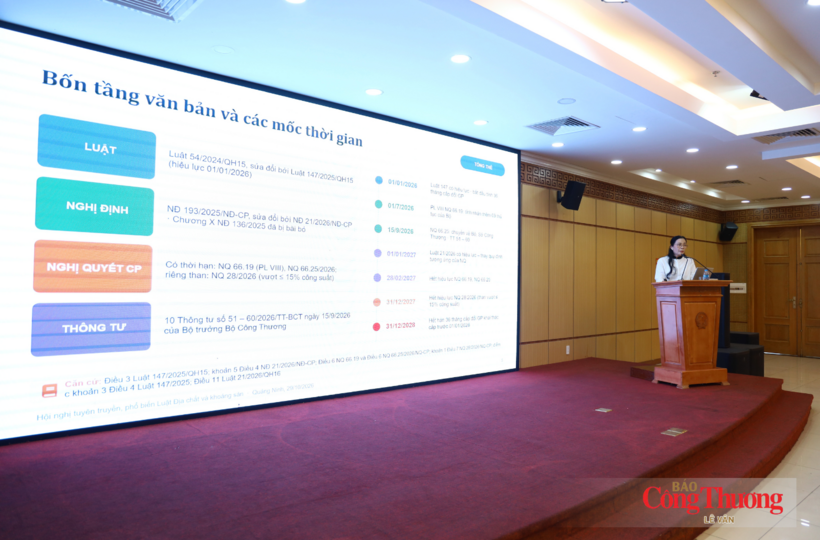
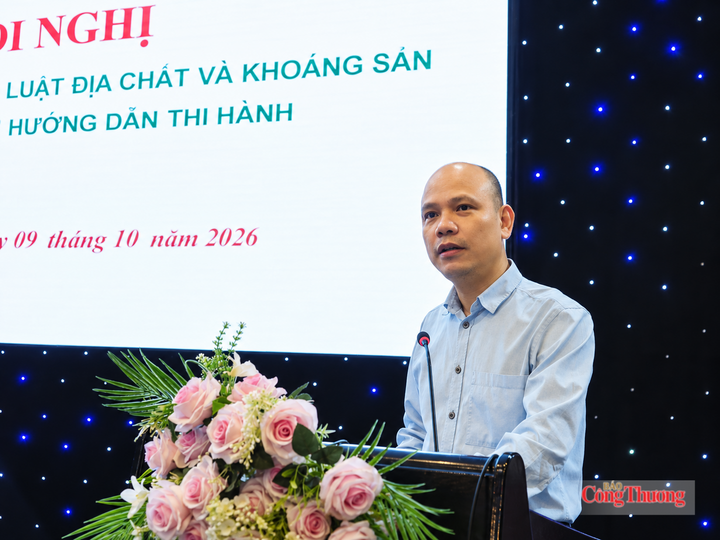
At the conference on disseminating and providing guidance on geological and mineral legislation in Quang Ninh, Pham Thi Thanh, Deputy Head of the Legal Affairs and Inspection Division of the Viet Nam Department of Geology and Minerals, presented notable new provisions in the current legal framework.
Pham Thi Thanh, Deputy Head of the Legal Affairs and Inspection Division of the Viet Nam Department of Geology and Minerals, delivers remarks at the conference.
According to Pham Thi Thanh, the current legal framework comprises the Law on Geology and Minerals No.54/2024/QH15, amendments and supplements under Law No.147/2025/QH15, Decree No.193/2025/ND-CP and Decree No.21/2026/ND-CP, together with Government resolutions and guiding circulars. A clear understanding of the effective dates, scope of regulation and authority responsible for handling administrative procedures under each legal document is essential to law enforcement at the local level.
One of the key issues highlighted by the presenter was the decentralization of state management authority over minerals. According to the conference presentation, local authorities need to proactively receive and review applications and carry out procedures within their delegated powers, while correctly identifying the competent authority responsible for handling each case.
Regarding mineral extraction activities, the new regulations also require a review of existing licences, particularly those issued under the 2010 Law on Minerals. According to Pham Thi Thanh, licences issued before January 1, 2026, that do not meet the requirements specified in Clause 2, Article 56 of the Law on Geology and Minerals must be considered for replacement in accordance with regulations. The deadline for completing the replacement procedure, as highlighted by the presenter, is December 31, 2028.
Mining licences must contain complete information on the location, area, extraction depth, associated minerals, permitted reserves, extraction capacity and duration. Enterprises need to compare their existing licences against the regulations to determine whether replacement procedures are required, thereby avoiding disruptions to their extraction activities.
In addition, monitoring extraction output was identified as an important requirement for strengthening resource management and ensuring the fulfillment of financial obligations. According to Pham Thi Thanh, enterprises must submit periodic reports on their mineral activities, update current-status maps and cross-sections, and conduct statistics and inventories of mineral reserves in accordance with regulations.
Regarding mine waste rock and soil, Pham Thi Thanh noted that their recovery and use must comply with registration procedures as prescribed by law. Materials at waste dumps cannot automatically be regarded as resources that may be used freely. If minerals are discovered during construction, project owners must follow the prescribed procedures for handling such discoveries, particularly when the minerals found belong to a different group from those covered by the extraction licence.
Proposed reforms to mineral extraction licensing mechanisms
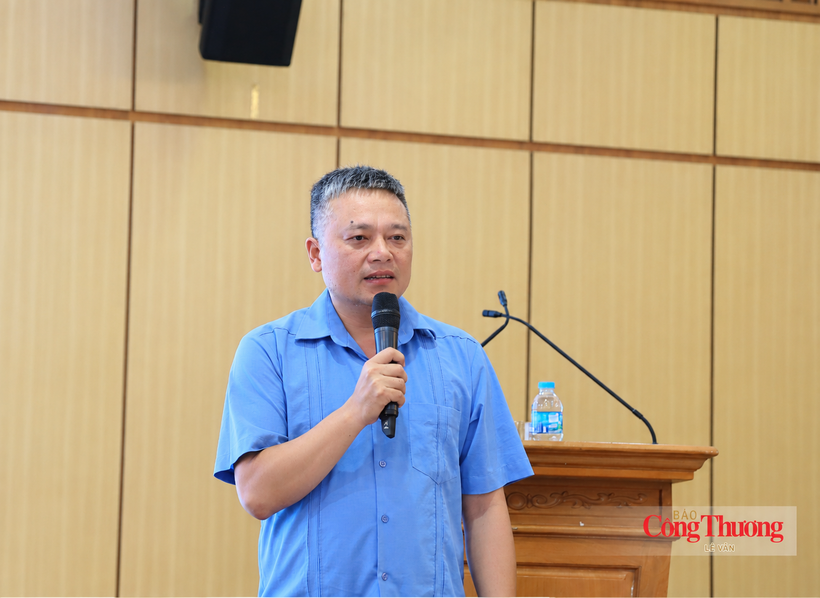
At the conference, Nguyen Xuan Quang, Deputy Head of the Legal Affairs and Inspection Division of the Viet Nam Department of Geology and Minerals, presented policy proposals for amending the Law on Geology and Minerals. The Government will submit the comprehensive draft amendments to the National Assembly at its fourth session in October 2027.
Nguyen Xuan Quang, Deputy Head of the Legal Affairs and Inspection Division of the Viet Nam Department of Geology and Minerals, delivers remarks at the conference.
According to Nguyen Xuan Quang, the draft amendments propose abolishing the separate licensing procedure for mineral exploration, enabling enterprises to proactively conduct exploration and upgrade reserves throughout the life cycle of their projects. At the same time, the State would concentrate resources on basic geological surveys and make digitized geological data publicly available, providing a basis for enterprises to independently assess information when participating in auctions for mineral extraction rights or being granted mining sites.
The draft also proposes shifting to a licensing approach based on three-dimensional (3D) spatial blocks, with clearly defined extraction boundaries and depths. According to the conference presentation, this approach is intended to address difficulties relating to associated minerals discovered during extraction, while linking the management of mining activities to spatial boundaries and actual extraction output.
Regarding extraction monitoring, the draft sets out an orientation towards shifting from a pre-inspection mechanism to post-inspection based on technological data. Proposed solutions include electronic weighbridges, surveillance cameras at mine entrances and data collected through unmanned aerial vehicles (UAVs).
For mine waste rock and soil, the draft proposes changing the management mechanism to facilitate the use of these materials in construction projects where demand exists, subject to environmental requirements and compliance with prescribed procedures. In addition, the draft considers revising mineral classification, designing licensing authority arrangements and establishing procedures suited to each mineral group. It also proposes preferential mechanisms for enterprises investing in deep processing, including exemptions from or reductions in mineral extraction rights fees and natural resource taxes corresponding to the proportion of added value generated by domestic deep-processing activities.
At the conference, participants discussed and received explanations addressing difficulties and obstacles encountered in implementing the new regulations on geology and minerals, particularly those concerning licensing procedures and the management of mineral extraction activities.
The two sides discussed solutions to outstanding issues involving reservoir operations, power plant emissions, land management, and import-export activities.
A conference on disseminating and raising awareness of geological and mineral laws and their implementing documents was held in Quang Ninh on the afternoon of October 29.
A conference on disseminating and raising awareness of geological and mineral laws and their implementing documents was held in Quang Ninh on the afternoon of October 29.
A conference to disseminate legislation on geology and minerals and its implementing regulations was held in Lao Cai province on the morning of October 23.
The Vietnam Industry Agency under the Ministry of Industry and Trade and Samsung Vietnam continue to strengthen cooperation in developing supporting industries, enhancing the capabilities of domestic enterprises and expanding opportunities for their participation in global supply chains.
On October 9, the Viet Nam Department of Geology and Minerals, in coordination with the Thai Nguyen Department of Industry and Trade, held a conference in Thai Nguyen province to disseminate the Law on Geology and Minerals and its implementing regulations.
Northern localities are strengthening links in supporting industries, energy and logistics to build competitive value chains and create new growth drivers.