

Decentralized C/O issuance to ease procedures for exporters
19:05 | 23/03/2025 15:43 | 21/11/2026Trade
The decentralization of certificate of origin (C/O) issuance is being implemented in 33 of 34 provinces and cities.


The Ministry of Industry and Trade (MOIT) will continue to help localities build capacity and support exporters. Nguyen Anh Son, Director-General of the MOIT's Agency of Foreign Trade, spoke to the Newspaper of Industry and Trade about this issue.

Nguyen Anh Son, Director-General of the MOIT's Agency of Foreign Trade. Photo: Nam Nguyen
Transferring tasks, promoting the role of localities
- Implementing the policy of stepping up decentralization and delegation of authority in handling administrative procedures, the MOIT has transferred the task of issuing certificates of origin (C/O) to localities. How have provinces and cities taken on and carried out this task so far?
Nguyen Anh Son: Since Circular No. 40/2025/TT-BCT took effect on July 1, 2025, decentralization and delegation of authority in the field of rules of origin have been implemented in 33 of 34 provinces and cities. The transfer of C/O issuance to localities has initially produced positive results, with the participation of Departments of Industry and Trade and Economic Zone Management Boards.
The process has been carried out on the basis of the Government's Decree No. 146/2025/ND-CP dated June 12, 2025 on the delegation and decentralization of authority in industry and trade. Subsequently, Circular No. 40/2025/TT-BCT dated June 22, 2025 of the Minister of Industry and Trade set out regulations on issuing C/Os and approval documents for eligible exporters to self-certify the origin of goods under the decentralization mechanism, providing a basis for localities to take on and perform this task.
In particular, from August 1, 2026, under Circular No. 26/2026/TT-BCT, the scope of C/O issuance by the MOIT has been adjusted toward transferring applications that fall under local authority to C/O-issuing agencies and organizations in provinces and cities.
However, implementation has also shown differences among localities in organizational capacity, human resources and the readiness of information technology systems. These issues require continued attention to ensure that decentralization and delegation of authority do not stop at transferring tasks but deliver real effectiveness, facilitating businesses in C/O procedures.
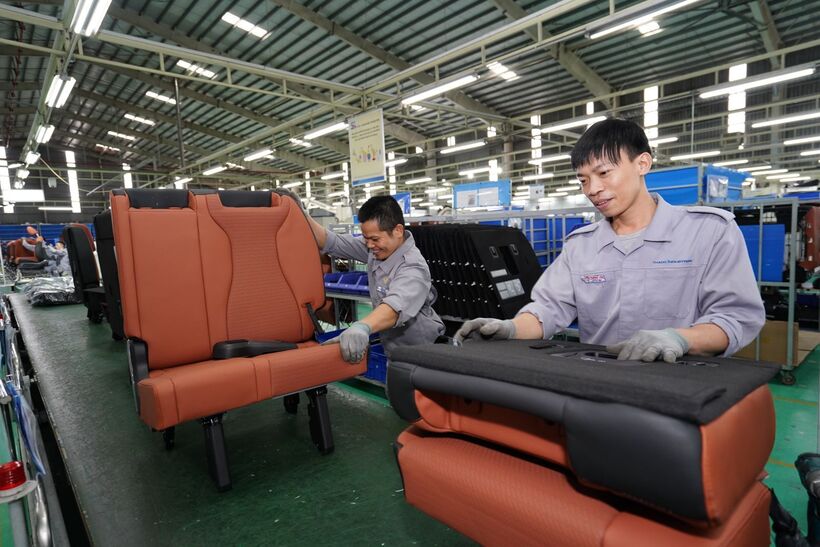
The decentralization of C/O issuance to localities greatly facilitates exporters. Photo: Can Dung
Strengthening guidance, training and professional support
- The transfer of C/O issuance requires consistency among localities in applying rules of origin, the quality of application appraisal and the time taken to process procedures. What has the Agency of Foreign Trade done in terms of guidance, training, professional support, inspection and supervision to limit confusion or discrepancies in implementation?
Nguyen Anh Son: Given the highly specialized technical nature of the work, which must meet international commitments, the Agency of Foreign Trade has issued directions and guidance on rules of origin to the Departments of Industry and Trade of provinces and centrally governed cities since decentralization and delegation of authority in this field began.
In addition, the Agency of Foreign Trade has chaired and coordinated with the former Viet Nam E-Commerce and Digital Economy Agency and the Department for Science, Technology and Digital Transformation, to organize conferences, seminars, training programs and direct working sessions in a number of localities on decentralization and delegation of authority in the field of rules of origin in the Northern, Central and Southern regions in 2025 and 2026.
The Agency of Foreign Trade and the Department for Science, Technology and Digital Transformation have exchanged views and provided detailed guidance for local Departments of Industry and Trade to implement, or to inform the organizations assigned by provincial People's Committees to issue C/Os and approval documents of the tasks to be carried out.
Specifically, this includes guidance on completing the legal basis for issuing C/Os and approval documents, under which provincial People's Committees issue documents assigning the Department of Industry and Trade or the Management Board to issue C/Os and approval documents in accordance with Decree No. 146/2025/ND-CP and Circular No. 40/2025/TT-BCT. It also includes consolidating the personnel performing the tasks; completing the registration of seal and signature specimens; and proposing training needs, if any, to the Agency of Foreign Trade. Training covers expertise in international trade, provisions of international trade agreements, rules of origin, origin criteria, methods for reviewing applications and appraising their content, and methods for cross-checking against the provisions of free trade agreements (FTAs) and legal documents. At the same time, localities must ensure the digital infrastructure for issuing C/Os and approval documents, including system connections, creating accounts for collecting C/O fees, issuing electronic receipts and printing paper C/O forms.
Building local capacity, supporting exporters
- In the coming period, what solutions will the Agency of Foreign Trade pursue to build the capacity of decentralized local agencies, step up the application of information technology and simplify C/O procedures, thereby better facilitating exporters, especially small and medium-sized enterprises?
Nguyen Anh Son: Based on practical experience in implementing decentralization and delegation of authority in the field of rules of origin in localities, the Agency of Foreign Trade will continue to chair and coordinate with the MOIT's functional units in implementing several groups of solutions.
Specifically, it will continue to closely monitor implementation in localities to provide direct guidance on the processes, procedures and regulations related to issuing C/Os and written approvals for traders to self-certify the origin of goods. The Agency of Foreign Trade has issued documents urging the Departments of Industry and Trade of the remaining provinces and centrally governed cities to inform the units assigned by People's Committees to urgently complete their plans for issuing C/Os and approval documents for self-certification of origin. They are encouraged to draw on the models of localities that have implemented or are implementing the task, so as to facilitate businesses and ensure that administrative procedures are processed within the time limits set out in Decree No. 31/2018/ND-CP.
The Agency of Foreign Trade will continue to issue specific, in-depth guidance on each relevant item based on actual implementation in localities. In addition, it is focusing on developing and improving legal documents on rules of origin to create a uniform legal basis for C/O-issuing agencies and organizations, as well as businesses nationwide, with particular attention to measures against origin fraud.
At the same time, it will organize conferences, seminars and in-depth training programs to disseminate and guide the implementation of decentralization and delegation of authority in the field of rules of origin, as well as intensive training courses on professional skills and procedures for issuing C/Os and approval documents. Specifically, it will continue holding in-depth conferences guiding the implementation of decentralization and delegation of authority in this field for competent local leaders and civil servants in the Northern region, the Central region and the Central Highlands, and the Southern region. It will also step up region-specific intensive training courses, as rules of origin are a highly technical and specialized field that requires knowledge of foreign trade and international integration, foreign language proficiency and an understanding of the specific production processes of each product and industry.
- Thank you very much!
19:05 | 23/03/2025 15:43 | 21/11/2026Trade

19:05 | 23/03/2025 12:03 | 21/11/2026Trade

19:05 | 23/03/2025 12:00 | 21/11/2026News and Events

19:05 | 23/03/2025 11:59 | 21/11/2026News and Events

19:05 | 23/03/2025 06:20 | 21/11/2026News and Events


