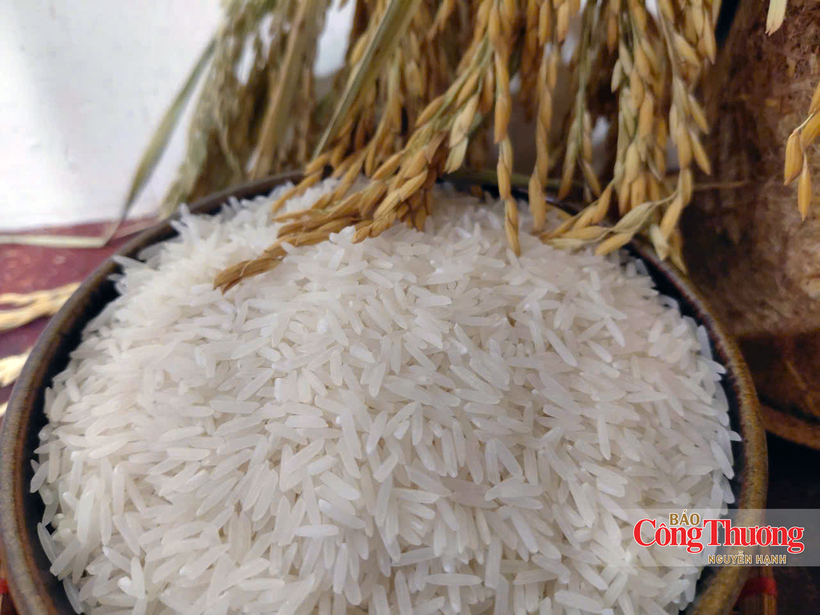
Rising global rice prices, stronger import demand from South Korea and Viet Nam's successful bid to supply 35,000 tons are providing positive signals for rice exports.
El Niño heightens supply risks
The global rice market is showing signs of rising prices as extreme weather conditions, particularly the risk of El Niño reaching historically high intensity, raise concerns over supply and food security. The Oryza White Rice Index (WRI), which tracks the weighted average price of globally exported white rice, closed the second week of November 2026 at USD 502 per ton, up USD 13 per ton from the previous week, USD 35 per ton from the previous month and USD 114 per ton from the same period in 2025.
Prices in major exporting countries continued to trend upward.
According to a November 12, 2026, bulletin from the U.S. National Oceanic and Atmospheric Administration (NOAA), there is about a 60% chance that El Niño will exceed the strongest events recorded since 1950 in the October-December 2026 and November 2026-January 2027 periods. El Niño is expected to strengthen before beginning to weaken in early 2027, with a strong to very strong event likely through January-March 2027.
The effects of extreme weather are already evident in several major rice-producing and consuming countries. The Philippine Department of Agriculture forecasts the country's unmilled rice production at about 18.6 million tons in 2026, approximately 1 million tons lower than the previous year. The Philippine weather agency warned that a very strong El Niño event could persist through the first half of 2027.
In addition to weather-related factors, rising fuel and fertilizer costs amid the conflict in Iran are placing further pressure on food production. The Food and Agriculture Organization of the United Nations (FAO) has warned that concerns over potential supply shortages could trigger price fluctuations even before the harvest season ends.
According to the November 2026 World Agricultural Supply and Demand Estimates (WASDE) report by the U.S. Department of Agriculture (USDA), global milled rice production in 2026/27 is forecast to decline by 2.3% from the previous crop year. However, higher-than-expected ending stocks are expected to partly ease upward price pressures. Compared with its October forecast, the USDA cut its rice export projections for India by 1 million tons and for Thailand by 200,000 tons. Separately, S&P Global Energy CERA projects that Philippine rice imports will increase by nearly 29% in 2026/27 from the previous marketing year. Rising demand in Central America and the Caribbean is also expected to support global rice trade.
Another USDA report on global grain markets and trade for November 2026 indicates that global rice production in the 2026/27 crop year is little changed from the October forecast, while projected consumption has been revised slightly downward. The forecast for ending stocks has been raised, though stocks are still expected to finish below the previous crop year’s level. Global rice trade has been revised downward due to weaker export prospects for India and Thailand, along with lower import demand from Bangladesh and several West African countries.
Vietnamese rice maintains an advantage in import markets
Prices in major exporting countries continued to rise. In the second week of November 2026, India's 5% broken rice was quoted at approximately USD 399 per ton, up USD 9 per ton from the previous week and USD 51 per ton from the same period last year. Thailand's 5% broken rice reached USD 494 per ton, increasing by USD 5 per ton and USD 165 per ton, respectively. Pakistan's rice was priced at USD 417 per ton, up USD 5 per ton week over week and USD 79 per ton year over year.
In Viet Nam, according to the Viet Nam Food Association (VFA), export prices increased for most rice varieties on November 18. The price of 100% broken fragrant rice reached USD 410-414 per ton, up USD 15 per ton, while Jasmine rice rose by USD 4 per ton to USD 570-574 per ton. Fragrant 5% broken rice remained at USD 515-520 per ton.
On the same day, Thailand's 5% broken rice was offered at USD 490-494 per ton, up USD 2 per ton, while its 100% broken rice reached USD 427-431 per ton, up USD 3 per ton. In India, the corresponding varieties were priced at USD 393-397 per ton and USD 335-339 per ton, representing increases of USD 4 per ton and USD 2 per ton, respectively.
Despite rising prices, Thailand's export outlook continues to face pressure from competition within ASEAN, geopolitical tensions, transportation costs and labor shortages at ports. The country's rice exports fell 19.3% year over year in the first nine months of 2026. According to the Industry and Trade Newspaper, Thailand’s ending stocks are projected to rise to 5.135 million tons amid limited export prospects.
Meanwhile, India continues to maintain a price competitiveness advantage, with its export rice recorded at USD 389 per ton during the period from October 5 to November 5. The USDA cut its 2027 rice export forecast for India by 1 million tons to 23 million tons, mainly due to lower exports of broken and white rice.
India has also recently adjusted its rice export requirements. It will continue to require quality inspection certificates for rice shipments to the European Union, the United Kingdom and certain European markets, while other European markets will be exempt from this requirement until April 1, 2027.
On the import side, moves by several countries to strengthen reserves and organize tenders demonstrate that ensuring food security remains a top priority.
Indonesia is projected to hold a record 4.5 million tons of national rice stocks by the end of 2026. South Korea has begun purchasing 400,000 tons of rice from the 2026 harvest to replenish its national reserves. It has also allocated KRW 4 trillion through state agencies and agricultural cooperatives to finance procurement and support farmers.
Notably, South Korea's rice production fell for the fifth consecutive year in 2026, to 3.508 million tons, its lowest level since 2020.
Of particular note, in the eighth 2026 tariff-rate quota (TRQ) rice import tender held on October 29, South Korea awarded contracts for 45,600 tons out of a total offered volume of 60,600 tons.
Viet Nam secured the largest share, winning a contract for 35,000 tons of long-grain broken rice at prices ranging from USD 413 to USD 468 per ton. Thailand secured contracts for 5,600 tons of broken and milled white rice, while the United States won a contract for 5,000 tons of medium-grain white rice at USD 1,054.92 per ton.
The results demonstrate that Vietnamese rice remains competitive in the South Korean market, particularly in the long-grain broken rice segment. This is a notable signal at a time when importing countries are proactively replenishing reserves and diversifying their sources of supply.
In Japan, the Ministry of Agriculture, Forestry and Fisheries is expected to continue organizing rice import tenders under the Simultaneous Buy and Sell (SBS) system, including approximately 25,000 tons on November 20 and around 4,123 tons under the Comprehensive and Progressive Agreement for Trans-Pacific Partnership (CPTPP) framework on November 24, 2026.
Previously, Japan had also planned to purchase approximately 49,200 tons of rice through an international tender on November 13, with deliveries scheduled from mid-February to late March 2027.
Import and reserve replenishment plans in South Korea and Japan indicate that Northeast Asia remains a market of considerable interest to rice exporters.
At a time when global rice prices are rising but worldwide trade is projected to be revised downward, export opportunities will depend not only on price movements but also on the ability to meet quality standards, secure supplies and maintain delivery schedules.
In particular, the risk of El Niño extending into 2027 requires exporters to closely monitor crop developments in major producing countries while adopting appropriate supply management strategies and avoiding the temptation to chase short-term price increases.
Global rice export prices continue to rise amid the risk of a strong El Niño event, declining production in several countries and growing import demand. Against this backdrop, Vietnamese rice is gaining a competitive advantage in the South Korean market.
Rising global rice prices, stronger import demand from South Korea and Viet Nam's successful bid to supply 35,000 tons are providing positive signals for rice exports.
Railways, logistics and smart border gates are expected to create new momentum for economic and trade connectivity between Viet Nam and Southwest China.
Ba Den Mountain welcomed its 5 millionth cable car visitor of 2026 on October 23, as travelers sought cultural experiences as well as spiritual retreats in Tay Ninh.
Rising global rice prices, stronger import demand from South Korea and Viet Nam's successful bid to supply 35,000 tons are providing positive signals for rice exports.
Exports of four key packaging groups reached USD 1.47 billion in nine months, as the MOIT and trade offices seek wider access to Japan, Australia and Singapore.
MOIT is working alongside Ninh Binh province to leverage its infrastructure advantages, strengthen regional connectivity and enhance logistics capacity.