The AFT met with localities and businesses to address difficulties in C/O issuance as C/O applications surge following decentralization to local units.
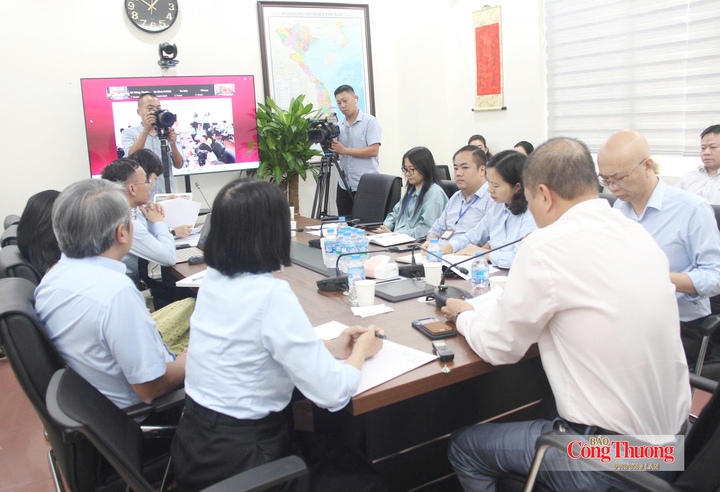
On the morning of August 17, the Agency for Foreign Trade (AFT) under the Ministry of Industry and Trade (MoIT) held a meeting to address difficulties and obstacles arising in the receipt and processing of applications and procedures for the issuance of Certificates of Origin (C/O).
The meeting was attended by Nguyen Anh Son, Director of the AFT; Tran Thanh Hai and Trinh Thi Thu Hien, Deputy Directors of the AFT; Hoang Ninh, Deputy Director of the Viet Nam E-commerce and Digital Economy Agency; and representatives from the Regional Import - Export Management Offices.
Also attending the meeting were representatives of the Customs Department under the Ministry of Finance, as well as representatives of the Departments of Industry and Trade of centrally-run provinces and cities.
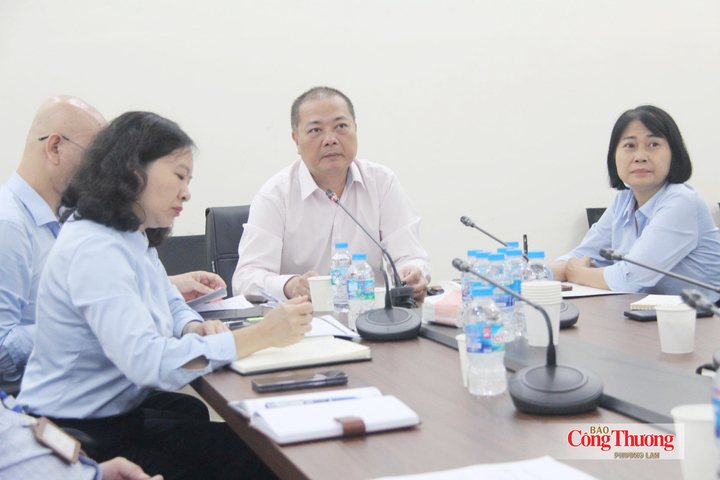
AFT holds meeting with localities and businesses to address difficulties in C/O issuance.
C/O issuance procedures shift significantly to localities
To implement Clause 6, Article 28 of the Government's Decree No. 146/2025/ND-CP dated June 12, 2025, stipulating the delegation and decentralization of authority in the industrial and trade sectors, the Minister of Industry and Trade issued Circular No. 40/2025/TT-BCT dated June 22, 2025. Accordingly, from July 1, 2025, the AFT under the MoIT and provincial-level People's Committees have been authorized to issue various types of C/Os and approval documents.
On May 20, 2026, the Minister of Industry and Trade issued Circular No. 26/2026/TT-BCT amending and supplementing regulations on the delegation of authority, reduction and simplification of administrative procedures in areas under the MoIT's management. Accordingly, from August 1, 2026, the MoIT will issue only 12 types of C/Os.
During the transition period from July 1, 2025 to August 1, 2026, which lasted 13 months, the MoIT and C/O-issuing agencies and organizations in localities simultaneously issued all types of C/Os and approval documents. During this period, to ensure consistent and smooth implementation, the MoIT regularly issued documents providing guidance and instructions, urging implementation, offering support and exchanging professional expertise with local C/O-issuing agencies and organizations.
The AFT has recently received feedback from several industry associations and businesses regarding difficulties and obstacles arising in the receipt and processing of applications and procedures for C/O issuance under Circular No. 26/2026/TT-BCT.
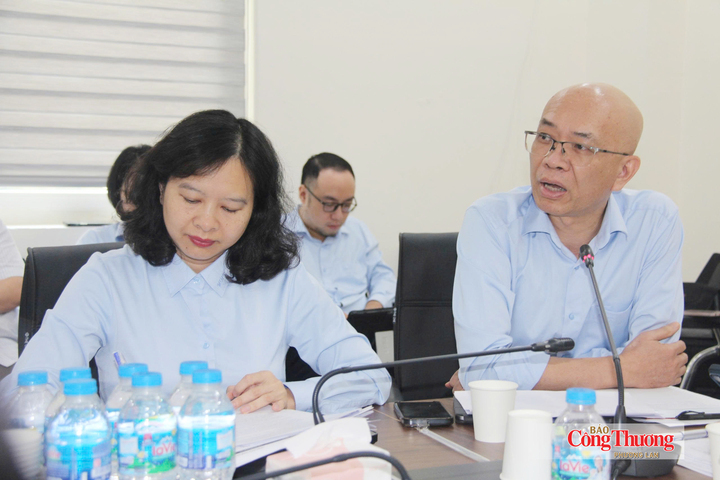
At the opening of the meeting, Director Nguyen Anh Son said that C/O issuance for several groups of products, including footwear, handbags and seafood, has been on the rise. Therefore, the meeting was organized with the participation of the Customs Department, Departments of Industry and Trade, industry associations and businesses to discuss and clarify difficulties and obstacles and seek solutions to ensure that C/O issuance is conducted smoothly and creates the greatest possible facilitation for businesses' export activities.
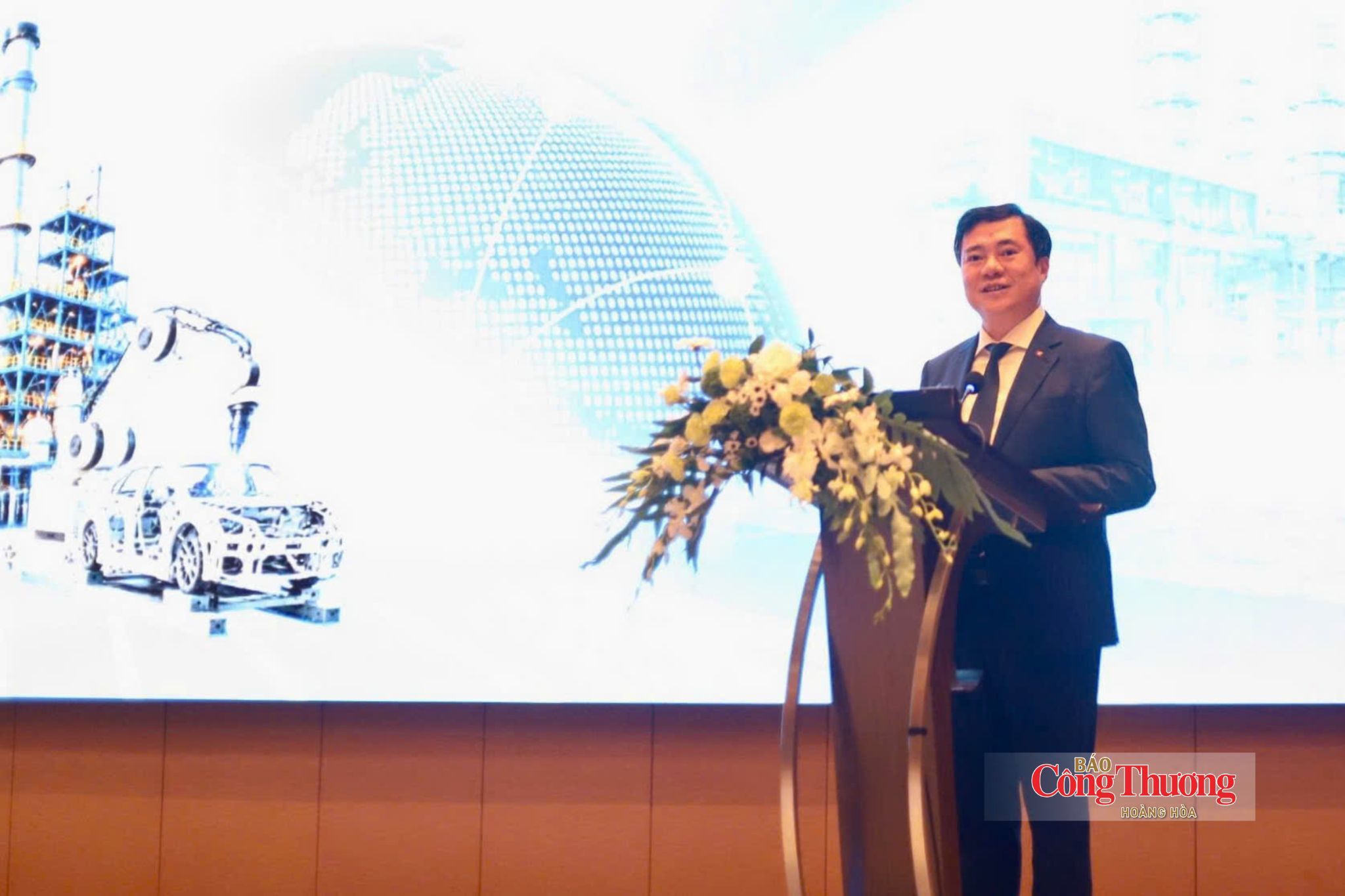
Director Nguyen Anh Son delivers opening remarks at the meeting.
Providing more details on C/O issuance in recent times, Tran Thanh Binh, Head of the Rules of Origin Division under the AFT, said that since July 1, 2025, the AFT has coordinated implementation and issued numerous documents to ensure professional guidance and procedures for C/O-issuing agencies and organizations, particularly those in localities that have recently been delegated the relevant authority.
Data from the period shows a significant shift in where procedures are carried out. From July 1, 2025 to August 1, 2026, around 80% of C/O applications submitted by traders were processed by agencies under the AFT, while approximately 20% were handled by 34 local C/O-issuing agencies and organizations. However, the proportion of applications processed by localities during the first 15 days of August, when Circular No. 26 took effect, was about twice as high as that recorded during the first seven months of the year.
The rapidly increasing volume of applications has placed considerable pressure on local C/O-issuing agencies. In Ho Chi Minh City, Le Van Danh, Deputy Director of the Department of Industry and Trade, said the department had established a seven-member C/O team, comprising a team leader, deputy team leader and five specialists. The department is currently handling 9,056 applications, with businesses from other provinces and cities accounting for more than 50% of the total. Initially, C/O officers in Ho Chi Minh City had to work day and night, including Saturdays and Sundays, to process the volume of applications.
According to Le Van Danh, difficulties faced by local authorities and businesses during the first week mainly involved applications that failed to meet the required documentation under Decree No. 31/2018/ND-CP dated March 8, 2018, detailing the Law on Foreign Trade Management regarding the origin of goods. Some applications lacked supporting documents, including applications for C/O issuance. In some cases, lists of goods had not been signed or stamped. Businesses also frequently selected the wrong C/O-issuing agency, resulting in applications being returned and resubmitted.
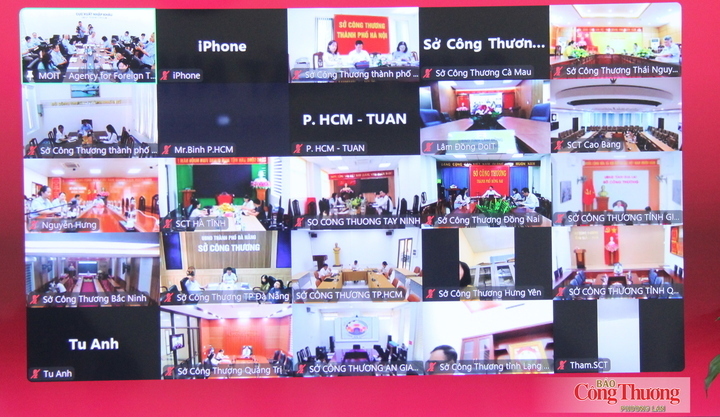
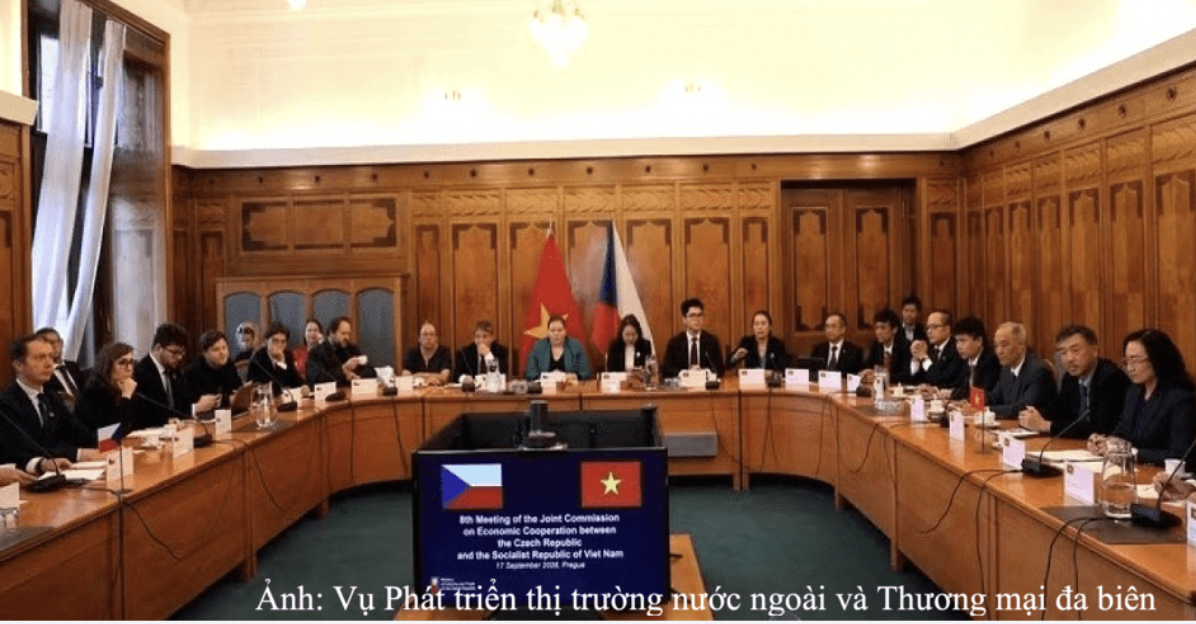
The meeting was held online with localities.
Another issue raised by Ho Chi Minh City was the use of paper documents. Under current regulations, businesses must contact the Department of Industry and Trade to obtain paper forms before completing and submitting their applications, which adds to processing time. Therefore, the Ho Chi Minh City Department of Industry and Trade proposed moving toward fully digitizing the process to facilitate businesses.
In Hanoi, Nguyen The Hiep, Deputy Director of the Department of Industry and Trade, said the number of applications had also risen rapidly since August 1, 2026. Of the 2,576 applications received by the department, 43% came from localities outside Hanoi, mainly for C/O forms B and E. The department expects the volume to reach 1,500 applications per day and is proposing additional personnel to prevent a backlog.
Addressing difficulties from systems to personnel and professional expertise
The decentralization process has generated not only pressure from the increased volume of applications but also issues related to electronic systems, trader profiles, professional expertise and the methods used by different C/O-issuing agencies.
Based on feedback collected from the Vietnam Pepper and Spice Association, the Vietnam Leather, Footwear and Handbag Association, the Vietnam Association of Seafood Exporters and Producers, as well as opinions published in electronic newspapers and on social media, the AFT has identified several groups of issues that need to be reviewed.
First, applications are still being processed slowly, while the rate of requests for additional documents and supporting evidence remains high. Some cases involve changes in administrative boundaries, names of administrative units, or differences in the way company names are presented in English and Vietnamese, resulting in inconsistent information.
Notably, some information already available on the customs system or a company's own system has nevertheless been accompanied by requests for additional documents proving the production process and detailed images of production stages. This has extended processing times.
Regarding electronic systems, businesses have reported data-upload capacity limits and system overload. Associations have called for standardized procedures, documentation requirements and declaration criteria, particularly for amended and supplementary applications. They also proposed that all required additional information be clearly identified from the outset to prevent new requirements from arising during each round of processing and forcing businesses to submit additional documents multiple times.
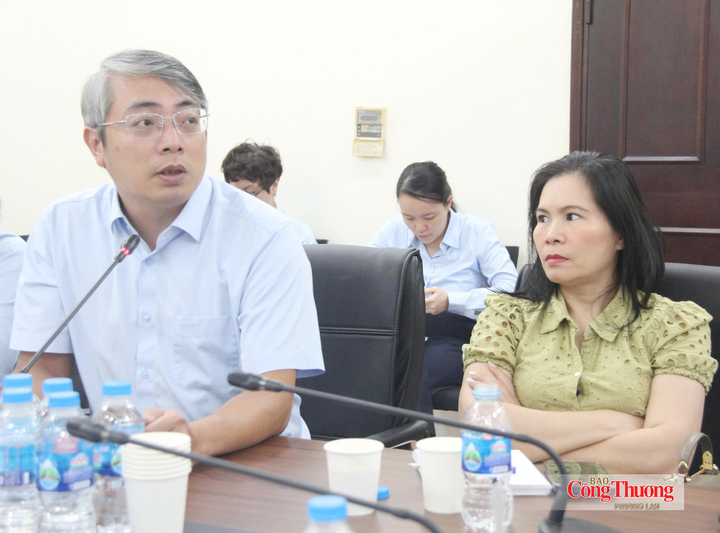
Phan Thi Thanh Xuan, Vice Chairwoman and Secretary General of the Vietnam Leather, Footwear and Handbag Association, delivers remarks at the meeting.
Phan Thi Thanh Xuan, Vice Chairwoman and Secretary General of the Vietnam Leather, Footwear and Handbag Association, said that when authority for C/O issuance was transferred from the Regional Import-Export Management Offices under the AFT to newly designated issuing agencies at local Departments of Industry and Trade, differences had emerged in the way applications were processed. Previously, the Regional Import-Export Management Offices had already accumulated substantial information about businesses and were familiar with their capacity profiles and experience. Meanwhile, when C/O issuance authority was transferred to localities, C/O officers had to familiarize themselves with the businesses again from the beginning, while businesses also had to resubmit their applications from scratch, leading to difficulties and delays in C/O issuance.
"To ensure smooth operations, exchanges and training should be strengthened so that agencies can access official records and apply a consistent approach to processing legal documents. For example, footwear businesses with export records spanning more than 10 years should be subject to differentiated processing and should not be required to restart their records from scratch like newly exporting businesses," Phan Thi Thanh Xuan said.
Another proposal was to allow the transfer and automatic inheritance of trader profiles already registered on the system to the local Departments of Industry and Trade, thereby avoiding the need for businesses to register again. During the transition period, associations proposed allowing applications to be received and approved in parallel, or applying a temporary trader-profile mechanism so businesses could continue submitting C/O applications while their trader profiles were being reviewed.
For localities with a large volume of applications, personnel shortages have become a clear issue. In Quang Ninh, Nguyen Tien Dung, Deputy Director of the Department of Industry and Trade, said the locality was processing around 90-100 applications per day. As a border province with a large volume of fresh goods, officials have had to work 12-16 hours a day, including Saturdays and Sundays, to process applications.
In Lang Son, Hoang Khanh Duy, Deputy Director of the Department of Industry and Trade, said the number of businesses registering with the department had increased by 15% compared with the period before August 1. The department has arranged for officials to work overtime to address difficulties faced by traders. A distinctive feature of Lang Son is that around 99% of C/Os issued are Form E, mainly for agricultural products and fruit exported to China.
Hoang Ninh, Deputy Director of the Viet Nam E-commerce and Digital Economy Agency, delivers remarks at the meeting.
According to Hoang Ninh, Deputy Director of the Vietnam E-commerce and Digital Economy Agency under the MoIT, from January 1 to August 17, 2026, the total number of C/O applications received exceeded 1.6 million.
Hoang Ninh also said that the agency is coordinating with the AFT to review and standardize procedures so that C/O-issuing agencies can access trader profiles registered with other C/O-issuing organizations. Regarding the green, yellow and red channel mechanism, he said the mechanism is already in place, along with regulations on document checks, which can help reduce procedures for businesses with an established export track record.
Joint efforts to address difficulties for businesses
From the perspective of C/O management, Tran Thanh Hai, Deputy Director of the AFT, said the new C/O issuance system had been operational for eight months. During this period, the AFT had repeatedly proposed that the Customs Department connect the system to the National Single Window and the ASEAN Single Window, thereby integrating the systems to further facilitate exporting businesses, particularly those exporting to China.
Tran Thanh Hai calls on localities to standardize procedures to process business applications promptly.
Regarding this proposal, a representative of the Customs Department said the agency would assess the situation and report to its leadership to seek solutions to address difficulties faced by businesses in the coming period.
"The Law on Electronic Transactions and relevant documents recognize paper records and electronic records as having equal legal value. I propose that Departments of Industry and Trade adopt a consistent understanding of this matter so that business applications can be processed promptly," Tran Thanh Hai emphasized.
Regarding documentation requirements and procedures for C/O issuance, Trinh Thi Thu Hien, Deputy Director of the AFT, emphasized the need for all C/O-issuing agencies and organizations nationwide to consistently implement the regulations under Decree No. 31/2018/ND-CP, avoiding situations in which different issuing agencies require different documentation and procedures.
In concluding the meeting, Director Nguyen Anh Son said that the AFT would continue coordinating with the Vietnam E-commerce and Digital Economy Agency to review emerging issues, with the AFT responsible for substantive matters and the Viet Nam E-commerce and Digital Economy Agency responsible for technical matters.
Regarding backlogged applications at several issuing agencies, particularly the Departments of Industry and Trade of Dong Nai and Ho Chi Minh City, the AFT Director called for efforts to process them promptly for businesses.
Nguyen Anh Son said that for traders applying for C/O issuance, each C/O form may be registered with only one issuing organization. For traders that have digitized their records and have profiles on the eCoSys system, registration is not restricted by administrative boundaries. Accordingly, a trader in Hanoi or any other locality may register with C/O-issuing organizations in any of the 34 provinces and cities to obtain a C/O.
Regarding strengthening management capacity, Nguyen Anh Son said the AFT had instructed that additional training be organized in the southern region within August. During the week, the AFT also plans to send a working delegation to localities to discuss, provide guidance and address recommendations concerning administrative procedures in the field of rules of origin.
The rapidly increasing volume of applications in localities, together with specific difficulties related to systems, personnel and professional expertise, shows that the decentralization of C/O issuance requires continued efforts to improve. The objective is not only to address the immediate application backlog but also to ensure consistency among issuing agencies, enhance system connectivity and create genuine facilitation for businesses engaged in export activities.
MoIT is advancing the Energy Efficiency Promotion Fund to mobilize financial resources and support greater investment in energy efficiency in Viet Nam.
The ASEAN Economic Ministers’ Meeting highlighted positive progress in economic integration, trade, digital economy and stronger connectivity among ASEAN economies.
The Prime Minister has asked relevant ministries and agencies to urgently finalize draft laws and resolutions to mobilize resources for socio-economic development.
General Secretary and President To Lam’s attendance and address at UNGA 81 high-level debate are particularly significant as Viet Nam and the UN look ahead to the 50th anniversary of their relations.
MoIT is advancing the Energy Efficiency Promotion Fund to mobilize financial resources and support greater investment in energy efficiency in Viet Nam.
Viet Nam and Poland are exploring complementary strengths in furniture manufacturing, machinery, raw materials and technology to develop regional supply chains.
On September 18, the Trade Remedies Authority of Viet Nam (TRAV) held the 2026 Trade Remedies Forum under the theme “Enhancing national production capacity - Creating new drivers of growth.”
Viet Nam - Russia business networking conference in Moscow created opportunities for businesses from the two countries to connect, seek partners and promote business cooperation.