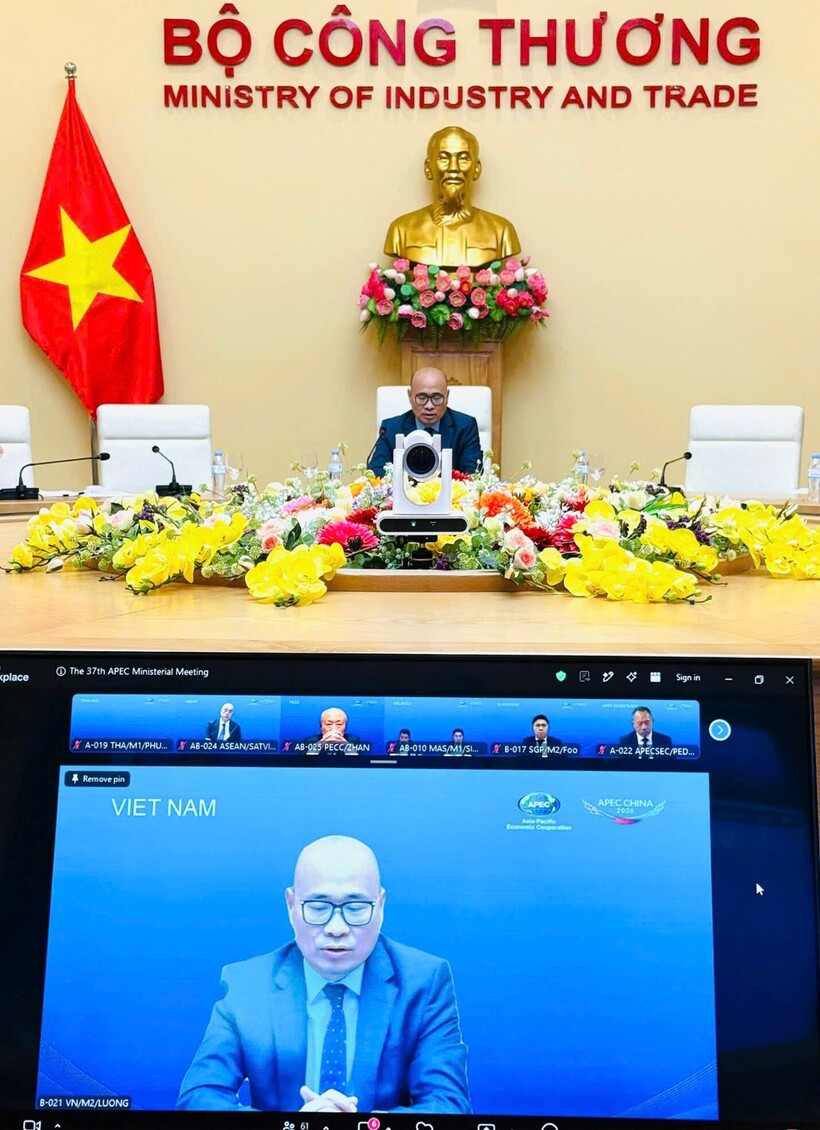
The 37th APEC Ministerial Meeting (AMM 37) was held online on November 3, 2026, within the framework of the Asia-Pacific Economic Cooperation (APEC) forum.
The meeting was co-chaired by Wang Yi, Member of the Political Bureau of the Communist Party of China Central Committee and Minister of Foreign Affairs of China, and Wang Wentao, Minister of Commerce of China. It was attended by foreign ministers, economic and trade ministers, and heads of delegations from the 21 APEC member economies.
Also attending were the Chair of the APEC Business Advisory Council (ABAC), representatives of the Pacific Economic Cooperation Council (PECC) and the APEC Secretariat. The Vietnamese delegation was co-headed by Le Hoai Trung, Member of the Politburo and Minister of Foreign Affairs, and Luong Hoang Thai, Deputy Minister of Industry and Trade.
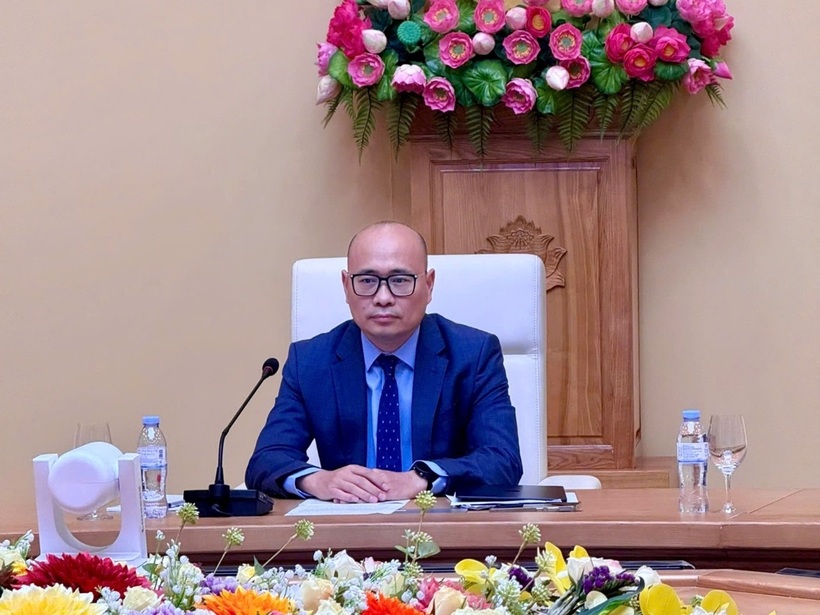
Deputy Minister of Industry and Trade Luong Hoang Thai, Co-Head of the Vietnamese delegation, attends the meeting.
APEC advances new drivers of regional economic integration
The meeting focused on two main themes: (i) working toward an interconnected, inclusive, resilient and prosperous Asia-Pacific community, in which economies cooperate to address shared challenges, narrow development gaps, promote sustainable growth and ensure that the benefits of integration are widely shared among people and businesses; and (ii) advancing new drivers of regional economic integration by harnessing emerging sources of growth, including digital technologies, innovation, the application of artificial intelligence (AI), the green transition and stronger supply chain connectivity, with a view to deepening economic linkages, enhancing competitiveness and ensuring sustainable and inclusive growth across the Asia-Pacific region.
The ministers reaffirmed their commitment to realizing the Putrajaya Vision 2040, which aims to build an open, dynamic, resilient and peaceful Asia-Pacific community. They underscored the pivotal role of innovation, the green and digital transitions, and the responsible development and application of artificial intelligence (AI) in promoting sustainable and inclusive economic growth and enhancing prosperity across the region.
The ministers also highlighted APEC’s central role in promoting regional economic cooperation, particularly amid the emergence of new technological trends and development models. As a platform for advancing innovative ideas and initiatives, APEC will continue to help economies harness technological achievements, strengthen supply chain resilience, promote open trade and investment, and contribute to reinforcing the rules-based multilateral trading system, with the World Trade Organization (WTO) at its core.
Regarding multilateral trade, many ministers reaffirmed that the WTO continues to play a pivotal role in establishing and maintaining a rules-based trading system. WTO commitments and rules constitute an indispensable foundation of international trade. Against this backdrop, the ministers welcomed efforts to promote dialogue and strengthen discussions within the WTO on emerging trade issues and current challenges facing global trade.
Viet Nam outlines three priorities for APEC economic cooperation
At the meeting, Deputy Minister Luong Hoang Thai affirmed that regional economic integration is a key pillar in realizing the Putrajaya Vision 2040. He commended APEC’s efforts to promote economic integration, particularly through the process toward the Free Trade Area of the Asia-Pacific (FTAAP), trade and investment facilitation, enhanced services competitiveness and an improved business environment. He also shared with APEC members several priorities Viet Nam will pursue in the coming period to ensure free, open, sustainable and inclusive trade and investment across the Asia-Pacific region:
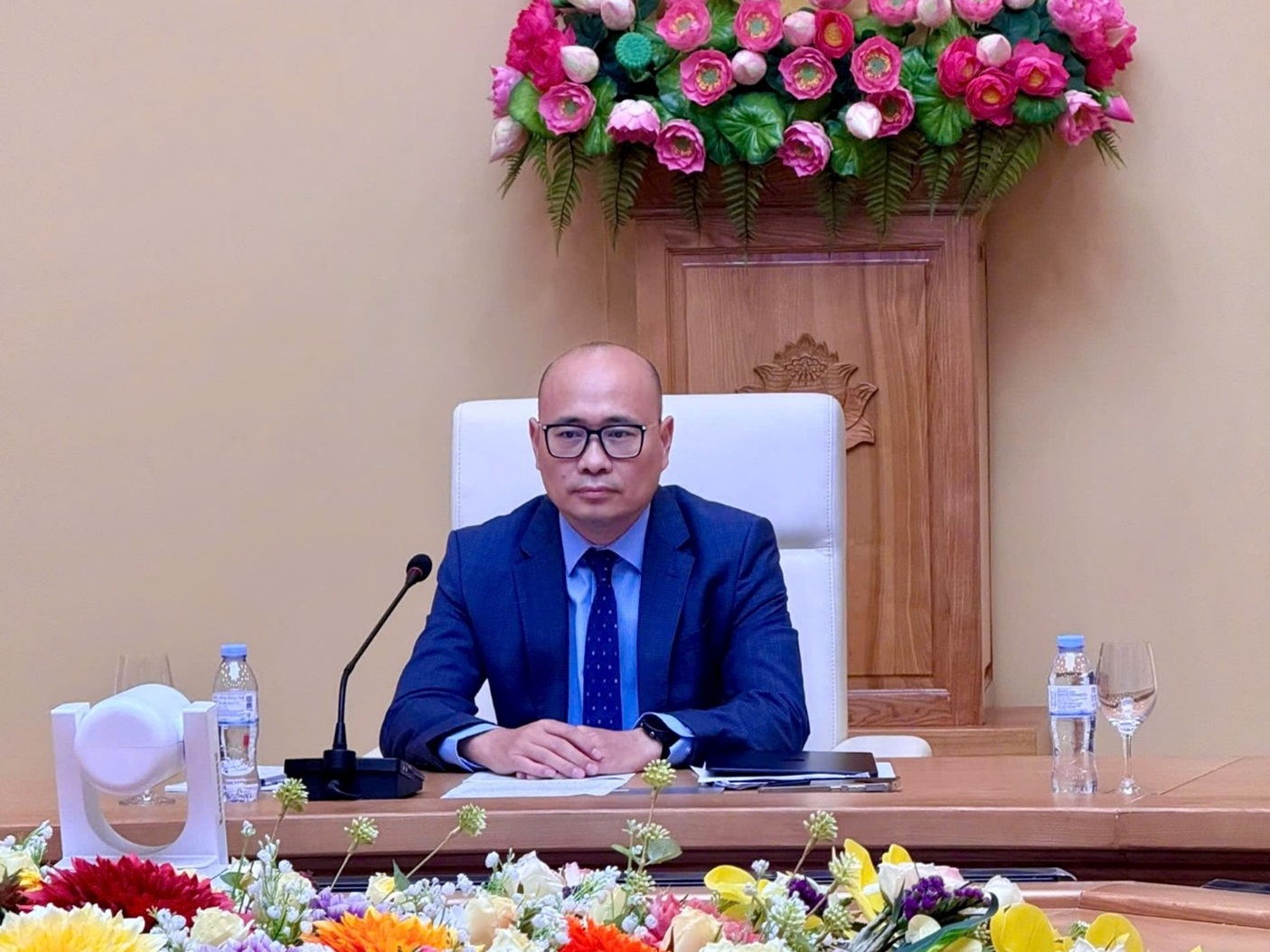
Deputy Minister Luong Hoang Thai delivers remarks at the meeting.
First, developing strategic technologies. Viet Nam prioritizes the development and application of strategic and emerging technologies, including AI, semiconductors and other advanced technologies, to improve productivity, innovation capacity and the economy’s competitiveness. Viet Nam aims to train 50,000 semiconductor engineers by 2030 and emphasizes the importance of regional cooperation in technology, innovation and human resource development to ensure that all APEC economies can participate in and benefit from technological advances.
Second, promoting the digital economy and an innovative startup ecosystem. Viet Nam will accelerate digital transformation, develop the digital economy and build a dynamic startup ecosystem. The country attaches importance to promoting digital trade, strengthening digital connectivity and creating favorable conditions for micro, small and medium-sized enterprises to participate more effectively in value chains and regional and global markets.
Third, accelerating the green transition. Viet Nam will promote green investment, develop clean technologies, improve resource-use efficiency and encourage sustainable production and consumption. The green transition is not only Viet Nam’s environmental commitment but also a new driver of growth, linked to its goal of achieving net-zero emissions by 2050. Viet Nam also encourages businesses to adopt environmental, social and governance (ESG) standards and seeks to strengthen APEC cooperation in promoting trade and investment in environmental goods and services, developing green finance, and supporting businesses, particularly small and medium-sized enterprises, in their green transition.
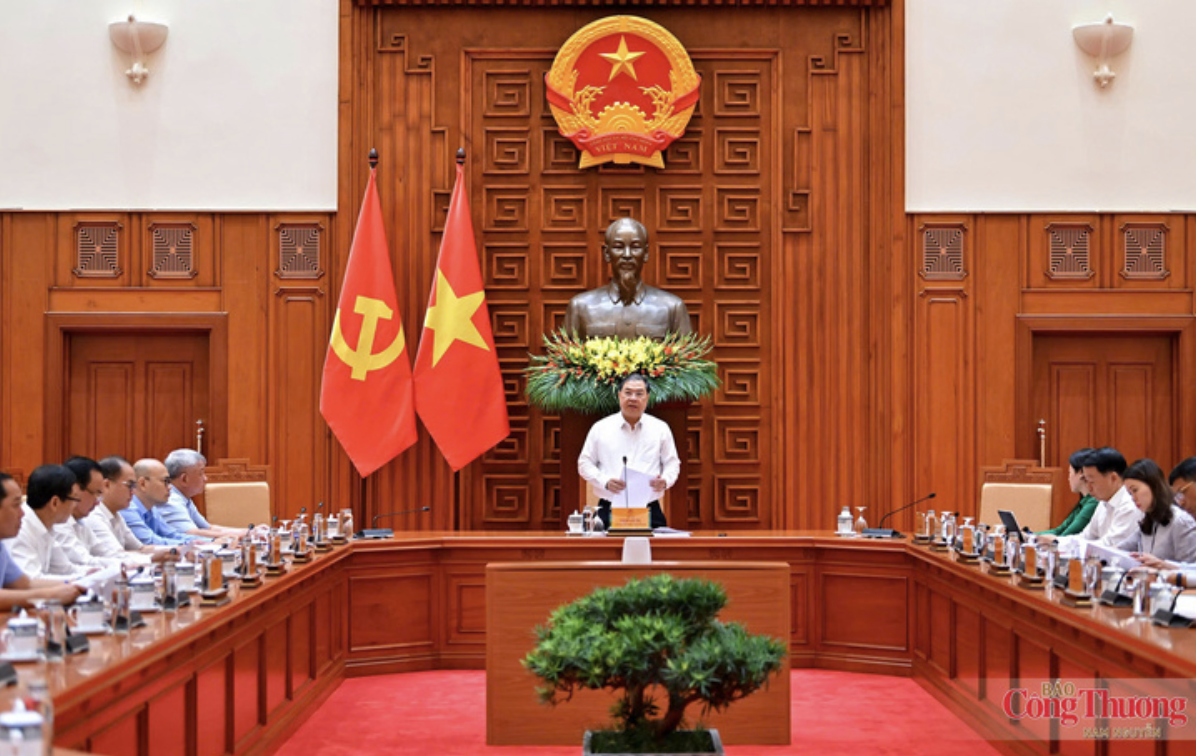
Deputy Minister of Industry and Trade has outlined the results of the E10 biofuel rollout after more than five months, highlighting stable supply, steady retail prices and continued market inspections and supervision.
The 37th APEC Ministerial Meeting (AMM 37) was held online on November 3, 2026, within the framework of the Asia-Pacific Economic Cooperation (APEC) forum.
The 2026 - 2030 program seeks to enhance the competitiveness of Vietnamese goods, strengthen distribution networks and build lasting consumer confidence.
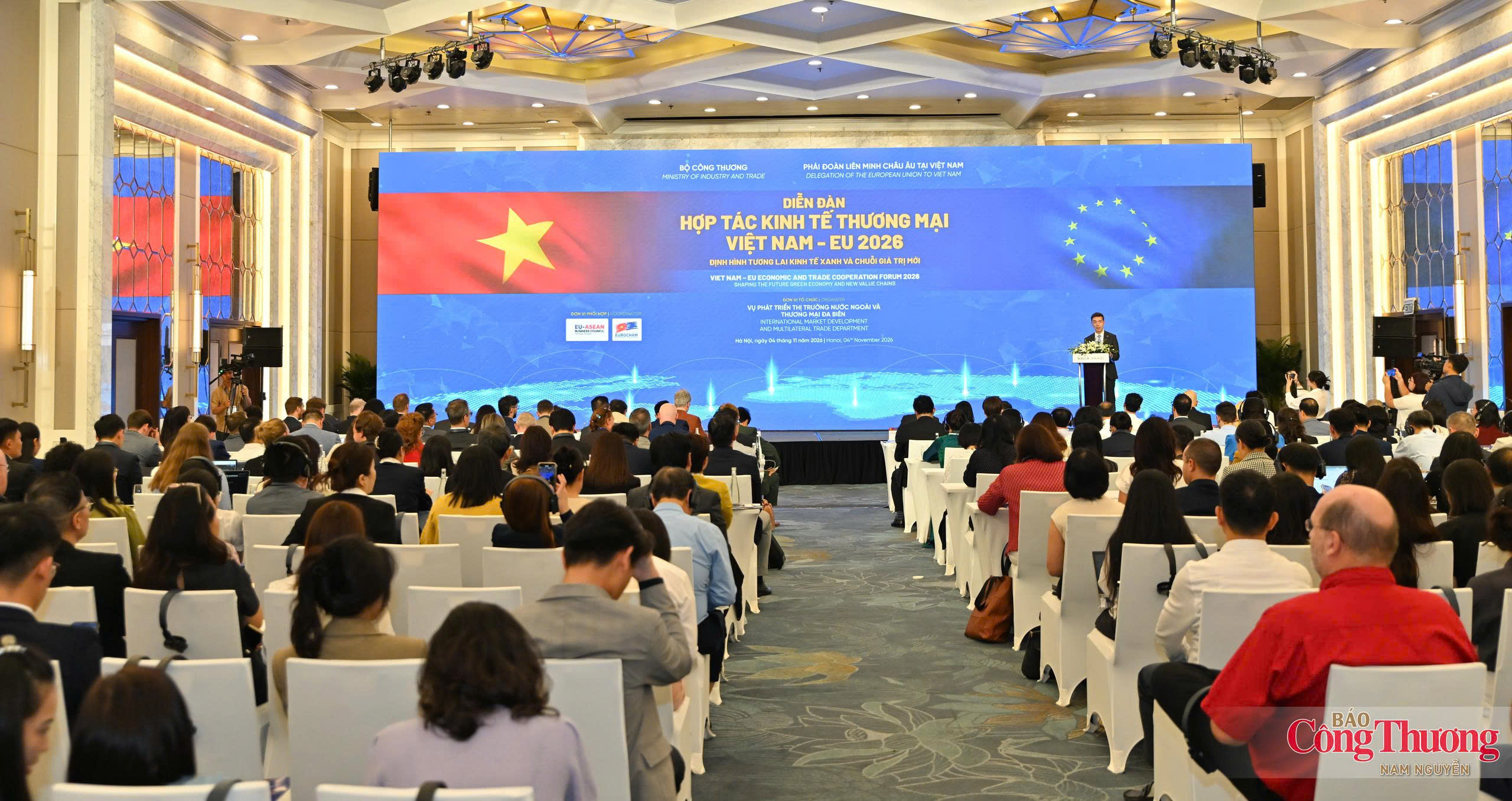
The forum promotes Viet Nam - E.U. economic, trade and investment ties, focusing on green growth, supply chain development and higher-value trade cooperation.
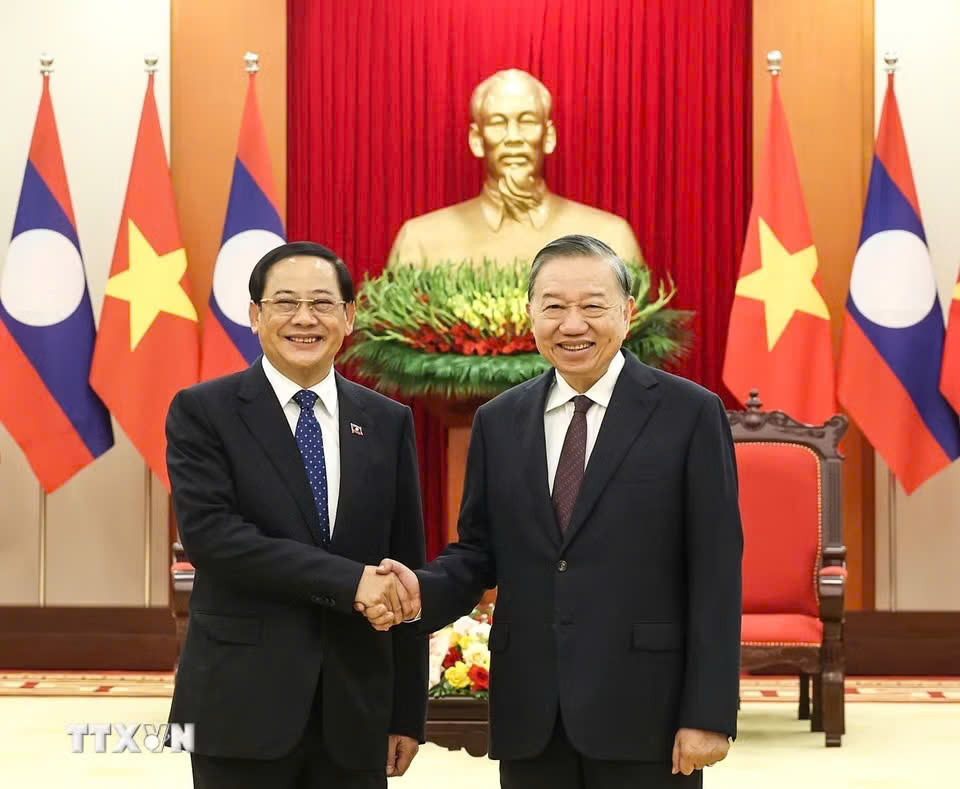
General Secretary and State President To Lam received Saysomphone Phomvihane, President of the Lao National Assembly, and a high-level delegation from the Lao legislature during their official visit to Viet Nam.
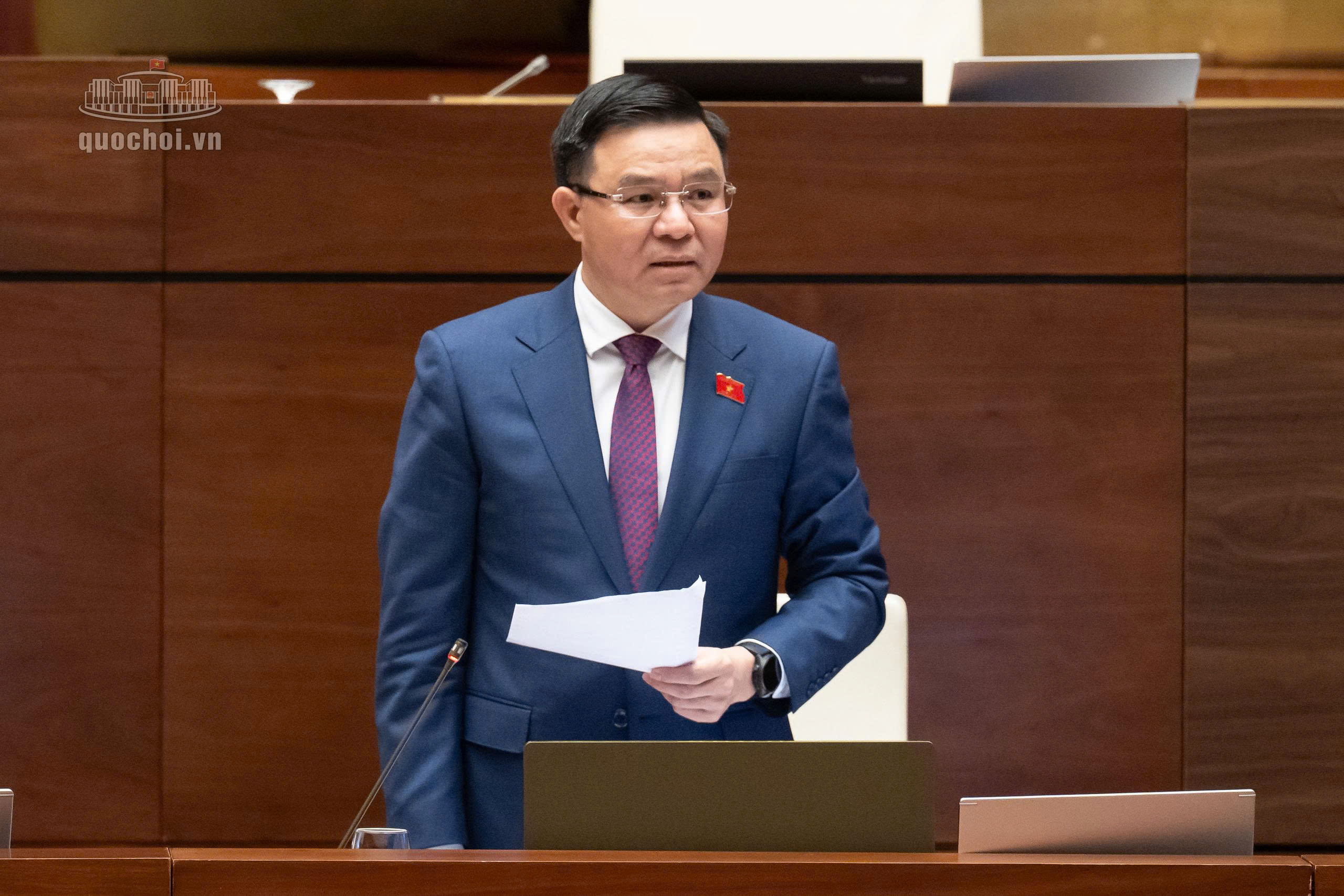
During a plenary session on November 3, Le Manh Hung, Minister of Industry and Trade, addressed questions raised by National Assembly deputies regarding the draft Law amending and supplementing a number of articles of the Law on Electricity.
In the first nine months of 2026, southern provinces and cities implemented approximately 48% of their approved industrial promotion funding plans for the year. Addressing bottlenecks and accelerating project implementation are key priorities for the remaining months.
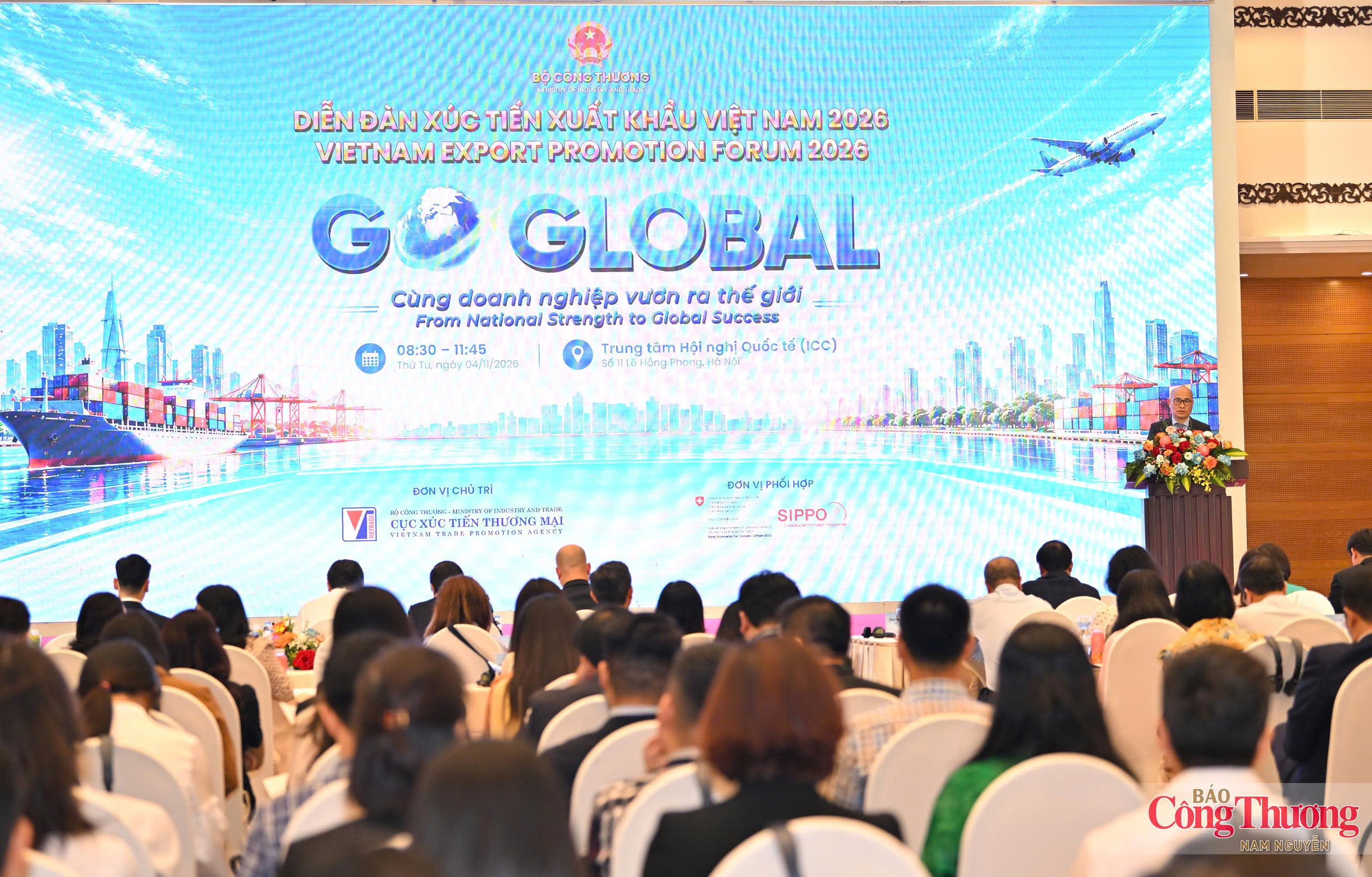
On November 4 in Ha Noi, the Steering Committee for the Go Global Programme under the Ministry of Industry and Trade organized the Viet Nam Export Promotion Forum 2026 under the theme “Go Global - Supporting businesses in reaching out to the world”, in coordination with the Swiss Import Promotion Program (SIPPO), the Viet Nam Chamber of Commerce and Industry (VCCI), and domestic and international business support organizations and trade promotion agencies.