Vietnam’s coffee industry is not only benefiting from its strengths in production and exports, but is also opening up significant room for growth in the domestic retail market. As institutional capital and private equity funds show increasing interest in the F&B sector, scalability, operational control, unit economics and the ability to develop an integrated value chain are becoming key factors determining the attractiveness of businesses.
In an interview with Vietnam Economic News, Giovanni Zangani, Founder and Managing Partner of Maestro Equity Partners, a private equity fund that has invested in F&B chains including Milano Coffee and Sasin Noodles, shared his views on the factors that make a coffee business attractive to investors, as well as lessons from the Milano Coffee case.
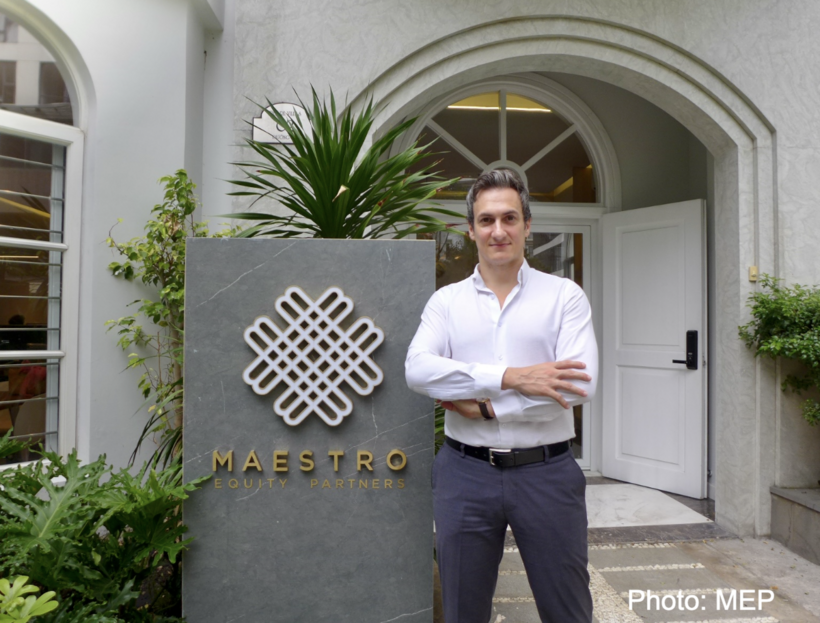
Giovanni Zangani, Founder and Managing Partner of Maestro Equity Partners, a private equity firm that invested in F&B chains like Milano Coffee and Sasin Noodles.
- In your view, what are the key factors that determine the attractiveness of a Vietnamese coffee company to private equity investors?
- Giovanni Zangani: Coffee is not the core business. The real value lies in how a company systematically integrates its products, brand and a tightly controlled operating system.
When evaluating a coffee business, we focus on the parts of the value chain that generate higher value added, including research and development, roasting and packaging, distribution and retail.
There are five key pillars that investors need to consider.
First is scalability. A company needs the capacity to expand its network, enter new regional markets and develop additional revenue channels, such as Consumer Packaged Goods (CPG).
Second is replicability. This depends on standardized operating procedures, a strong management team and audited financial systems. These are the foundations for maintaining consistency when operating hundreds of stores.
Third is unit economics. An attractive business model must demonstrate profitability at the individual store level. This efficiency can be driven by economies of scale, effective marketing and the characteristics of the industry, where variable costs such as rent and labor can be offset by high margins from coffee products.
Fourth is control. Companies need to build robust digital infrastructure, including Enterprise Resource Planning (ERP) software and dedicated applications for franchisees and end consumers.
Finally, there is CPG integration. A retail brand that can expand into Consumer Packaged Goods can create additional opportunities to develop an omnichannel retail model.
Therefore, for institutional investors, the story is not simply about how many stores a company has or how well-known its brand is. The key question is whether the company can build a business platform that is scalable, replicable, controllable and capable of generating sustainable unit economics.
- Milano Coffee is a notable case of building a large network through a franchising model. Could you share what factors make this model attractive to investors?
- Giovanni Zangani: Milano Coffee is a strong example of scalability in Vietnam’s F&B sector.
While many premium coffee chains focus on prime locations in major cities, Milano Coffee has chosen to target the mass market through a pure franchising model, with relatively small stores of around 30–70 square meters.
Milano Coffee currently has 1,600 operating stores nationwide, giving it a large network and a particularly strong presence in the value segment. The scale of the network demonstrates the replicability of the model.
Another factor is its fit with consumer needs. Milano Coffee does not compete solely on image or aesthetics, but focuses on the priorities of everyday consumption. Customers value affordable prices, convenient locations and flavors suited to local tastes.
The brand also has an NPS (Net Promoter Score) of 34, a figure considered notable compared with many competitors in the mid-range and premium segments.
These factors show that an F&B model does not necessarily have to rely entirely on large-format stores or expensive locations. If the model is designed to meet market demand and can be replicated effectively, a company can still build a significant network.
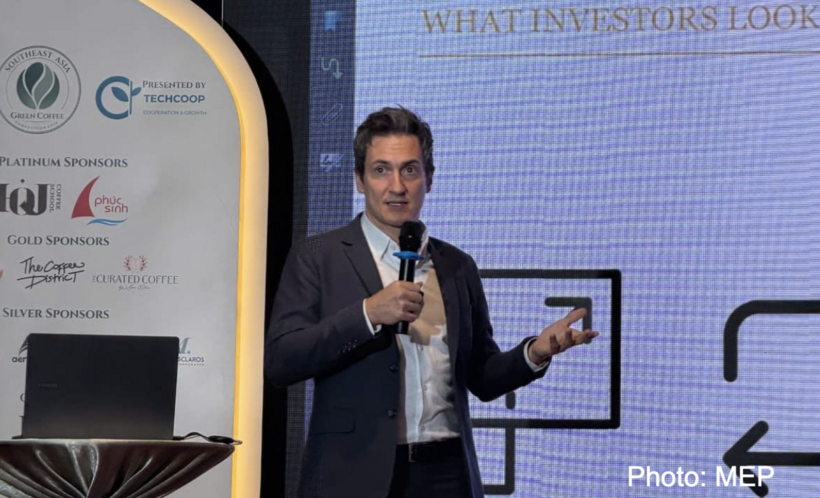
Giovanni Zangani, a guest speaker at a professional forum for coffee industry professionals and investors.
- After receiving investment and strategic guidance from Maestro Equity Partners, how is the company seeking to unlock additional growth potential, particularly in terms of operational control and supply chain management?
- Giovanni Zangani: Once a company has built a large network, the next question is not simply how many more stores it can open, but how to gain better control over the operations of the entire system.
For Milano Coffee, we see significant value in leveraging its large network by strengthening operational control. Part of this process involves deploying applications for consumers and franchisees to support inventory management and loyalty programs.
Strengthening management tools and digital infrastructure is important for mitigating common operational risks in highly fragmented emerging markets.
Alongside operational control, supply chain management is also a critical factor. Milano Coffee proactively manages its supply chain, with a production facility in Cu Chi capable of producing 2,000 tonnes per year and meeting international food safety standards.
This enables the company to maintain product consistency as its franchise network expands.
From an investor’s perspective, this is important: the larger the network becomes, the stronger the systems a company needs to ensure quality, manage inventory, maintain customer experience and control the operations of individual outlets.
- Based on the Milano Coffee case, what do you think Vietnamese coffee companies need to prepare if they want to access international capital or private equity funding in the coming period?
- Giovanni Zangani: What investors are increasingly looking for is real assets, stable cash flows and business models that have demonstrated their ability to scale.
Therefore, the attractiveness of a coffee company does not lie solely in the image of a brand or a coffee shop. A company needs to build a system that can be tightly controlled, operated consistently and replicated effectively.
One particularly important factor is unit economics at the individual store level. If each outlet has an efficient business model, the company will have a stronger foundation for nationwide expansion.
At the same time, companies need to focus on integrating products, branding, supply chains, technology and retail systems. As companies mature, the application of artificial intelligence (AI) to logistics, consumer data analytics and franchise operations monitoring is expected to further improve operational efficiency.
Therefore, for Vietnamese coffee companies seeking to attract international capital or private equity investment, the focus should not be limited to building a brand with strong visual appeal. More importantly, they need to build a business platform that can be controlled, operated consistently, scaled effectively and generate sustainable unit economics.
The Viet Nam Economic News respectfully presents the full text of the the Joint Statement on the outcome of the official visit to the Kingdom of Belgium by General Secretary and President To Lam.
With e-commerce valued at USD 31 billion in 2025, officials called for closer government-university-business ties to enhance efficiency, skills and innovation.
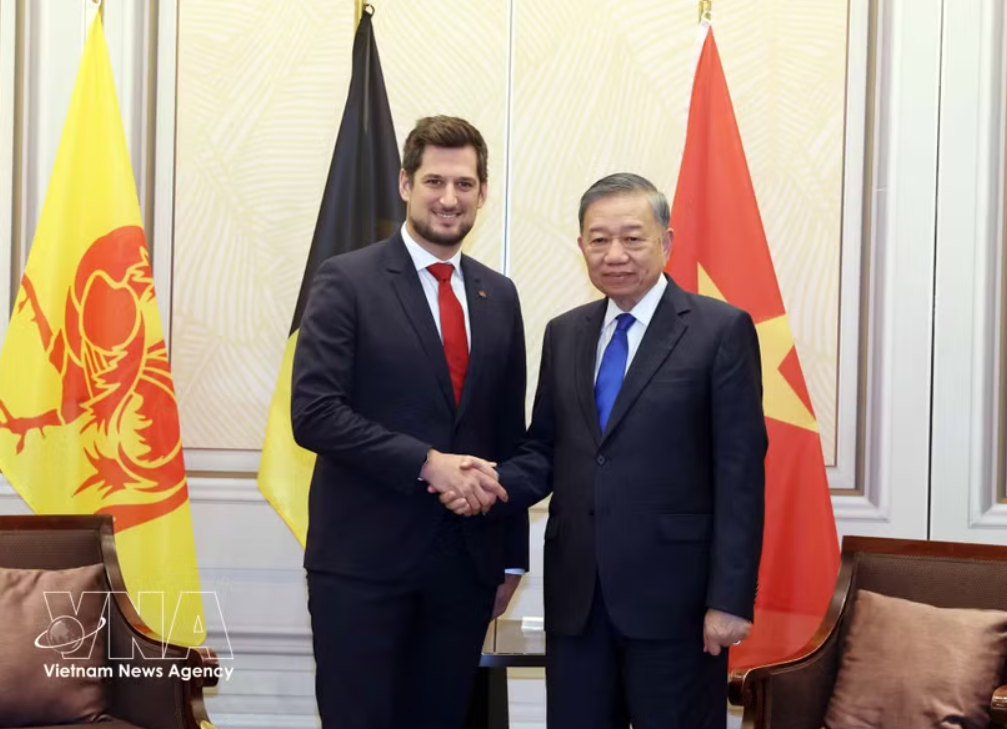
Discussing future orientations, General Secretary and President To Lam suggested that the government of the Wallonia region support the early elevation of Viet Nam–Belgium ties to a Strategic Partnership.
The host leaders described the Belgian House of Representatives' approval of the EU - Viet Nam Investment Protection Agreement (EVIPA) as tangible evidence of the two countries’ determination and potential to expand economic, trade and investment cooperation.
The top leader called on Flanders to support the early elevation of Viet Nam - Belgium relations to a strategic partnership, take a pioneering role in promoting economic cooperation, encourage businesses to expand investment in Viet Nam, and back the completion of ratification and effective implementation of the EU–Viet Nam Investment Protection Agreement (EVIPA).
The Viet Nam Economic News respectfully presents the full text of the the Joint Statement on the outcome of the official visit to the Kingdom of Belgium by General Secretary and President To Lam.
Discussing future orientations, General Secretary and President To Lam suggested that the government of the Wallonia region support the early elevation of Viet Nam–Belgium ties to a Strategic Partnership.
The host leaders described the Belgian House of Representatives' approval of the EU - Viet Nam Investment Protection Agreement (EVIPA) as tangible evidence of the two countries’ determination and potential to expand economic, trade and investment cooperation.
The top leader called on Flanders to support the early elevation of Viet Nam - Belgium relations to a strategic partnership, take a pioneering role in promoting economic cooperation, encourage businesses to expand investment in Viet Nam, and back the completion of ratification and effective implementation of the EU–Viet Nam Investment Protection Agreement (EVIPA).
Polish Prime Minister Donald Tusk will pay an official visit to Viet Nam from October 24 to 26 as the bilateral trade continues to grow, creating opportunities for deeper cooperation.