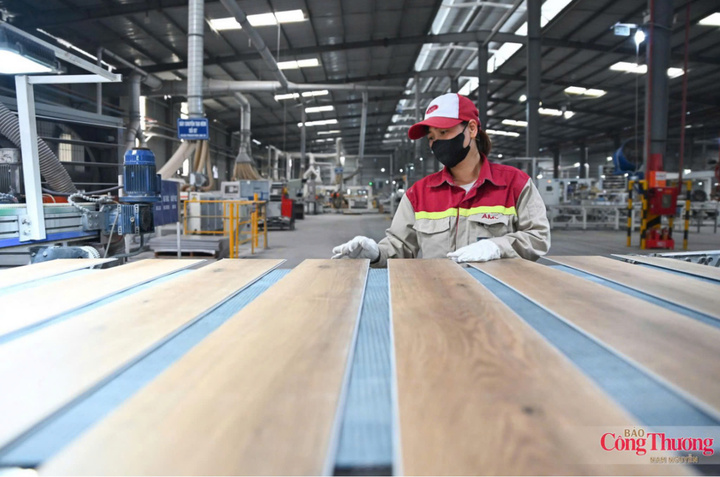
Wood and wood product exports exceeded USD 15 billion in the first 10 months of 2026, highlighting the need for transparent raw material sourcing and stronger origin verification capabilities to capitalize on FTA preferences.
More than just legal timber
According to data from the National Statistics Office under the Ministry of Finance, Viet Nam's exports of wood and wood products reached USD 15.014 billion in the first 10 months of 2026, up 6.8% year-on-year. This performance further underscores the wood industry's position among the country's key export sectors. However, alongside this growth, businesses are facing increasingly stringent requirements for raw material transparency and proof of origin.
Previously, product quality, pricing and the ability to fulfil orders were the main factors determining competitiveness. Today, information on raw material origins, legality and the production process has also become essential to maintaining trade relationships with international partners.
For the wood industry, meeting these requirements is particularly complex because raw materials pass through multiple stages, from forest planting, harvesting, transportation and procurement to processing and export. Inconsistencies in information at any stage can create difficulties for businesses when trading partners request origin verification or competent authorities inspect their documentation.
In an interview with the Newspaper of Industry and Trade, Nguyen Van Dien, Deputy Director General of the Department of Forestry and Forest Protection under the Ministry of Agriculture and Environment, said that improving the institutional framework was one of the fundamental solutions to meeting increasingly stringent international market requirements. In this regard, Decree No. 120 amending and supplementing a number of provisions of Decree No. 102 on Viet Nam's Timber Legality Assurance System (VNTLAS) is an important measure. The Ministry has also issued Circular No. 26 and Circular No. 84 to strengthen timber traceability.
Nguyen Van Dien, Deputy Director General of the Department of Forestry and Forest Protection under the Ministry of Agriculture and Environment. Photo: Ngoc Hoa.
According to Dien, these regulations help affirm that Vietnamese timber has transparent and legal origins, meeting international market requirements.
"The inevitable trend in the coming period is to ensure that products can be traced back to their origins, thereby guaranteeing producer responsibility throughout the entire supply chain, from forest planting, harvesting, transportation, trading and processing to export," Nguyen Van Dien emphasised.
Notably, in export activities, traceability goes beyond the requirement to manage legally sourced raw materials. It also plays a practical role in preparing documentation to prove the origin of goods. Although closely related, these are two distinct requirements.
Traceability enables businesses to control raw materials and monitor the production process. Meanwhile, the origin of goods is determined according to specific rules applicable to each product and trade agreement. To obtain a Certificate of Origin (C/O), businesses must meet the relevant rules of origin and provide supporting documentation as required.
This means that using legally sourced raw materials does not automatically qualify a product for a preferential C/O. However, when information on raw material origins, procurement and processing is properly recorded and managed, businesses will be better positioned to provide explanations, cross-check information and complete origin documentation.
As Viet Nam participates in numerous free trade agreements, a C/O is more than just a document required for export procedures. It is directly linked to a product's eligibility for tariff preferences. Therefore, strengthening origin verification capabilities should be regarded by wood businesses as part of their supply chain management strategies, rather than a task undertaken only when a certificate is requested.
Digitalising data to strengthen origin verification
One of the notable directions for the forestry sector is the development of an electronic traceability system, gradually replacing management methods that rely primarily on paper-based records. This is not merely a solution to modernise management practices but also aims to establish a data platform for improving transparency throughout the timber supply chain.
"The Department is currently working with several international organisations, including the Food and Agriculture Organization of the United Nations (FAO), to develop an electronic traceability system and establish a centralised database," Nguyen Van Dien said.
According to him, the system is expected to help reduce administrative procedures, improve supply chain transparency and enable businesses to cut unnecessary costs. The establishment of a centralised database also aims to ensure information can be managed consistently across all stages, rather than remaining fragmented across separate sets of records.
Viet Nam's exports of wood and wood products reached USD 15.014 billion in the first 10 months of 2026, up 6.8% year-on-year.
For exporters, the system's value lies not only in its ability to track raw material origins but also in creating interconnected data across production stages. When information on inputs, transportation, procurement and processing is fully recorded, businesses will be better equipped to provide documentation for origin verification. They will also have a stronger evidentiary basis for proving the origin of goods in accordance with individual market requirements.
However, digitalisation can only deliver its full benefits when all participants in the supply chain actively contribute to updating information. In particular, the earliest stages, including forest planting, harvesting and raw material procurement, need to be closely monitored. If input data is incomplete or inconsistent, processing and exporting businesses will find it difficult to prepare comprehensive supporting documentation when verification requests arise.
Alongside improvements to the management system, market expansion remains an important task for the wood industry. Dien said the Ministry of Agriculture and Environment would continue coordinating with the Ministry of Industry and Trade to develop targeted, focused and long-term trade promotion programmes, supporting businesses in promoting the image, brands and products of Viet Nam's wood industry.
He also noted that timber trade development is closely linked to forestry development and forest protection. Viet Nam currently has more than 4 million hectares of plantation forests, supplying approximately 70-80% of the raw materials used by the wood processing industry. Therefore, export development not only generates foreign currency earnings but also contributes to sustainable forestry development and forest environmental protection.
With export turnover exceeding USD 15 billion in the first 10 months of 2026, the wood industry's challenge is no longer limited to increasing output or expanding markets. It must also strengthen its capacity to manage raw material sources and prove product origin. When traceability data is comprehensively established, production records are transparently managed and rules of origin are properly applied, C/O can become an effective tool for businesses to capitalise on trade preferences.
Origin transparency, therefore, should no longer be treated as a matter of completing paperwork at the final stage of the export process. Instead, it needs to begin with raw material management and production organisation. This is also the foundation for Vietnamese wood products to enhance their reputation, strengthen competitiveness and achieve sustainable growth in international markets.
Carlsberg Viet Nam was named Nordic Company of the Year at the Nordic Business Awards 2026 and recognized for its workplace, sustainability and community efforts.
Viet Nam and Panama agreed to promote economic, trade and investment cooperation in key areas, aiming to effectively tap the market potential of both countries.
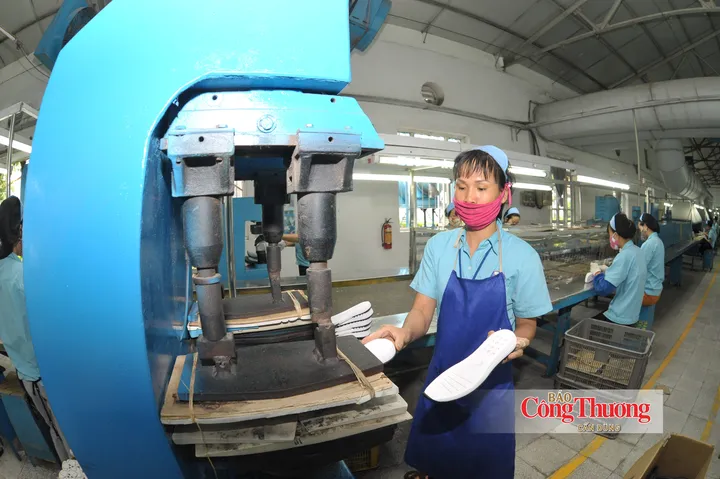
The EVFTA offers Vietnamese footwear tariff advantages in the E.U. market. To capitalize on these opportunities sustainably, businesses need to secure material supplies, strengthen production capacity and meet green requirements.
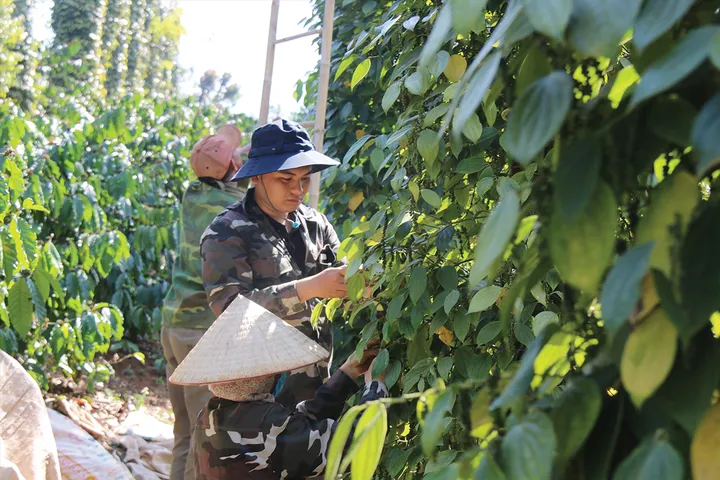
Tariff preferences under free trade agreements (FTAs) are creating new opportunities for Vietnamese pepper exports. However, businesses need to proactively meet rules of origin requirements.
Ha Noi is set to host CPTPP ministerial dialogues with the E.U. and ASEAN on November 26, 2026, but the dialogues do not mean either is joining the agreement.