Ha Noi is set to host CPTPP ministerial dialogues with the EU and ASEAN on November 26, 2026, but the dialogues do not mean either is joining the agreement.
Alongside the 11th CPTPP Commission meeting scheduled for November 27, Hanoi is expected to host the CPTPP-European Union and CPTPP-ASEAN Ministerial Trade and Investment Dialogues on November 26, 2026, under the plan issued by the Ministry of Industry and Trade (MoIT) with Decision No. 2352/QD-BCT dated September 22, 2026. As both mechanisms were only launched in November 2025, they are easily misread as a stepping stone toward membership. The CPTPP's own documents say otherwise.
Born in Melbourne at the ninth Commission meeting
The dialogues with the EU and ASEAN were both held for the first time on November 20, 2025 in Melbourne, each with its own joint statement, according to the UK Government and Global Affairs Canada. The ninth CPTPP Commission meeting, chaired by Australia, welcomed the two inaugural dialogues.
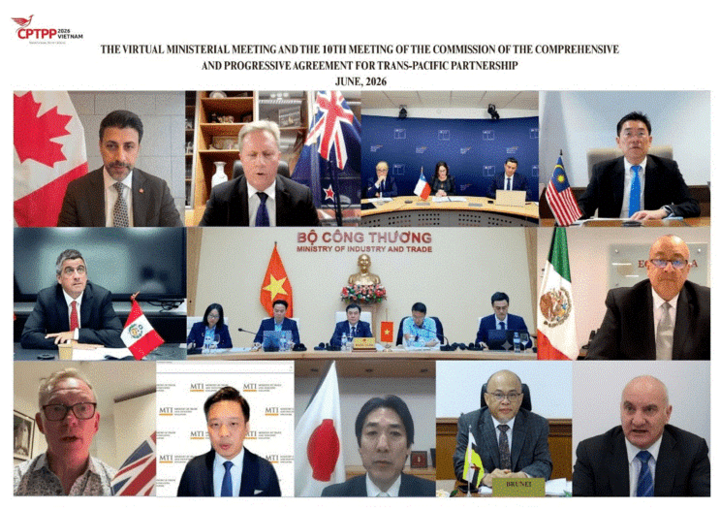
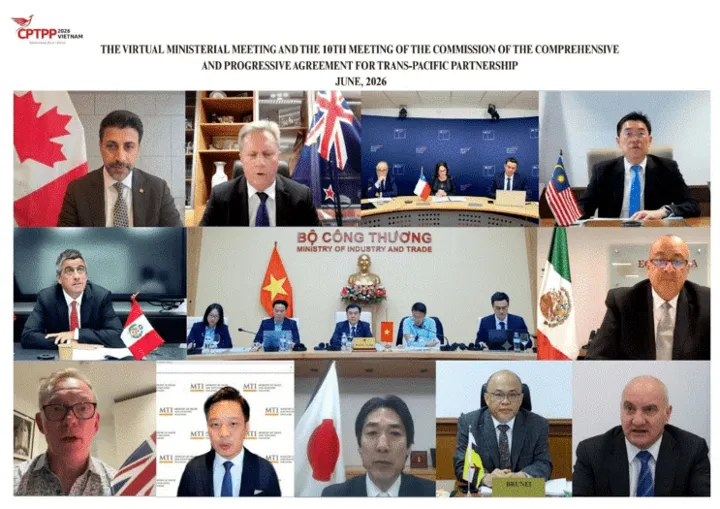
Ministers and representatives of CPTPP members at the virtual ministerial meeting and the 10th CPTPP Commission meeting in June 2026. Photo: MoIT
The CPTPP-EU Trade and Investment Dialogue was established by a Joint Ministerial Statement on November 20, 2025, with four priority areas: digital trade, sustainable trade, investment and sustainable supply chains.
Viet Nam took over the chairmanship just as the two mechanisms were getting under way. On November 22, 2025, on the sidelines of the G20 Summit, Canadian Prime Minister Mark Carney and European Commission President Ursula von der Leyen welcomed Viet Nam's assumption of the CPTPP chairmanship for 2026. Viet Nam's Prime Minister said that in 2026, Viet Nam would treat the CPTPP-EU Trade and Investment Dialogue as one of its top priorities. Dialogue with partners outside the bloc is also one of the five priority groups of Viet Nam's chairmanship year.
Dialogue is not accession
The first point to grasp is that the dialogues do not mean the EU or ASEAN is joining the CPTPP, nor do they create new trade commitments. The tariff preferences and rules of origin that businesses currently apply when exporting to CPTPP members remain governed by the existing agreement.
Accession is a separate path with its own procedures. Under the Auckland Principles, an aspiring economy must be ready to meet the agreement's high standards, have a track record of complying with its trade commitments, and win the consensus of all members. The UK went through every step: its accession process was launched and an Accession Working Group established on June 2, 2021; it signed the Accession Protocol on July 16, 2023; and the Protocol entered into force on December 15, 2024, according to Global Affairs Canada.
The CPTPP is an open agreement, and Viet Nam, as Chair, coordinates in line with established procedures on the basis of consensus. The CPTPP-ASEAN dialogue is a separate cooperation channel, distinct from the accession process.
Every next step requires consensus. The Joint Statement of June 26, 2026 reaffirmed the vision for the two dialogues, while stating clearly that all further initiatives, including the trade and investment dialogues, are to be carried out on the basis of consensus among the CPTPP Parties.
2026: Digital trade, supply chains and the trading environment
During Viet Nam's chairmanship year, the dialogues have produced concrete work. The first Senior Officials' Meeting (SOM1) in Hanoi in March 2026 discussed the accession process, the dialogues with the EU and ASEAN, and e-commerce and trade facilitation. On March 27, 2026, ministers of CPTPP members and the EU met on the sidelines of the 14th WTO Ministerial Conference in Yaoundé, according to Global Affairs Canada. The Joint Statement of June 26, 2026 referred to a workshop organized by Japan in July 2026 as part of concrete cooperation with the EU and ASEAN.
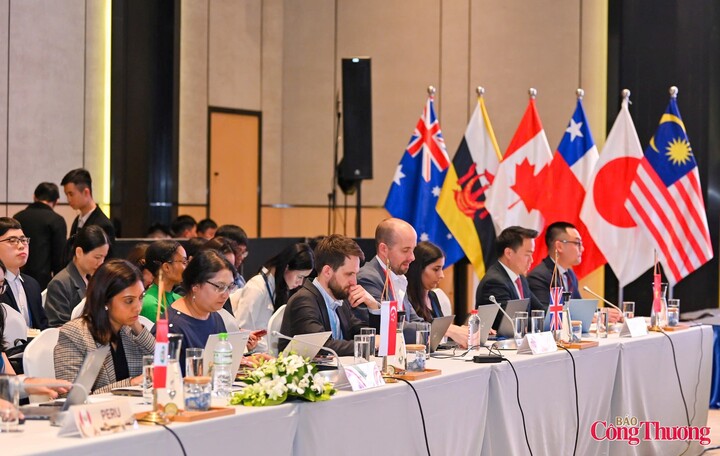
The first CPTPP Senior Officials' Meeting in Hanoi in March 2026. Photo: Newspaper of Industry and Trade.
According to Nguyen Son Tra, Deputy Head of Viet Nam's delegation as assigned under Decision No. 141/QD-BCT, CPTPP-EU cooperation in 2026 focuses on three pillars: digital trade, supply chain resilience and the global trading environment. Her remarks were published by Vietnam Economic News (VEN) on July 20, 2026.
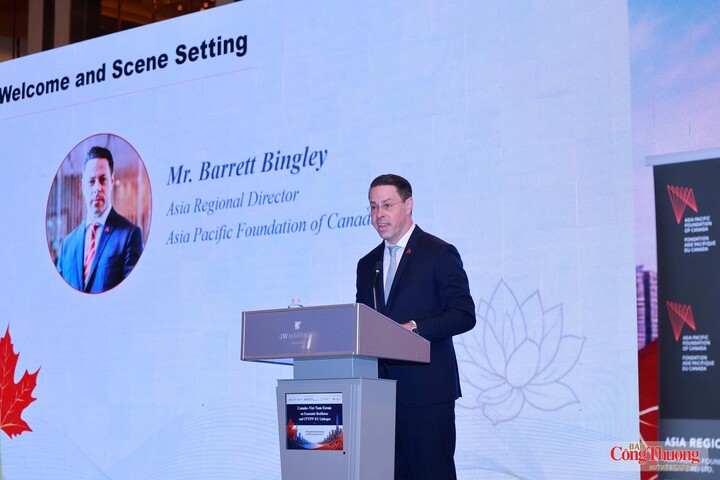
Also on July 20, 2026, on the sidelines of SOM3 in Ho Chi Minh City, a forum on economic resilience and CPTPP-EU connectivity was co-organized by the Asia Pacific Foundation of Canada, the MoIT and the Embassy of Canada. Participants noted that Viet Nam is one of the few economies that is both a CPTPP member and has a free trade agreement with the EU. Mary-Catherine Speirs, Canada's CPTPP Senior Official, said the CPTPP-EU dialogue provides a foundation for middle powers to promote an open, transparent and rules-based trading system. On July 21, 2026, a statement from the Office of the Prime Minister of Canada said Prime Minister Mark Carney had discussed stronger cooperation between CPTPP members and the EU.
The Canada - Viet Nam forum on the sidelines of SOM3 in Ho Chi Minh City on July 20, 2026. Photo: Newspaper of Industry and Trade
What the Ha Noi outcomes mean for businesses
For businesses, the practical question is whether exports will gain anything immediately after the Hanoi meetings. The answer lies in the wording of the documents: the dialogues have not created new trade commitments, so all preferences are still calculated under each agreement that businesses currently use.
The MoIT's Department of Foreign Market Development and Multilateral Trade cautions that using materials from partners under another agreement does not mean the finished product meets the CPTPP's rules of origin; businesses must check each agreement and each destination market. This advice remains valid as the CPTPP holds dialogues with the EU and ASEAN.
Businesses can take part directly in the CPTPP-ASEAN-EU Business Forum 2026, expected to open at 3:30 p.m. on November 26 in Hanoi under the theme "From dialogue to business action." The outcomes of the two ministerial dialogues will be recorded in documents released after the meetings; until those documents are issued, there is no basis for discussing membership.
The measure of the dialogues therefore lies in joint work across the four areas set out in Melbourne: digital trade, sustainable trade, investment and sustainable supply chains. The list of 12 CPTPP members does not change because of the dialogues; any change, as the Joint Statement of June 26, 2026 makes clear, must go through the consensus of the Parties.
Amid global trade volatility, the CPTPP continues to serve as a high-standard FTA, deepening intra-bloc cooperation and expanding partnerships beyond the bloc.
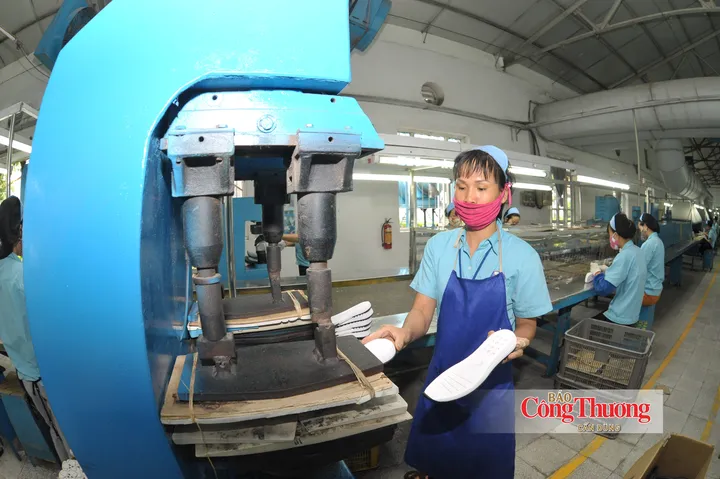
The EVFTA offers Vietnamese footwear tariff advantages in the EU market. To capitalize on these opportunities sustainably, businesses need to secure material supplies, strengthen production capacity and meet green requirements.
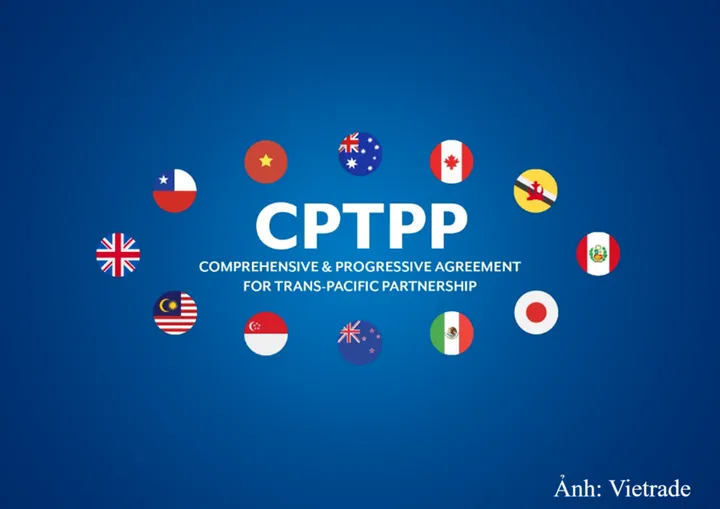
Born from the 12-member TPP after the US withdrawal, the CPTPP has gradually expanded, with the accession of the UK bringing its membership to 12 economies.
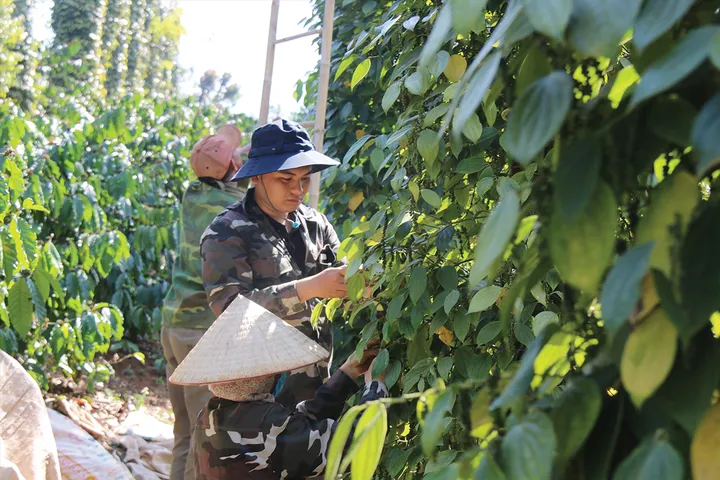
Tariff preferences under free trade agreements (FTAs) are creating new opportunities for Vietnamese pepper exports. However, businesses need to proactively meet rules of origin requirements.
Ha Noi is set to host CPTPP ministerial dialogues with the EU and ASEAN on November 26, 2026, but the dialogues do not mean either is joining the agreement.
The EVFTA offers Vietnamese footwear tariff advantages in the EU market. To capitalize on these opportunities sustainably, businesses need to secure material supplies, strengthen production capacity and meet green requirements.
Tariff preferences under free trade agreements (FTAs) are creating new opportunities for Vietnamese pepper exports. However, businesses need to proactively meet rules of origin requirements.
Ha Noi is set to host CPTPP ministerial dialogues with the EU and ASEAN on November 26, 2026, but the dialogues do not mean either is joining the agreement.
Rising global rice prices, stronger import demand from South Korea and Viet Nam's successful bid to supply 35,000 tons are providing positive signals for rice exports.