As competitive pressure intensifies, trade remedies have become a “shield” protecting domestic production and a lever enabling enterprises to participate more deeply in global value chains.
A foundation for core industries
As Vietnam becomes increasingly integrated into global value chains, export goods facing legal and trade barriers is an inevitable consequence of deeper economic connectivity. Data from the Trade Remedies Authority of Vietnam under the Ministry of Industry and Trade of Vietnam show that as of March 30, 2026, Vietnam had responded to and handled as many as 306 foreign trade remedy investigations.
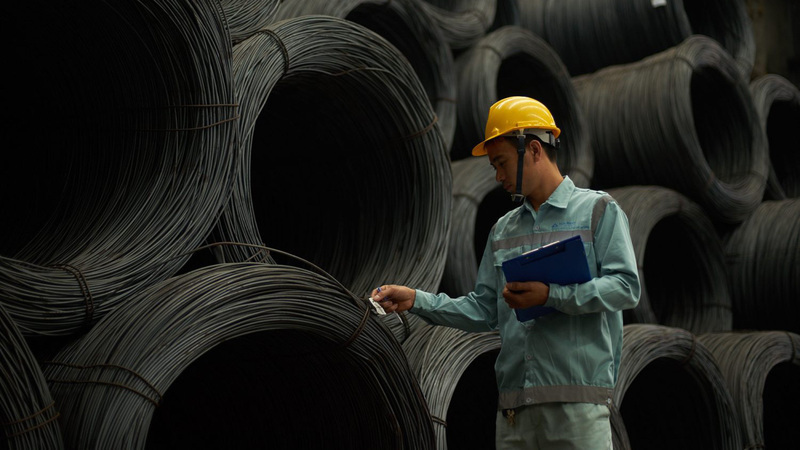
Vietnam proactively uses trade remedy instruments in accordance with international commitments to protect the legitimate interests of domestic production. Photo: Minh Nguyet
The sectors most heavily affected include steel, plastics, wood products and fibers. Investigations are no longer limited to billion-dollar export products such as wooden cabinets, solar batteries, shrimp and pangasius, but have also expanded to smaller-scale products including foam mattresses, lawn mowers, cigarette paper and honey.
In response to these pressures, Vietnam’s trade offices abroad and relevant units under the Ministry of Industry and Trade have acted as “frontline outposts.” Strengthened early-warning mechanisms and support for enterprises in preparing defense dossiers have enabled many sectors to successfully prove the absence of dumping practices or subsidies. As a result, many enterprises have avoided punitive tariffs or faced only low duty rates, helping them maintain market share in some of the world’s most demanding markets.
On the other hand, Vietnam has also proactively utilized trade remedy instruments in line with international commitments to protect the legitimate interests of domestic production. As of January 2026, the Trade Remedies Authority of Vietnam had initiated investigations into 62 cases and was applying 37 trade remedy measures against imported goods.
Protected sectors are no longer limited to heavy industries such as metallurgy, chemicals and construction materials, but have expanded to products closely linked to the livelihoods of millions of farmers. Measures imposed on sugar, monosodium glutamate and sorbitol are notable examples, as these industries are directly associated with sugarcane and cassava growers nationwide.
According to data from the Trade Remedies Authority of Vietnam, the application of trade remedy measures in recent years has delivered tangible benefits to the Vietnamese economy. "Trade remedies have protected and facilitated the formation and development of several foundational industries, construction industries and consumer industries such as metallurgy, chemicals, construction materials and agricultural processing," the authority stated.
The revenue scale of enterprises protected by trade remedy measures over the years is estimated at VND 600 trillion, supporting more than 56,000 direct jobs and hundreds of thousands of indirect jobs, thereby contributing to economic security and social welfare across provinces and cities nationwide.
At the same time, anti-dumping duties, countervailing duties, safeguard duties and anti-circumvention duties have generated substantial annual state budget revenues of more than VND 2.5 trillion.
In addition, the appropriate application of trade remedy measures in compliance with international commitments has helped shield domestic industries from unfair competition from imported goods, thereby creating conditions for local enterprises to expand, generate employment and increase added value for the economy.
From a consumer perspective, trade remedies also help the economy avoid excessive dependence on imports over the long term, strengthening resilience and stability against external shocks.
Vietnam’s wood industry is a notable example of coordination between regulators and industry associations in protecting legitimate interests. Speaking to the Newspaper of Industry and Trade, Ngo Sy Hoai, Vice Chairman and Secretary General of the Vietnam Timber and Forest Products Association (VIFOREST), highly appreciated the proactive role played by the Ministry of Industry and Trade in supporting enterprises facing complex investigations.
According to Ngo Sy Hoai, during the U.S. Department of Commerce’s anti-dumping and countervailing investigations into Vietnamese plywood products, timely guidance from the Trade Remedies Authority of Vietnam and related agencies in dossier preparation, hearings and legal rebuttals became a critical pillar supporting enterprises and protecting the legitimate interests of Vietnam’s wood industry.
Harmonizing domestic production and integration
The Resolution of the 14th National Party Congress outlined development orientations for the 2026-2030 period, identifying 12 strategic directions. One key priority highlighted is the need to "effectively balance domestic production self-reliance with participation in global production networks and value chains."
According to leaders of the Trade Remedies Authority of Vietnam, this new orientation carries significant practical implications for enhancing the competitiveness of Vietnam’s manufacturing sectors.
To implement the Resolution of the 14th National Party Congress, the authority has identified key tasks aimed at translating the Party’s policy directions into concrete actions while ensuring harmony between protecting domestic production and promoting integration and growth model transformation.
Tasks set for the remainder of 2026 and the following period include continuously reviewing and refining management functions and trade remedy policies to align with requirements for improving productivity, quality and added value; strengthening analytical and trade monitoring capabilities to detect risks early and safeguard the legitimate interests of domestic industries.
At the same time, inter-agency coordination mechanisms and international cooperation in investigation-related information exchange will be reinforced. Capacity-building efforts for trade remedy officials will also be intensified, alongside regular support and guidance for enterprises in responding to trade remedy measures and adapting to the new growth model.
Discussing the issue with the Newspaper of Industry and Trade, Nguyen Minh Khoi, Director of Policy Advisory at the Tony Blair Institute for Global Change, said the Resolution of the 14th National Party Congress places business interests at the center of protection throughout the integration process.
More specifically, according to Nguyen Minh Khoi, the Resolution elevates foreign affairs, identifying diplomacy and international integration as “essential and regular” priorities.
"This policy reflects Vietnam’s proactive mindset, shifting from passive integration to a more constructive approach aimed at strengthening soft power and attracting high-quality resources to achieve the goal of becoming a developed country by 2045," Nguyen Minh Khoi said.
He emphasized this mindset places enterprise interests at the center of protection. The synchronization of foreign affairs and security policies will create an effective shield safeguarding Vietnamese businesses and the Vietnamese economy within global supply chains.
The year 2026 is regarded as a year of acceleration and breakthrough as Vietnam enters a new era of national development. Against this backdrop, trade remedies will continue to serve as an important instrument enabling Vietnam to affirm its position as an autonomous, transparent and responsible participant in global value chains.
The coordinated efforts of the State, industry associations and enterprises will form a solid “three-legged pillar” to protect the legitimate rights and interests of domestic producers throughout international trade and cooperation activities.
As of January 2026, the Trade Remedies Authority of Vietnam had initiated investigations into 62 cases and was applying 37 measures against imported goods.
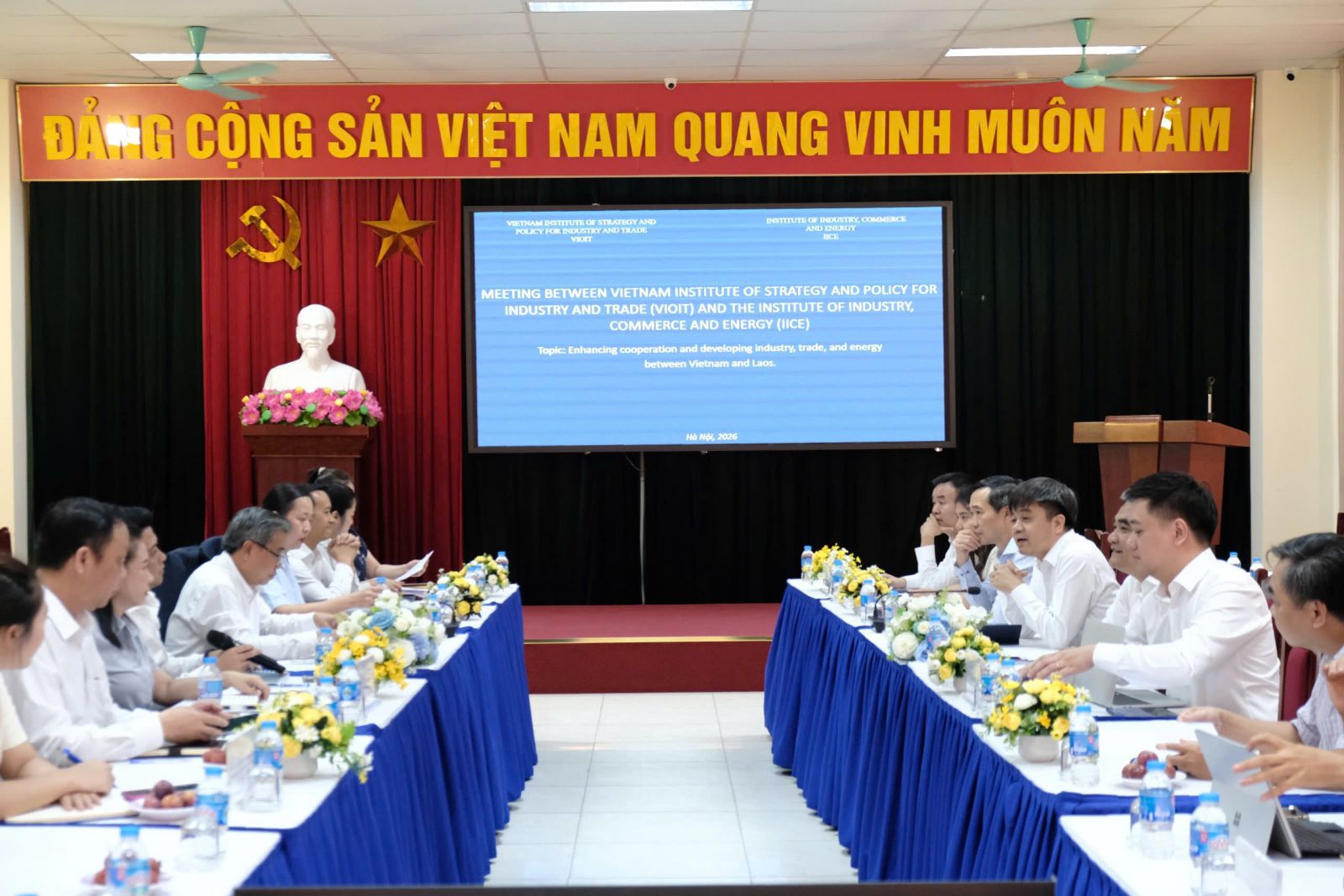
The Vietnam Institute of Strategy and Policy for Industry and Trade and Lao counterpart review the implementation of a bilateral cooperation agreement.
The Vietnam Institute of Strategy and Policy for Industry and Trade and Lao counterpart review the implementation of a bilateral cooperation agreement.
A seminar in Tokyo connected Vietnamese and Japanese businesses, providing market insights and promoting trade, investment and supply chain cooperation.
Prime Minister Le Minh Hung chairs thematic meeting on Resolution 57, urging breakthrough mechanisms, decentralisation and innovation-led growth reforms in Vietnam.
Amid rising electricity demand and increasingly complex weather conditions, Vietnam is stepping up efforts to ensure a stable power supply for economic growth.
Vietnam has promulgated two new ordinances to improve judicial procedures, accelerate digital transformation and enhance the consistency and accessibility of laws.