Urgent submission sought on breakthrough mechanisms for budget allocation and delegation of authority in science, technology and innovation development
Prime Minister Le Minh Hung chairs thematic meeting on Resolution 57, urging breakthrough mechanisms, decentralisation and innovation-led growth reforms in Vietnam.
According to VGP, on the afternoon of June 23, Prime Minister Le Minh Hung chaired a thematic meeting to review the implementation of Resolution No. 57-NQ/TW following the third meeting of 2026.
Prime Minister Le Minh Hung, Head of the Government Steering Committee for science, technology, innovation, digital transformation and Project 06, chaired the thematic meeting to review the implementation of Resolution No. 57-NQ/TW after the third meeting of 2026 and discuss solutions to promote science, technology and innovation development, with a view to further accelerating implementation and ensuring the progress and quality of tasks assigned by the Central Steering Committee.
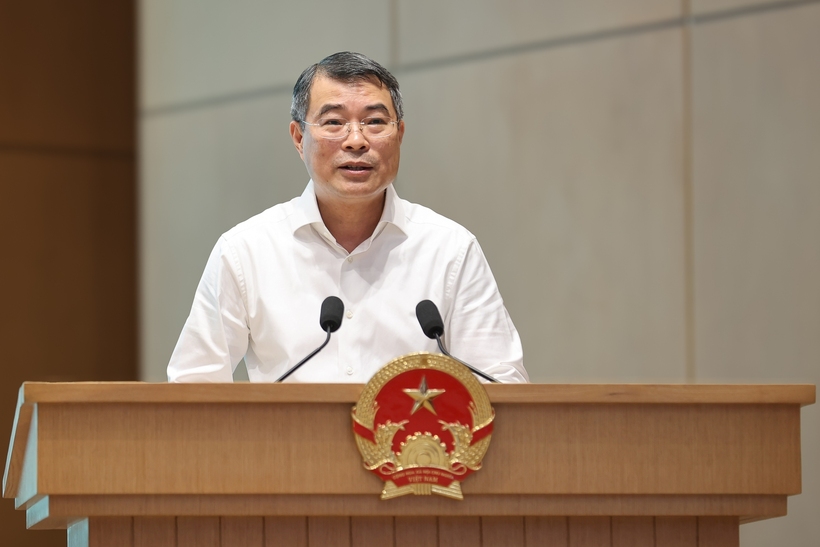
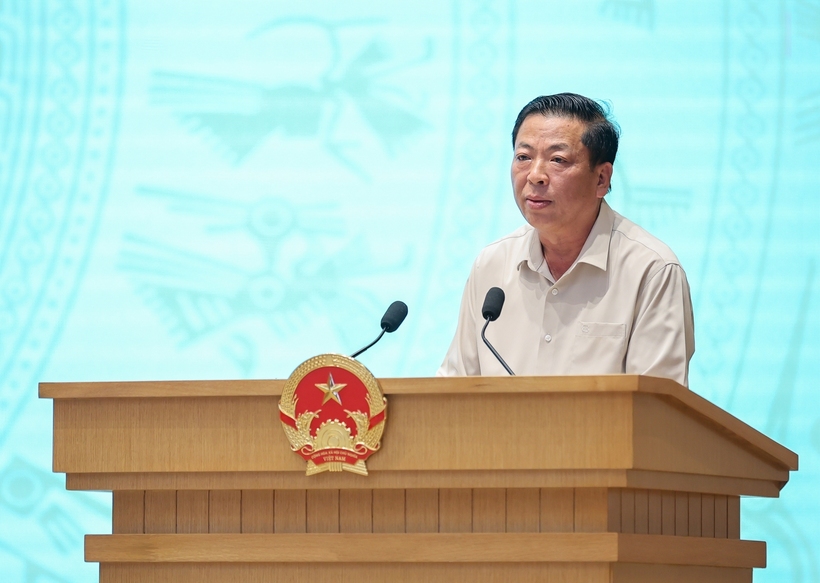
Prime Minister Le Minh Hung delivers concluding remarks at the thematic meeting. Photo: VGP
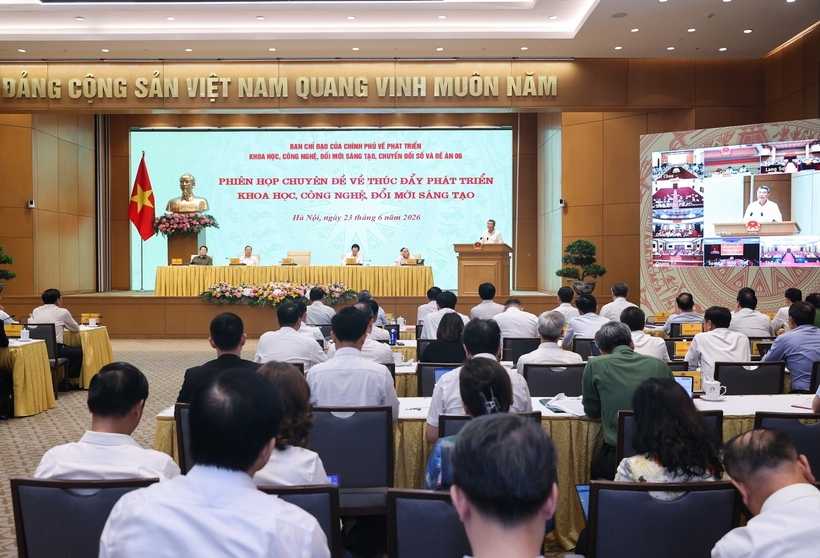
The meeting was connected online from the Government Headquarters to localities nationwide. Attendees included Pham Gia Tuc, Politburo member, Permanent Deputy Prime Minister and Standing Deputy Head of the Steering Committee; Ho Quoc Dung, Party Central Committee member, Deputy Prime Minister and Deputy Head of the Steering Committee; General Luong Tam Quang, Politburo member, Minister of Public Security and Deputy Head of the Steering Committee; Vu Hai Quan, Party Central Committee member, Minister of Science and Technology and Deputy Head of the Steering Committee; Party Central Committee members, leaders of ministries, sectors and central agencies, provincial and municipal Party secretaries, chairpersons of provincial and municipal People's Committees, as well as representatives of research institutes, universities, research establishments, corporations, enterprises and commercial banks.
At the meeting, leaders of ministries and sectors delivered presentations on promoting strategic technologies and establishing a national venture capital fund (Ministry of Science and Technology); developing an ecosystem for new energy technologies, renewable energy and smart grids to support green growth (Ministry of Industry and Trade); researching, mastering and applying green construction materials and new materials (Ministry of Construction); building a national tourism digital data ecosystem and applying AI to promote local tourist destinations in international markets (Ministry of Culture, Sports and Tourism); developing data platforms and digital technologies for precision agriculture and circular agriculture in key production regions (Ministry of Agriculture and Environment); and building a research, testing and production ecosystem for high-tech medicines and vaccines (Ministry of Health).
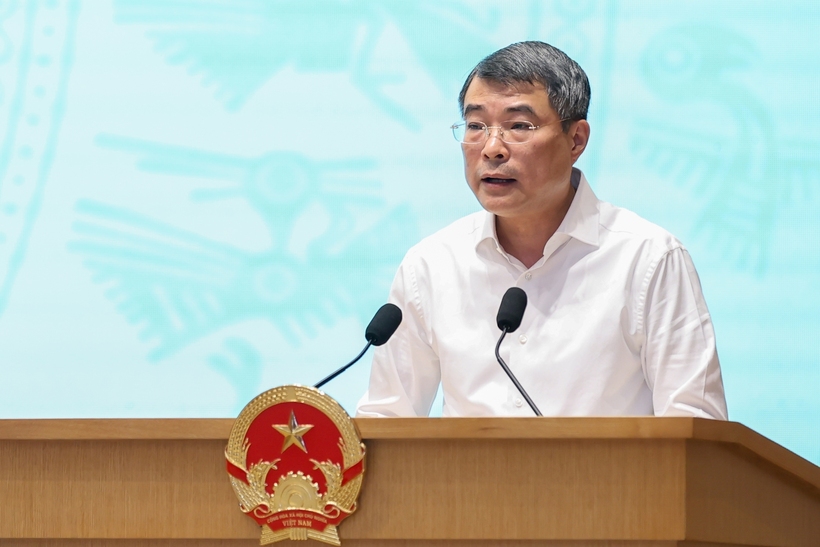
The Prime Minister highlights key tasks and solutions for the coming period. Photo: VGP.
Representatives of localities also shared experiences regarding technology research and application in tourism in Quang Ninh; seaport and logistics development in Hai Phong; Son La coffee products; high-tech agricultural value chains in Lam Dong province; building networks for sharing research infrastructure, key laboratories and high-quality human resources to support local science and technology development in Hanoi; and establishing technology sandbox mechanisms and expanding technology enterprise development models to localities in Ho Chi Minh City.
Focusing discussions on bottlenecks, difficulties and challenges
Following the Prime Minister's direction, delegates did not repeat achievements already reflected in reports but instead focused on identifying unresolved bottlenecks, difficulties and challenges, particularly overdue tasks requiring immediate decisions and direction from the Government and the Prime Minister. Participants analysed causes and proposed specific recommendations, while identifying key tasks and solutions for the coming period, especially those related to the development of core and strategic technologies, completion of the National Digital Architecture Framework, and the completion and operation of database systems.
Delegates concentrated on discussing mechanisms, policies and bottlenecks requiring immediate removal to shorten the time from research to products and markets, particularly special financial mechanisms for science, technology, innovation and digital transformation development. Discussions also focused on how ministries and sectoral management agencies could lead value chains and assign roles to localities, institutes, universities and enterprises; and how each locality could identify key development challenges linked to its potential and advantages, determine which strategic and high technologies should be applied to address those challenges, and generate concrete socio-economic outcomes.
The Prime Minister urges the prompt submission of breakthrough mechanisms for budget allocation and decentralisation of authority in science, technology and innovation development. Photo: VGP
In addition, specific mechanisms, policies and solutions are needed to remove obstacles in the management, operation, utilisation and sharing of infrastructure and laboratories, while encouraging private enterprises to participate in investing in, operating and utilising research and testing infrastructure, as well as commercialising strategic technology products, particularly in areas with the potential for early deployment.
According to reports and opinions presented at the meeting, following the third meeting of the Steering Committee, of the 53 assigned tasks, ministries, sectors and localities have completed 11 tasks, 24 are being implemented on schedule, two are overdue and 16 are regular tasks.
Regarding digital infrastructure and databases, the State has invested in the construction of 16 national key laboratories with total funding of approximately VND 967 billion. Of the 12 critical databases, four have fully met all 19 out of 19 required criteria.
The Prime Minister has issued decisions approving a list of 10 strategic technology groups and 30 strategic technology products, assigning 10 ministries, sectors and agencies to implement strategic technology development tasks through 20 major challenges. A total of 29 out of 34 localities have registered 124 science, technology and innovation products, with 33 of them identified as belonging to strategic technology groups.
Regarding funding, priority has been given to allocating 3% of total state budget expenditure. In 2026, more than VND 100 trillion has been allocated for science, technology, innovation and digital transformation.
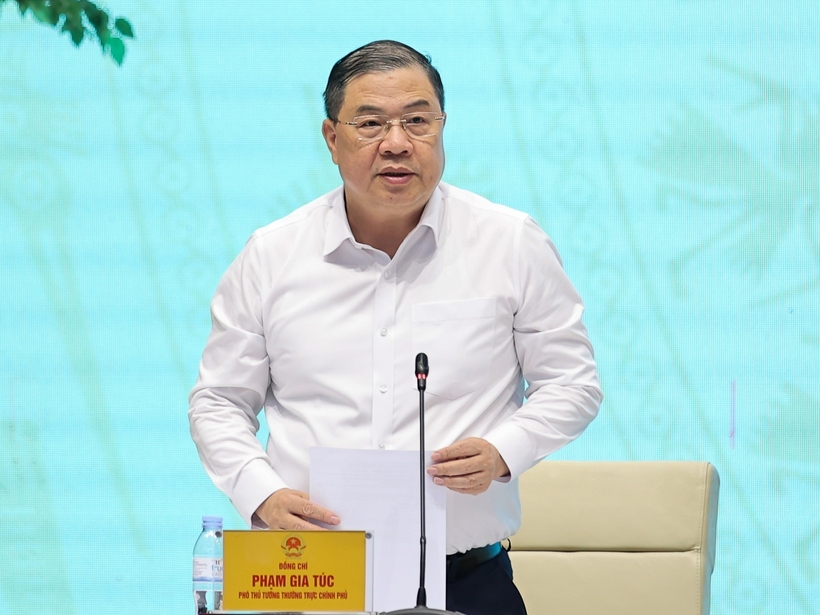
Pham Gia Tuc, Politburo member and Permanent Deputy Prime Minister, delivers remarks at the meeting. Photo: VGP.
Making outputs and application efficiency the ultimate measure
In his concluding remarks, Prime Minister Le Minh Hung, Head of the Government Steering Committee, basically agreed with the reports and opinions presented at the meeting regarding improvements in the organisation and implementation of assigned tasks, noting that certain progress had been made, some results achieved and many delayed tasks had largely been addressed.
At the same time, the Prime Minister pointed out existing shortcomings and limitations, noting that many ministries, agencies and localities still demonstrate a passive mindset, fear of responsibility and a tendency to shift or avoid responsibility. Digital infrastructure, research infrastructure, laboratories and equipment remain outdated, fragmented and inefficient. Large-scale research infrastructure serving the development of strategic technologies has yet to be established. A comprehensive architecture and overall design to guide the implementation of major and important tasks is also lacking.
The organisation and implementation of national and sectoral databases continue to face numerous difficulties, challenges and bottlenecks, ranging from data collection, cleansing, standardisation and replacement of dossier components to fragmented and inconsistent connectivity and data sharing.
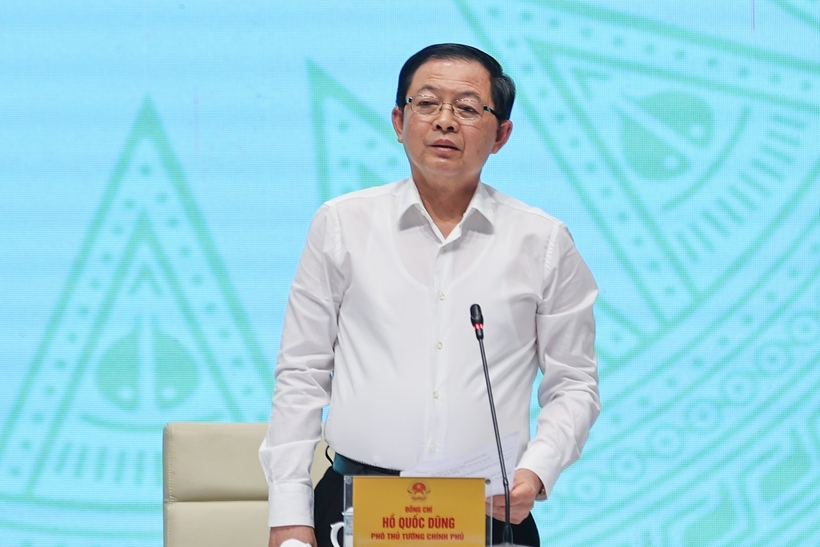
Ho Quoc Dung, member of the Party Central Committee and Deputy Prime Minister, delivers remarks at the meeting. Photo: VGP.
Regarding strategic technologies and products, no substantial breakthroughs have yet been achieved. The level of completion of the product portfolio remains low. Ministries and agencies have yet to clearly identify sector-specific products, while localities have not determined products aligned with their potential and advantages. Mechanisms for the participation of institutes and universities remain unclear and insufficiently specific.
There remains a shortage of high-quality human resources, as well as leading experts, chief engineers and chief architects in strategic technology fields.
Resource allocation and utilisation in a number of agencies, units and localities remain fragmented and insufficiently focused on key and breakthrough tasks, particularly investment spending.
Regarding the causes of these shortcomings and limitations, the Prime Minister said they stem from both objective and subjective factors. In particular, some agency heads have not provided close, direct and comprehensive leadership, instead delegating responsibilities to their deputies. Coordination among agencies remains insufficiently close and specific, while practical mechanisms for cooperation with enterprises, institutes and universities have yet to be established.
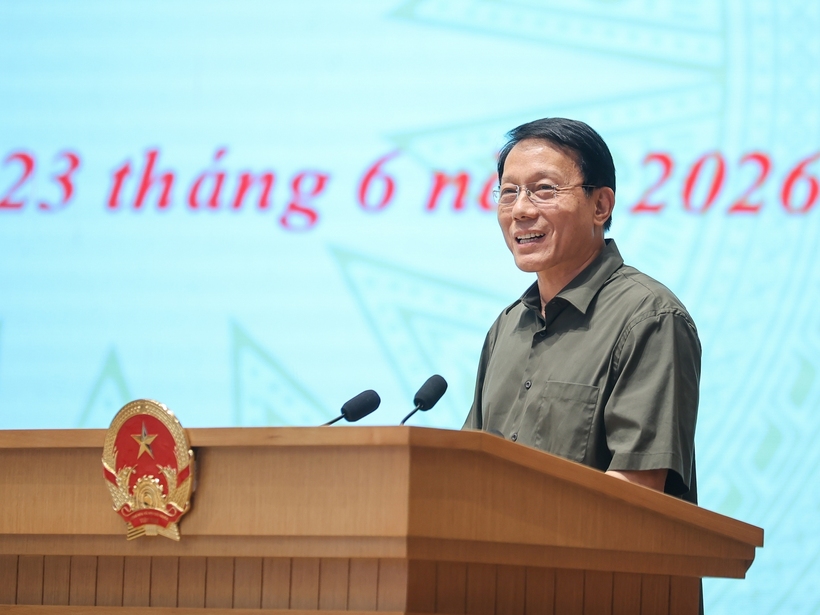
General Luong Tam Quang, Politburo member and Minister of Public Security, delivers remarks at the meeting. Photo: VGP.
Emphasising the need to implement tasks in a substantive and effective manner rather than as a formality, the Prime Minister requested that the meeting's conclusion clearly identify delayed tasks, overdue tasks and those at risk of delay if ministries, sectors, agencies and localities fail to take more proactive action.
Regarding guiding principles, the Prime Minister stressed the need to continue thoroughly grasping and resolutely implementing the directions of Party General Secretary and State President To Lam, Head of the Central Steering Committee. Accordingly, science, technology, innovation and digital transformation must directly serve socio-economic development and act as key drivers of double-digit economic growth, enhanced productivity, improved quality and efficiency, stronger competitiveness and greater national self-reliance.
At the same time, there must be a decisive shift towards evaluating effectiveness based on outputs, application efficiency, commercialisation potential and contributions to economic growth, state governance, local socio-economic development, national development and the resolution of practical challenges.
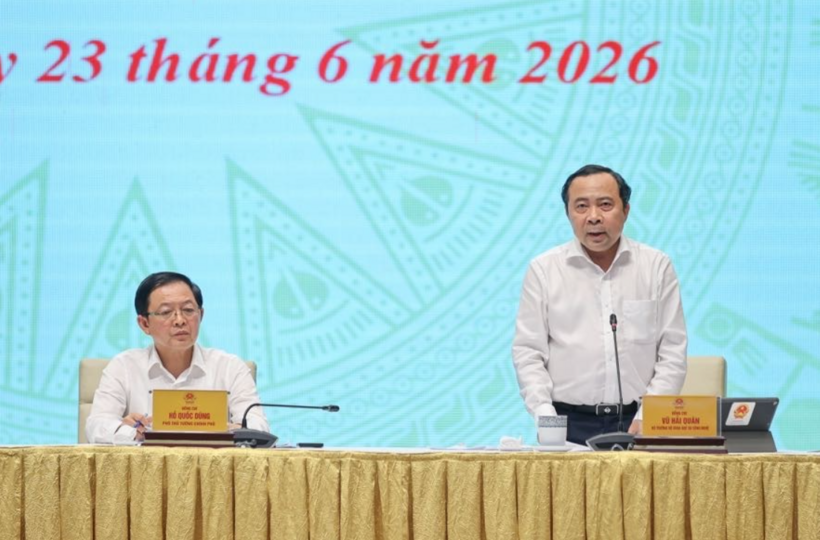
Vu Hai Quan, Minister of Science and Technology, delivers remarks at the meeting. Photo: VGP.
Responsibilities among different levels and sectors must be clearly defined. The national level should focus on strategic technologies, core infrastructure and major challenges; regional and sectoral levels should develop inter-regional value chains; while localities should focus on distinctive products capable of generating immediate value.
The State should create institutions, develop standards, place orders, establish testing environments and provide controlled risk-sharing mechanisms, but should not replace enterprises. Institutes and universities should provide knowledge and technology, while enterprises should organise production, commercialisation and market development.
Resources should be concentrated on major challenges, core technologies and strategic products capable of creating spillover effects, while linking national missions with regional strengths, local advantages and global value chains. Inefficient, overlapping and scattered investment must be decisively eliminated.
Heads of ministries, sectors and localities must directly lead, direct and take responsibility for implementation progress, quality and effectiveness. Implementation results must be measurable and incorporated into performance evaluations.
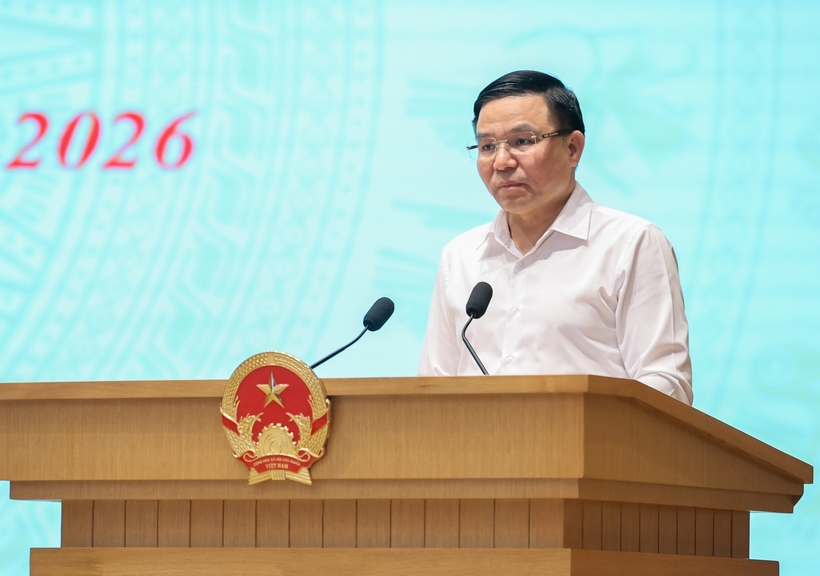
Le Manh Hung, Minister of Industry and Trade, delivers remarks at the meeting. Photo: VGP.
The Prime Minister also highlighted priorities for the coming period. Ministries and agencies must identify major challenges with strong guiding influence that are closely linked to their functions and responsibilities and connected with localities, while localities should select products based on their strengths and practical needs. As an example, the Prime Minister noted that the Ministry of Industry and Trade has effectively applied technology in electricity distribution and should continue expanding applications in petroleum management, goods origin tracing and industrial processing and manufacturing.
Enterprises must remain at the centre, participating from problem identification and technology selection to investment, testing and market development. Institutes and universities must align research activities with demand-driven orders, while the State should create institutions, standards, testing environments and suitable initial markets.
Financial mechanisms should be made more flexible, with immediate efforts to address obstacles and bottlenecks relating to procurement orders, lump-sum funding mechanisms, procurement of first products, intellectual property valuation and risk acceptance. Priority should be given to developing core technologies, commercially viable products and challenges with broad spillover impacts, while maximising the effectiveness of laboratories, research infrastructure and expert teams.
Studying proposals for sharing the national data repository with domestic technology enterprises
Tran Hong Minh, Minister of Construction, delivers remarks at the meeting. Photo: VGP.
Outlining key tasks and solutions for the period ahead, the Prime Minister instructed ministries, agencies and localities to review all assigned tasks and completely resolve overdue tasks. No requests for deadline extensions should be submitted without clearly identifying causes, responsibilities and solutions. All overdue tasks must be completed before June 30. The Ministry of Public Security was assigned to closely monitor implementation progress and submit monthly reports to the Prime Minister on delayed tasks, causes and the responsibilities of agency heads, while proposing timely corrective measures.
Regarding digital infrastructure, research infrastructure, database development and digital transformation, the Ministry of Science and Technology has submitted the National Digital Architecture Framework to the Prime Minister. The PM stressed that this framework serves as a particularly important foundation, enabling synchronised, detailed and interconnected investment from the central to local levels. He requested continued review and completion at the earliest possible time, in the most effective and cost-efficient manner, ensuring a truly comprehensive and integrated framework for uniform application nationwide. Recommendations from ministries, sectors and enterprises regarding lead agencies, operations, coordination and management should also be carefully considered to ensure efficiency and avoid wasteful investment.
The Ministry of Science and Technology was instructed to closely coordinate with the Ministry of Public Security in developing the data architecture framework and data development scheme for submission to competent authorities. It must also urgently complete the proposal on developing a system of national research centres, testing centres and key national laboratories for submission to the Prime Minister in June 2026. In addition, the ministry is required to conduct a comprehensive review of national research centre infrastructure and national laboratory systems, propose plans for concentrated, shared and interconnected investment prioritising infrastructure serving strategic technologies, and avoid investment in equipment without corresponding tasks and operational personnel. A report must be submitted to the Prime Minister in July 2026.
Line ministries and agencies must complete the connection and synchronisation of databases in accordance with Resolution No. 11/NQ-CP on the National Data Centre. Priority should be given to cleansing, standardising, cross-checking and synchronising data on land, healthcare, education, social welfare, construction, agriculture, asset and income control, and administrative violations. For the 12 critical databases, each responsible ministry must develop a plan to fulfil all 19 criteria by the third quarter of 2026.
The Ministry of Public Security was assigned to study proposals for sharing the national data repository with domestic technology enterprises to facilitate the development of digital services. It is also tasked with coordinating with the Government Office and the Ministry of Justice to ensure the smooth operation of the National Public Service Portal and synchronised implementation of administrative procedures under the one-stop-shop mechanism.
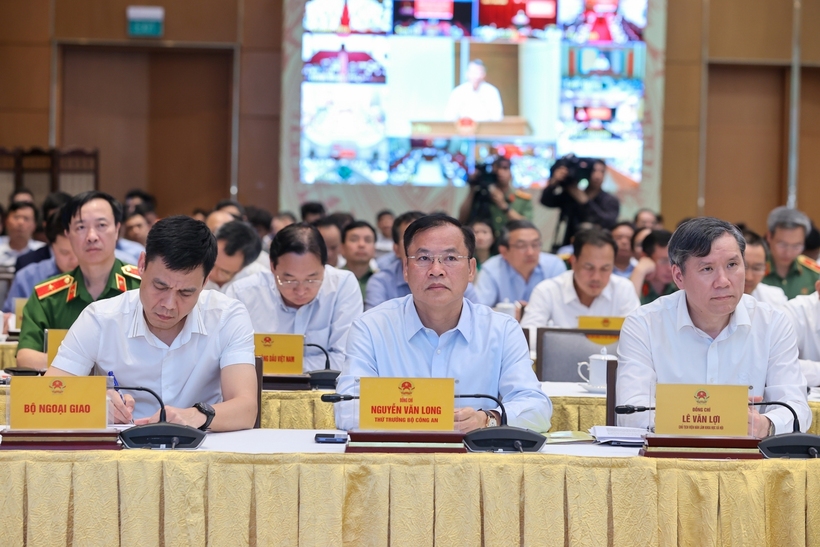
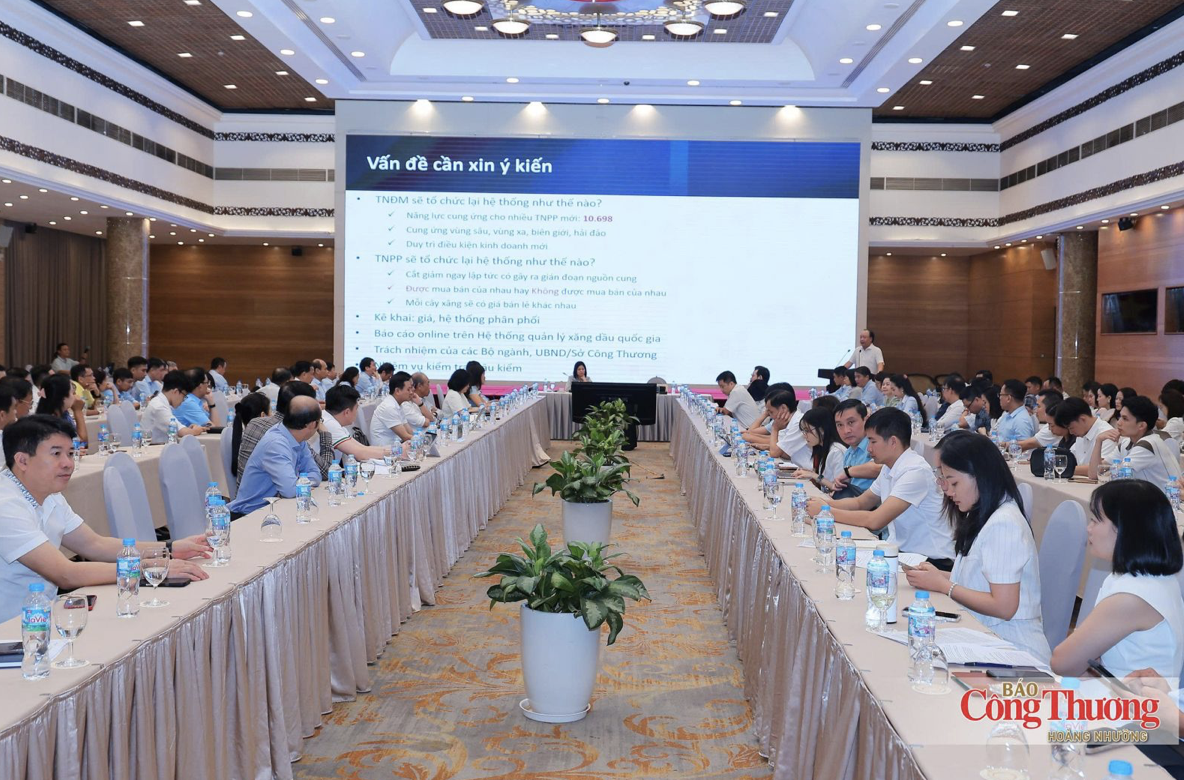
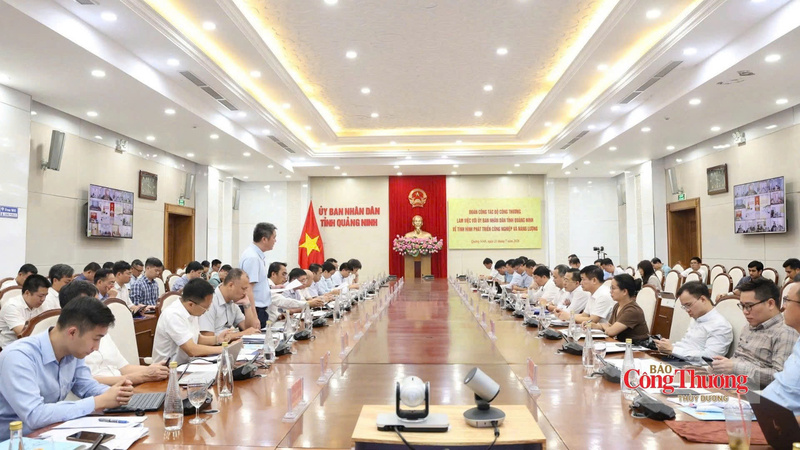
Delegates attend the meeting. Photo: VGP.
Regarding strategic technologies and the selection of key challenges and products, the Prime Minister instructed each relevant ministry and sector to select one to three major challenges, clearly defining value chains, mastered and unmastered stages, priority technologies, leading enterprises, participating localities, standards, markets, resources, testing milestones and commercialisation plans, with completion required no later than June.
The Ministries of Health, Construction, Agriculture and Environment, and Culture, Sports and Tourism were instructed to complete, within June 2026, development orientations for products under their management, including next-generation vaccines, cell technology and 3D printing in healthcare; transport infrastructure, urban railways and intelligent transportation systems; renewable and new energy technologies; biotechnology, crop varieties, medicinal materials, fisheries, marine technologies, smart agriculture, deep processing and traceability technologies; and smart tourism, cultural industries, digital heritage and inter-regional tourism chains.
The Ministry of Science and Technology was instructed to urgently appraise strategic technology development tasks proposed by relevant ministries and agencies in accordance with regulations, paying particular attention to projected funding requirements and financing plans to ensure implementation immediately after approval. This task must be completed within June. Enterprises have also submitted specific proposals regarding participation in these initiatives.
For provincial and municipal People's Committees, the Prime Minister requested a review of key science and technology development challenges linked to practical needs, local potential and comparative advantages. Each locality must select at least one product in 2026 that can be quantified in terms of value. From 2027 onwards, each locality should select and implement two to three key products annually. Each product must have a clearly designated responsible entity, enterprise participation, application destination, funding source, timeline and measurable socio-economic contribution targets.
Regarding high-quality human resource development, the Prime Minister assigned the Ministry of Education and Training to coordinate with the Ministry of Science and Technology and relevant ministries in conducting a comprehensive review of training programmes, as well as mechanisms for attracting, utilising and rewarding talent.
Regarding mechanisms, policies and finance, the Ministry of Finance and the Ministry of Science and Technology were instructed to urgently study and report to the Government at its next meeting on breakthrough mechanisms for budget allocation and delegation of authority to ministries, sectors and localities. They are also required to report on progress in developing and refining policies related to output-based procurement, lump-sum funding mechanisms, public-private partnership investment, public procurement of first products, controlled-risk testing mechanisms for research and new technologies, and the valuation, capital contribution, mortgaging and commercialisation of intellectual property assets. Reports must be submitted to the Prime Minister no later than the third quarter of 2026.
The Prime Minister, who also serves as Head of the Steering Committee, further requested that thematic meetings of the Government Steering Committee be organised in the third quarter of 2026 under the chairmanship of deputy prime ministers responsible for relevant sectors and fields, with the aim of promoting double-digit economic growth.
The Vietnam Trade Office in Chile promoted Vietnamese coffee, connected businesses with importers and reinforced the country's presence in the Chilean market.
The draft decree proposes reforms to market management, pricing, distribution and supply security to improve the efficiency of Vietnam's petroleum market.
MoIT delegation led by Deputy Minister Truong Thanh Hoai worked with Quang Ninh to review the revised PDP8 and accelerate key power and industrial projects.
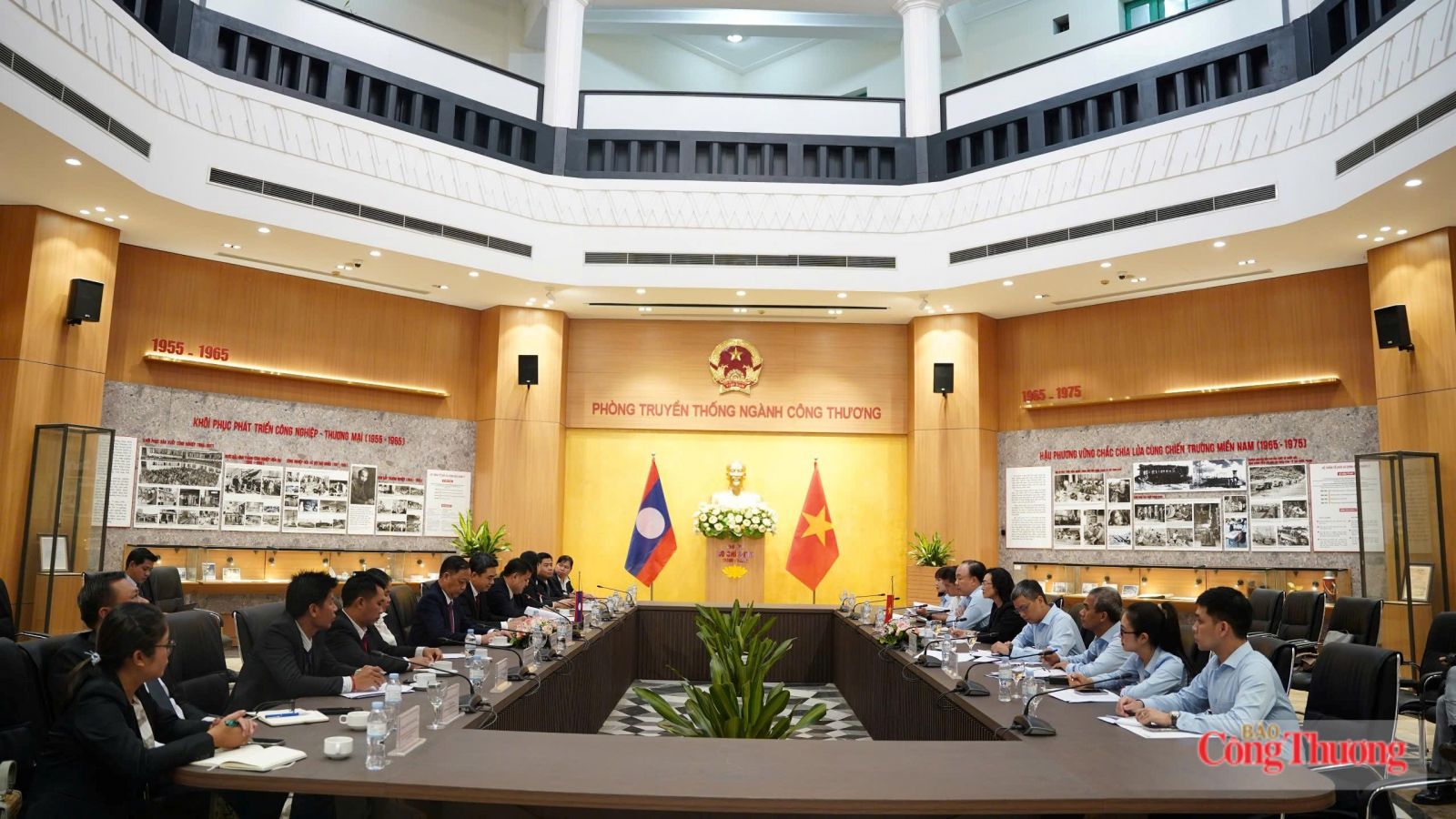
Vietnam and Laos exchanged experience on inspection, examination and domestic market management while reaffirming commitment to deepen bilateral cooperation and tie.
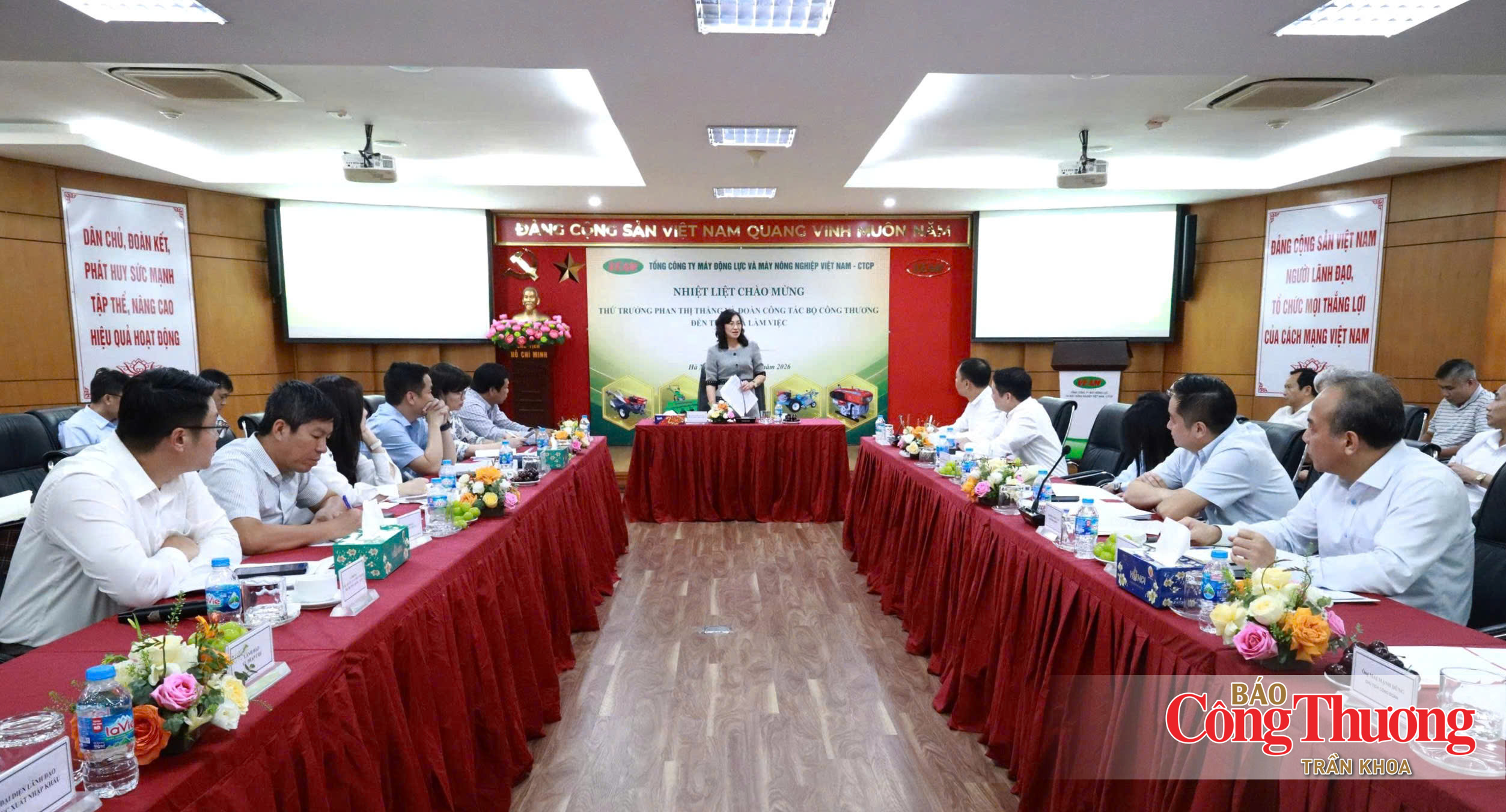
Deputy Minister Phan Thi Thang firmly urged VEAM to accelerate restructuring, boost capital efficiency, and invest in science and technology to develop new products.
MoIT delegation led by Deputy Minister Truong Thanh Hoai worked with Quang Ninh to review the revised PDP8 and accelerate key power and industrial projects.
Vietnam and Laos exchanged experience on inspection, examination and domestic market management while reaffirming commitment to deepen bilateral cooperation and tie.
Deputy Minister Phan Thi Thang firmly urged VEAM to accelerate restructuring, boost capital efficiency, and invest in science and technology to develop new products.
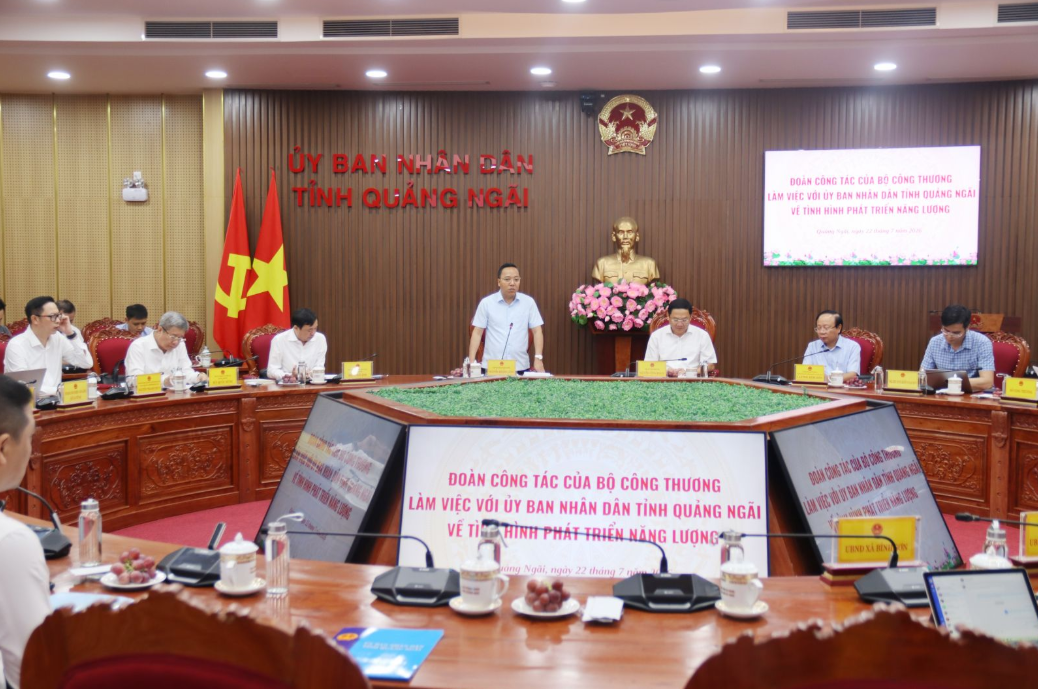
Deputy Minister Nguyen Hoang Long works with Quang Ngai to review key energy projects, address bottlenecks and accelerate implementation under national energy plans