The National Assembly Standing Committee reviews the draft revised Law on Petroleum, aiming to improve the legal framework and attract investment for the sector.
On the morning of July 9, under the chairmanship of National Assembly Chairman Tran Thanh Man and with National Assembly Vice Chairman Nguyen Hong Dien presiding over the session, the National Assembly Standing Committee reviewed the draft revised Law on Petroleum. Minister of Industry and Trade Le Manh Hung presented the Government’s proposal on the draft law.
Completing the legal framework to create breakthroughs for petroleum sector development
Presenting the proposal, Minister of Industry and Trade Le Manh Hung stressed that the draft revised Law on Petroleum is designed to meet the requirement of placing national interests above all else, in line with the goal of building an independent and self-reliant economy while ensuring macroeconomic stability, maintaining major economic balances, particularly energy security, protecting and efficiently exploiting natural resources and national sovereignty, including legal sovereignty, developing institutions for international integration, affirming Vietnam’s position as a responsible member of the international community, and strengthening state management through greater decentralisation and delegation of authority.
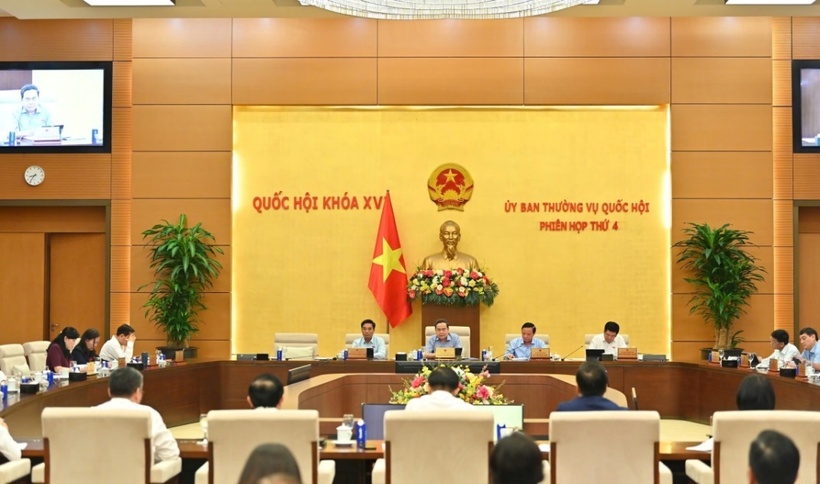
Overview of the meeting.
The Ministry also emphasised that the drafting of the revised law institutionalises the Party’s and the State’s orientations on developing breakthrough mechanisms and policies to accelerate the growth of the energy industry, with the petroleum sector contributing to the target of achieving double-digit GDP growth through 2030.
The draft law proposes cutting and simplifying administrative procedures while strengthening decentralisation and delegation of authority alongside enhanced inspection and supervision by state management agencies in basic petroleum surveys and petroleum activities. These measures are intended to improve transparency and accountability while preventing corruption, wastefulness and vested interests in the management and implementation of petroleum activities.
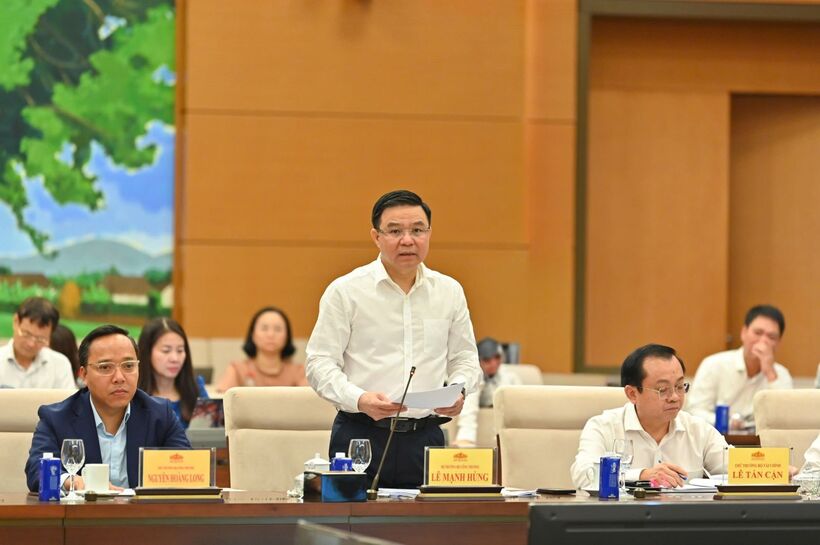
Minister Le Manh Hung presents the Government's proposal on the draft revised Law on Petroleum.
The draft revised Law on Petroleum consists of 12 chapters and 62 articles. It has been developed on the basis of inheriting the progressive provisions of the 2022 Law on Petroleum currently in force, together with five policy groups approved by the Government under Resolution No.81/NQ-CP dated April 3, 2026.
The first policy group focuses on improving and simplifying procedures while strengthening decentralisation and delegated authority in the appraisal and approval of basic petroleum surveys and petroleum activities.
The second policy group supplements and improves regulations governing petroleum contracts and petroleum activities.
The third policy group introduces additional and improved mechanisms and policies on investment incentives for petroleum activities.
The fourth policy group establishes mechanisms and policies to develop the petroleum value chain, including high-tech petroleum services and offshore energy.
The fifth policy group provides a legal framework for reducing greenhouse gas emissions and promoting carbon capture and storage in petroleum activities.
The draft law is the result of a comprehensive preparation process led by the Ministry of Industry and Trade as the drafting agency, in close coordination with ministries and sectors and following thorough appraisal by the Ministry of Justice. The draft dossier was widely consulted with affected stakeholders, National Assembly deputies and was publicly posted on the Government Portal and the Ministry of Industry and Trade’s online portal to collect comments and ensure comprehensive explanation and revision.
Driving investment and sector development
Presenting a summary of the preliminary verification report on the draft revised Law on Petroleum and proposing key issues for discussion by the National Assembly Standing Committee, Chairman of the National Assembly’s Committee for Economic and Financial Affairs Phan Van Mai said that the majority of opinions from the committee’s standing body agreed on the necessity, political basis, practical foundation and objectives of further improving petroleum legislation as outlined in Government Proposal No.539/TTr-CP. The revision aims to elevate the Law on Petroleum so that it continues to "pave the way for development," meeting higher requirements for ensuring energy security, supporting high economic growth and rapidly unlocking resources for socio-economic development and breakthroughs in the country’s new era.
The committee’s standing body also proposed that the drafting agency continue reviewing and refining the draft law to fully institutionalise the Party’s guidelines on developing the petroleum sector in association with safeguarding energy security and national sovereignty, while inheriting and renewing mechanisms and policies to strengthen investment attraction. It also called for clearer provisions on the basis for decentralisation and delegation of authority, management models and the functions and responsibilities of relevant stakeholders to ensure consistency, coherence and effectiveness in implementation.
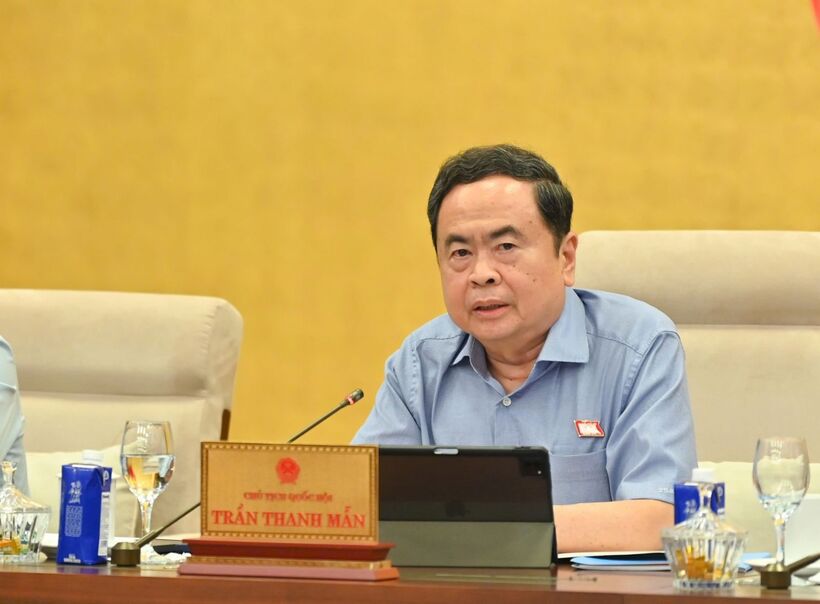
National Assembly Chairman Tran Thanh Man chairs the meeting.
Commenting on the draft revised Law on Petroleum, National Assembly Chairman Tran Thanh Man underscored the need for a fundamental shift in legislative thinking to ensure that the amendment genuinely creates breakthroughs and enhances the competitiveness of Vietnam’s petroleum sector amid the global energy transition and the country’s new development requirements. He said the revised law should help unlock resources, attract high-quality investment flows and create new growth momentum for the petroleum sector and petroleum enterprises.
One of the issues highlighted by the National Assembly Chairman was the need to shift from an incentive-based approach to a globally competitive approach in attracting investment. He also called for continued simplification of administrative procedures and shorter approval processes for petroleum exploration, prospecting and production activities in order to reduce costs and save time for investors.
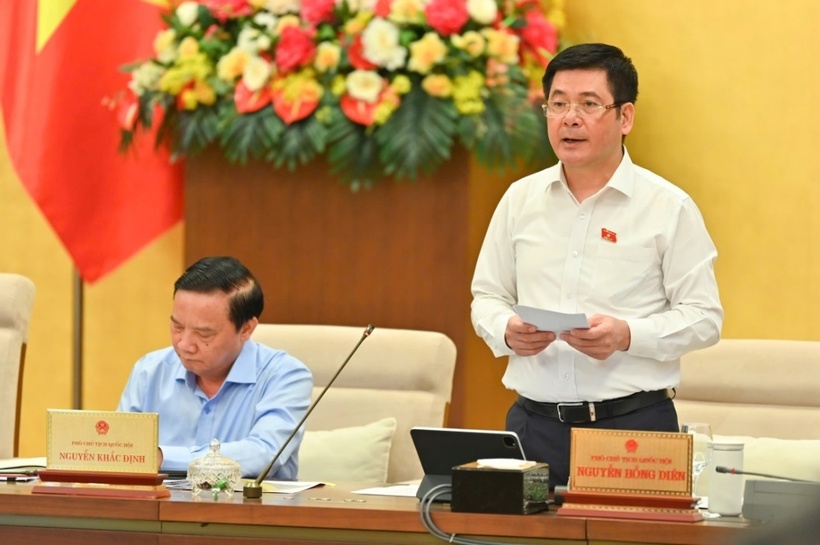
National Assembly Vice Chairman Nguyen Hong Dien delivers concluding remarks.
Concluding the discussion, National Assembly Vice Chairman Nguyen Hong Dien said that, after considering the directions of the National Assembly Chairman and the opinions of delegates, the National Assembly Standing Committee had basically agreed on the necessity of promulgating the revised Law on Petroleum to promptly and fully institutionalise the Party’s guidelines, ensure greater consistency across the legal system, and comprehensively address difficulties and obstacles arising during the implementation of the 2022 Law on Petroleum.
To ensure the quality of the draft and the timeline for submission to the National Assembly, the Standing Committee requested the Government to direct the drafting agency and relevant bodies to urgently review and fully incorporate the opinions of Standing Committee members, the verification report of the Committee for Economic and Financial Affairs and comments raised during the meeting.
The National Assembly Vice Chairman also requested the Committee for Economic and Financial Affairs to take the lead, in coordination with the Council for Ethnic Affairs and other committees of the National Assembly, in conducting the official verification of the draft law and preparing a report for the National Assembly’s consideration and decision at the specialised law-making session scheduled for August.
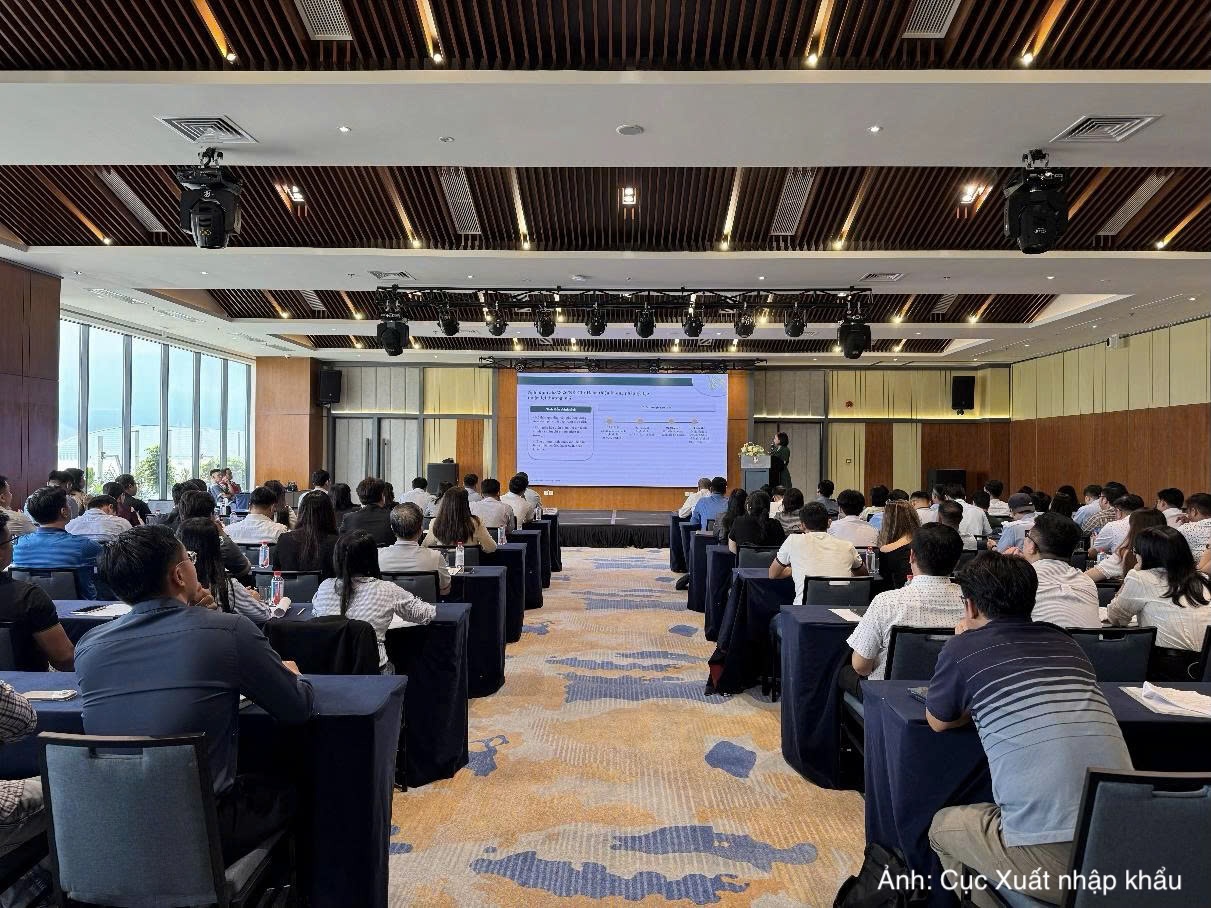
On October 13, the Agency of Foreign Trade under the Ministry of Industry and Trade (MoIT) held a conference in Dong Thap province to disseminate Government Decree No.365/2026/ND-CP dated September 23, 2026, on rice export and import business, and Circular No.65/2026/TT-BCT dated October 1, 2026, issued by the Minister of Industry and Trade, detailing certain provisions and measures for implementing Decree No.365/2026/ND-CP.
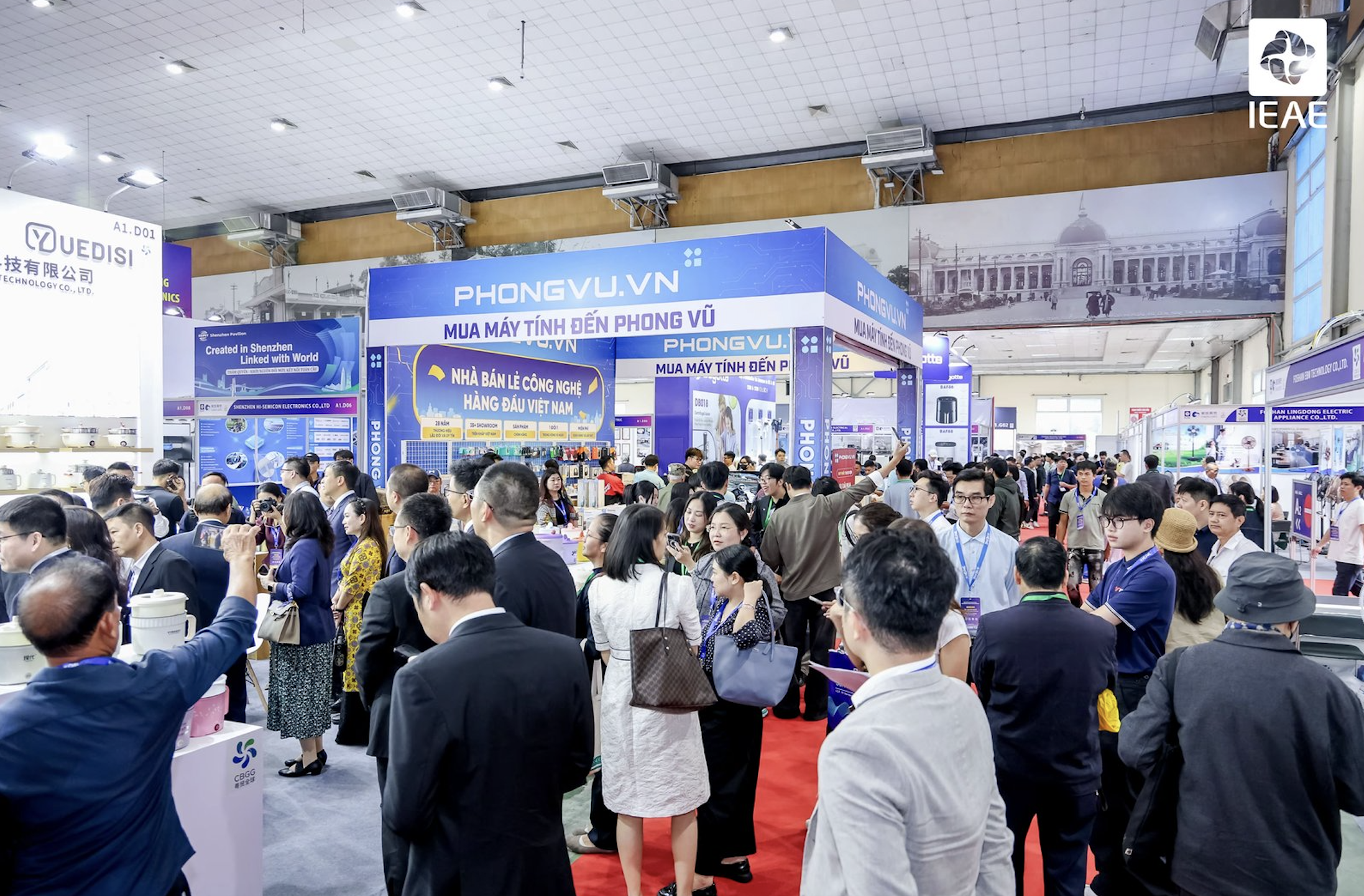
IEAE Hanoi 2026 will gather over 300 exhibitors, showcasing electronics, smart appliances and connecting businesses with sourcing and trade opportunities in Vietnam.
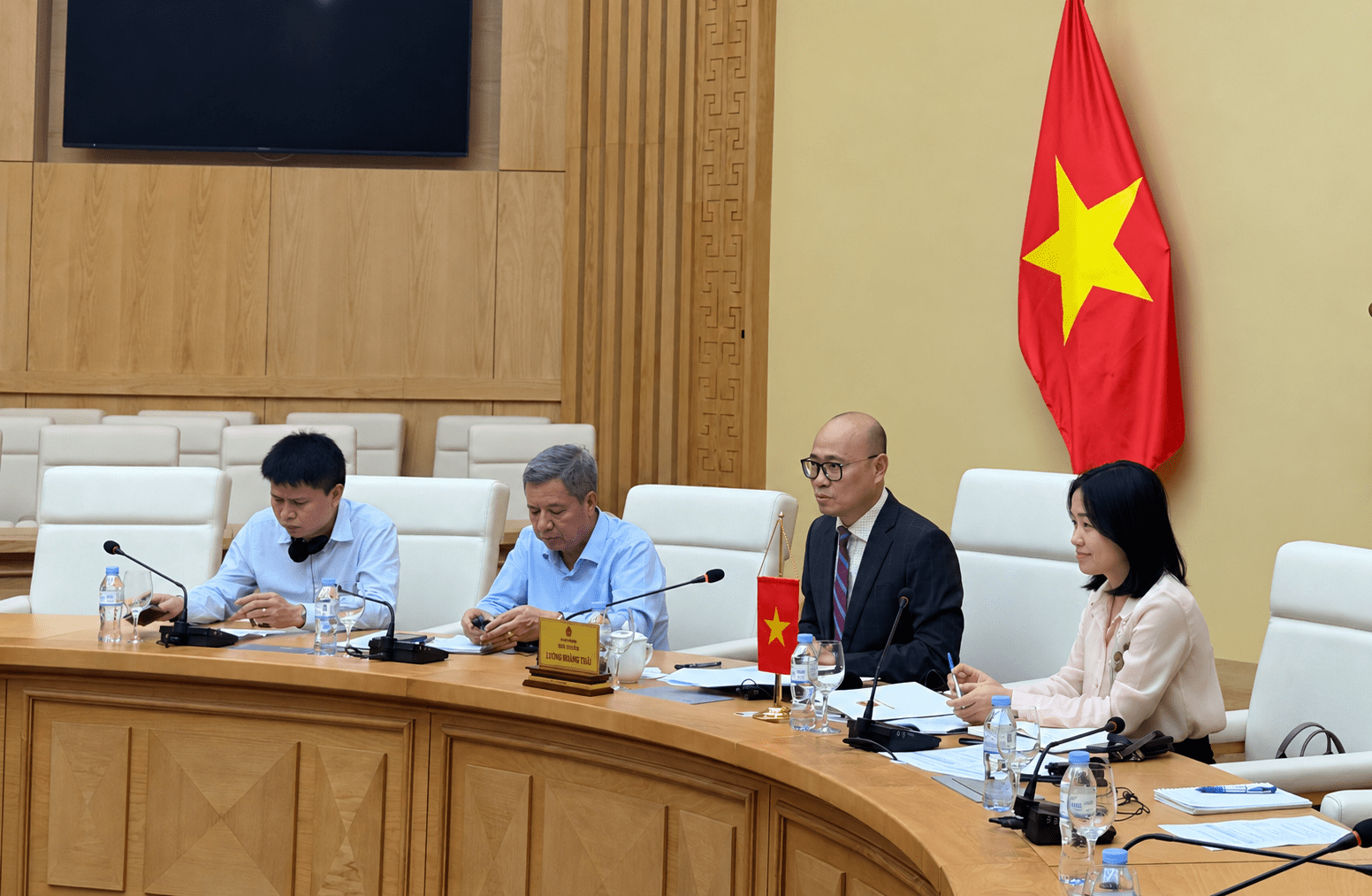
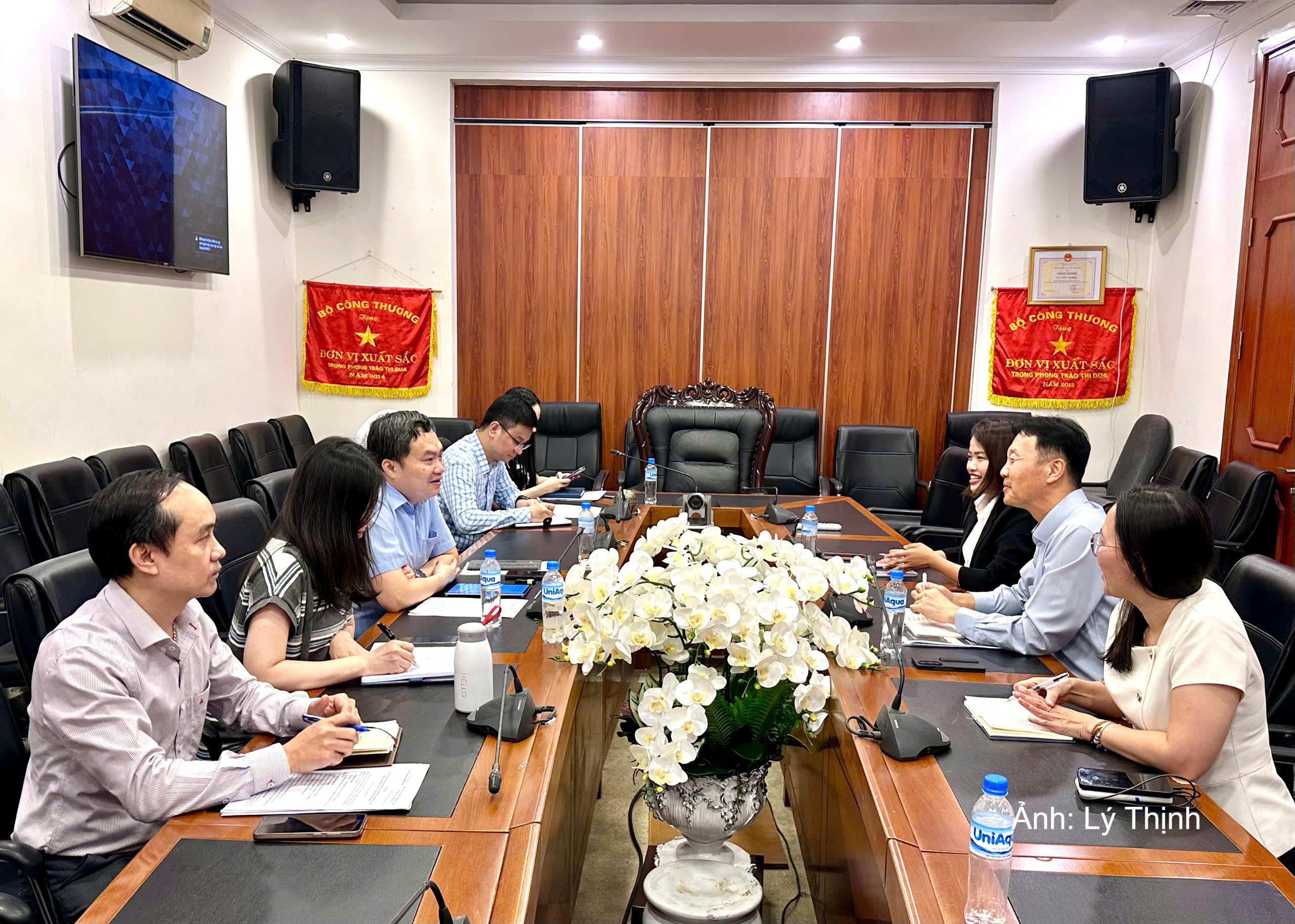
On October 13, Deputy Minister of Industry and Trade Luong Hoang Thai held a working session with MEDEF International, a French business organization, and representatives of French corporations operating in various sectors, including energy, industry, transport, construction and infrastructure development, food and beverages, and services, at the Ministry of Industry and Trade's headquarters.
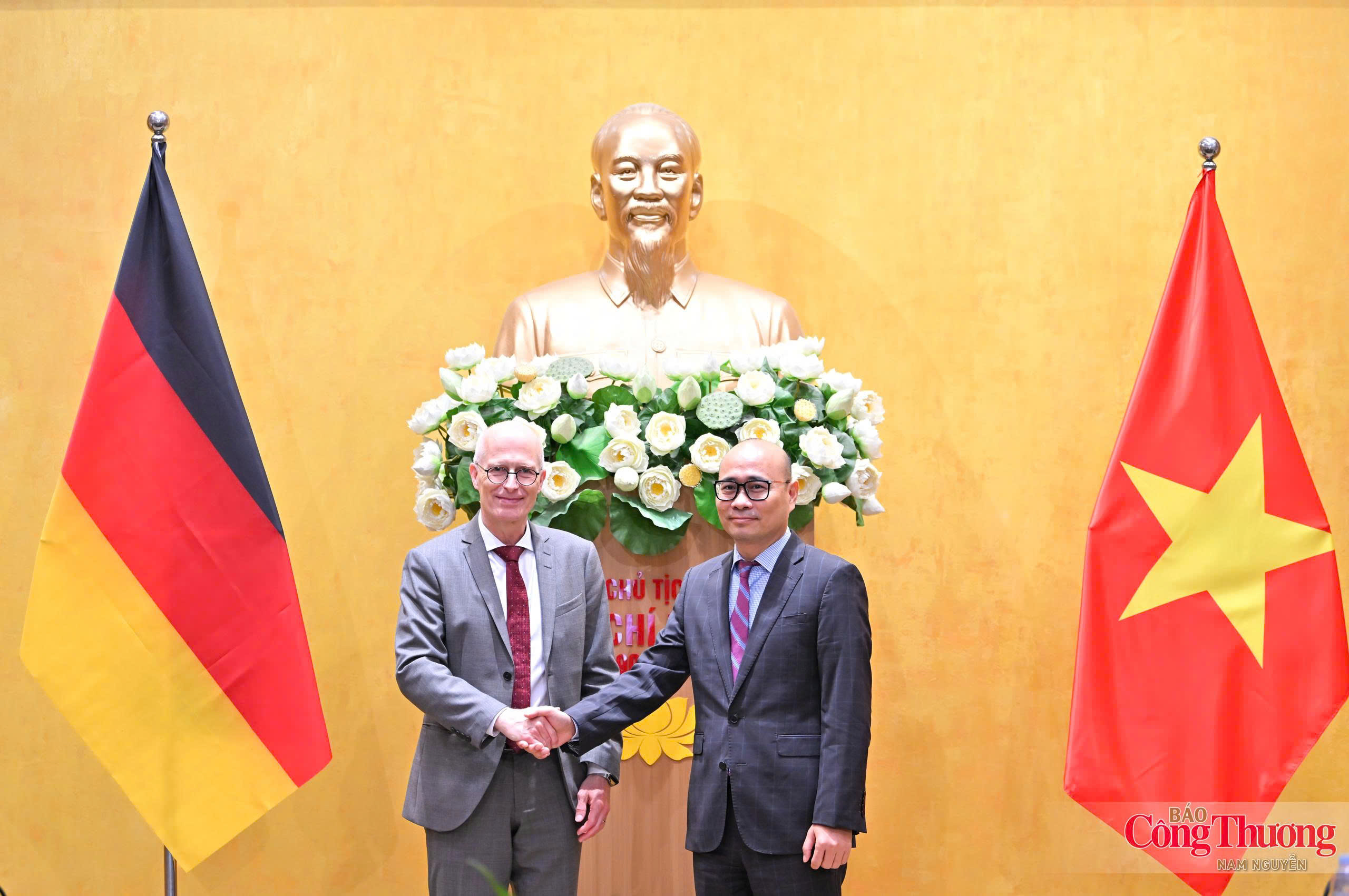
On October 14, Deputy Minister of Industry and Trade Luong Hoang Thai received and held a working session with a delegation from Hamburg, Germany, led by the city's First Mayor Peter Tschentscher at the Ministry of Industry and Trade's headquarters.
The Copyright Office is working closely with relevant agencies to develop plans for inspections and enforcement action against copyright and related rights infringements in the digital environment.
The Vietnam Industry Agency under the Ministry of Industry and Trade and Samsung Vietnam continue to strengthen cooperation in developing supporting industries, enhancing the capabilities of domestic enterprises and expanding opportunities for their participation in global supply chains.
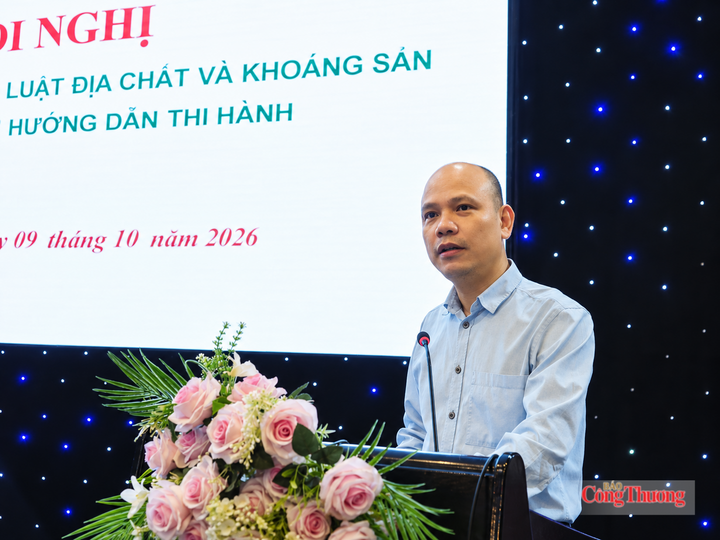
On October 9, the Viet Nam Department of Geology and Minerals, in coordination with the Thai Nguyen Department of Industry and Trade, held a conference in Thai Nguyen province to disseminate the Law on Geology and Minerals and its implementing regulations.
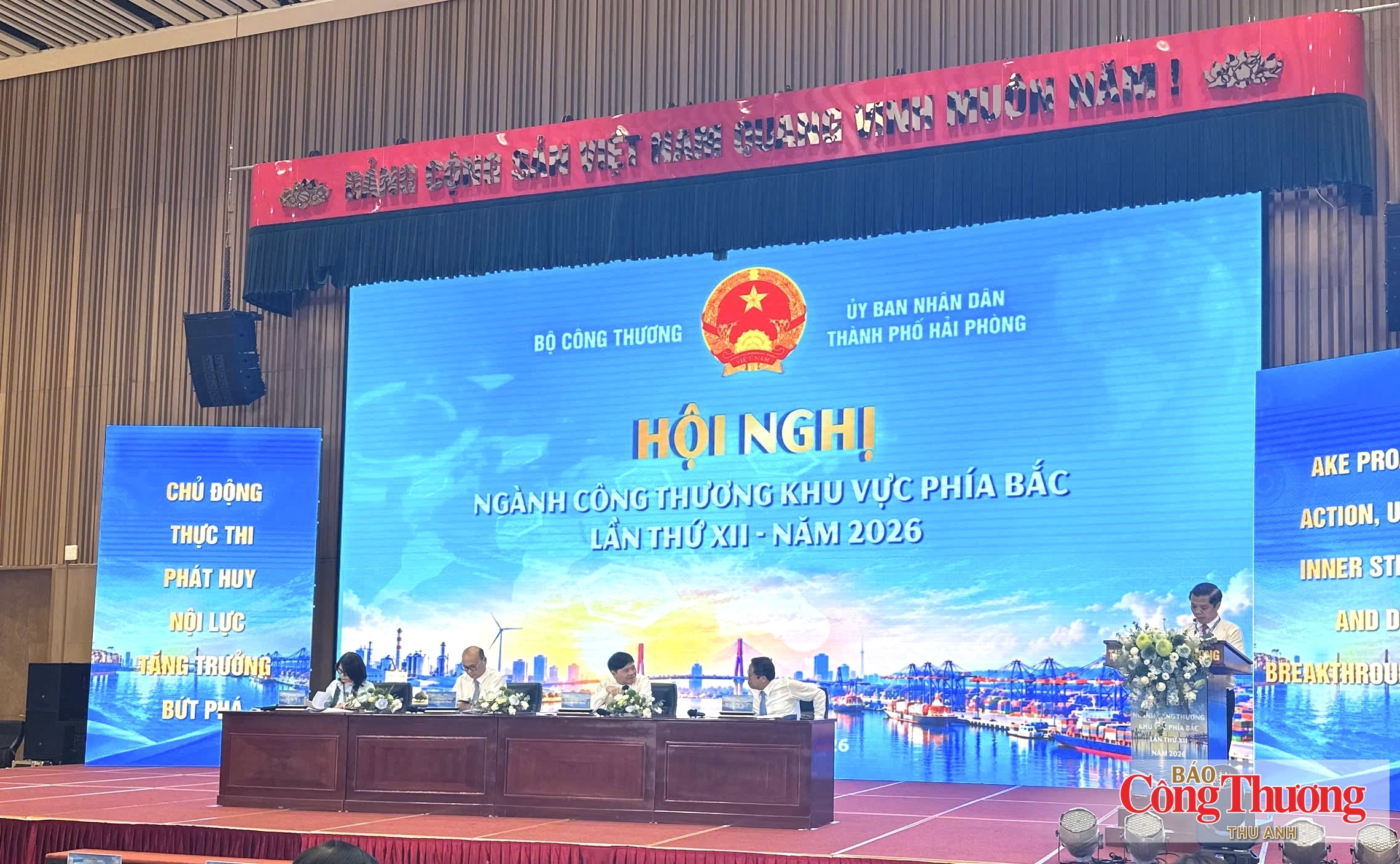
Northern localities are strengthening links in supporting industries, energy and logistics to build competitive value chains and create new growth drivers.
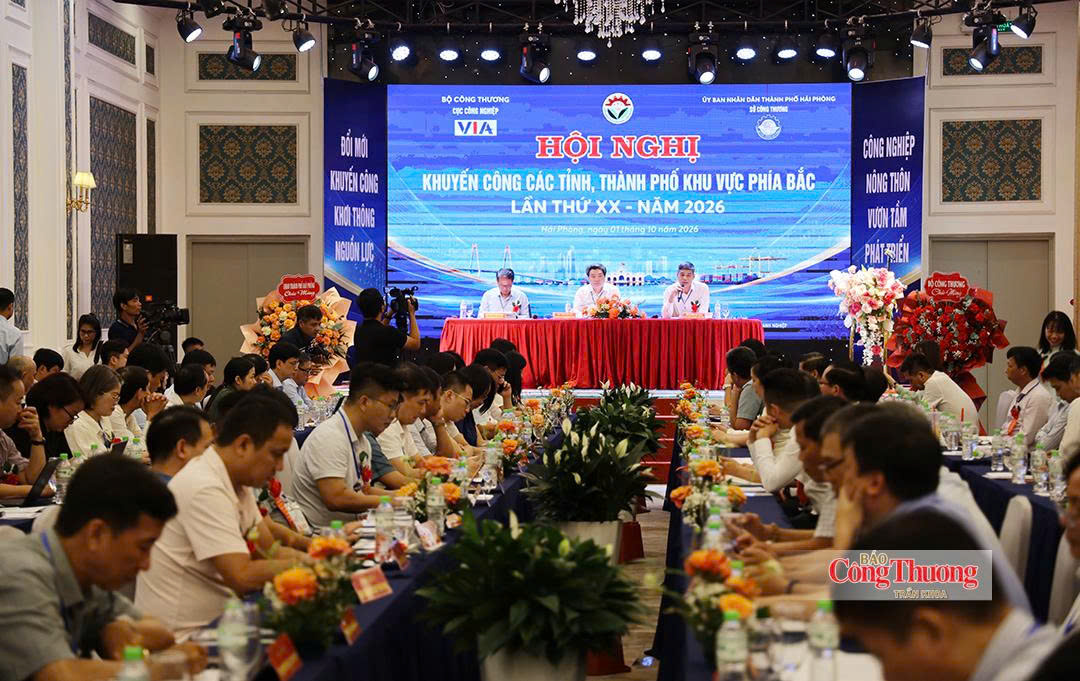
The 20th Industrial Promotion Conference for Northern Provinces and Cities in 2026 was held in Hai Phong City on October 1, with discussions focusing on renewing industrial promotion activities.
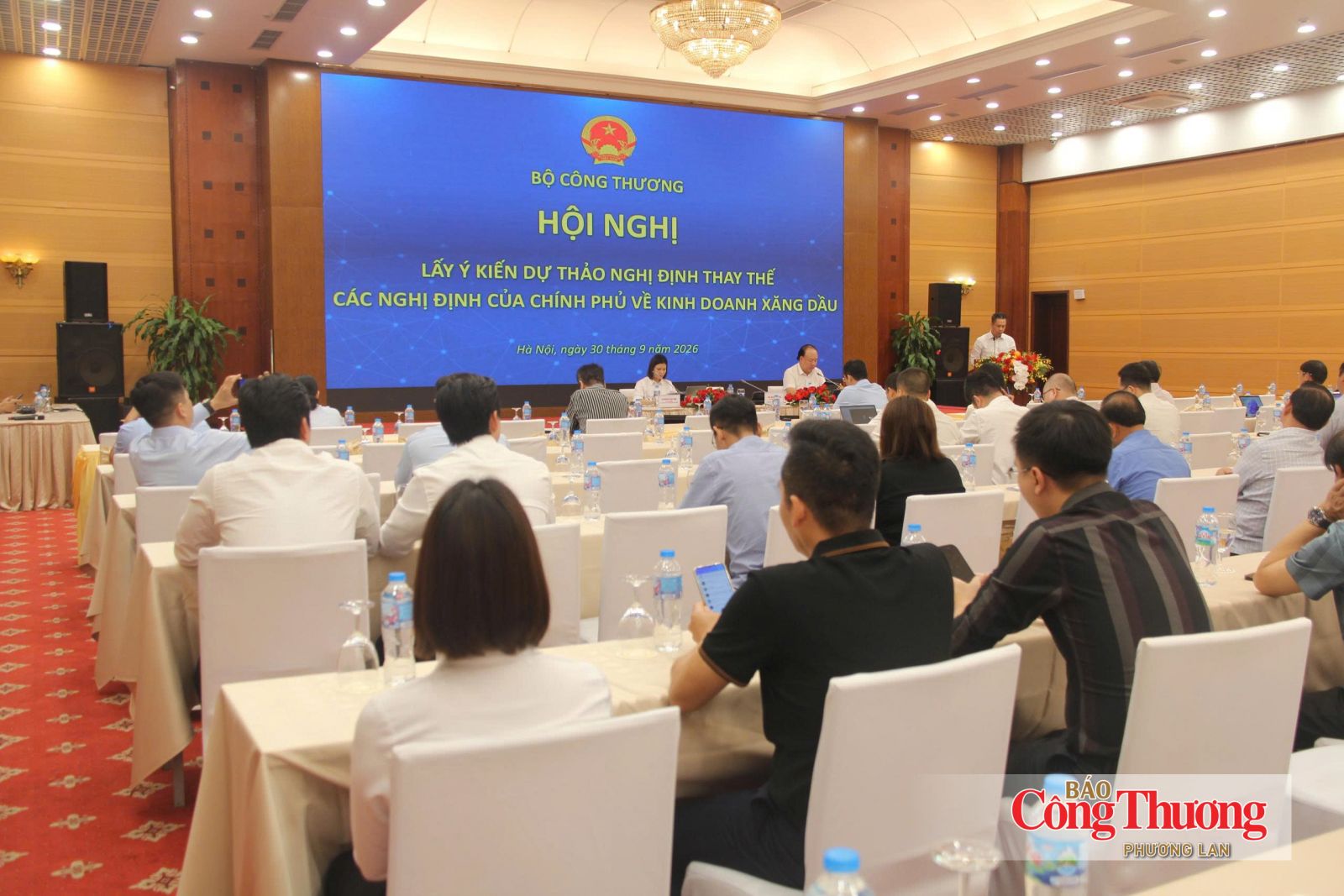
On September 30 in Ha Noi, the Ministry of Industry and Trade (MoIT) held a conference to gather broad feedback on a draft decree replacing the Government’s existing decrees on petroleum trading.