As Viet Nam and the Republic of Korea (RoK) work towards the goal of raising bilateral trade to USD 150 billion, the National Assemblies of the two countries have an important role to play in improving institutions and removing bottlenecks.
Strong growth in relations between legislative bodies
At the invitation of Chairman of the National Assembly of the RoK Cho Jeong Sik and his spouse, Chairman of the National Assembly of Viet Nam Tran Thanh Man and his spouse, together with a high-ranking Vietnamese delegation, will pay an official visit to the RoK.
Viet Nam and the RoK established diplomatic relations in 1992. Over the past 34 years, the two countries have become trusted partners, forged strategic bonds and developed an increasingly profound mutual understanding. Notably, in December 2022, Viet Nam and the RoK upgraded their relations to a Comprehensive Strategic Partnership, opening up broader space for cooperation while creating the need to translate political commitments into concrete, substantive and sustainable outcomes.
Looking back on the course of bilateral cooperation, Viet Nam - RoK relations have continued to develop in a comprehensive, substantive and effective manner, gaining increasing depth across a wide range of fields. Parliamentary cooperation stands out as one of the most prominent areas.
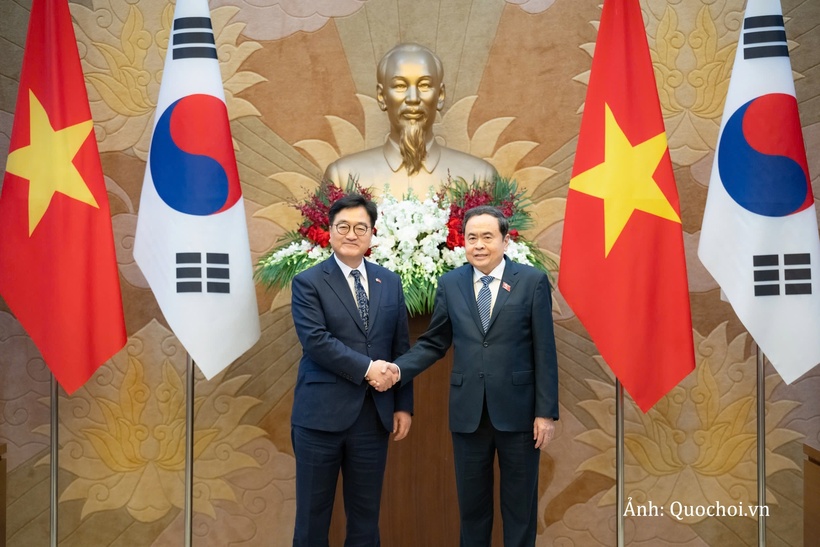
National Assembly Chairman Tran Thanh Man and Chairman of the National Assembly of the Republic of Korea Woo Won Shik in November 2025. Photo: Quochoi.vn
In an interview with the press ahead of National Assembly Chairman Tran Thanh Man’s visit to the RoK, Vietnamese Ambassador to the RoK Vu Ho affirmed that parliamentary cooperation is an important pillar of the Viet Nam - RoK Comprehensive Strategic Partnership.
Ambassador Vu Ho noted that while the executive bodies formulate and implement cooperation programmes, the National Assemblies of the two countries contribute to establishing the legal framework, allocating resources, overseeing implementation and ensuring that commitments are translated into concrete policies.
In practice, relations between the two countries’ legislative bodies have developed strongly and substantively in recent years, achieving a number of new outcomes and making an important contribution to deepening bilateral ties. In particular, during the official visit to Viet Nam by Chairman of the National Assembly of the RoK Woo Won Sik, the two legislatures signed a Memorandum of Understanding on cooperation between the National Assembly of Viet Nam and the National Assembly of the RoK in November 2025.
This marked a notable shift. Viet Nam - RoK parliamentary cooperation is no longer confined to exchanges and the strengthening of friendship, but is increasingly linked to highly practical issues in bilateral relations, including improving the legal framework for investment, trade, science and technology, digital transformation and sustainable development, as well as safeguarding the legitimate rights and interests of citizens of both countries.
Agencies of the two National Assemblies are also strengthening connectivity in emerging fields. Science and technology, innovation and the environment, in particular, are receiving growing attention in parliamentary exchanges.
As the two countries pursue the USD 150 billion trade target and advance a range of strategic projects in technology, energy and infrastructure, the role of the National Assemblies is becoming increasingly important in establishing legal frameworks, removing bottlenecks and overseeing the implementation of commitments.
Notably, according to Ambassador Vu Ho, parliamentary cooperation offers considerable opportunities and potential for the two sides to share experience in law-making and institutional improvement in support of development in the coming period. Viet Nam is accelerating efforts to improve institutions for science and technology, innovation and the digital economy, while the RoK has extensive experience in formulating industrial policies, supporting businesses, commercialising research outcomes and developing technology ecosystems.
“The National Assemblies of the two countries can strengthen exchanges between their specialised committees on AI governance, data protection, information security, carbon markets, clean energy, semiconductor industry development, and oversight of major infrastructure projects. These are all emerging areas where legislation must keep pace with rapid technological advances while at the same time protecting national interests, citizens’ rights and a healthy competitive environment,” Ambassador Vu Ho said.
Turning the USD 150 billion target into reality
According to Ambassador Vu Ho, legislative cooperation should also be closely linked to the need to improve the quality of economic cooperation. Bilateral trade reached USD 89.5 billion in 2025 and approximately USD 70 billion in the first seven months of 2026. Alongside trade, investment cooperation between the two countries has also made a significant leap forward. The RoK’s accumulated investment in Viet Nam had reached approximately USD 101 billion as of May 2026, with more than 10,000 projects. Such a large scale of investment requires a transparent and stable legal framework that also encourages technology transfer, increases the localisation rate and enables Vietnamese businesses to participate more deeply in supply chains.
The objective is not merely to attract more capital, but to generate new value. In the semiconductor sector, cooperation should aim to develop an entire ecosystem comprising businesses, universities, research institutions and a skilled technical workforce. In AI and digital transformation, due attention should also be paid to data, ethics, security and commercialisation capacity. These are precisely the areas in which cooperation among the National Assemblies, governments, businesses and educational institutions of the two countries can deliver long-term results.
Sharing this view in an exclusive interview with Newspaper of Industry and Trade, Pham Khac Tuyen, Commercial Counsellor at the Viet Nam Trade Office in the RoK, said National Assembly Chairman Tran Thanh Man’s official visit to the RoK carries significance beyond that of a conventional high-level diplomatic activity. From an economic perspective, the visit comes at a time when the two countries are seeking to translate the framework of their Comprehensive Strategic Partnership into more concrete cooperation programmes and projects.
Commercial Counsellor Pham Khac Tuyen said the sound political relationship and high level of mutual trust between the two countries provide an important foundation for businesses to make long-term investment decisions. For projects in such fields as semiconductors, energy, infrastructure and high technology, investment cycles can span decades. Political stability and high-level commitments to cooperation are therefore of great importance in strengthening investor confidence.
Notably, according to Commercial Counsellor Pham Khac Tuyen, Viet Nam and the RoK have set a target of increasing bilateral trade to USD 150 billion by 2030. Against this backdrop, National Assembly Chairman Tran Thanh Man’s official visit to the RoK is expected to reinforce new drivers of growth and help the two sides turn this target into reality.
However, Pham Khac Tuyen said the USD 150 billion bilateral trade target for 2030, while important, should not be regarded as the sole measure of progress. A more meaningful step forward would be reflected in how many more Vietnamese enterprises become tier-1 and tier-2 suppliers to RoK conglomerates; how many research and development centres are established in Viet Nam; how many technologies are transferred; how many Vietnamese-branded products secure a stable presence in distribution networks in the RoK; and what position Viet Nam will occupy in emerging value chains in semiconductors, energy, AI, biotechnology and quantum technology.
After more than three decades, Viet Nam - RoK economic relations have progressed from trade to investment and from investment to production linkages. The next stage should mark a transition from production linkages to technological linkages and joint participation in value chains with higher knowledge content.
With the foundation of the Comprehensive Strategic Partnership, the high degree of complementarity between the two economies and the determination of the two countries’ leaders, National Assembly Chairman Tran Thanh Man’s visit is expected to provide fresh impetus for this transition to take place more rapidly, enabling Viet Nam - RoK economic relations not only to expand in scale but also to achieve marked improvements in quality, effectiveness and depth in a new stage of development.
Vietnamese Ambassador to the RoK Vu Ho also expressed his expectation that the visit would generate new progress in three directions. First, it is expected to maintain regular exchanges among leaders of the two National Assemblies, specialised committees and parliamentarians, thereby enhancing mutual understanding, sharing experience and building consensus on major issues in bilateral relations.
Second, it is expected to promote the supervisory role of the two legislatures in the implementation of high-level agreements, particularly large-scale programmes that directly affect businesses, workers and citizens.
Third, it is expected to strengthen coordination at the Inter-Parliamentary Union and regional parliamentary forums, enabling the two sides to jointly contribute to peace and stability, respect for international law and the promotion of ASEAN’s centrality.
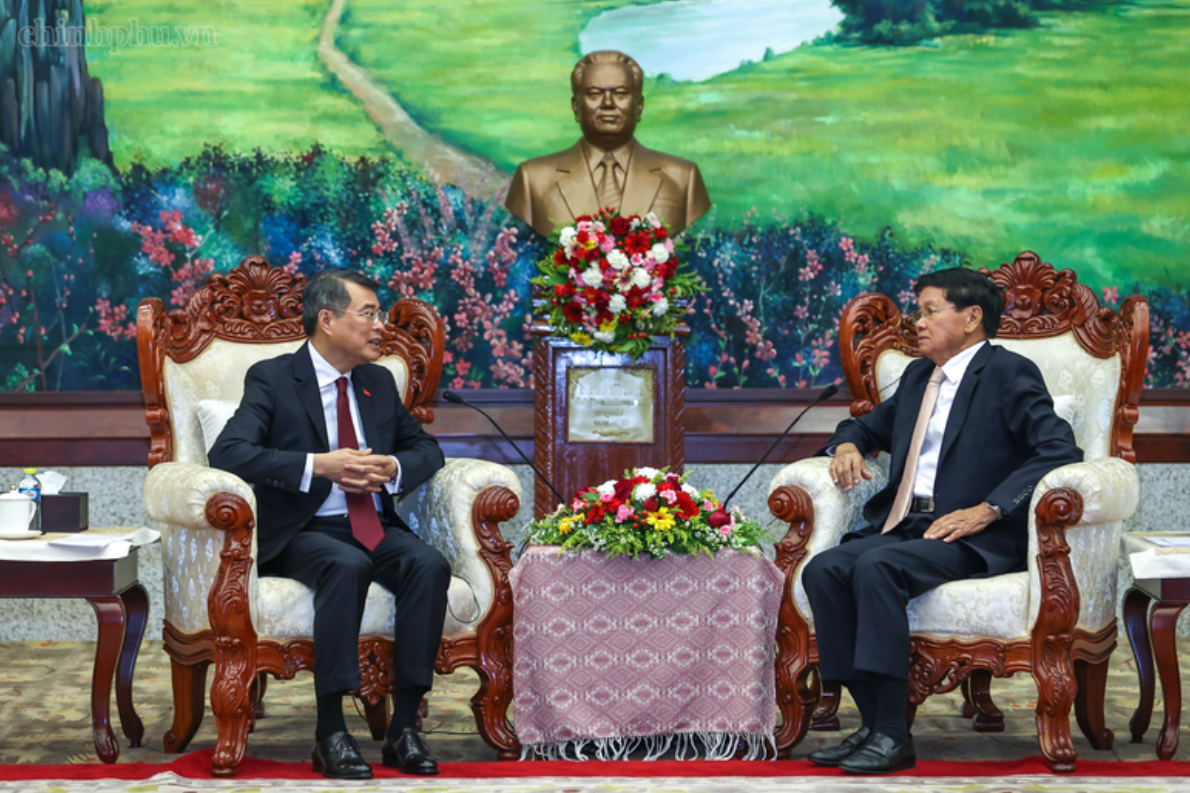
Prime Minister Le Minh Hung on October 8 paid a courtesy call on Lao General Secretary and President Thongloun Sisoulith in Vientiane as part of his on-going official visit to Laos.
The two sides expressed their delight at the positive developments in the bilateral relations in recent years, noting that there remains significant room for greater cooperation and complementarity, particularly in trade, investment and economic ties. They also held extensive discussions on strategic directions to further deepen and strengthen bilateral relations in a more substantive and practical manner.
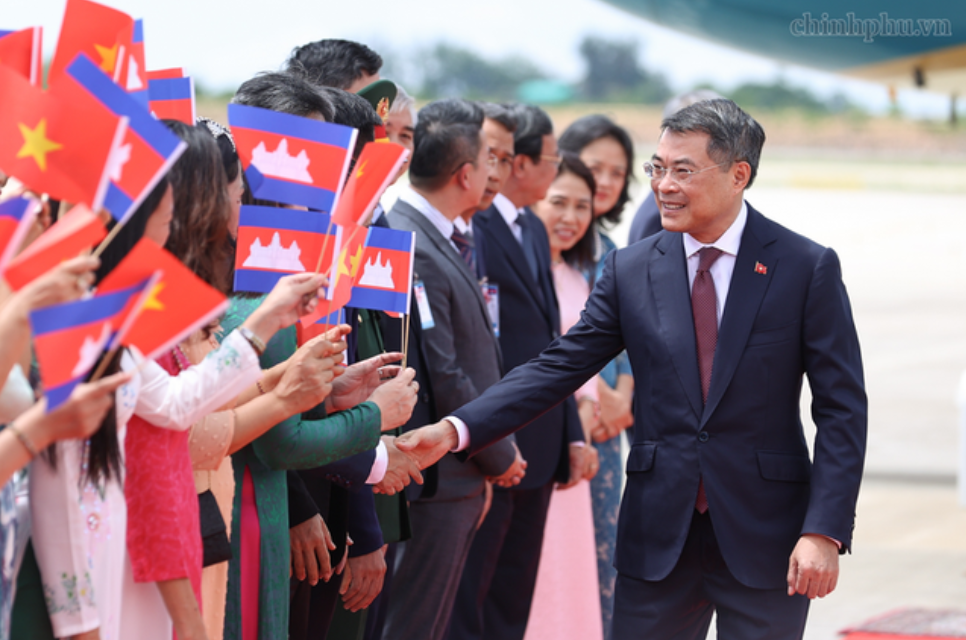
Prime Minister Le Minh Hung arrived in Phnom Penh on Friday afternoon, starting his two-day official visit to Cambodia at the invitation of Cambodian counterpart Hun Manet.
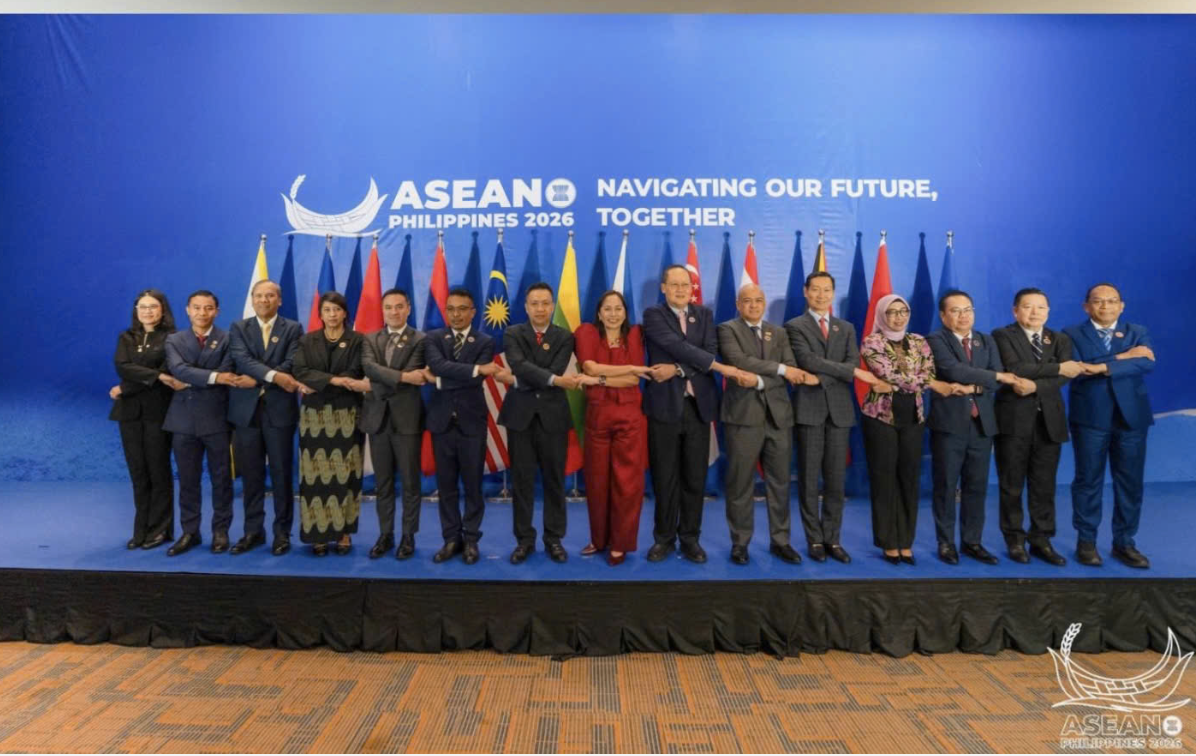
On 7 October 2026, the 44th ASEAN Ministers on Energy Meeting (AMEM 44) was held in Manila, the Philippines, under the chairmanship of Sharon S. Garin, Secretary of the Department of Energy of the Philippines. The meeting brought together energy ministers from ASEAN Member States, the Secretary-General of ASEAN, the ASEAN Centre for Energy, and representatives of ASEAN energy sector bodies and specialised networks. Deputy Minister of Industry and Trade Nguyen Viet Son led the Vietnamese delegati
Prime Minister Le Minh Hung on October 8 paid a courtesy call on Lao General Secretary and President Thongloun Sisoulith in Vientiane as part of his on-going official visit to Laos.
The two sides expressed their delight at the positive developments in the bilateral relations in recent years, noting that there remains significant room for greater cooperation and complementarity, particularly in trade, investment and economic ties. They also held extensive discussions on strategic directions to further deepen and strengthen bilateral relations in a more substantive and practical manner.
Prime Minister Le Minh Hung arrived in Phnom Penh on Friday afternoon, starting his two-day official visit to Cambodia at the invitation of Cambodian counterpart Hun Manet.
On 7 October 2026, the 44th ASEAN Ministers on Energy Meeting (AMEM 44) was held in Manila, the Philippines, under the chairmanship of Sharon S. Garin, Secretary of the Department of Energy of the Philippines. The meeting brought together energy ministers from ASEAN Member States, the Secretary-General of ASEAN, the ASEAN Centre for Energy, and representatives of ASEAN energy sector bodies and specialised networks. Deputy Minister of Industry and Trade Nguyen Viet Son led the Vietnamese delegati