Vietnam is strengthening measures to ensure fuel supply, quality and consumer protection as E10 gasoline is rolled out nationwide from June 1.
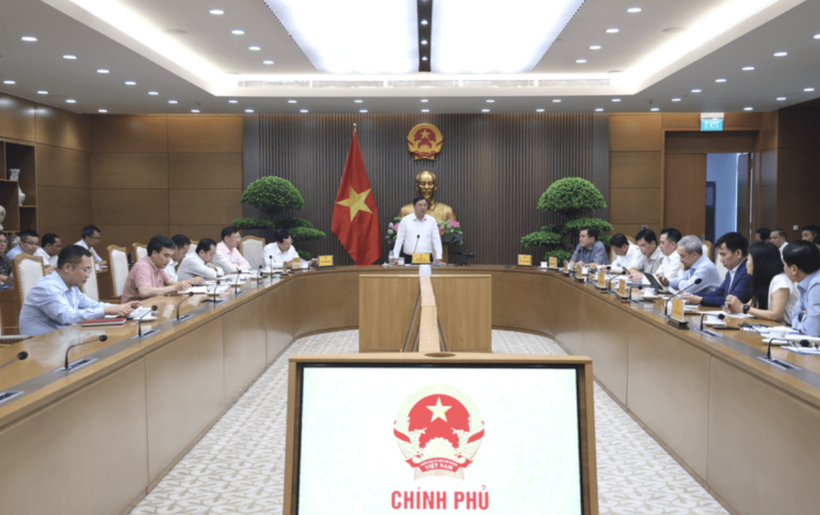
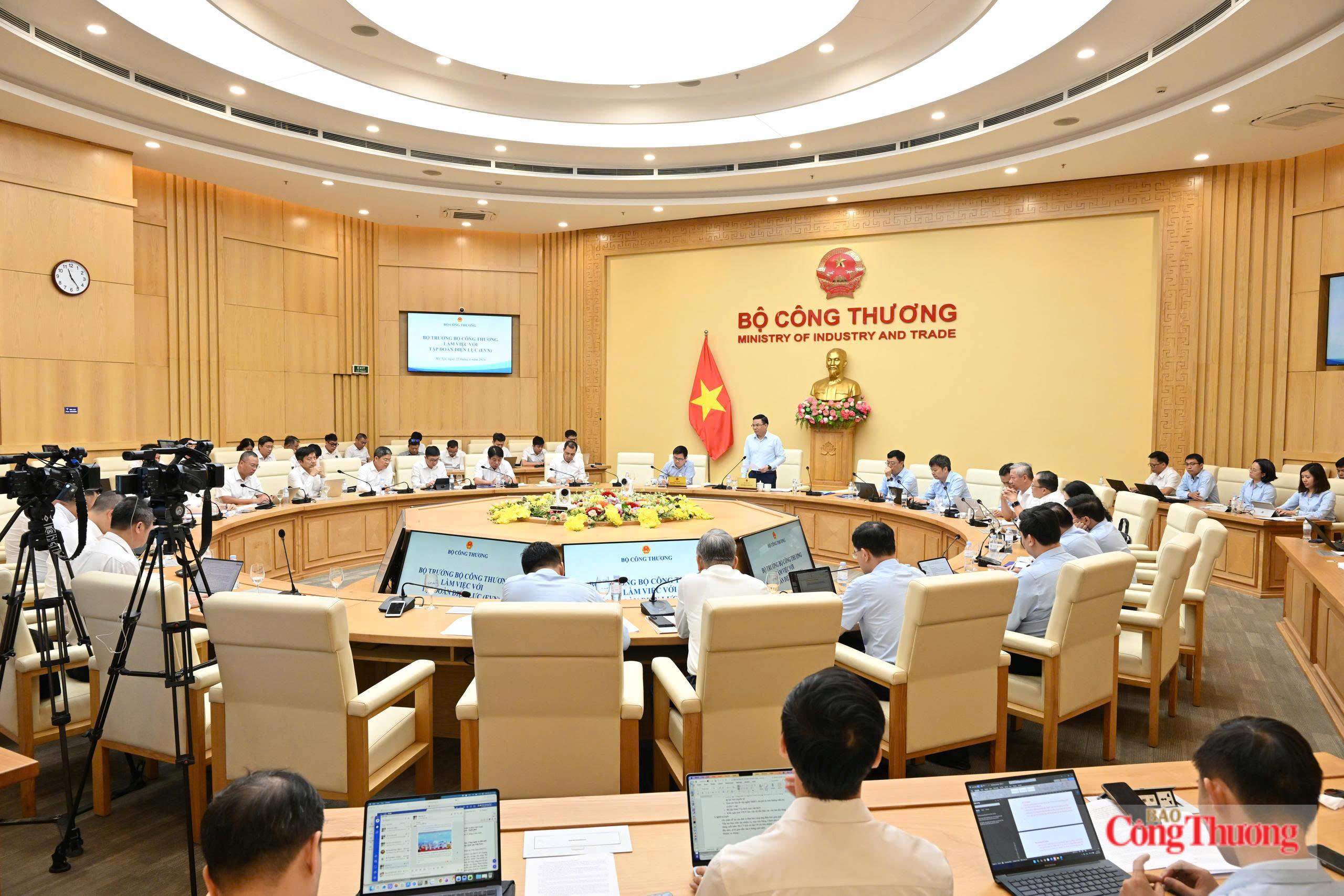
On June 2, Politburo member and Permanent Deputy Prime Minister Pham Gia Tuc chaired a meeting with the Ministry of Industry and Trade and relevant ministries and agencies on the implementation of the nationwide supply and distribution of E10 biofuel gasoline.
The Permanent Deputy Prime Minister emphasized that all Party guidelines and State policies are ultimately aimed at serving the people. The roadmap for blending and distributing E10 gasoline nationwide is intended to provide consumers with fuel at reasonable prices in line with international practices, while contributing to emissions reduction, energy security and domestic agricultural development.
Permanent Deputy Prime Minister Pham Gia Tuc chairs a meeting with the Ministry of Industry and Trade and relevant ministries and agencies on the implementation of E10 biofuel gasoline supply and distribution. Photo: VGP
The transition to E10 gasoline has attracted significant attention from the public, businesses and society. The Government and the Prime Minister have directed the Ministry of Industry and Trade, relevant ministries and media agencies to strengthen policy communications and promptly address public concerns and questions to ensure that citizens and businesses fully understand the policy and support its implementation.
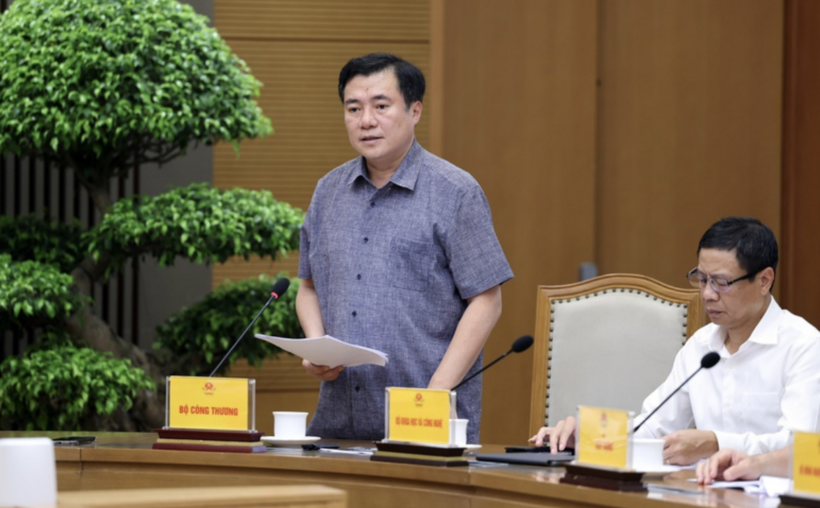
At the meeting, Deputy Minister of Industry and Trade Nguyen Sinh Nhat Tan reported that before launching the transition to E10 gasoline, the ministry coordinated with ministries, local authorities, businesses, industry associations and experts to conduct technical assessments, study international experience and prepare fuel supply, blending capacity, distribution infrastructure and communication activities.
Deputy Minister of Industry and Trade Nguyen Sinh Nhat Tan delivers a report at the meeting. Photo: VGP
To date, supplies of gasoline base stock and ethanol have been secured, blending capacity meets requirements, distribution systems have completed the transition, and the entire market is now supplied with E5 and E10 gasoline that complies with applicable standards and quality regulations.
After one day of nationwide E10 distribution, fuel consumption remained broadly comparable to previous levels of conventional gasoline usage. Daily consumption of biofuel gasoline reached approximately 29,000 cubic meters, compared to an average gasoline demand of 32,000 cubic meters per day, as some retail outlets were still selling their remaining conventional gasoline inventories.
As E10 gasoline has not yet been officially designated as a commonly consumed fuel product in the market, businesses are currently calculating their own base prices. Market observations show that E10 gasoline has been properly priced and displayed in accordance with regulations and has consistently remained cheaper than equivalent conventional gasoline since pilot distribution began in August 2025.
The Ministry of Industry and Trade is currently submitting to the Government a draft Resolution on the implementation of the E10 gasoline roadmap. Under the proposal, E10 gasoline would be designated, from June 1, 2026, as the fuel product for which the State announces the base price, replacing RON95-III conventional gasoline. Once the Resolution is issued, the ministry will officially regulate E10 gasoline pricing.
Representatives of the Vietnam National Petroleum Group (Petrolimex) stated that the company has rolled out E10 gasoline at more than 2,800 retail stations and through over 1,400 franchised dealers. Petrolimex has invested in E10 blending facilities with a capacity of approximately 7.7 million cubic meters annually, sufficient not only to meet its own demand but also to support other enterprises.
Meanwhile, the Vietnam Oil Corporation (PVOIL) reported that it, together with domestic refineries, is ensuring adequate supplies of gasoline base stock for the market. The company has also resumed operations at the Dung Quat biofuel plant and is gradually increasing production capacity to meet ethanol demand for E10 blending. PVOIL’s blending system is likewise capable of supporting other fuel wholesalers in implementing E10 gasoline distribution.
Both companies recommended that regulators promptly finalize technical standards for E10 gasoline and gasoline base stock to provide long-term regulatory certainty, enabling businesses to proactively plan imports, blending operations and supply strategies from 2027 onward. They also proposed simplifying inspection and conformity certification procedures to reduce administrative burdens and avoid overlapping quality control requirements.
In addition, Petrolimex and PVOIL called for continued government investment in logistics infrastructure and ethanol import terminals, as well as policy support for domestic ethanol production.
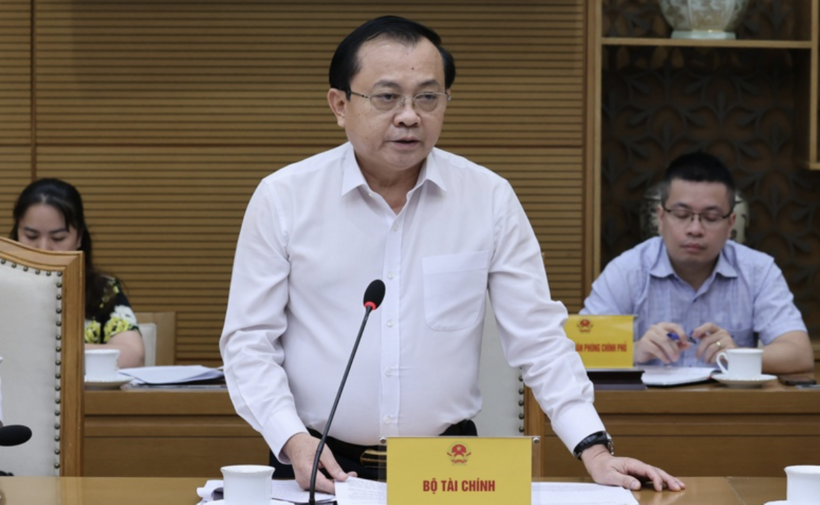
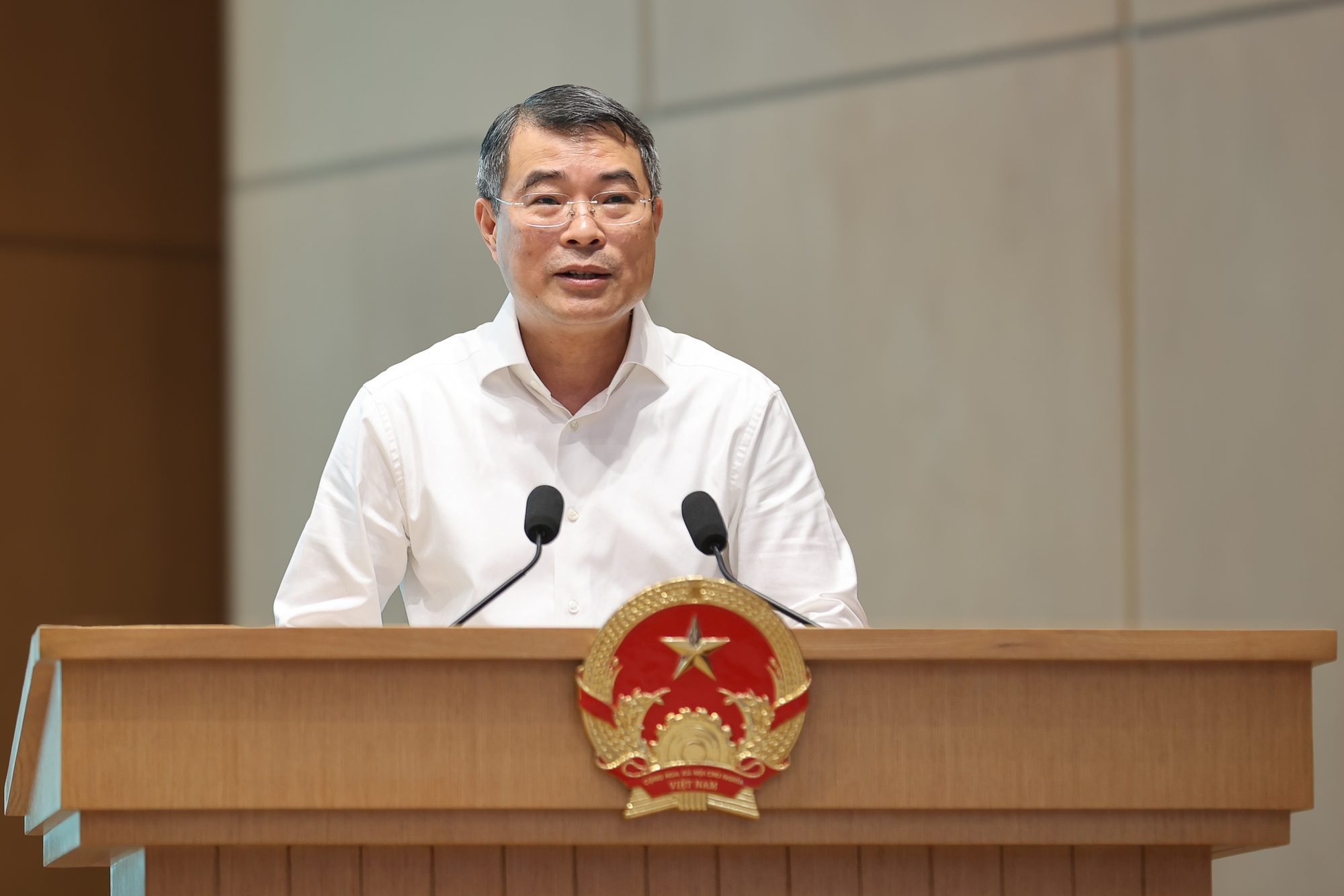
Deputy Minister of Finance Le Tan Can speaks at the meeting. Photo: VGP
Quality control across the entire E10 supply chain
At the meeting, leaders from the Ministries of Science and Technology, Finance, Public Security, Construction, Agriculture and Environment, and Culture, Sports and Tourism, together with other participants, expressed strong support for the implementation of E10 biofuel gasoline. They described the initiative as a practical solution aligned with the global transition toward green energy, contributing to emissions reduction and supporting Vietnam’s commitment to achieving net-zero emissions by 2050.
Participants acknowledged and commended the proactive efforts of major petroleum wholesalers in preparing the necessary conditions for implementing the policy.
They recommended that the Ministry of Industry and Trade continue reviewing and improving technical requirements, infrastructure and fuel supply conditions for E10 deployment. Particular attention should be given to assessing compatibility with older vehicles, raising fuel quality standards, improving storage, blending and distribution systems, and strengthening quality control throughout the entire supply chain, especially in mountainous, remote and island areas.
They also emphasized the need to ensure stable ethanol supplies, improve logistics infrastructure, warehouses and port facilities, comprehensively assess impacts on consumers and businesses, and promptly finalize tax, financial, production and business policies, as well as domestic ethanol feedstock development strategies, to facilitate implementation.
Participants stressed the importance of proactive, timely, accurate and transparent communications to address public concerns, build social consensus and counter misinformation related to E10 gasoline.
At the same time, the Ministry of Industry and Trade and fuel businesses should establish efficient mechanisms to receive and promptly address consumer feedback, proactively resolve issues arising during implementation, strengthen state management, maintain fuel quality oversight, combat trade fraud and ensure market security and order.
A sound policy aligned with national energy development goalsConcluding the meeting, the Permanent Deputy Prime Minister praised the Ministries of Industry and Trade, Science and Technology, Construction, Finance and other relevant agencies, as well as major fuel suppliers, for effectively implementing the Party’s and Government’s roadmap for E10 gasoline deployment.
He stressed the importance of recognizing the significance of E10 biofuel gasoline, which consists of 90% conventional gasoline and 10% ethanol primarily produced from agricultural feedstocks such as corn, sugarcane and cassava.
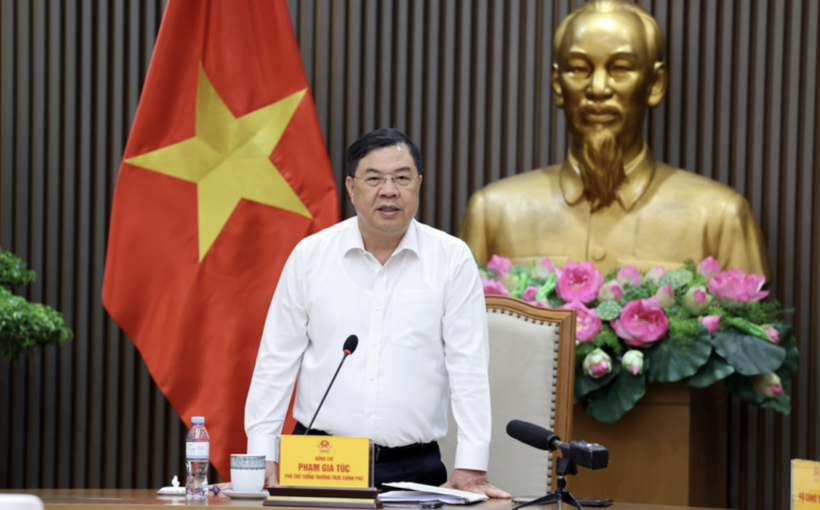
Permanent Deputy Prime Minister Pham Gia Tuc calls for ensuring fuel supply, quality and consumer rights during the transition to E10 gasoline. Photo: VGP
Accordingly, promoting E10 gasoline is a sound policy consistent with the country’s energy development strategy. Replacing part of conventional gasoline consumption with biofuel reduces fossil fuel use by 10%, lowers pollutant emissions and carbon output, diversifies energy sources, reduces dependence on fossil fuels, enhances energy self-reliance and contributes to national energy security.
Furthermore, biofuel development creates additional markets for agricultural products, promotes circular economic models, supports the formation of a domestic biofuel industry and enhances the value chain of local production.
“The most important objective of the transition to E10 gasoline is to create the best possible conditions for citizens, consumers and businesses. The rollout of E10 not only contributes to emissions reduction and fuel security but also helps lower retail prices. Practical implementation so far shows that E10 gasoline generally meets technical standards and safety requirements,” the Permanent Deputy Prime Minister said.
He noted that E10 gasoline has been widely used for many years in countries including the United States, Brazil, India, Thailand and member states of the European Union, while some countries have already adopted E20 gasoline.
International experience demonstrates that vehicles manufactured according to current technical standards do not encounter technical problems when using E10 gasoline, provided fuel quality is assured and technical requirements are followed. Successful implementation has consistently depended on coordinated efforts involving standards, quality assurance, blending infrastructure, distribution systems and public communication.
A roadmap prepared comprehensively and carefully
Vietnam has sold E5 biofuel gasoline nationwide since 2018, and the product has gained market acceptance.
The rollout of E10 gasoline has been prepared over an extended period through a structured process involving ministries, local authorities, major fuel wholesalers, distributors, retail networks, industry associations and biofuel producers. International organizations, including the US Grains Council, the Global Green Fuels Alliance and the Thai Biofuels Trade Association, as well as experts and scientists specializing in engines and fuels, have also contributed to the process.
Since August 2025, the Ministry of Industry and Trade, together with relevant agencies and businesses, has conducted pilot programs in Hanoi, Ho Chi Minh City, and Hai Phong to evaluate blending quality, vehicle performance, consumer acceptance and distribution system operations before nationwide implementation.
The trials confirmed adequate ethanol and gasoline base stock supplies, suitable blending, storage, transportation and distribution technologies, and the growing operational readiness of fuel wholesalers, distributors and retailers.
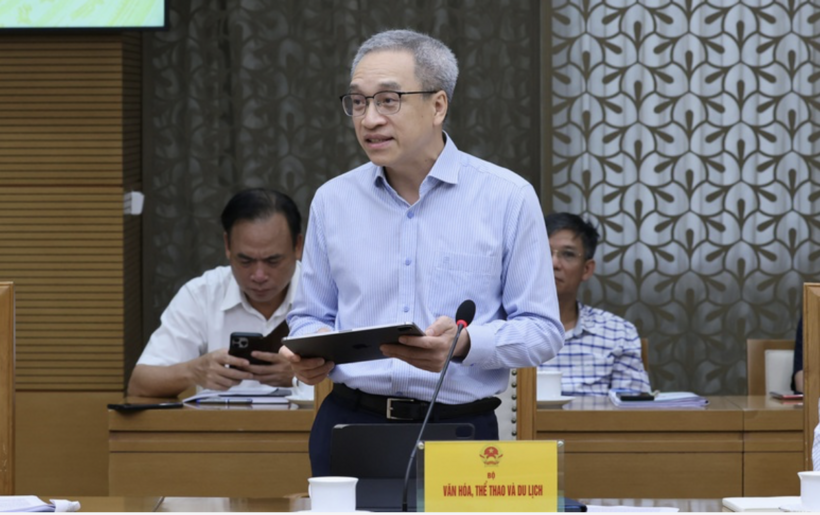
Deputy Minister of Culture, Sports and Tourism Phan Tam speaks at the meeting.Photo: VGP
The ministry also coordinated with relevant agencies and enterprises to study international experience and comprehensively assess domestic conditions, including feedstock availability, ethanol production capacity, blending capabilities, storage infrastructure, distribution networks, fuel quality standards and vehicle compatibility.
Based on these assessments, the Ministry of Industry and Trade concluded that nationwide E10 deployment is technically feasible and suitable for Vietnam’s conditions, subsequently issuing Circular No.50/2025/TT-BCT establishing the nationwide blending and distribution roadmap from June 1, 2026.
After the first day of implementation, E10 distribution across the country proceeded smoothly, with stable supplies and uninterrupted operations. Initial feedback from consumers and transport businesses has been positive, with broad support for the use of biofuels as a means of protecting the environment and reducing emissions. Fuel companies have proactively organized supply operations and successfully met market demand without shortages or disruptions.
Consumer interests must remain the top priority
Despite the positive results, the Permanent Deputy Prime Minister identified several shortcomings.
Communication regarding E10 gasoline has not always been sufficiently comprehensive, clear, timely or consistent. Certain information concerning vehicle compatibility has not been explained in enough detail, leading to uncertainty among some consumers.
Questions regarding which vehicle categories may be unsuitable for E10, what precautions should be taken when using the fuel, which alternatives should be used for incompatible vehicles, and the responsibilities of regulators, vehicle manufacturers and fuel suppliers in the event of technical issues have not yet been fully communicated to the public.
He instructed the Ministry of Industry and Trade and relevant agencies to intensify policy communication efforts, ensure the public and businesses receive complete and consistent information, and prioritize mechanisms such as hotlines and automated response systems to answer questions and provide support.
Looking ahead, he requested the ministry to continue coordinating with relevant agencies to comprehensively review nationwide implementation, closely monitor market developments and ensure fuel supply, fuel quality and stable distribution operations.
The ministry was also tasked with urgently developing and implementing a unified nationwide communications plan highlighting the role, significance and benefits of E10 gasoline; publicly disclosing information on standards, quality, vehicle compatibility and consumer protection measures; proactively countering misinformation; and compiling international experiences to clearly demonstrate E10’s practical benefits in terms of fuel performance, environmental protection and vehicle compatibility.
“Consumer interests are the most important consideration. All of our policies must be designed to safeguard consumer rights,” the Permanent Deputy Prime Minister stressed.
The Ministry of Industry and Trade, in coordination with the Ministries of Construction and Science and Technology, relevant associations and vehicle manufacturers, was instructed to develop detailed guidance identifying vehicle categories suitable for E10 gasoline, clarify exceptional cases requiring caution and recommend appropriate fuel alternatives where necessary.
The ministry should also work with industry associations and vehicle manufacturers, assemblers and importers to publicly disclose compatibility information for specific vehicle models and provide technical guidance to users.
Fuel wholesalers, producers and biofuel businesses were directed to maintain stable production and imports to ensure adequate supplies for blending and distribution of E5 and E10 gasoline.
“The Ministry of Industry and Trade must strengthen inspections and supervision of imports and blending operations to ensure compliance with standards. Fuel quality must be identical whether in urban centers, rural areas, mountainous regions or remote locations. Blending activities must not compromise the quality of biofuel gasoline or harm consumers,” he said.
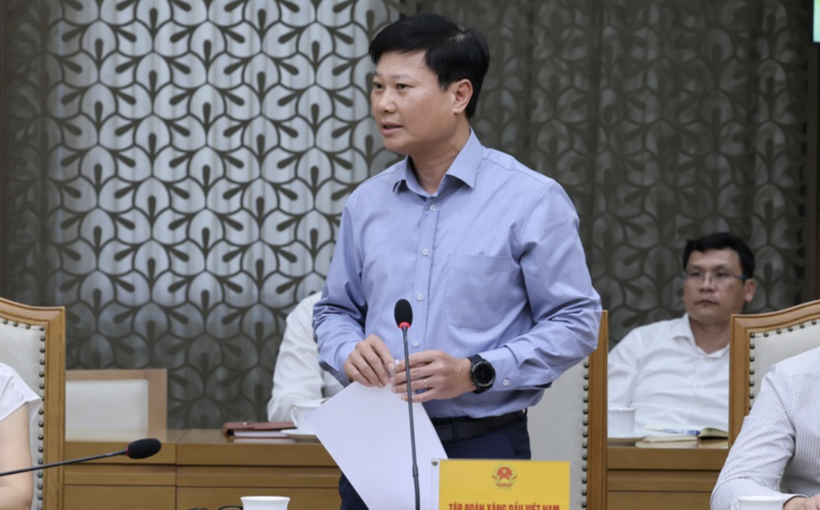
Luu Van Tuyen, Chief Executive Officer of Petrolimex, speaks at the meeting. Photo: VGP
Promoting production, business activities and the use of biofuels
The Permanent Deputy Prime Minister assigned the Ministry of Finance to coordinate with relevant agencies in reviewing tax policies, fees and financial mechanisms to encourage the production, distribution and use of biofuels and promote market development in line with the approved roadmap.
The Ministry of Science and Technology was tasked with improving technical standards and regulations governing biofuel quality, advancing scientific research and technological development in biofuels, assessing impacts on engines and evaluating the feasibility of higher blending ratios in the future, while strengthening conformity assessments and technical inspections.
The Ministry of Construction was instructed to coordinate with relevant agencies in promoting low-emission fuels in the transport sector under the national green energy transition roadmap.
The Ministry of Agriculture and Environment was tasked with developing feedstock regions for biofuel production and promoting the use of agricultural by-products, biomass and renewable materials for domestic biofuel manufacturing.
The Ministry of Public Security was assigned to coordinate with relevant agencies, local authorities and businesses in monitoring nationwide implementation, promptly detecting and handling violations involving fuel production, blending, transportation and trading, as well as counterfeit fuels, substandard products, hoarding and policy profiteering.
The Permanent Deputy Prime Minister called on law enforcement authorities to intensify investigations and strictly punish violations related to illegal blending, smuggling, counterfeit gasoline and low-quality fuel products. He also urged authorities to closely monitor public sentiment and take legal action against the dissemination of false or misleading information that could cause public concern and undermine the implementation of the Party’s and State’s biofuel policy.
The Ministry of Culture, Sports and Tourism was directed to coordinate with the Ministry of Industry and Trade and relevant agencies in guiding media organizations to provide accurate, objective and science-based information on E10 gasoline, thereby fostering social consensus during implementation.
“The Ministry of Industry and Trade and businesses must proactively provide information to competent authorities and media organizations, including the Government News Portal, ensuring accuracy, timeliness and transparency,” he said.
Petrolimex and PVOIL were urged to continue playing a pioneering role in the E10 roadmap by ensuring fuel supply, blending capacity, storage capabilities and distribution systems capable of meeting market demand, while strictly complying with quality management regulations to ensure that all E10 gasoline distributed nationwide fully meets technical standards and regulatory requirements.
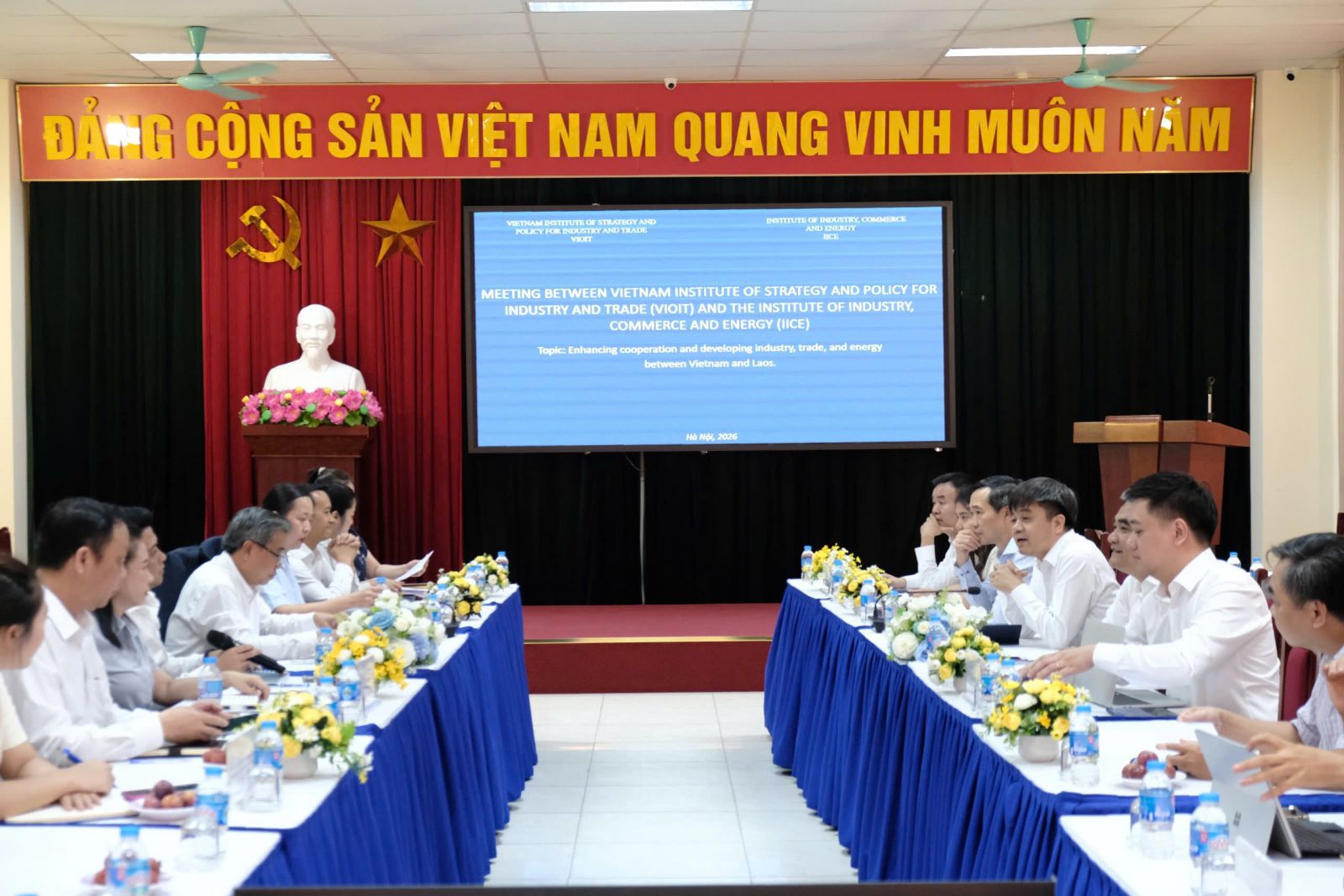
The Vietnam Institute of Strategy and Policy for Industry and Trade and Lao counterpart review the implementation of a bilateral cooperation agreement.
The Vietnam Institute of Strategy and Policy for Industry and Trade and Lao counterpart review the implementation of a bilateral cooperation agreement.
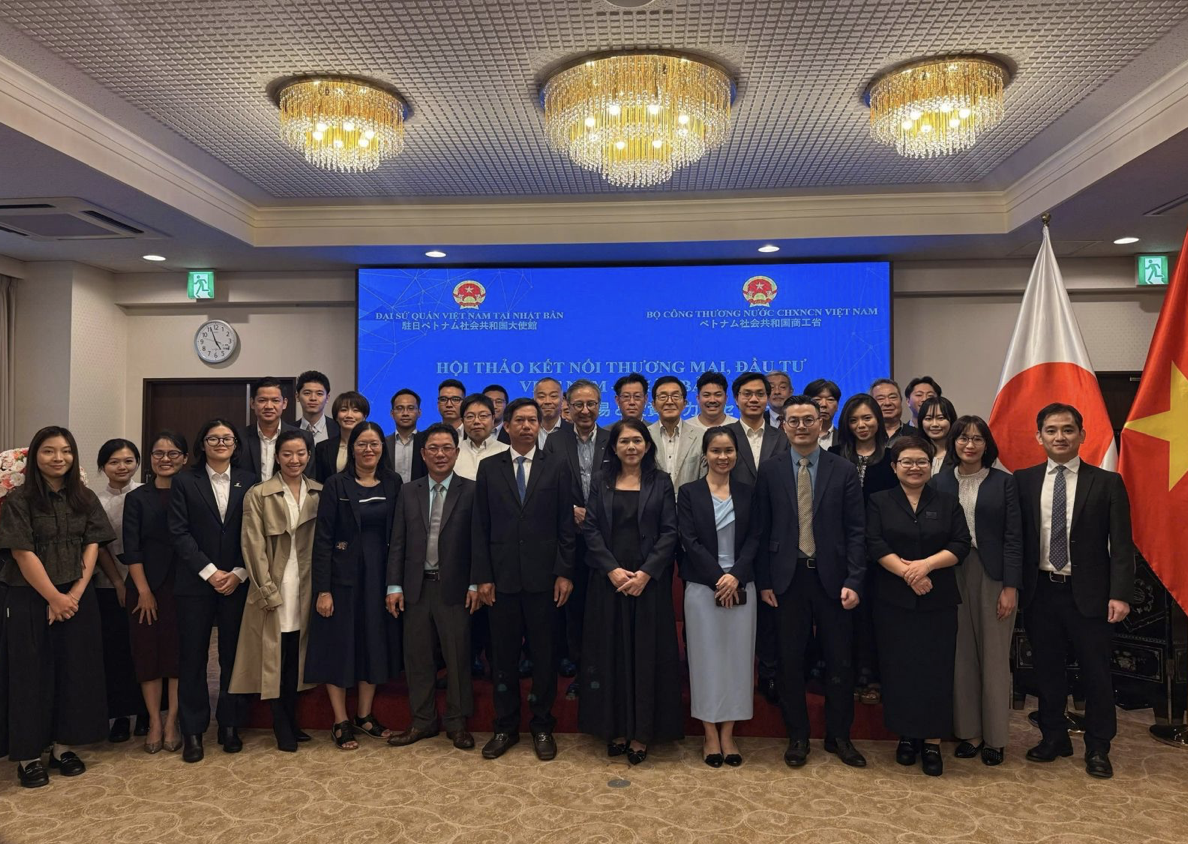
A seminar in Tokyo connected Vietnamese and Japanese businesses, providing market insights and promoting trade, investment and supply chain cooperation.
Prime Minister Le Minh Hung chairs thematic meeting on Resolution 57, urging breakthrough mechanisms, decentralisation and innovation-led growth reforms in Vietnam.
Amid rising electricity demand and increasingly complex weather conditions, Vietnam is stepping up efforts to ensure a stable power supply for economic growth.
Vietnam has promulgated two new ordinances to improve judicial procedures, accelerate digital transformation and enhance the consistency and accessibility of laws.