Vietnam is enhancing early warning and forecasting capacity as a potential strong El Niño and increasingly extreme climate risks threaten communities.
Proactive response to the risks of El Niño and extreme weather patterns
On the morning of June 23, the Vietnam Meteorological and Hydrological Administration under the Ministry of Agriculture and Environment, in coordination with the United Nations Development Programme (UNDP) in Vietnam and the Embassy of Canada in Vietnam, organized the Conference on “2026 Hydroa-Meteorological Outlook”.
The conference focused on assessing climate and disaster trends in the coming period, particularly the possibility of a strong El Niño event, while discussing solutions to strengthen forecasting and early warning capacity and enhance community resilience against growing climate-related risks.
The event was attended by Deputy Minister of Agriculture and Environment Le Cong Thanh; Ramla Khalidi, Resident Representative of UNDP in Vietnam; Emilie Carrier, Counsellor at the Embassy of Canada in Vietnam; and more than 80 delegates from central and local agencies, international organizations, development partners, research institutions and media agencies.
According to the latest assessments by the World Meteorological Organization, the global climate system continues to exhibit unusual patterns. Global average temperatures have remained at record highs for several consecutive years, resulting in significant changes in rainfall patterns and water resources, while increasing both the frequency and intensity of extreme weather events.
Against this backdrop, Vietnam is considered one of the countries most severely affected by climate change. Risks associated with heatwaves, droughts, water shortages, saltwater intrusion, extreme rainfall, flooding and landslides are increasing, directly affecting livelihoods and economic activities.
Current forecasts indicate that the second half of 2026 and early 2027 may be significantly influenced by El Niño. Many international climate forecasting models and Vietnam’s meteorological agencies predict that El Niño could develop into a strong event comparable to that of 2015 - 2016, one of the most intense El Niño episodes ever recorded.
Such developments could heighten the risk of prolonged heatwaves, reduced rainfall, droughts, water shortages and saltwater intrusion in many areas, particularly in the Central Region and the Mekong Delta. At the same time, agriculture, water resources, energy, environmental management and people's livelihoods are expected to face considerable impacts.
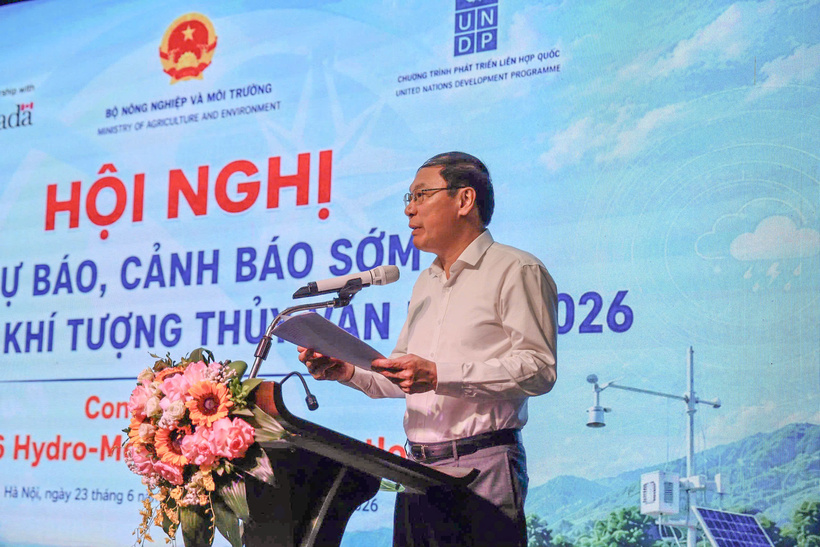
In the opening remarks, Deputy Minister Le Cong Thanh noted that the global climate system is becoming increasingly complex, extreme and difficult to predict. Lessons learned from the 2015-2016 El Niño event demonstrated its profound impacts on socio-economic development, as severe drought and saltwater intrusion affected the South Central Coast, the Central Highlands and the Mekong Delta.
Deputy Minister Le Cong Thanh delivers remarks at the conference. Photo: Le Van
However, according to the Deputy Minister, practical experience also shows that El Niño does not necessarily mean all regions will experience drought. Unusual and extreme weather events may still occur. The historic floods in Quang Ninh in 2015 serve as evidence of the increasing extremity and unpredictability of weather patterns under the influence of climate change.
Highlighting the role of forecasting and early warning in the current context, he stressed that transforming scientific information into timely management decisions has become one of the decisive factors in disaster response and climate adaptation efforts.
“In the context of climate change increasing the extremity and uncertainty of weather patterns, and with El Niño forecast to have a strong impact on Vietnam in the second half of 2026 and early 2027, enhancing forecasting and early warning capacity and effectively translating scientific information into management decisions and timely response actions is an urgent requirement,” Deputy Minister Le Cong Thanh said.
According to him, Vietnam has established a relatively synchronized meteorological and hydrological observation system, while irrigation infrastructure and water resource management mechanisms have continued to improve. The country has also accumulated valuable experience in disaster prevention and control. Further promoting the application of science and technology, digital transformation, artificial intelligence and multi-hazard early warning systems will help improve forecast quality, minimize disaster-related losses, ensure water and food security, and maintain social stability.
At the conference, the Deputy Minister also urged experts to conduct comprehensive assessments of El Niño’s impacts, identify risks at an early stage and propose appropriate response measures tailored to each sector and locality. The conference outcomes will serve as an important basis for ministries, sectors and localities to proactively develop response scenarios and ensure sustainable socio-economic development in the coming period.
Shifting from phenomenon-based forecasting to impact-based forecasting
One of the key topics discussed at the conference was the need to transition from traditional forecasting methods to impact-based forecasting and warning systems in order to better support decision-making and the implementation of response measures at all levels.
The conference was organized not only to provide updated assessments of meteorological, hydrological, disaster and climate trends in 2026, but also to evaluate risks and challenges arising from El Niño and climate change. It aimed to propose solutions to enhance forecasting and early warning capacity, disaster risk management and community resilience.
The event also served as a platform for government agencies, domestic and international experts to exchange information, share experiences and promote cooperation in meteorology, hydrology, disaster prevention and climate change adaptation.
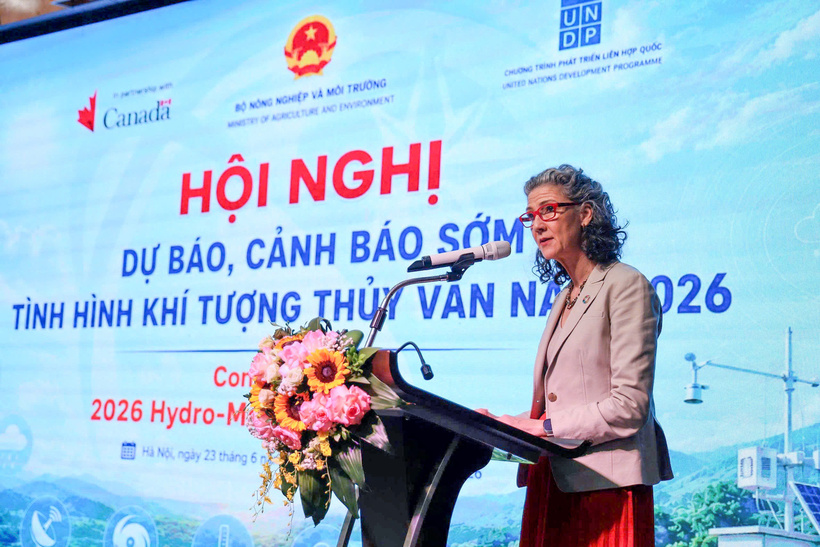
Addressing the conference, Ramla Khalidi, Resident Representative of UNDP in Vietnam, said that Vietnam is on the frontline of the climate crisis. The impacts of storms and landslides in northern and central regions, as well as saltwater intrusion in the Mekong Delta, are no longer future projections but realities that affect daily life.
Ramla Khalidi, Resident Representative of UNDP in Vietnam delivers remarks. Photo: Le Van
According to Khalidi, extreme weather events are increasingly becoming the new normal, requiring management and response systems to adapt accordingly.
She emphasized that data alone cannot save lives, and advanced forecasting models can only deliver real value when information reaches people on the frontlines.
“Through our work with smallholder farmers in the Central Highlands and coastal communities, we have found that the greatest gap lies in communication, translating complex meteorological data into simple, localized and gender-responsive messages that people can understand and act upon in a timely manner,” she said.
At the conference, UNDP experts also introduced the global Early Warnings for All (EW4All) initiative launched by the UN, which aims to ensure that all people worldwide are protected by multi-hazard early warning systems by the end of 2027. The initiative is expected to help bridge the gap between high-level meteorological analysis and practical response capacity at the community level.
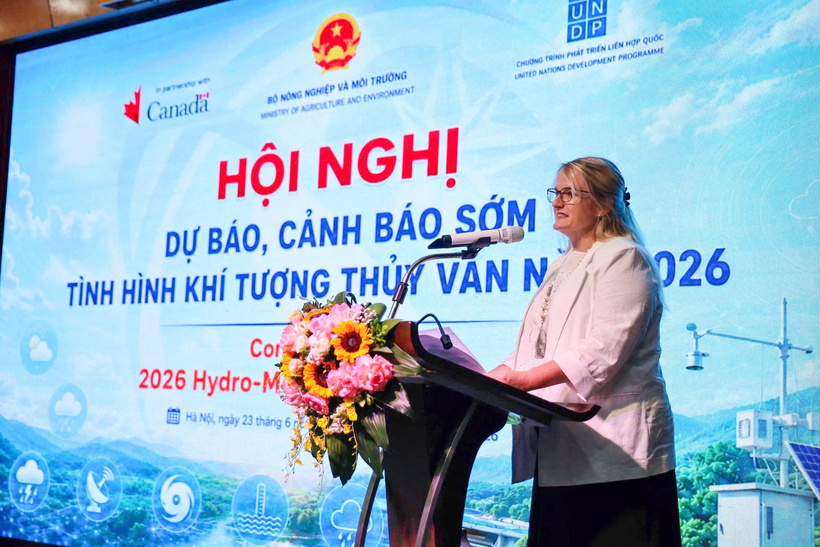
Representing Canada, Emilie Carrier, Counsellor at the Embassy of Canada in Vietnam, affirmed that Canada is proud to support Vietnam in strengthening climate resilience, particularly through improving the quality of early warning systems and disaster risk communication.
Emilie Carrier, Counsellor at the Embassy of Canada in Vietnam delivers remarks. Photo: Le Van
According to Carrier, through the Climate-smart Coastal Communities in Vietnam project funded by the Government of Canada and implemented by UNDP, 20 automatic meteorological and hydrological stations have been installed in Ca Mau province. These stations provide real-time data and are being integrated into provincial and national systems.
She noted that warnings only become truly effective when they are not only issued but also received, understood and acted upon by local communities. As emerging technologies such as artificial intelligence and high-resolution forecasting models continue to advance, strengthening professional exchanges, knowledge sharing and international cooperation will help improve forecasting, early warning and disaster risk management.
Within the framework of the conference, experts from UNDP, Environment and Climate Change Canada, the Japan International Cooperation Agency (JICA) and Vietnamese institutions shared practical experiences and lessons on climate forecasting, multi-hazard early warning systems, forecast-based disaster risk management and strengthening community resilience against the increasingly visible impacts of climate change.
The Ministry of Industry and Trade (MoIT) held its regular press conference for the third quarter of 2026 in Ha Noi on the afternoon of October 7, chaired by Deputy Minister Phan Thi Thang.
Deputy Minister of Industry and Trade Luong Hoang Thai emphasized that building the national brand is a driving force for improving Viet Nam’s competitiveness and international standing.
The official visit to Laos by Prime Minister Le Minh Hung is expected to inject fresh momentum into bilateral relations, with economic, trade and investment cooperation continuing to serve as a core pillar.
The Panamanian President’s visit is expected to contribute to further deepening and making the traditional friendship and cooperation between the two nations more substantive and effective.
Experts warn that RSV can hospitalize even healthy infants under one, with severe cases linked to long-term respiratory problems and no specific treatment available.
Vietnamese and international experts call for routine influenza vaccination to better protect older adults from severe complications and preventable deaths.
On the morning of September 1, tens of thousands of people nationwide flocked to Ba Dinh Square in Ha Noi to visit Ho Chi Minh Mausoleum and pay tribute.
In the lead-up to National Day on September 2, Ha Noi is awash in red flags and festive decorations, creating a vibrant atmosphere and stirring national pride.
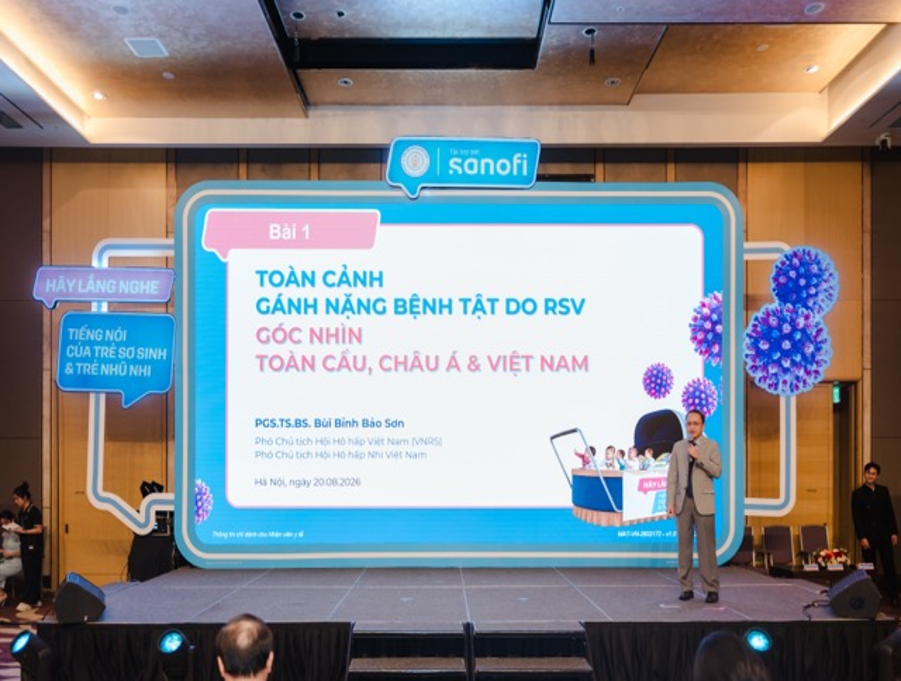
Nearly 1,000 healthcare professionals attended RSV workshops in Hanoi and Ho Chi Minh City organized by the Vietnam Pediatric Association and sponsored by Sanofi-Aventis Vietnam.