Deputy Minister Truong Thanh Hoai urged Vinh Long to remove infrastructure and energy bottlenecks, attract investment and drive double-digit growth.
On September 8, a delegation from the Ministry of Industry and Trade (MoIT), led by Deputy Minister Truong Thanh Hoai, held a working session with the People's Committee of Vinh Long province on orientations for industrial and energy development and the implementation of key projects, thereby promoting new growth drivers towards the province's goal of achieving double-digit economic growth.
Industry maintains growth momentum, energy plays a key role
The working session focused on assessing industrial and energy development in the province, identifying achievements as well as difficulties and obstacles in project implementation, and discussing solutions and recommendations to unlock resources, accelerate investment progress and ensure sufficient power supply for socio-economic development.
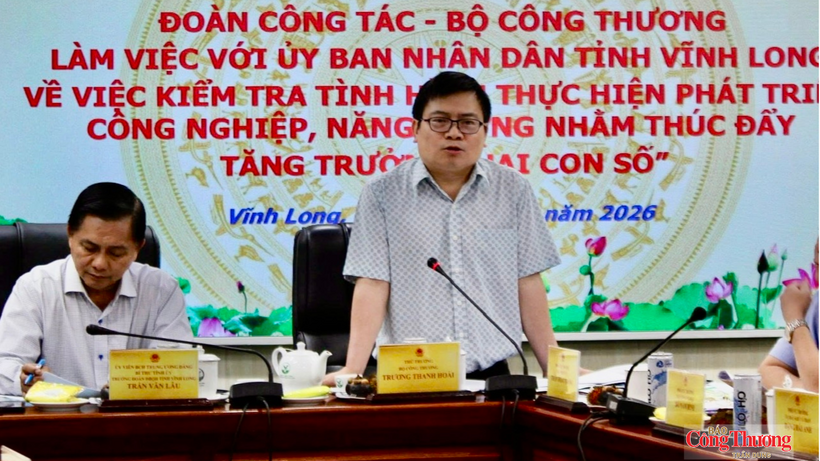
Deputy Minister Truong Thanh Hoai delivers remarks.
At the working session, Deputy Minister Truong Thanh Hoai said Vinh Long has many favorable conditions to strongly develop industries associated with the advantages of the Mekong Delta region, particularly agricultural and food processing, seafood processing, agricultural supporting industries, supporting industries and energy.
According to the Deputy Minister, following the expansion of its development space, Vinh Long has greater room to develop high-value-added manufacturing industries that apply technology and are environmentally friendly. However, to turn its potential into genuine growth momentum, the province needs to address in a coordinated manner issues related to infrastructure, transport, logistics, energy, land clearance and the quality of investors.
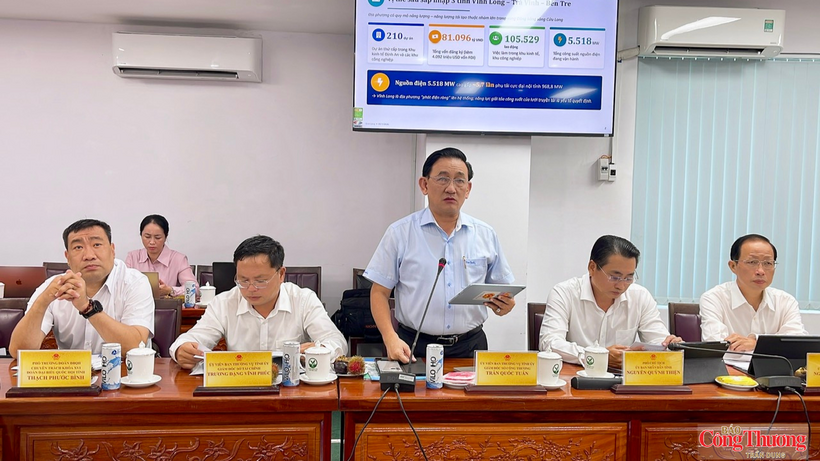
Reporting at the working session, Tran Quoc Tuan, Director of the Vinh Long Department of Industry and Trade, said that in the first seven months of 2026, industrial production continued to maintain its growth momentum. The Index of Industrial Production (IIP) rose 9.90%, while GRDP from the industry and construction sector increased 7.60%. Industrial production value in economic and industrial zones reached VND 82,805.13 billion, up 14.05% year on year and equivalent to 85.97% of the annual target.
The province aims to put at least eight new processing and manufacturing projects into operation and support eight enterprises in expanding their scale; urge 17 new investment projects, with a total capital of VND 1,794.86 billion and USD 107.10 million, to complete procedures for groundbreaking; and put four renewable energy projects, with a combined capacity of 254 MW and total investment of nearly VND 11 trillion, into commercial operation.
In the energy sector, the total capacity of power sources currently in operation in the province stands at approximately 5,518 MW, comprising four coal-fired thermal power plants with a combined capacity of 4,498 MW (Duyen Hai 1, Duyen Hai 2, Duyen Hai 3 and Duyen Hai Expansion); 15 wind power plants with a total capacity of 650.75 MW; two solar power plants with a total capacity of 189.3 MW; and approximately 5,000 rooftop solar power systems with a combined capacity of around 180 MW.
Tran Quoc Tuan, Director of the Vinh Long Department of Industry and Trade, reports at the working session.
Peak capacity reached 968.8 MW, while commercial electricity output in 2025 stood at 4,996.71 million kWh. In the first eight months of 2026, commercial electricity output reached 3,666.03 million kWh, up 9.56% year on year, and is forecast to increase by around 8.5% for the full year.
In the first six months of 2026, electricity generation reached 14.722 billion kWh, up 9.48%, of which thermal power generation reached 13.751 billion kWh, up 9.09%. The added value of the electricity sector increased 7.23%, contributing 0.77 percentage points to the 6.41% increase in GRDP.
Vinh Long also plans to develop a Scheme for a Renewable Energy Export Center to concretize the adjusted Power Development Plan VIII, the National Marine Spatial Planning, the Mekong Delta Regional Planning and the provincial planning. The orientation is to establish linkages among power sources, power grids, energy storage, seaports, logistics and consumer markets.
The areas under study for development include wind power, solar power, biomass power, waste-to-energy, battery energy storage systems (BESS), green hydrogen, green ammonia, green data centers, the energy industry, technical services and energy logistics.
Removing bottlenecks to attract new investment flows
At the working session, Vinh Long province proposed that the MoIT support investment promotion and connect the province with multinational corporations and capable industrial infrastructure investors; support the implementation of the Supporting Industry Development Program for 2026-2035 under Decision No.929/QD-TTg; and provide guidance on developing eco-industrial clusters towards efficient resource use, with environmental treatment infrastructure and appropriate financial models.
In the energy sector, the province proposed completing the legal framework for new energy models; resolving issues related to electricity prices and power purchase agreements for transitional power projects; supporting the development of the Renewable Energy Export Center Scheme; issuing guidelines on onshore wind power; and addressing transitional power grid projects.
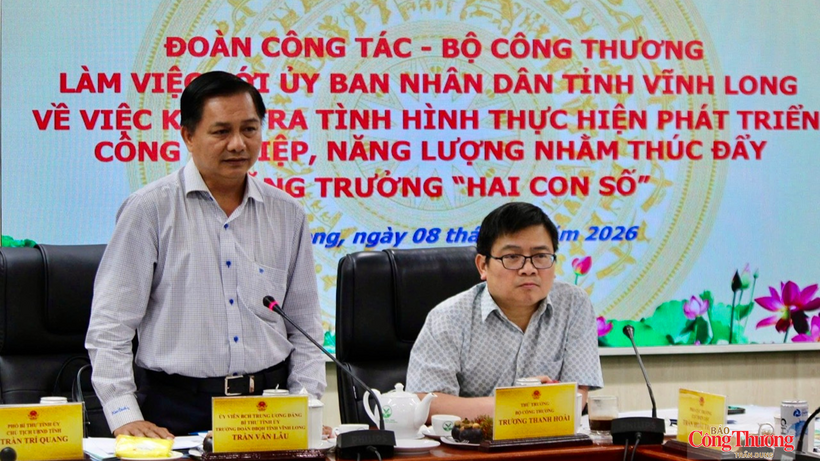
Tran Van Lau, Secretary of the Vinh Long provincial Party Committee, speaks at the working session.
The province also proposed providing guidance on procedures for wind power projects that simultaneously use marine and land areas under Point c, Clause 4, Article 4 of Resolution No.254/2025/QH15; and asked EVN, EVNNPT and the Southern Power Corporation to prioritize investment capital for synchronous development of 500 kV, 220 kV and 110 kV power grid projects under the Power Development Plan VIII, the adjusted Power Development Plan VIII and the province's power development planning.
At the working session, Tran Van Lau, Secretary of the Vinh Long provincial Party Committee, said industry and energy are two key pillars that play a leading role and serve as drivers for breakthroughs as Vinh Long pursues rapid and sustainable growth, with a target of achieving double-digit growth.
According to Tran Van Lau, following the merger, Vinh Long brings together numerous advantages in terms of economic zones, industrial parks, seaports, logistics, agricultural, seafood and coconut material areas, as well as substantial renewable energy potential. These provide a foundation for the province to develop deep-processing industries, high-tech industries and supporting industries, and become an energy hub of the region and the country.
The province will prioritize attracting projects featuring advanced technologies, high added value, efficient resource use and low emissions, as well as projects capable of creating linkages with and generating spillover effects for local enterprises. At the same time, it will focus on removing bottlenecks related to land, site clearance, infrastructure, human resources, supporting industries and investment procedures.
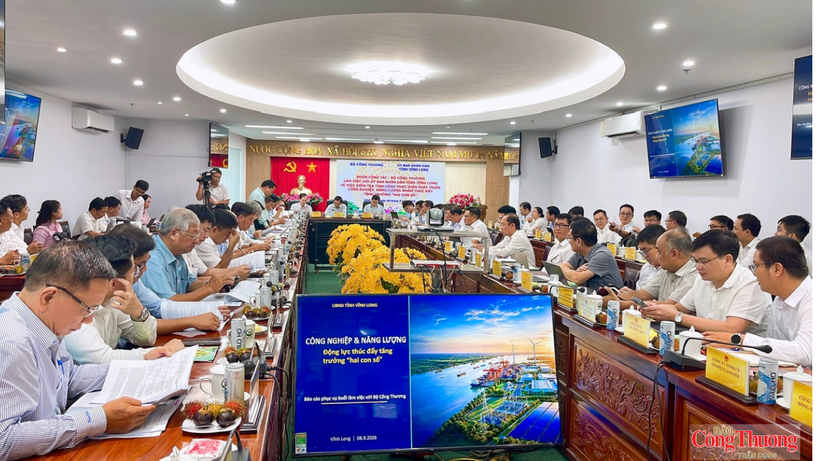
Concluding the working session, Deputy Minister Truong Thanh Hoai spoke highly of the results achieved by Vinh Long, saying that the locality possesses significant advantages in agricultural products, food, energy, as well as room for industrial and trade development. These are important foundations for creating new growth momentum.
At the working session.
Regarding industrial development, the province needs to address in a coordinated manner the conditions related to infrastructure, transport, logistics, energy and land. Without synchronous infrastructure, the province will find it difficult to attract major investors, particularly foreign investors.
For industry and energy projects, port infrastructure is of particular importance. The Deputy Minister called on Vinh Long to carefully review the potential for developing its port system and clearly identify which ports can meet requirements, their scale and connectivity capacity. The MoIT will work with the province to study and consider appropriate priorities.
Regarding investment attraction, the province needs to pay attention to investors' financial capacity, project timelines and actual implementation capabilities. Projects with significant potential should be implemented promptly, avoiding situations in which projects are delayed or abandoned, resulting in missed development opportunities for the locality.
In the energy sector, the Deputy Minister said the MoIT is continuing to finalize regulations related to the electricity price framework. The 2026 electricity price framework is currently being circulated for consultation and is expected to be finalized this month, creating a basis for implementing projects in the coming period. He also emphasized the need to continue resolving outstanding transitional power projects, avoiding prolonged delays that could waste resources and affect the locality's development opportunities.
Deputy Minister Truong Thanh Hoai called on Vinh Long in the coming period not to pursue dispersed development, but to clearly identify industries and sectors in which the province has advantages in order to concentrate resources, while making thorough preparations in terms of infrastructure, human resources and other necessary conditions to attract new investment flows.
With advantages in industry, seaports, logistics and energy, Vinh Long province is focusing on removing infrastructure bottlenecks, accelerating projects and attracting high-quality investment to create new room for growth.
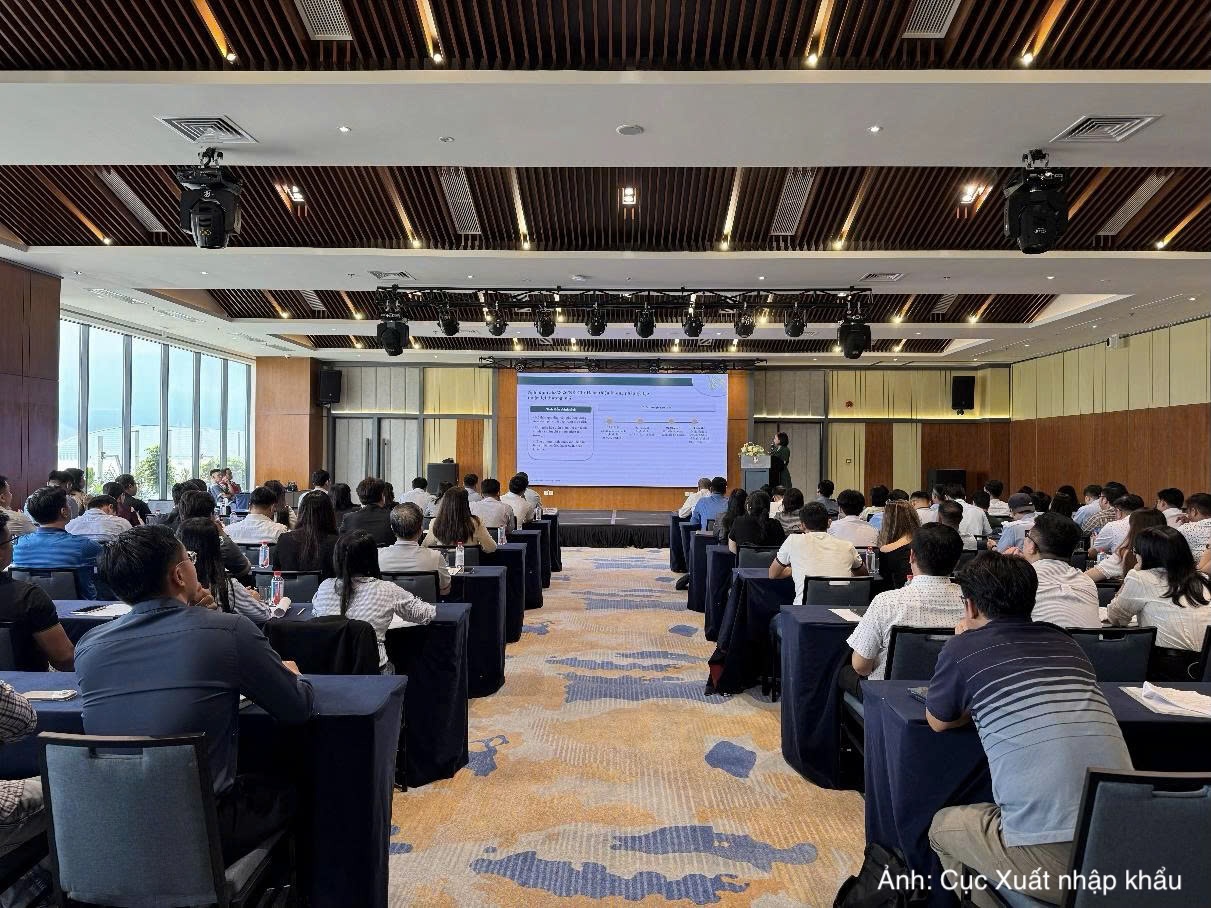
On October 13, the Agency of Foreign Trade under the Ministry of Industry and Trade (MoIT) held a conference in Dong Thap province to disseminate Government Decree No.365/2026/ND-CP dated September 23, 2026, on rice export and import business, and Circular No.65/2026/TT-BCT dated October 1, 2026, issued by the Minister of Industry and Trade, detailing certain provisions and measures for implementing Decree No.365/2026/ND-CP.
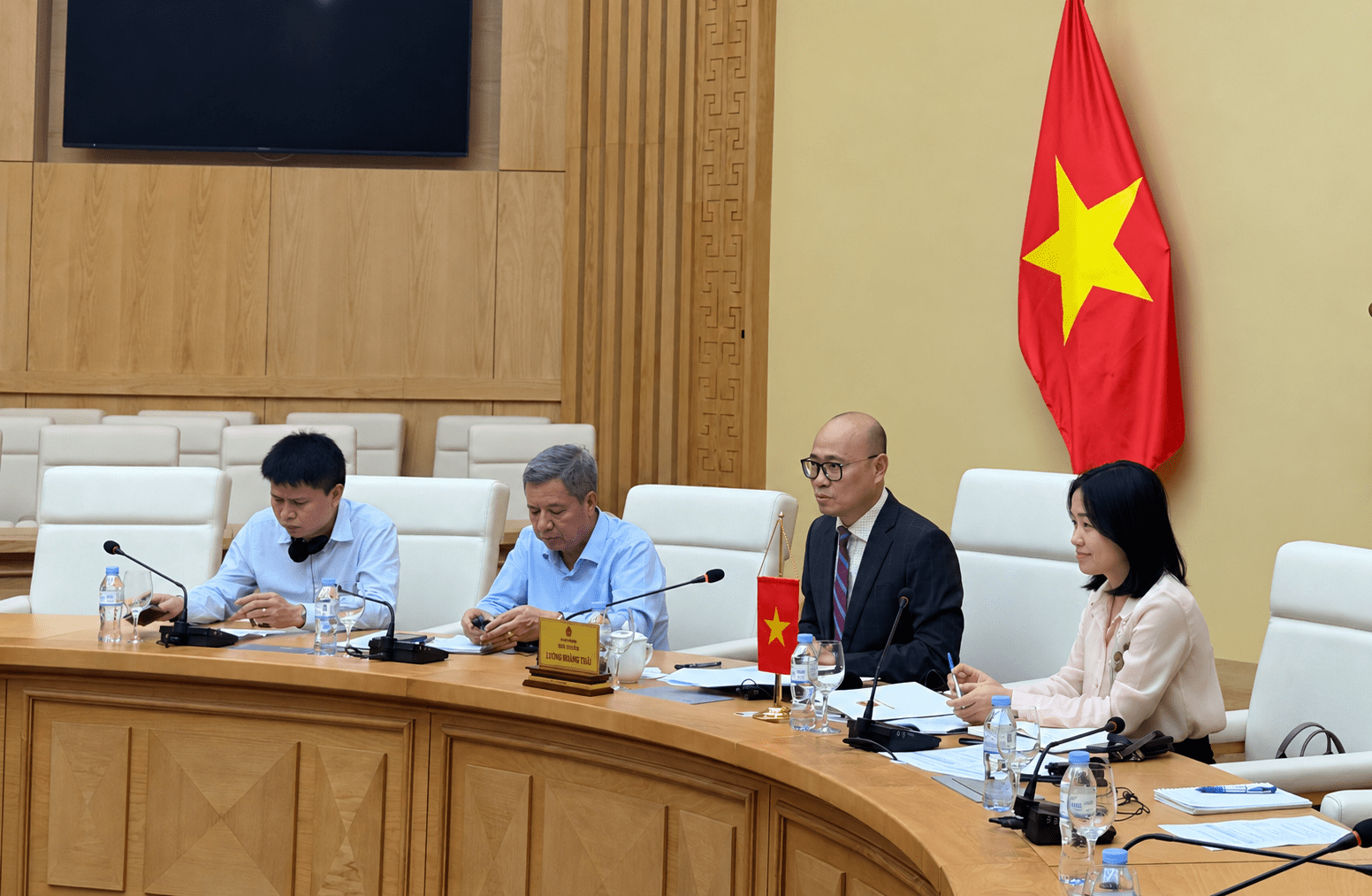
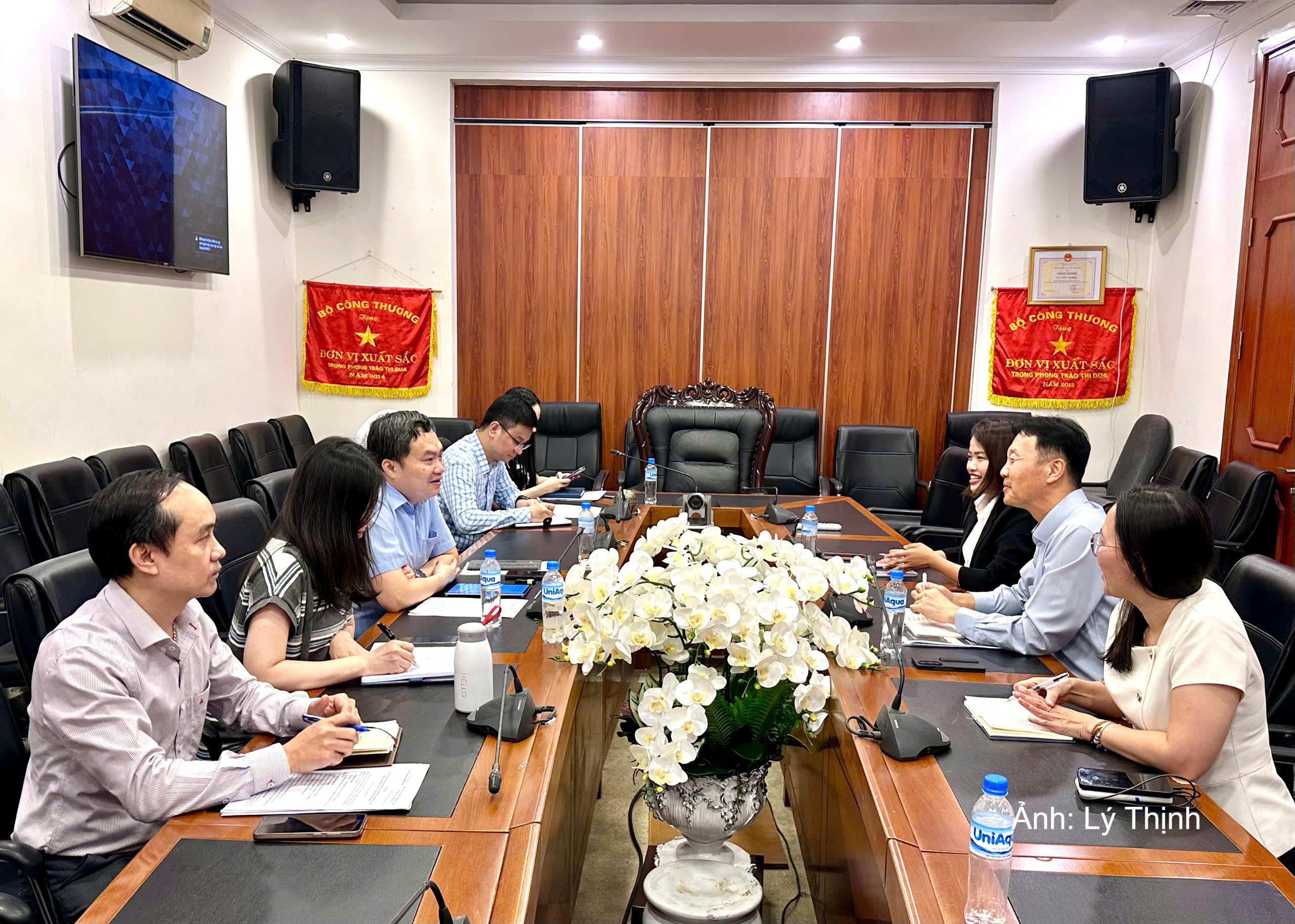
On October 13, Deputy Minister of Industry and Trade Luong Hoang Thai held a working session with MEDEF International, a French business organization, and representatives of French corporations operating in various sectors, including energy, industry, transport, construction and infrastructure development, food and beverages, and services, at the Ministry of Industry and Trade's headquarters.
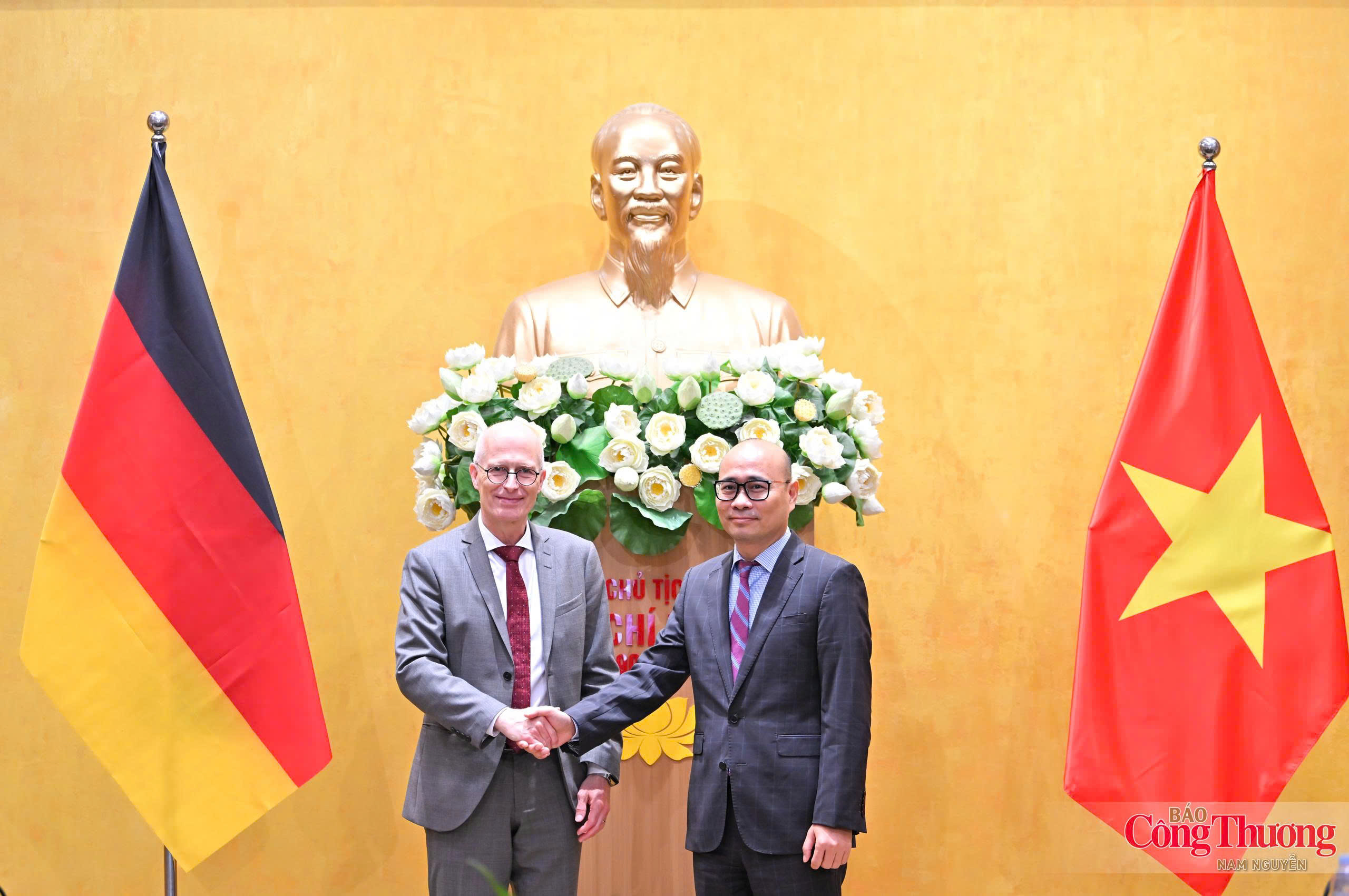
On October 14, Deputy Minister of Industry and Trade Luong Hoang Thai received and held a working session with a delegation from Hamburg, Germany, led by the city's First Mayor Peter Tschentscher at the Ministry of Industry and Trade's headquarters.
The Copyright Office is working closely with relevant agencies to develop plans for inspections and enforcement action against copyright and related rights infringements in the digital environment.
Viet Nam’s cultural industries are poised for growth as development targets become clearer, the digital content market expands and technology creates new ways.
The Vietnam Industry Agency under the Ministry of Industry and Trade and Samsung Vietnam continue to strengthen cooperation in developing supporting industries, enhancing the capabilities of domestic enterprises and expanding opportunities for their participation in global supply chains.
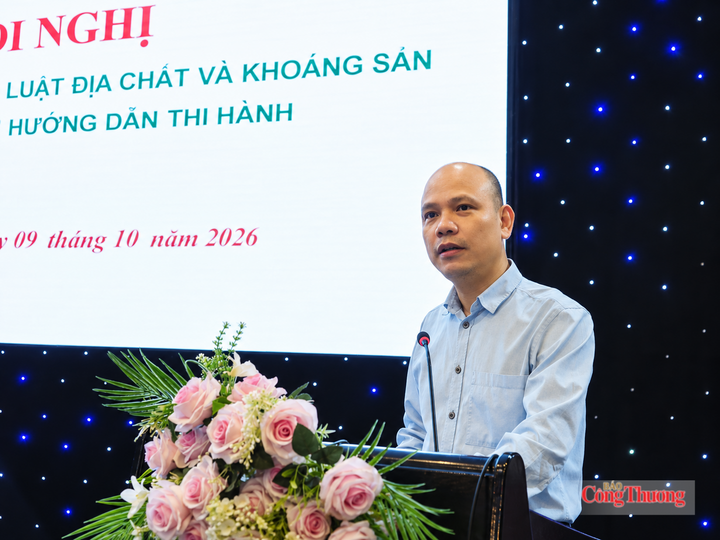
On October 9, the Viet Nam Department of Geology and Minerals, in coordination with the Thai Nguyen Department of Industry and Trade, held a conference in Thai Nguyen province to disseminate the Law on Geology and Minerals and its implementing regulations.
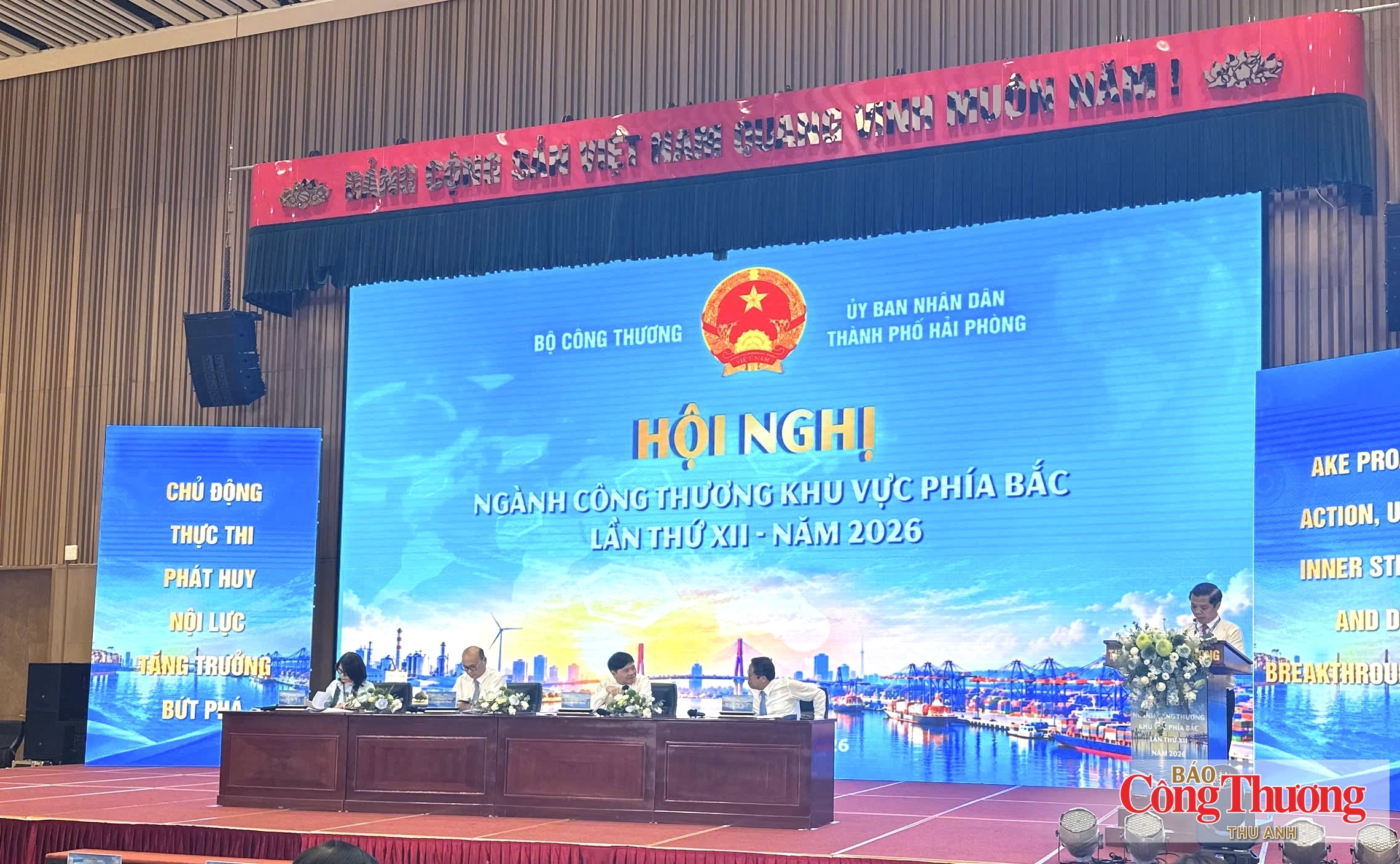
Northern localities are strengthening links in supporting industries, energy and logistics to build competitive value chains and create new growth drivers.
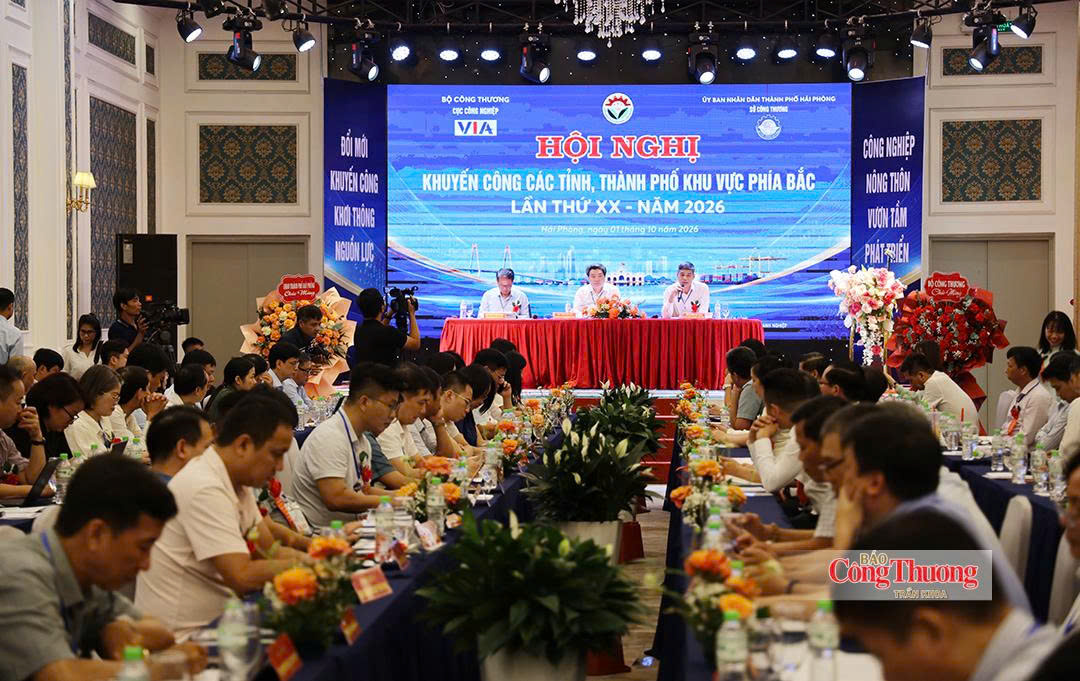
The 20th Industrial Promotion Conference for Northern Provinces and Cities in 2026 was held in Hai Phong City on October 1, with discussions focusing on renewing industrial promotion activities.
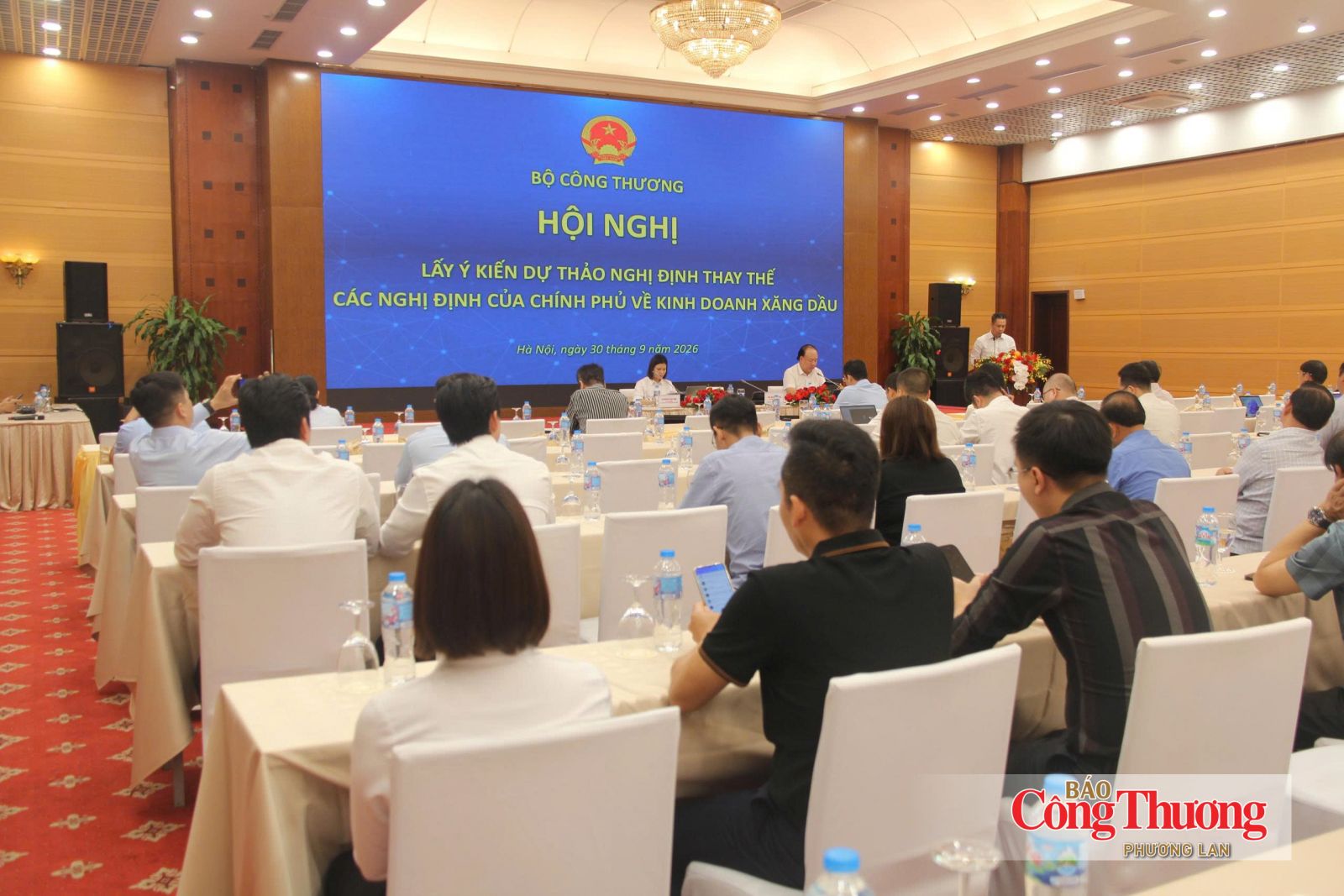
On September 30 in Ha Noi, the Ministry of Industry and Trade (MoIT) held a conference to gather broad feedback on a draft decree replacing the Government’s existing decrees on petroleum trading.