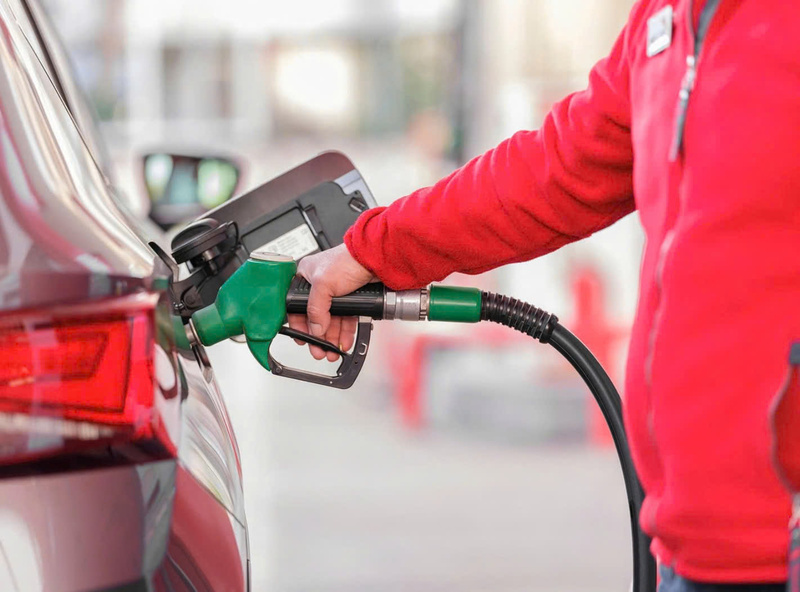
The Government has issued Resolution No. 19/2026/NQ-CP to streamline, decentralise and simplify administrative procedures and business conditions in the petroleum sector.
The Government has issued Resolution 19 on cutting, decentralising and simplifying administrative procedures and business conditions under the management of the Ministry of Industry and Trade.
Cutting procedures, decentralising management
The Government has issued Resolution 19 dated April 29, 2026 on cutting, decentralising and simplifying administrative procedures and business conditions under the management of the Ministry of Industry and Trade. The streamlining and decentralisation apply to 10 sectors, including chemicals, electricity, tobacco, petroleum, e-commerce, international trade, import-export, trade promotion, commodity exchanges and local industry.
Resolution No. 19/2026/NQ-CP focuses on simplifying procedures and cutting petroleum business conditions, contributing to an improved investment environment.
In the petroleum sector, several notable changes are introduced. Specifically, the administrative procedure for reissuing Certificates of eligibility for acting as general petroleum distributors across two or more centrally governed provinces and cities, as stipulated in Article 17 of Decree No. 83/2014/ND-CP, will no longer be required.
At the same time, the administrative procedure for amending and supplementing such certificates for general petroleum distributors operating in two or more centrally governed localities, as prescribed in Article 17 of Decree No. 83/2014/ND-CP, will also be abolished.
In addition, a number of administrative procedures in the petroleum sector will be simplified, including those related to the issuance, amendment, supplementation and reissuance of Certificates of eligibility for petroleum wholesale traders; petroleum distribution traders; Certificates of eligibility for retail fuel outlets; and Certificates of eligibility for retail petroleum agents.
Cutting petroleum business conditions
The Resolution also removes a number of business conditions in the petroleum sector stipulated in Articles 7, 13, 19, 22 and 24 of Decree No. 83/2014/ND-CP.
For petroleum wholesale traders, enterprises must be established in accordance with the law. They are required to have specialised wharves within Vietnam’s international port system capable of receiving petroleum tankers or other petroleum transport vehicles with a minimum capacity of 7,000 tonnes, owned, co-owned or leased for at least five years.
They must also have import petroleum storage facilities with a minimum capacity of 15,000 cubic metres to directly receive fuel from tankers and other specialised transport vehicles, owned or leased for at least five years.
Additionally, they must maintain a distribution system comprising at least 10 retail fuel outlets under ownership or lease for at least five years, including at least five owned outlets, and at least 40 general agents, retail agents or franchised petroleum retailers within the distribution network.
For aviation fuel wholesale traders, the requirement to have a distribution system as stipulated in Clause 5, Article 7 of Decree No. 83/2014/ND-CP is removed. However, they must meet additional conditions, including having transport vehicles and aircraft refuelling equipment that comply with aviation fuel standards, owned or leased for at least five years.
They must also have storage facilities at airports with equipment and infrastructure meeting aviation fuel standards, owned or leased for at least five years, as well as testing laboratories with sufficient capacity, either owned or leased, to verify aviation fuel quality in accordance with national and international standards.
For petroleum distribution traders, enterprises must be established in accordance with the law. They must operate a distribution system including at least five retail fuel outlets under ownership or lease for at least five years, of which at least three are owned, and at least 10 retail outlets operated by agents or franchised retailers that have been granted Certificates of eligibility for retail petroleum business in accordance with regulations.
For retail petroleum agents and franchised retailers, enterprises must be legally established and must have retail fuel outlets under ownership or lease for at least five years, which have been granted Certificates of eligibility for retail petroleum business in accordance with Article 25 of Decree No. 83/2014/ND-CP.
For retail fuel outlets, they must be owned or leased for at least five years by petroleum agents, general agents, franchised retailers, distribution traders, wholesale traders or petroleum-producing wholesalers. The applicant must be named on the Certificate of eligibility for retail petroleum business. In cases of leasing, the lessee must be named on the certificate.
Such outlets must be designed, constructed and equipped in compliance with national technical standards for fuel stations, ensuring requirements for fire prevention and environmental protection.
At the same time, business conditions for petroleum port and storage leasing services stipulated in Article 27 of Decree No. 83/2014/ND-CP, as well as conditions for petroleum transportation services stipulated in Article 28 of the same decree, are abolished.
The Resolution takes effect from April 29, 2026. Article 3 and Appendix I will take effect 30 days after the Resolution comes into force. The Resolution will expire on March 1, 2027, unless relevant provisions are replaced or newly issued and come into force earlier.
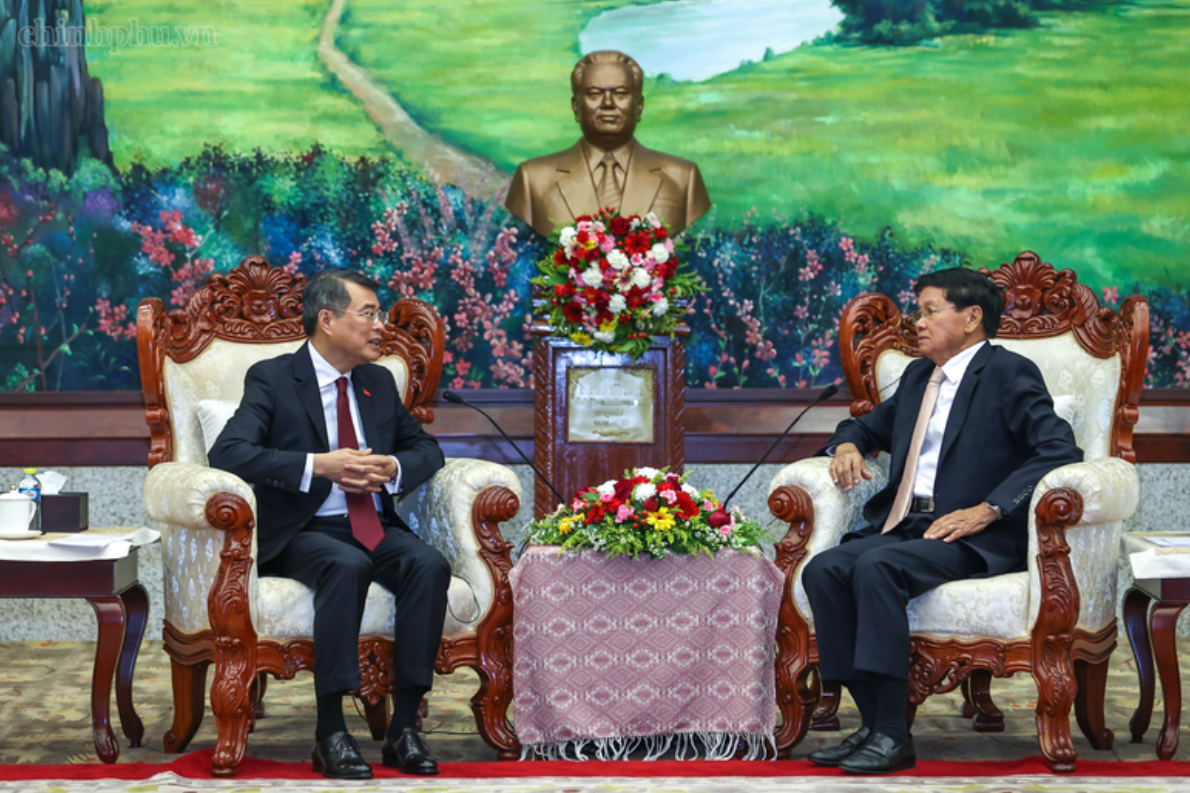
Prime Minister Le Minh Hung on October 8 paid a courtesy call on Lao General Secretary and President Thongloun Sisoulith in Vientiane as part of his on-going official visit to Laos.
The two sides expressed their delight at the positive developments in the bilateral relations in recent years, noting that there remains significant room for greater cooperation and complementarity, particularly in trade, investment and economic ties. They also held extensive discussions on strategic directions to further deepen and strengthen bilateral relations in a more substantive and practical manner.
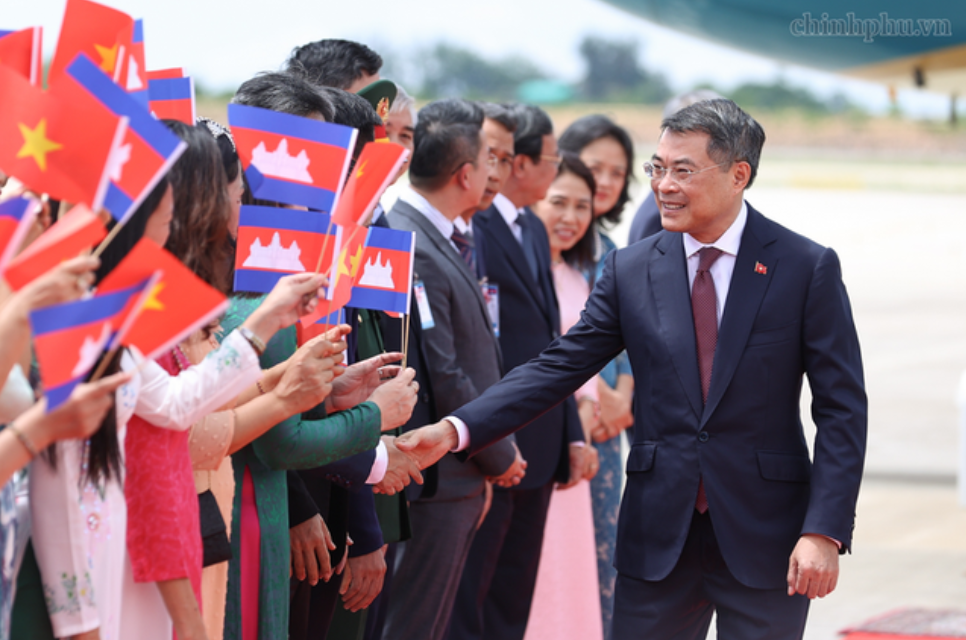
Prime Minister Le Minh Hung arrived in Phnom Penh on Friday afternoon, starting his two-day official visit to Cambodia at the invitation of Cambodian counterpart Hun Manet.
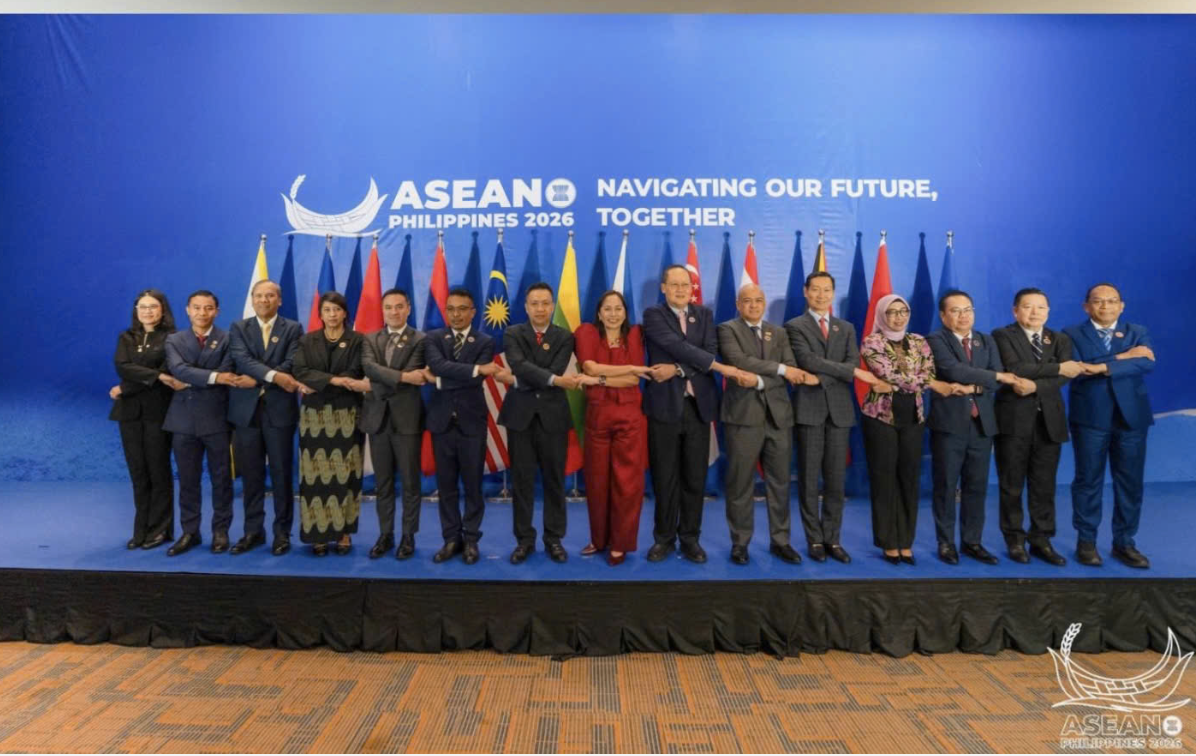
On 7 October 2026, the 44th ASEAN Ministers on Energy Meeting (AMEM 44) was held in Manila, the Philippines, under the chairmanship of Sharon S. Garin, Secretary of the Department of Energy of the Philippines. The meeting brought together energy ministers from ASEAN Member States, the Secretary-General of ASEAN, the ASEAN Centre for Energy, and representatives of ASEAN energy sector bodies and specialised networks. Deputy Minister of Industry and Trade Nguyen Viet Son led the Vietnamese delegati
A new MoIT circular requires commodity exchanges and clearing centers to share real-time trading data and complete system connectivity with regulators nationwide now