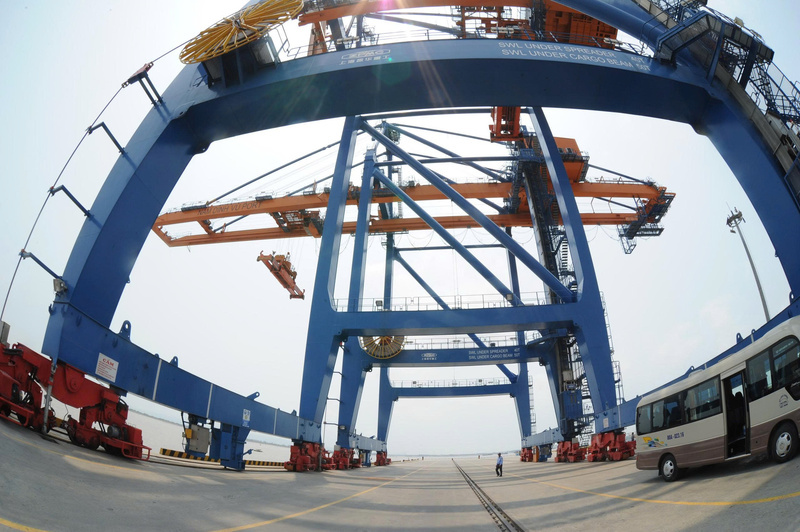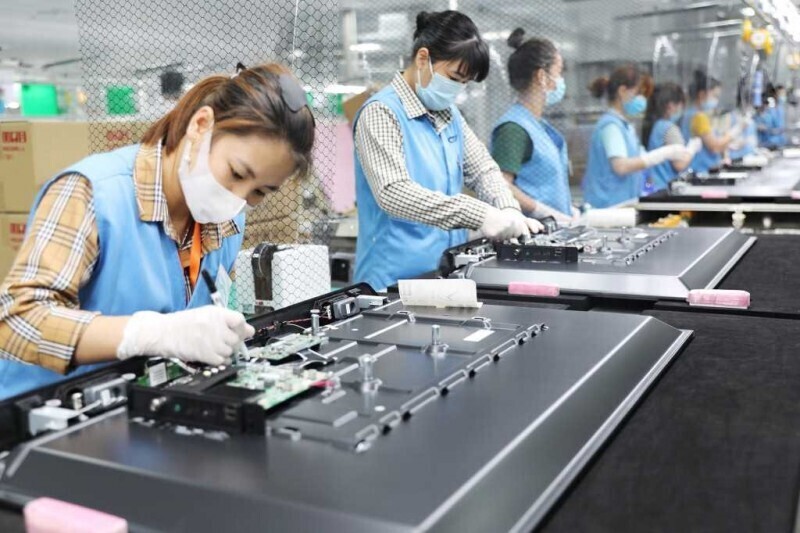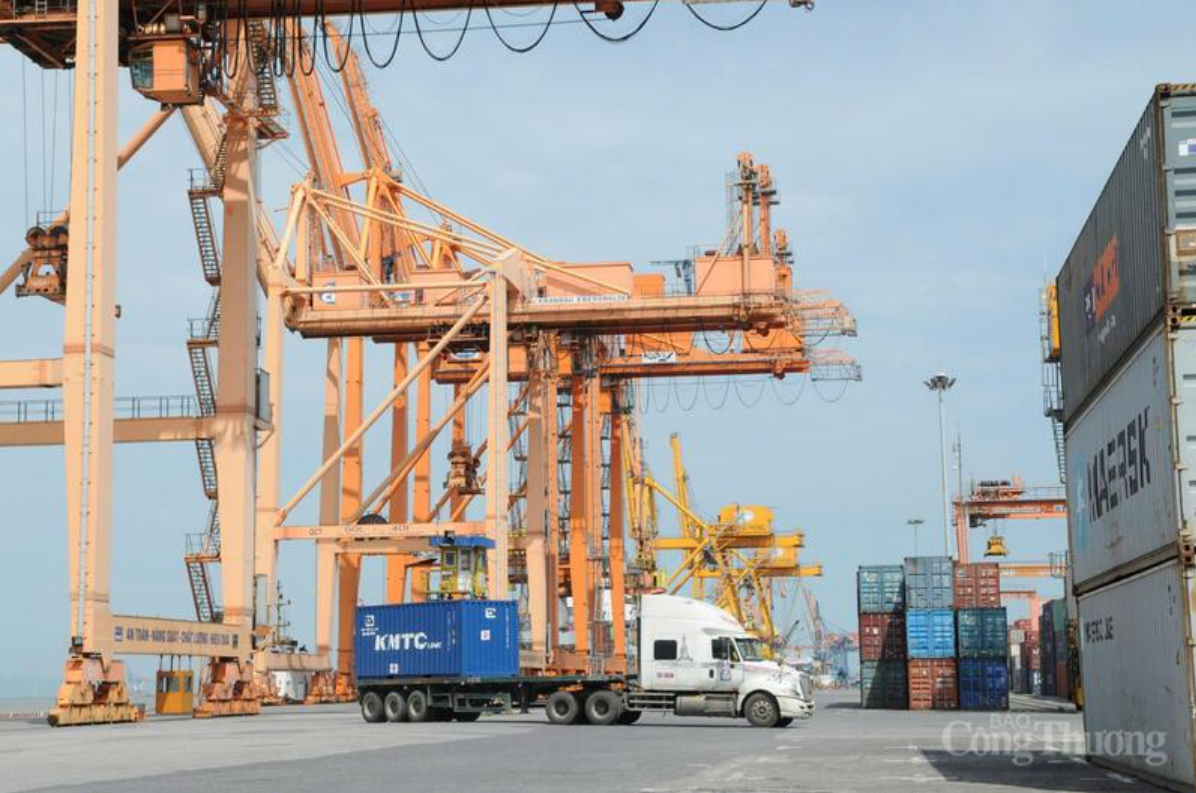
Export - import turnover exceeds USD 839 billion
19:05 | 23/03/2025 21:56 | 06/12/2025Trade
Vietnam’s total export-import turnover reached USD 839.75 billion in the first 11 months of 2025, posting a trade surplus of USD 20.53 billion.


A strong foundation for growth
Vietnam is positioned within one of the world’s most dynamic e-commerce regions, the Asia-Pacific. The country has already built a “solid foundation” to enter a higher stage of development, with one of the fastest e-commerce growth rates in Southeast Asia and an online retail market valued at USD 16.4 billion.
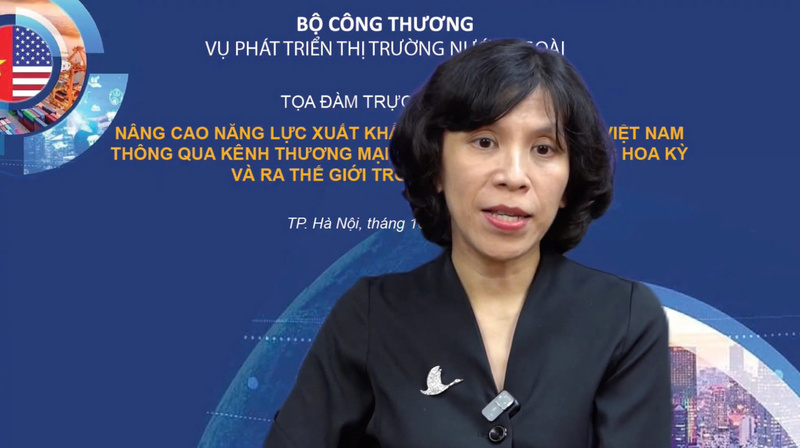
Lai Viet Anh, Deputy Director of the E-Commerce and Digital Economy Agency, Ministry of Industry and Trade.
Speaking at the online seminar “Enhancing Export Capacity of Vietnamese Enterprises through E-commerce to the U.S. and Global Markets in the New Context,” Lai Viet Anh, Deputy Director of the E-Commerce and Digital Economy Agency under the Ministry of Industry and Trade (MoIT), emphasized that Vietnam still enjoys enormous growth potential. This is supported by a business community, particularly small and medium-sized enterprises that are agile, willing to experiment with new technologies, and driven by strong ambition. International organizations even rank Vietnam among the regional leaders in e-commerce adoption among SMEs.
Not only is Vietnam advantaged by its growing digital infrastructure, it also possesses traditional export strengths. “Vietnam is among the world’s leading exporters in key sectors such as agriculture, fisheries, textiles, footwear and electronic components,” Lai noted. However, only around 20% of enterprises currently utilize e-commerce for export activities, meaning the potential to expand through online channels remains immense. Cross-border e-commerce is becoming an important complement to traditional export methods, especially in terms of accessing consumers directly in non-traditional markets and reducing dependence on intermediary distribution systems, which have been heavily affected by global trade disruptions.
A new policy landscape to support businesses
Despite positive prospects, many businesses, especially small, micro, and medium-sized enterprises still face challenges when exporting via digital platforms. According to Lai, the greatest difficulty lies in meeting stringent technical, testing, safety and compliance requirements imposed by importing countries. “The US is a typical example, with some of the strictest regulations in the world,” she stressed.
Businesses also face limitations in leveraging digital tools to optimize operational costs. Although global e-commerce platforms offer strong support tools, mastering them and converting skills into actual orders requires significant time and resources. Participation costs from store setup to marketing and daily operations remain a key concern for small enterprises.
Language barriers, payment systems, and especially logistics continue to be major bottlenecks. When exporting directly to consumers, orders tend to be small in size and value, making logistics costs per product significantly higher. “Cost optimization is still a major challenge for small firms seeking to expand through cross-border e-commerce,” Lai observed.
However, these challenges do not equate to dead ends. Lai highlighted several major government policies that have recently created an enabling environment for enterprises to accelerate digital transformation and leverage cross-border e-commerce more effectively.
First, Decision No.645/QD-TTg (2020) approving the National E-commerce Development Master Plan for 2021-2025 focuses on training, capacity-building and providing digital solutions for businesses, while promoting market expansion through both domestic and international e-commerce.
Second, Decree No.80/2021/ND-CP guiding the Law on SME Support, provides clear financial assistance mechanisms. Notably, businesses can receive support covering up to 50% of costs to open and maintain online storefronts on domestic and international platforms. According to Lai, this is a “highly practical form of support” that encourages enterprises to confidently pursue digital export channels.
Third, Decision No.1415/QD-TTg (2021) supports enterprises in accessing foreign distribution networks, targeting at least 5,000 Vietnamese businesses participating in cross-border e-commerce. Training, market-linkage and standards compliance programs help enterprises proactively enter new markets.
Cross-border e-commerce is becoming a key driver for expanding Vietnam’s export markets. As digital capabilities strengthen, platform participation costs are reduced, and operational bottlenecks are gradually removed, this channel promises to create strong momentum for enhancing Vietnam’s position in global value chains.
19:05 | 23/03/2025 21:56 | 06/12/2025Trade
19:05 | 23/03/2025 15:49 | 06/12/2025Trade

19:05 | 23/03/2025 23:59 | 05/12/2025Trade
19:05 | 23/03/2025 16:05 | 03/03/2026News and Events
19:05 | 23/03/2025 16:04 | 03/03/2026News and Events

19:05 | 23/03/2025 15:18 | 03/03/2026Tourism
19:05 | 23/03/2025 14:38 | 03/03/2026News and Events
19:05 | 23/03/2025 11:24 | 03/03/2026Investment