Vietnam’s total export-import turnover reached USD 839.75 billion in the first 11 months of 2025, posting a trade surplus of USD 20.53 billion.
Trade shows strong performance
According to data released by the General Department of Statistics under the Ministry of Finance on December 6, Vietnam’s merchandise trade in November stood at USD 77.06 billion, down 5.4% from the previous month but up 15.6% year-on-year.
For the January - November period, total export - import turnover climbed 17.2% against the same period of 2024. Exports rose 16.1% while imports increased 18.4%. As a result, the country recorded a trade surplus of USD 20.53 billion.
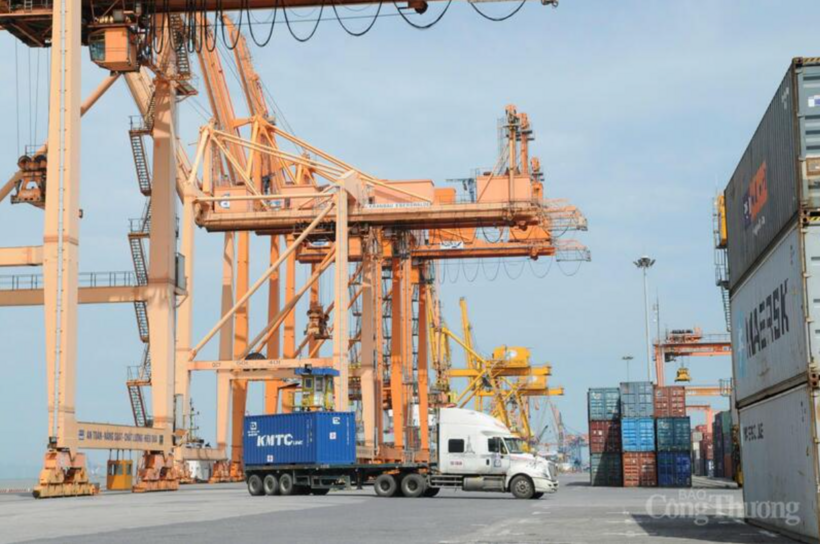
Bright spots emerge in trade after 11 months. Photo: Can Dung
Exports in November reached USD 39.07 billion, down 7.1% month-on-month but up 15.1% year-on-year. Overall, shipments in the first 11 months were valued at USD 430.14 billion, of which the domestic sector contributed USD 102.41 billion (down 1.7%) and the foreign-invested sector (including crude oil) accounted for USD 327.73 billion (up 23.1%).
Processed industrial goods continued to dominate, with USD 381.72 billion in export value, accounting for 88.7% of total shipments.
On the other side, imports in November stood at USD 37.98 billion, down 3.7% month-on-month but up 16% year-on-year. Cumulatively, imports reached USD 409.61 billion, with USD 128.4 billion from the domestic sector (up 1.7%) and USD 281.21 billion from the foreign-invested sector (up 28%).
Production materials made up the bulk of imports, amounting to USD 383.96 billion or 93.7% of total import turnover.
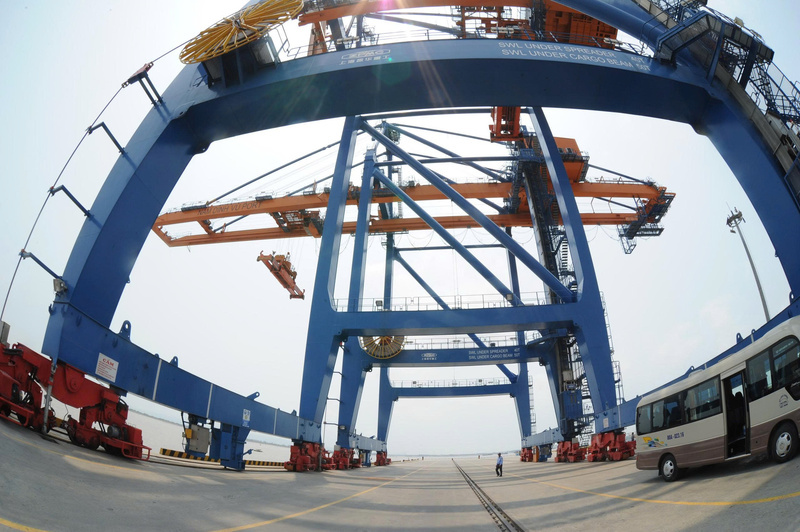
The US remained Vietnam’s largest export market with USD 138.6 billion in the first 11 months of 2025, while China continued to be the largest supplier with USD 167.5 billion in imports.
Preliminary estimates show a trade surplus of USD 1.09 billion in November alone. From January to November, the domestic sector posted a trade deficit of USD 25.99 billion, while the foreign-invested sector recorded a surplus of USD 46.52 billion.
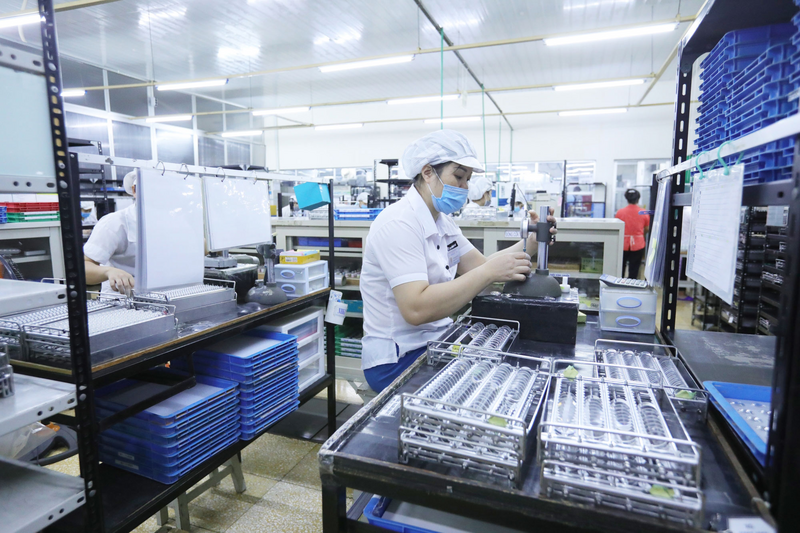
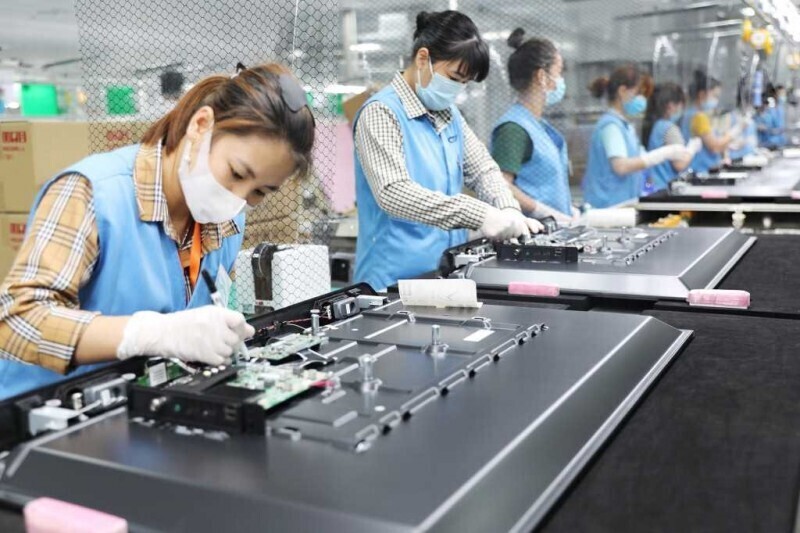
Key export items contributed significantly to overall growth. Computers, electronic products and components remained the biggest driver, earning USD 96.91 billion, up 48.5% year-on-year, maintaining their position as Vietnam’s largest export group. Other major earners included machinery and equipment (USD 53.3 billion), phones and components (USD 52.6 billion), and textiles and garments (USD 35.9 billion).
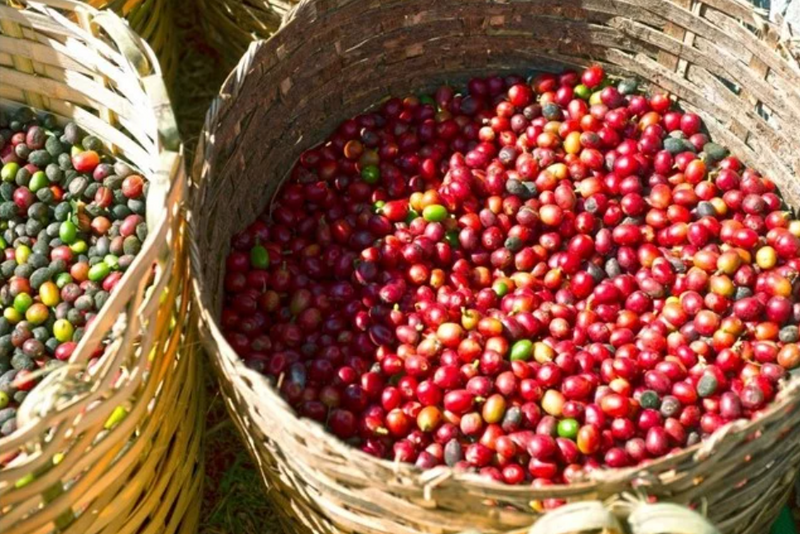
In agriculture, fruit and vegetable exports continued to shine, with durian leading the sector. According to the Vietnam Fruit and Vegetable Association (VINAFRUIT), durian exports reached more than USD 3.33 billion in the first 10 months, up 10.4% year-on-year and the highest level ever recorded. With a steady upward trajectory, VINAFRUIT Secretary-General Dang Phuc Nguyen forecast that durian exports could reach USD 4 billion in 2025, with an estimated USD 3.7 billion in the first 11 months.
To support fruit and vegetable shipments, Vietnam now has over 9,200 plantation area codes and more than 1,730 packing-house codes for fresh fruits such as dragon fruit, mango, star apple, banana, pomelo, seedless lime, longan, lychee, black jelly, durian and sweet potato destined for China, the US, Australia, New Zealand, the RoK and Japan, among others.
Year-end momentum strengthens
Trade has maintained its crucial role in Vietnam’s economic growth, with strong monthly turnover and rising demand from key markets.
In China, one of Vietnam’s top trading partners, Lang Son province will pilot two-way cargo transport via dedicated routes and checkpoints at the Huu Nghi (Vietnam) - Youyi Guan (China) international border gate pair from December 10, 2025 to December 9, 2026. The scheme covers dedicated cargo routes at markers 1119 - 1120 (Huu Nghi - Youyi Guan), 1088/2 - 1089 (Tan Thanh - Po Chai) and the checkpoint area at markers 1104 - 1105 (Coc Nam - Lung Nghiu), aiming to facilitate smoother flows and boost bilateral trade.
In the longer term, speaking at the Vietnam Export Promotion Forum 2025, Director of the Vietnam Trade Promotion Agency (Vietrade) Vu Ba Phu noted that markets such as the US, the EU, Japan, the Middle East, and Africa still offer significant untapped potential. Vietnamese enterprises, he stressed, must accelerate risk management, product development, standardisation, supply-chain transparency and digital commerce to enhance competitiveness.
Vietrade will shift from supporting individual firms to promoting entire industry clusters and value chains. Green transformation, clean production, low-carbon logistics and transparent traceability, will be a key pillar in future export strategies.
The Ministry of Industry and Trade (MoIT) plans to develop a digital trade-promotion ecosystem integrating enterprise, market and product data, and applying Big Data and AI to analysis and forecasting. The ministry will also build a national export branding system and roll out the “Go Global” program to designate leading enterprises as flagships for Vietnamese goods in global markets.
Vietnam’s Ministry of Industry and Trade urges businesses to diversify markets and strengthen risk management amid escalating US, Israel, Iran tensions.
The success of the upcoming election will lay the groundwork for building a truly reformed, professional, and action-oriented 16th National Assembly capable of steering the country’s institutional reform agenda.
As transport costs make up a significant share of travel budgets, investing in spacious, stable vehicles is becoming essential for turning every journey into a comfortable and premium experience.
Prime Minister Pham Minh Chinh called for more effective use of the Vietnam - EAEU free trade pact to boost trade, investment, logistics and regional connectivity.
The revised Investment Law 2025 reduces conditional sectors and eases procedures, creating stronger momentum to attract and retain foreign capital in Vietnam.
Rising tensions in the Middle East may drive up oil prices and freight costs, disrupting Vietnam’s import-export and supply chains the Import-Export Department warns
Vietnam surpassed all 2025 socio-economic targets, with GDP growth over 8%, strong FDI inflows and record trade turnover, laying groundwork for double-digit growth.
Despite short-term fluctuations, exports to the UAE remain above USD 5 billion, reflecting a stable foothold as CEPA paves the way for deeper cooperation.