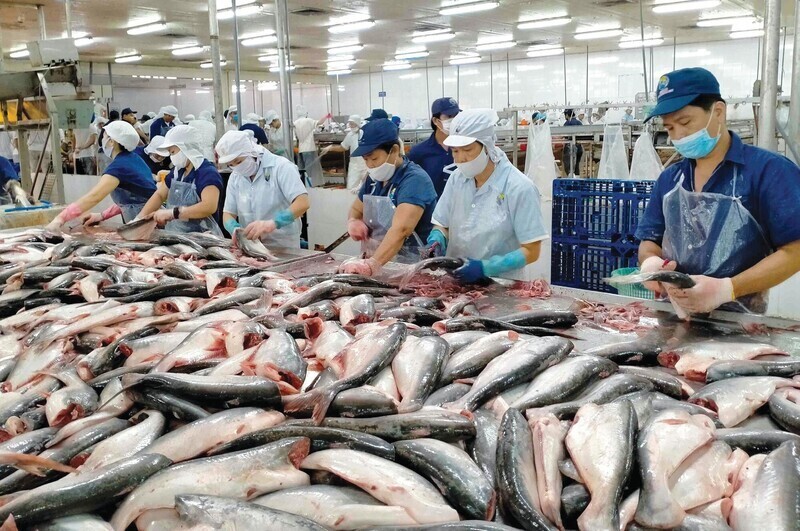
Seafood exports hit USD 10.38 billion in 11 months, sustaining strong momentum despite natural disasters, disease risks and market volatility.
Major markets sustain solid growth momentum
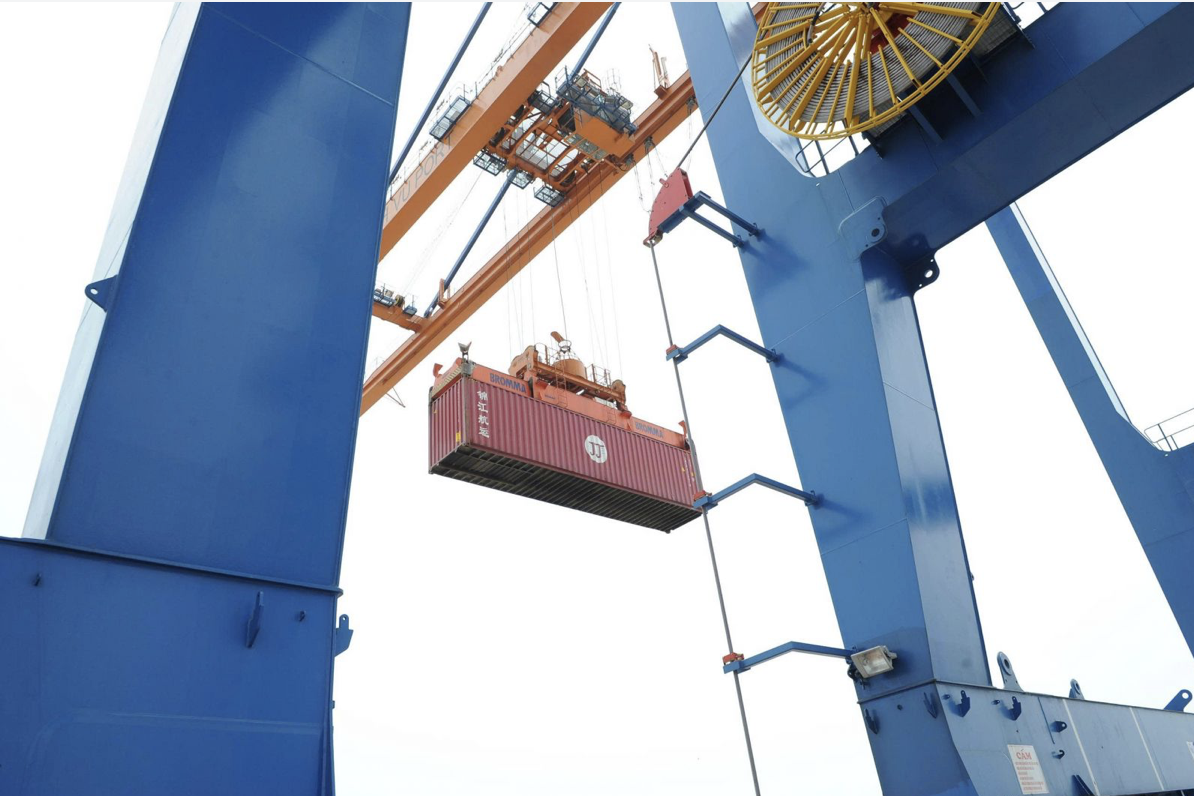
According to the Ministry of Agriculture and Environment, seafood exports in November 2025 were estimated at USD 1.05 billion, bringing the cumulative 11 month value to USD 10.38 billion, an increase of 13.2% year-on-year. China, US, and Japan remained the top three markets, accounting for 20.2%, 17.6%, and 15% of export value, respectively. Shipments to China rose 33.7%, to US 7.5%, and to Japan 10.5%. Among the 15 largest import markets, Brazil reported the strongest growth at 37.4%, while exports to Russia fell 3.6%.
The Vietnam Association of Seafood Exporters and Producers (VASEP) assessed the 11 month performance as a significant milestone. Although the third quarter showed signs of slowing due to countervailing duties, key product groups maintained firm momentum, creating a solid basis for full-year exports to potentially reach USD 11 billion.
Vietnam’s seafood sector has overcome substantial challenges and sustained stable growth thanks to strengthened oversight of farming areas, improved processing capacity, and more effective access to international markets.
Despite these encouraging results, the industry continues to face major risks. According to Nhu Van Can, Deputy Director of Fisheries and Fisheries Surveillance under the Ministry of Agriculture and Environment, recent year-end natural disasters caused extensive damage, wiping out infrastructure, broodstock, and essential materials in many farming zones. These losses directly affect production plans for early 2026, particularly for species with long farming cycles such as lobster and high-value marine fish.
Vietnam’s seafood exports reached an estimated USD 1.05 billion in November 2025, lifting the 11 month total to USD 10.38 billion, up 13.2% year-on-year.
A recent report by the Food and Agriculture Organization of the United Nations (FAO) highlights the severe impacts of natural disasters on the agricultural sector, emphasizing the heightened risks faced by fisheries and aquaculture. Over the past three decades, global losses in fisheries have totaled billions of dollars, with more than half occurring in the last ten years. FAO recommends broader adoption of digital transformation, artificial intelligence, and blockchain to monitor farming environments, track damages, support recovery efforts, and integrate climate-risk considerations into fisheries policies and early-warning systems.
Sustainability and value-chain development as key growth drivers
According to Rabobank’s Global Aquaculture Outlook 2026, global output is expected to grow, prices remain stable or rise, and farming costs drop. Carp production is forecast to increase 6%, sea bass and bream 4%, shrimp and tilapia 3%, and pangasius and salmon 2%. For shrimp, European demand is expected to grow more than 10% in 2025 but decline in 2026 due to import taxes and stockpiling policies. Meanwhile, global pangasius output is projected to exceed 4.1 million tonnes, with Vietnam contributing nearly 2 million tonnes, up 2% in 2026. Trade tensions and US import duties remain short-term challenges.
Rabobank also notes that the sector is improving thanks to stronger market expectations, lower feed prices, and favorable economic conditions. Adoption of sustainable practices is accelerating, with the share of producers improving animal welfare rising from 59% to 79%, and 72% reducing environmental impacts. Producers meeting sustainability standards continue to secure higher prices.
A survey by the Global Seafood Alliance (GSA) found that Chinese consumers are increasingly willing to pay premiums for certified seafood, though just 500.000 tonnes out of the country’s 60.8 million tonnes of farmed seafood currently carry BAP certification.
The global frozen shrimp market is projected to expand from USD 18.742 million in 2025 to USD 32.847 million in 2035, an increase of 75.3% over 10 years, equivalent to a CAGR of 5.8%. Rising demand for convenient food, high-protein diets, expanded aquaculture, and advances in processing technology are driving this growth. These trends create major opportunities for Vietnamese shrimp to enhance export value.
However, Le Van Quang, Chairman and CEO of Minh Phu Seafood Corporation, stressed that inadequate farming-zone planning remains the biggest bottleneck, leading to complex disease outbreaks and high production costs, sometimes 30% higher than in India and twice those in Ecuador undermining competitiveness. If disease control and zoning issues are resolved, he noted, Vietnam’s shrimp industry could fully rise to global leadership.
In response, Deputy Director Nhu Van Can said Vietnam’s seafood sector is accelerating efforts to restructure production spaces to adapt to climate change, reviewing farming-zone planning, adjusting stocking densities, curbing spontaneous development, and reducing pollution and disaster risks. Investments in priority-area infrastructure, automated environmental monitoring systems, digital technologies, and durable, climate-resilient cage materials are being encouraged to strengthen resilience.
Value-chain development is also a strategic priority, with the sector focusing on stronger linkages among enterprises, cooperatives, and farmers; balancing supply and demand; sharing risks; and enhancing overall chain resilience. The industry is proposing the introduction of marine-farming insurance to provide a financial buffer against increasingly complex natural disasters.
While 2026 is not expected to replicate the surge of 2025, the global seafood industry is moving toward greater stability, broader product diversification, more sustainable development, rebalanced trade flows, and increased investment in premium seafood. Nonetheless, geopolitical and economic uncertainties as well as rising competition from India, Ecuador, and Indonesia remain challenges that require close monitoring.
“Vietnamese enterprises must proactively restructure markets, develop value-added products, invest in processing technologies, and elevate sustainability standards to secure long-term growth,” said Le Hang, Deputy Secretary-General of VASEP.
Deputy Minister of Agriculture and Environment Phung Duc Tien emphasized the need to maintain growth momentum through December while preparing for the first quarter of 2026 “a starting point that is also the finish line for the entire year.”
“Recent severe natural disasters have clearly exposed vulnerabilities in seafood production. Yet from these challenges, long-term structural solutions are gradually taking shape, steering the sector toward safer, more adaptive, and more sustainable development,” Deputy Minister Phung Duc Tien affirmed.
Vietnam’s Ministry of Industry and Trade urges businesses to diversify markets and strengthen risk management amid escalating US, Israel, Iran tensions.
The success of the upcoming election will lay the groundwork for building a truly reformed, professional, and action-oriented 16th National Assembly capable of steering the country’s institutional reform agenda.
As transport costs make up a significant share of travel budgets, investing in spacious, stable vehicles is becoming essential for turning every journey into a comfortable and premium experience.
Prime Minister Pham Minh Chinh called for more effective use of the Vietnam - EAEU free trade pact to boost trade, investment, logistics and regional connectivity.
The revised Investment Law 2025 reduces conditional sectors and eases procedures, creating stronger momentum to attract and retain foreign capital in Vietnam.
Rising tensions in the Middle East may drive up oil prices and freight costs, disrupting Vietnam’s import-export and supply chains the Import-Export Department warns
Vietnam surpassed all 2025 socio-economic targets, with GDP growth over 8%, strong FDI inflows and record trade turnover, laying groundwork for double-digit growth.
Despite short-term fluctuations, exports to the UAE remain above USD 5 billion, reflecting a stable foothold as CEPA paves the way for deeper cooperation.