RCEP opens up export opportunities for Vietnamese businesses, but meeting market standards is key to securing orders and achieving sustainable growth.
Businesses proactively tap market opportunities
With the participation of all 10 ASEAN member states, alongside Australia, China, the Republic of Korea, Japan and New Zealand, the Regional Comprehensive Economic Partnership Agreement (RCEP) has established a major trading bloc, accounting for approximately 30% of global GDP, nearly 30% of the world's population and around 30% of global trade. This vast market creates significant room for Viet Nam's exports, particularly as businesses seek to diversify their markets, expand their customer base and become more deeply integrated into regional supply chains.
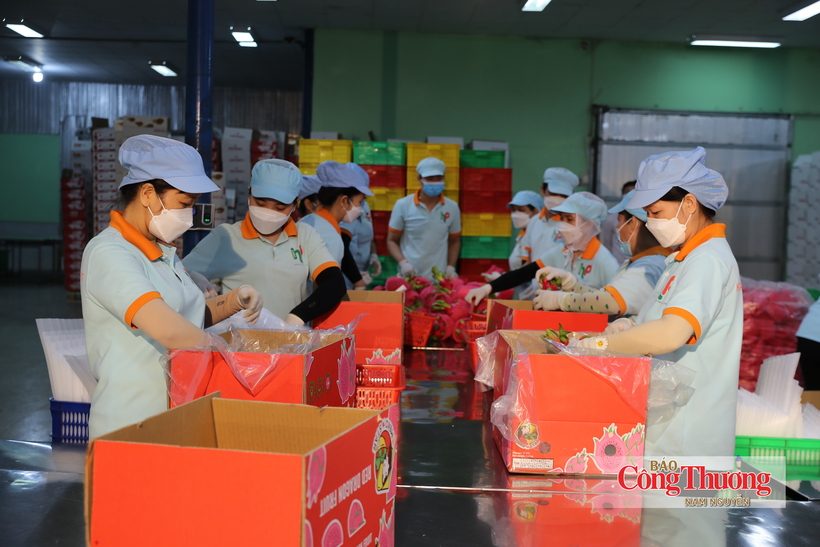
The RCEP creates opportunities for Vietnamese enterprises to participate more deeply in regional supply chains.
Speaking to the Newspaper of Industry and Trade about leveraging export opportunities under the RCEP, Nguyen Thi Huyen, CEO of the Viet Nam Cinnamon and Star Anise Production and Export Joint Stock Company (Vinasamex), said that alongside its focus on exports to Europe and the United States, the company is actively tapping markets within the RCEP bloc, particularly Japan, the Republic of Korea and Australia. Since the agreement took effect, Vinasamex has seen positive impacts, including expanded business cooperation opportunities with Japanese partners, supported by RCEP tariff preferences, optimized transportation costs and the quality of Vietnamese agricultural products.
Sharing the perspective of a coffee exporter, Nguyen Huu Dai, Director of Vinafood Import-Export Joint Stock Company, noted that among RCEP members, China stands out as a neighboring market with considerable scale and potential, thanks to its large population. This is also an important market for Vietnamese enterprises seeking to capitalize on opportunities within the RCEP region. Vinafood's coffee products are now available on the shelves of several supermarket chains and through online retail channels in China.
In addition to China, ASEAN countries are also, in his view, promising markets for value-added regional specialty agricultural products. Accessing markets across the region not only helps expand sales channels but also creates opportunities to increase the value of Vietnamese agricultural products and develop products that better match consumer demand.
To tap the potential of RCEP markets, keeping abreast of trade commitments and market regulations is essential to helping businesses formulate appropriate export strategies. Nguyen Huu Dai said Vinafood regularly participates in seminars organized by ministries and government agencies, particularly the Ministry of Industry and Trade, to stay updated on the latest regulations under free trade agreements (FTAs), including RCEP. These activities provide the company with additional information to develop appropriate export plans and strategies. "The Ministry of Industry and Trade has provided the business community with detailed and timely information on RCEP's preferences and commitments," he said.
Removing bottlenecks to capitalize on commitments
Practical experience at enterprises shows that meeting market requirements, particularly in high-standard markets such as Japan and the Republic of Korea, requires fundamental changes in production organization and business operations. On this issue, Nguyen Thi Huyen emphasized that both markets impose stringent requirements on documentation, paperwork and transparency throughout the entire value chain. While these requirements pose challenges for exporters, they also create a competitive advantage for businesses that have established integrated production chains and can ensure product traceability.
According to her, gaining access to the Japanese and South Korean markets is also considered an important stepping stone for Vinasamex to expand further into premium markets such as Europe and the United States. To meet partners' requirements, the company has gradually transformed its operating model, moving away from simply purchasing products in bulk for resale to less demanding, lower-priced markets toward systematically organizing production in line with the requirements of each target market.
Quality control and traceability records are maintained through comprehensive logbooks for each shipment, covering every stage from raw material sourcing and processing to production and final sale. "At the same time, Vinasamex has invested in machinery and factory infrastructure, standardized production processes, and engaged international experts to conduct direct assessments of the entire value chain and award internationally recognized certifications," she said.
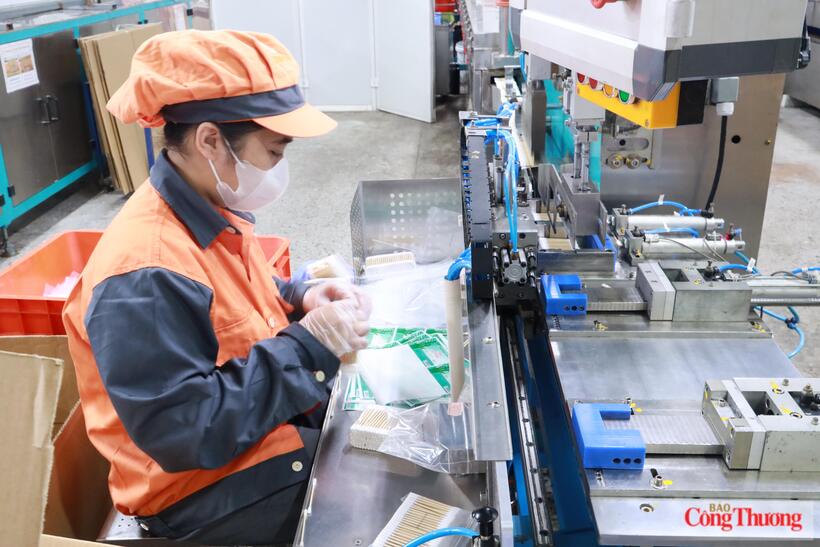
Vietnamese enterprises are proactively investing in technology to improve product quality and meet market requirements.
Director Nguyen Huu Dai said that bringing goods into China requires businesses to overcome numerous trade barriers and comply with stringent regulations. In response, the company is gradually strengthening its capabilities to meet the market's requirements.
Addressing export challenges and improving the effective utilization of the RCEP, Nguyen Huu Dai expressed the hope that businesses would receive additional policy support, including preferential access to credit, assistance with production facilities and infrastructure, and more flexible tax policies. These measures would enable enterprises to strengthen their production capacity and gain access to promising export markets.
He also called for more in-depth business-matching programs through direct trade promotion activities facilitated by the embassies of partner countries, including introductions to potential partners and support in establishing permanent product exhibition spaces to promote business brands. In addition, enterprises need more specialized training on FTAs, with detailed guidance and information-sharing on commitments under RCEP, the E.U.-Viet Nam Free Trade Agreement (EVFTA) and the Comprehensive and Progressive Agreement for Trans-Pacific Partnership (CPTPP). This would help businesses gain a deeper understanding of these agreements and apply their provisions effectively in practice.
Representing the small and medium-sized enterprise (SME) community, Dr. To Hoai Nam, Standing Vice Chairman and Secretary-General of the Viet Nam Association of Small and Medium Enterprises (VINASME), said that SMEs have made significant progress in recent years, shifting their mindset from "selling what they have" to "organizing production and business activities around what the market needs." Nevertheless, a substantial gap remains between their ability to access markets and their actual capacity to meet standards and product traceability requirements.
Dr. To Hoai Nam pointed out that certification, inspection, logistics and dedicated export personnel costs are placing considerable pressure on businesses. Moreover, given their limited scale and resources, SMEs may succeed in securing their first orders but often struggle to maintain the capacity to fulfill commitments consistently while securing a continuous stream of new orders from partners.
Against this backdrop, to help businesses strengthen their capacity to participate in supply chains and capitalize on opportunities offered by FTAs, including RCEP, Dr. To Hoai Nam proposed establishing networks in which larger enterprises lead and support SMEs along industry-specific supply chains. This should be accompanied by mechanisms providing economic incentives, including tax and infrastructure-related support, to encourage larger enterprises to take on this leading role. "However, support measures should ultimately aim to help businesses gradually increase value added and become self-reliant through innovation, rather than remain dependent subcontractors over the long term," Dr. To Hoai Nam emphasized.
The RCEP has opened up additional opportunities for Vietnamese enterprises to access markets, seek business partners and become more deeply integrated into regional supply chains. However, their ability to translate these opportunities into tangible export results ultimately depends on each enterprise's own capabilities.
Party General Secretary and State President To Lam and Russian President Vladimir Putin commended the achievements made in continuously advancing the Viet Nam-Russia Comprehensive Strategic Partnership.
Party General Secretary and State President To Lam delivered a keynote address at the APEC CEO Summit 2026, outlining Viet Nam’s development priorities and calling for stronger regional cooperation to promote sustainable and inclusive growth.
Party General Secretary and State President To Lam stated that Viet Nam consistently regards the consolidation and development of relations with China as a strategic choice and top priority in its foreign policy of independence, self-reliance, self-strengthening, multilateralization and diversification.
MOIT is working alongside Ninh Binh province to leverage its infrastructure advantages, strengthen regional connectivity and enhance logistics capacity.
The E.U.'s new packaging rules require Vietnamese food exporters to review materials, strengthen compliance documentation, and redesign packaging for recyclability.