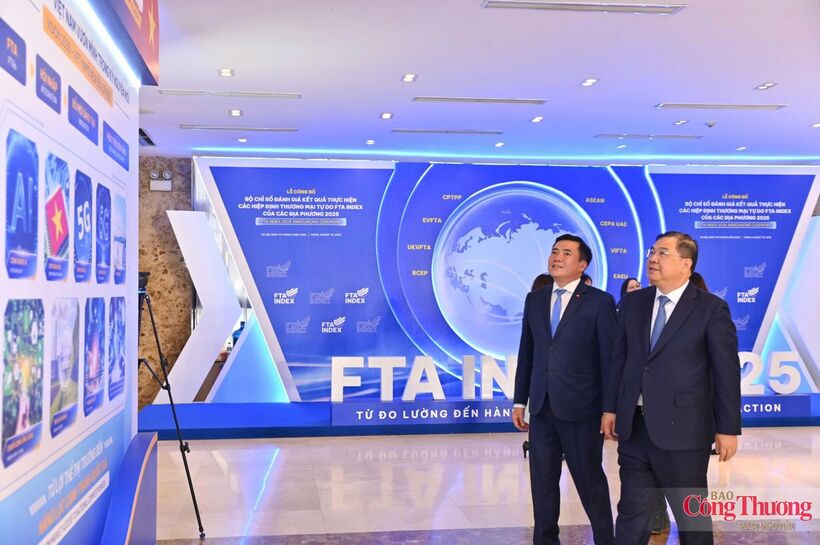
Viet Nam unveiled FTA Index 2025 to measure local FTA implementation and turn identified bottlenecks into specific solutions for stronger economic integration locally.
On the afternoon of August 18, the Ministry of Industry and Trade (MoIT), in coordination with relevant ministries and sectors, held a ceremony to unveil the 2025 FTA Index, a set of indicators assessing the implementation of free trade agreements (FTAs) by localities in 2025.
The ceremony was attended by Politburo member and Standing Deputy Prime Minister Pham Gia Tuc; Deputy Minister of Industry and Trade Nguyen Sinh Nhat Tan; Deputy Minister of Foreign Affairs Nguyen Thi Hoang Van; leaders of ministries, departments, and agencies; leaders of provincial and municipal People's Committees; representatives of embassies, international organizations, business associations and the business community.
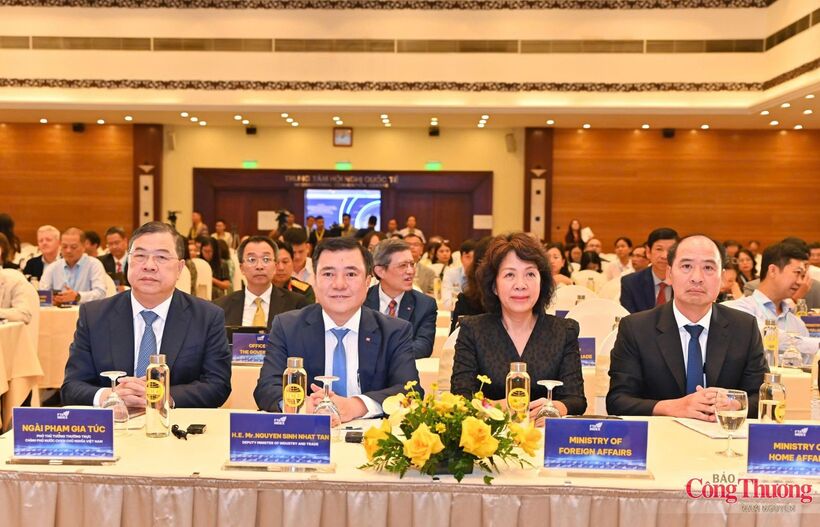
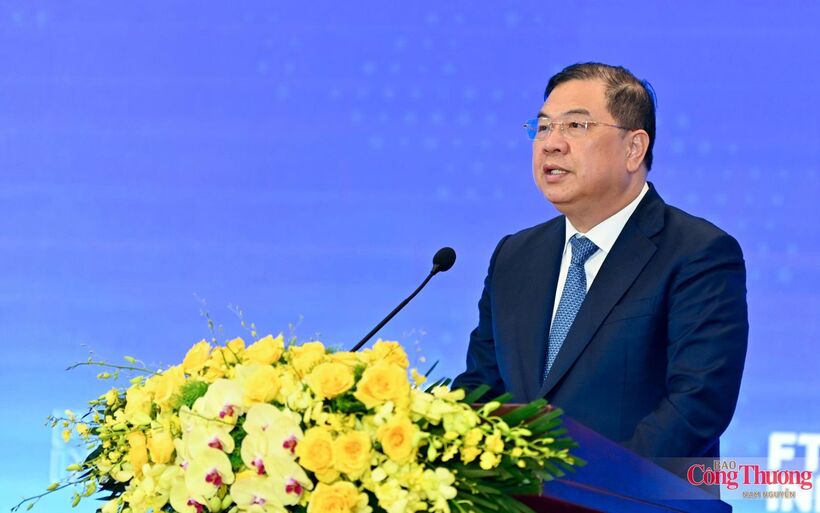
Politburo member and Standing Deputy Prime Minister Pham Gia Tuc and Deputy Minister of Industry and Trade Nguyen Sinh Nhat Tan attend the event. Photo: Nam Nguyen
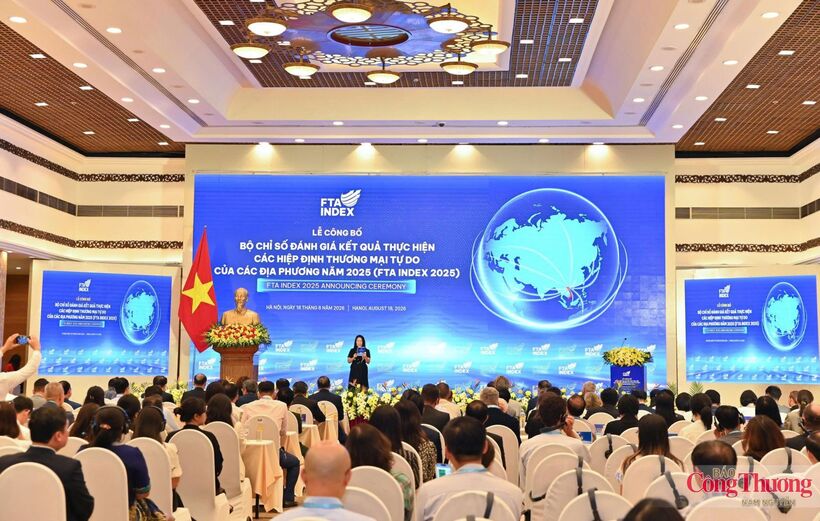
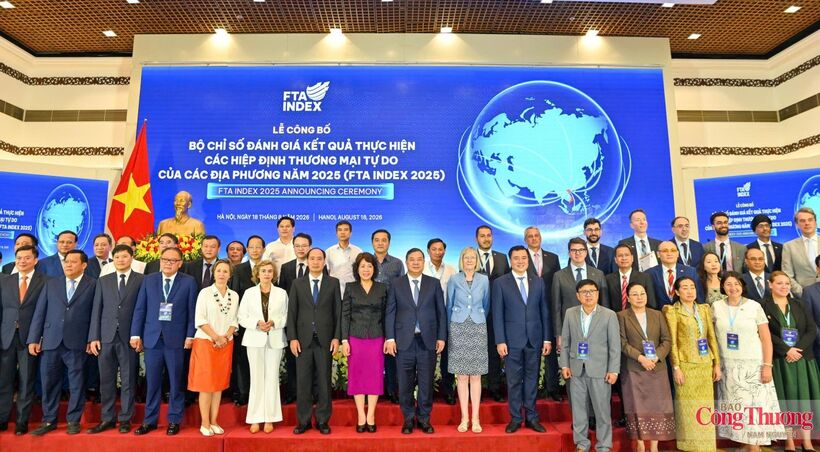
Delegates attend the ceremony. Photo: Nam Nguyen
A tool for measuring FTA implementation effectiveness
In his opening remarks at the ceremony, Deputy Minister of Industry and Trade Nguyen Sinh Nhat Tan said Viet Nam currently has 17 FTAs in force, covering more than 80% of global GDP and providing an important foundation for expanding markets, attracting investment, promoting institutional reform and enhancing the country's position. However, the advantages offered by FTAs will not automatically translate into growth without the capacity to organize implementation and effective coordination among the central government, localities and the business community.
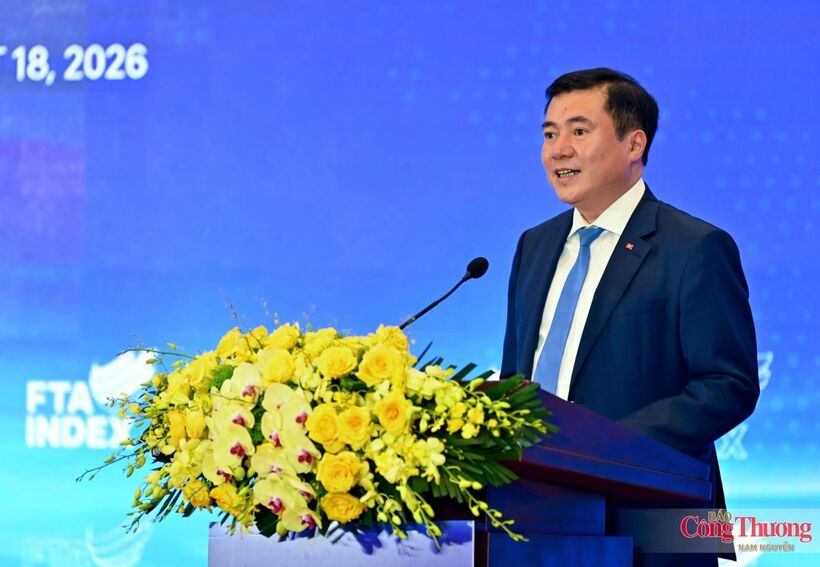
Deputy Minister of Industry and Trade Nguyen Sinh Nhat Tan delivers opening remarks at the ceremony. Photo: Nam Nguyen
According to the Deputy Minister, while the previous period focused on negotiating and expanding the network of FTAs, an equally important task in the current period is to improve the quality of implementation and translate international commitments into specific development outcomes for each locality and business.
In response to this practical requirement, the MoIT has coordinated with ministries, sectors, localities and the business community to develop the FTA Index as an objective and transparent tool for assessing the quality of FTA implementation in localities.
Deputy Minister Nguyen Sinh Nhat Tan emphasized that the FTA Index is not intended to create a ranking for comparison among localities. More importantly, through the results of the index, each locality can clearly identify areas in which it has performed well in order to further promote them, while also directly addressing shortcomings, bottlenecks and issues that businesses remain dissatisfied with and developing solutions for improvement.
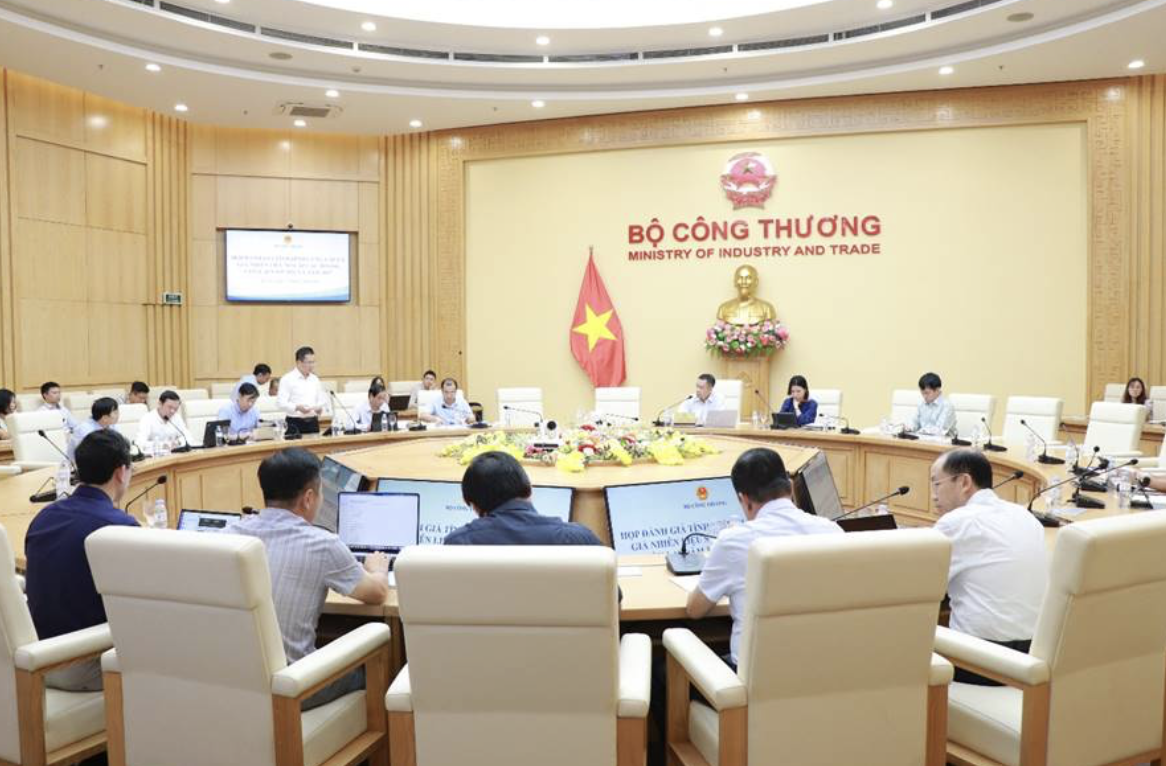
An overview of the ceremony unveiling the 2025 FTA Index, a set of indicators assessing the implementation of free trade agreements by localities in 2025. Photo: Nam Nguyen
According to Deputy Minister Nguyen Sinh Nhat Tan, in the coming period, the MoIT will continue coordinating with ministries, sectors, localities and the business community to improve the FTA Index in terms of its assessment methodology, data quality and applicability to state management. The index is intended not to stop at the annual publication of results but to become a source of information serving policymaking, improving coordination mechanisms between the central and local governments, and supporting localities in developing appropriate action programs.
Multiple localities recognized at FTA Index 2025
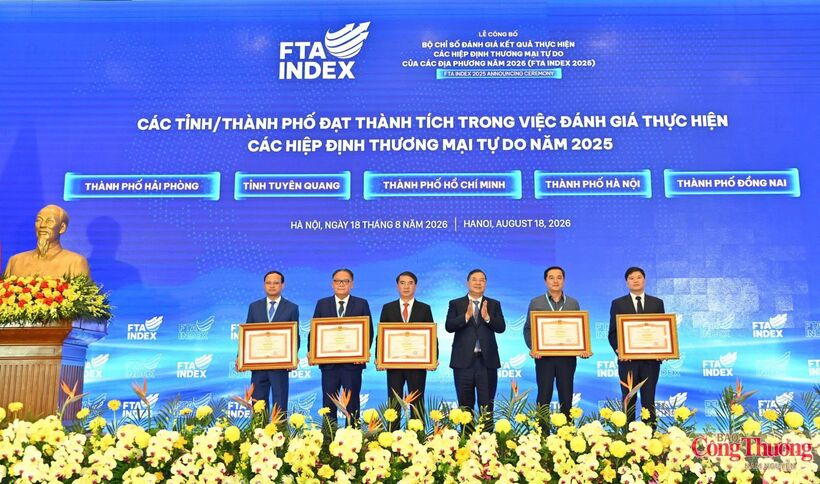
At the ceremony, localities with outstanding achievements in implementing FTAs in 2025 were presented with certificates of merit. Specifically, Standing Deputy Prime Minister Pham Gia Tuc presented certificates of merit to five provinces and cities for their achievements in assessing FTA implementation in 2025, including Hai Phong, Tuyen Quang, Ho Chi Minh City, Hanoi, and Dong Nai.
Standing Deputy Prime Minister Pham Gia Tuc presents certificates of merit to five provinces and cities for their achievements in assessing FTA implementation. Photo: Nam Nguyen
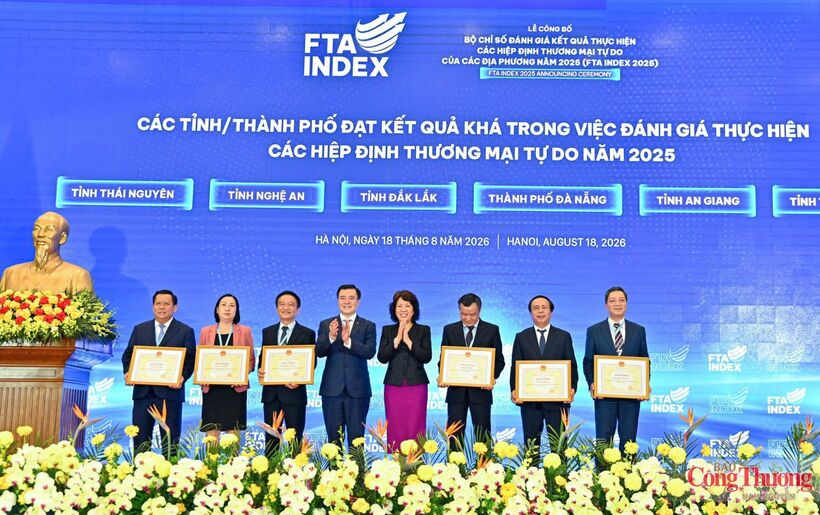
In addition, Deputy Minister of Industry and Trade Nguyen Sinh Nhat Tan and Deputy Minister of Foreign Affairs Nguyen Thi Hoang Van presented certificates of merit to provinces and cities that achieved a Fair result in the assessment of FTA implementation in 2025, including Thai Nguyen, Nghe An, Dak Lak, Da Nang, An Giang, and Tay Ninh.
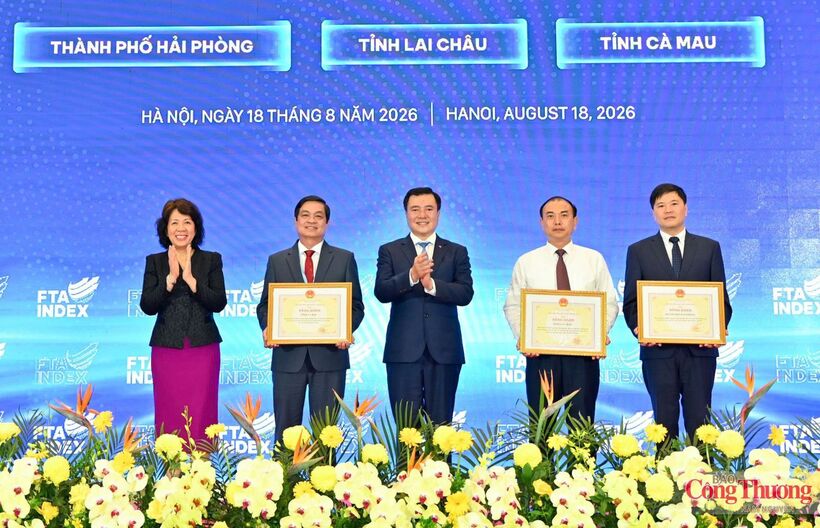
Localities were also recognized for their performance in individual component indicators. Specifically, Hai Phong achieved the best result in two indicators: FTA information dissemination and communication, and implementation of legal regulations for FTA implementation.
Lai Chau achieved the best result in the indicator on the implementation of policies supporting improved competitiveness. Meanwhile, Ca Mau achieved the best result in the indicator on the implementation of commitments to sustainable development.
In addition, certificates of merit for provinces and cities that achieved a Good result in the assessment of FTA implementation in 2025 were presented to Vinh Long, Ca Mau, and Lai Chau.
Deputy Minister of Industry and Trade Nguyen Sinh Nhat Tan and Deputy Minister of Foreign Affairs Nguyen Thi Hoang Van present certificates of merit to localities. Photo: Nam Nguyen
Following the certificate presentation, Vice Chairman of the Hai Phong People's Committee Hoang Minh Cuong said the city considers FTA implementation to be linked to the responsibility of the head of the agency, with businesses at the center, while strengthening internal capacity. Hai Phong will improve information and C/O procedures, support market expansion and compliance with standards, while promoting digital transformation, green transformation and sustainable development.
Each finding from the FTA Index must be linked to a specific solution
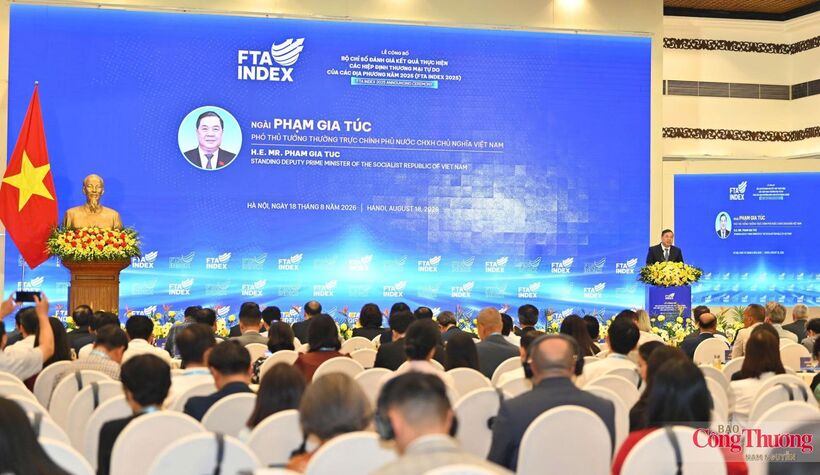
Addressing the ceremony, Politburo member and Permanent Deputy Prime Minister Pham Gia Tuc emphasized the need to shift strongly from measurement and assessment to action, considering the FTA Index an important tool for the governance of international economic integration.
Politburo member and Standing Deputy Prime Minister Pham Gia Tuc addresses the event. Photo: Nam Nguyen
According to Standing Deputy Prime Minister Pham Gia Tuc, international economic integration in the new period requires important shifts. Integration should not only open up market opportunities but also create momentum for reform, institutional improvement and renewal of the growth model.
FTA implementation needs to create additional momentum to expand development space for each industry, sector, region and locality, while contributing to improving competitiveness and the country's position.
Referring to the FTA Index, the Standing Deputy Prime Minister said 2025 was the first year the index was published, laying an important foundation for measuring local capacity to organize implementation and support businesses in effectively utilizing FTAs.
According to Standing Deputy Prime Minister Pham Gia Tuc, through feedback from businesses and implementation results in localities, the FTA Index must clearly identify where performance is good, where shortcomings remain and where bottlenecks lie, ranging from institutions, procedures, information and infrastructure to human resources quality and coordination among agencies. In particular, the Standing Deputy Prime Minister requested that every finding from the FTA Index be linked to a specific solution, a responsible agency and a specific deadline for addressing it.
The Standing Deputy Prime Minister highly appreciated the MoIT, ministries, sectors, localities and relevant agencies for their active coordination in developing the 2025 FTA Index, while expressing his appreciation to the Australian Government for supporting the development of the FTA Index website.
Continued improvement of the assessment methodology, stronger data and greater attention to the voice of businesses will make the index increasingly objective, reliable and useful for the direction and management of the Government and localities.
Based on the results of the 2025 FTA Index and new requirements arising in the country's development and integration process, the Standing Deputy Prime Minister asked all levels, sectors and localities to focus on three key tasks.
Standing Deputy Prime Minister Pham Gia Tuc outlines three groups of key tasks. Photo: Nam Nguyen
First, FTA implementation should be considered an integral part of the socio-economic development strategy and an important indicator for assessing local governance capacity and ability to integrate, rather than merely a task of the industry and trade or foreign affairs sectors.
Each locality should incorporate FTA implementation into its socio-economic development management program and link it to the responsibility of the head of the locality. Localities should develop action programs following the publication of the FTA Index and select major bottlenecks for definitive resolution. At the same time, FTA implementation should be linked to selective investment attraction, digital transformation, green transformation, high-quality human resources training and improving the capacity of small and medium-sized enterprises.
Second, central ministries and sectors should continue improving institutions, simplifying administrative procedures and promoting data sharing. According to the Standing Deputy Prime Minister, it is necessary to build a synchronized and accessible FTA information system and gradually apply artificial intelligence to support businesses in looking up commitments, rules of origin, market standards and risk warnings.
Management agencies need to shift strongly from disseminating general information to providing support services tailored to the specific needs of each business, industry and locality.
The Standing Deputy Prime Minister asked the MoIT to continue negotiating new-generation FTAs with countries and regions, while coordinating with relevant agencies to further improve the FTA Index toward a stable, transparent and comparable framework.
Delegates pose for a group photo at the ceremony unveiling the 2025 FTA Index. Photo: Nam Nguyen
The third task emphasized by Permanent Deputy Prime Minister Pham Gia Tuc is to make the business community the center and key actor in the process of implementing and effectively utilizing FTAs. The Permanent Deputy Prime Minister said that the process of negotiating and signing FTAs requires substantial efforts, but after FTAs are signed, the use of commitments and advantages from the agreements has yet to meet expectations. Therefore, this should be identified as a weakness requiring focused efforts to address in the coming period.
The State is responsible for creating an enabling environment and removing institutional bottlenecks, while businesses must proactively renew technologies, improve management quality, build brands, meet green and labor standards, ensure traceability and comply with increasingly demanding market requirements.
Industry associations also need to strengthen their role in connecting, guiding and organizing collaborative ecosystems so that Vietnamese businesses can participate more deeply in regional and global value chains.
Permanent Deputy Prime Minister Pham Gia Tuc emphasized that the ultimate goal of the FTA Index is not to create another ranking or a sector-specific set of assessment indicators, but to improve governance quality, implementation capacity, and the development and integration capabilities of localities.
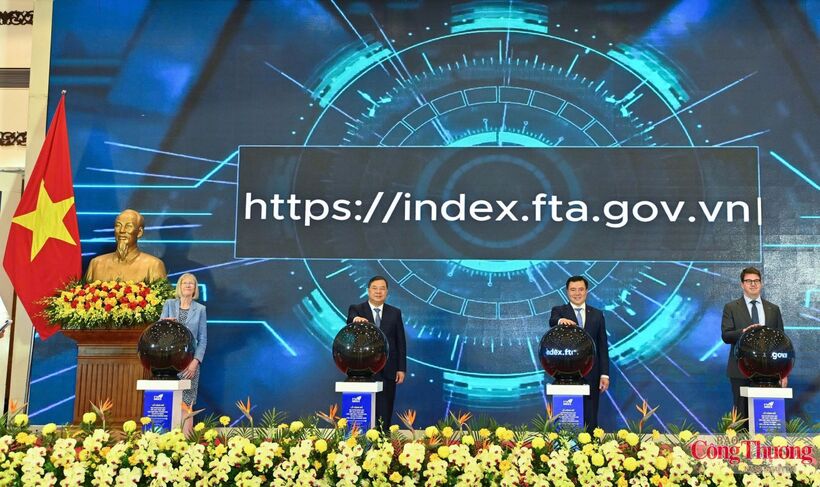
At the ceremony unveiling the 2025 FTA Index, the MoIT officially launches the FTA Index website. Photo: Nam Nguyen
At the ceremony unveiling the 2025 FTA Index, the MoIT officially launched the FTA Index website in the presence of Government leaders, MoIT leaders, the Australian Ambassador and the Asian Development Bank (ADB). Supported by Australia, the platform enables businesses to look up FTA indicators while supporting management agencies in monitoring reforms, implementing FTA commitments and effectively utilizing data.
Industry and Trade Newspaper would like to introduce a podcast series on the implementation of the Politburo's Resolution No. 57 in the Industry and Trade sector.
GREENTECH HA NOI 2026 showcases green technologies and energy-efficient solutions that help businesses cut emissions, optimize costs, promote sustainable production.
The programme connects Vietnamese businesses with Chinese investors, expanding opportunities for investment, technology cooperation and supply chain links.
Viet Nam and Poland are exploring complementary strengths in furniture manufacturing, machinery, raw materials and technology to develop regional supply chains.
The MoIT calls for proactive risk management and supply diversification to prevent energy supply disruptions amid global geopolitical and market uncertainties.
Viet Nam and Poland are exploring complementary strengths in furniture manufacturing, machinery, raw materials and technology to develop regional supply chains.
On September 18, the Trade Remedies Authority of Viet Nam (TRAV) held the 2026 Trade Remedies Forum under the theme “Enhancing national production capacity - Creating new drivers of growth.”
Viet Nam - Russia business networking conference in Moscow created opportunities for businesses from the two countries to connect, seek partners and promote business cooperation.
From the perspective of Ta Manh Cuong, economic relations between Viet Nam and Japan are facing significant opportunities to increase bilateral trade turnover, supported by new-generation free trade agreements.