Sustainable production and consumption are becoming business imperatives as companies invest in greener technologies, circular design and digital transformation.
Green pressure from the market
Decision No.889/QD-TTg, issued by the Prime Minister approving the National Action Program on Sustainable Production and Consumption for the 2021-2030 period, sets out objectives to ensure the efficient and sustainable management and use of natural resources, fuels and raw materials, while encouraging the development of environmentally friendly products that can be reused and recycled.
Sustainable production is becoming an increasingly important business trend. Photo: NH
Building on this framework, the Ministry of Industry and Trade issued Decision No.3529/QD-BCT on the Action Plan for implementing the National Action Program on Sustainable Production and Consumption for 2021-2030. One of its notable targets is to reduce the consumption of raw materials and fuels by 7-10% by 2030 across key manufacturing industries, including textiles and garments, steel, plastics, chemicals, cement, alcoholic beverages and soft drinks, paper, seafood processing and several other manufacturing sectors.
Driven by these policy directions, sustainable production and consumption are increasingly being translated into concrete business practices. For export-oriented manufacturers, the primary pressure comes from international customers and the regulatory requirements of importing markets.
Speaking to the Newspaper of Industry and Trade, Than Duc Viet, Director of Garment Corporation 10 (May 10), said that in today's deeply integrated global economy, businesses no longer serve only the domestic market but must also meet the increasingly stringent requirements of international buyers.
According to Than Duc Viet, for export manufacturers, sustainability standards, product quality requirements and corporate social responsibility have become essential rather than optional. As a result, businesses can no longer rely on isolated improvements in individual production stages but must simultaneously transform their technologies, management systems and production models.
The same expectations are increasingly being placed on enterprises operating in supporting industries.
Do Thi Thuy Huong, Executive Committee Member of the Vietnam Electronic Industries Association and Vice Chairwoman of the Vietnam Association for Supporting Industries, said that in response to the national action plan on sustainable production and consumption, the Vietnam Association for Supporting Industries has partnered with the United Nations Industrial Development Organization (UNIDO) to implement a project promoting sustainable development and end-of-life product responsibility through recycling and proper disposal.
While sustainability requirements in the textile and garment sector are reflected in environmental standards, product traceability and social responsibility throughout the supply chain, the challenge for supporting industries extends beyond manufacturing itself to encompass the entire product life cycle. Manufacturers of electronic components, mechanical parts, materials, packaging and supporting products are increasingly required to reduce emissions while improving recycling and end-of-life product management.
Businesses are benefiting from the growing shift toward green manufacturing. Photo: Vu Le
From dual transformation to circular design
At Garment Corporation 10, Than Duc Viet stressed that the company has undergone significant changes over the past five years to adapt to evolving market requirements. The company has pursued a dual transformation strategy encompassing both digital transformation and green transformation, while simultaneously upgrading technologies to ensure product quality.
On the digital front, May 10 has accelerated the adoption of technology systems for corporate governance and quality management, helping improve labour productivity and operational efficiency. In terms of green transformation, the company is pursuing sustainable development not only as a long-term objective but also to meet the increasingly demanding requirements of export customers, particularly those in the European market.
Alongside the textile and garment industry, supporting industry enterprises are also embracing sustainable production by integrating sustainability much earlier into the value chain.
According to Do Thi Thuy Huong, “Under this project, we support businesses in developing recycling and product treatment initiatives from the design stage onward, ensuring circularity throughout the entire product life cycle, from design and manufacturing to use and post-use management.”
This approach demonstrates that sustainable production and consumption are not simply about reducing material consumption inside factories. They also require companies to consider product recyclability, reusability and end-of-life treatment from the outset. By incorporating circularity into product design, businesses can minimize material waste, reduce disposal costs and better comply with the evolving requirements of global supply chains.
According to Than Duc Viet, the transformation process is far from straightforward, as it requires substantial financial resources, technological investment and significant changes in corporate governance. Nevertheless, businesses cannot afford to remain on the sidelines if they intend to preserve and strengthen their long-term competitiveness while maintaining efficient production and business operations.
From the perspective of industry associations, initiatives supporting businesses in recycling and managing products at the end of their life cycle also underscore the importance of collaboration. Small and medium-sized enterprises in supporting industries often face significant challenges in implementing such initiatives independently due to limited access to information, technical expertise and proven models. Consequently, the participation of industry associations, international organizations and government agencies plays an important role in turning sustainability requirements into measurable, practical actions.
In reality, as green standards increasingly become a prerequisite for market access, sustainable production and consumption are no longer mere slogans. They have become fundamental business requirements encompassing corporate governance, technology, raw materials, energy use, product design and end-of-life management. Companies that prepare early will be better positioned to secure contracts, retain customers and strengthen their standing within global supply chains.
On October 13, the Agency of Foreign Trade under the Ministry of Industry and Trade (MoIT) held a conference in Dong Thap province to disseminate Government Decree No.365/2026/ND-CP dated September 23, 2026, on rice export and import business, and Circular No.65/2026/TT-BCT dated October 1, 2026, issued by the Minister of Industry and Trade, detailing certain provisions and measures for implementing Decree No.365/2026/ND-CP.
On October 13, Deputy Minister of Industry and Trade Luong Hoang Thai held a working session with MEDEF International, a French business organization, and representatives of French corporations operating in various sectors, including energy, industry, transport, construction and infrastructure development, food and beverages, and services, at the Ministry of Industry and Trade's headquarters.
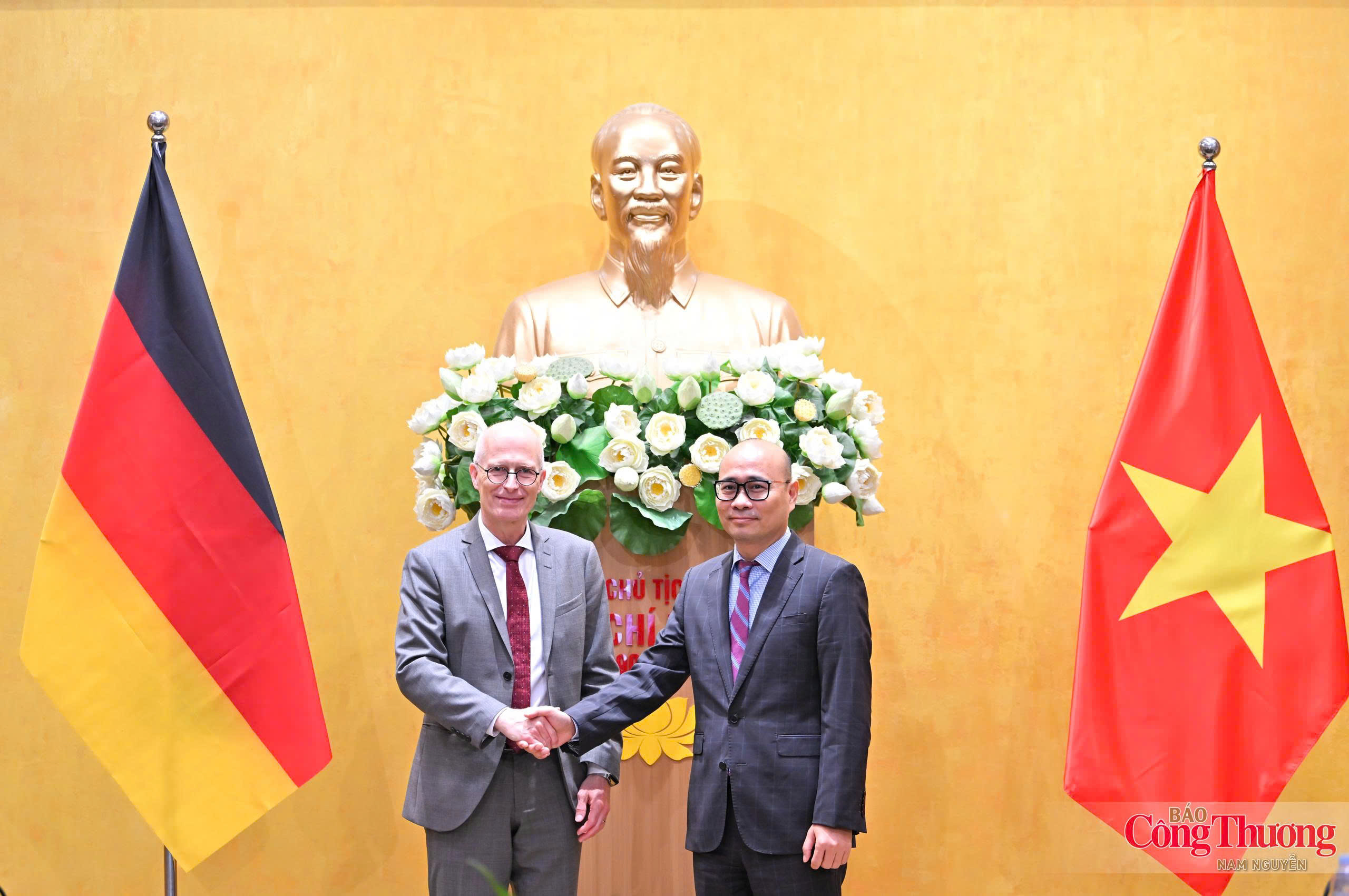
On October 14, Deputy Minister of Industry and Trade Luong Hoang Thai received and held a working session with a delegation from Hamburg, Germany, led by the city's First Mayor Peter Tschentscher at the Ministry of Industry and Trade's headquarters.
The Copyright Office is working closely with relevant agencies to develop plans for inspections and enforcement action against copyright and related rights infringements in the digital environment.
Viet Nam’s cultural industries are poised for growth as development targets become clearer, the digital content market expands and technology creates new ways.
The Vietnam Industry Agency under the Ministry of Industry and Trade and Samsung Vietnam continue to strengthen cooperation in developing supporting industries, enhancing the capabilities of domestic enterprises and expanding opportunities for their participation in global supply chains.
On October 9, the Viet Nam Department of Geology and Minerals, in coordination with the Thai Nguyen Department of Industry and Trade, held a conference in Thai Nguyen province to disseminate the Law on Geology and Minerals and its implementing regulations.
Northern localities are strengthening links in supporting industries, energy and logistics to build competitive value chains and create new growth drivers.
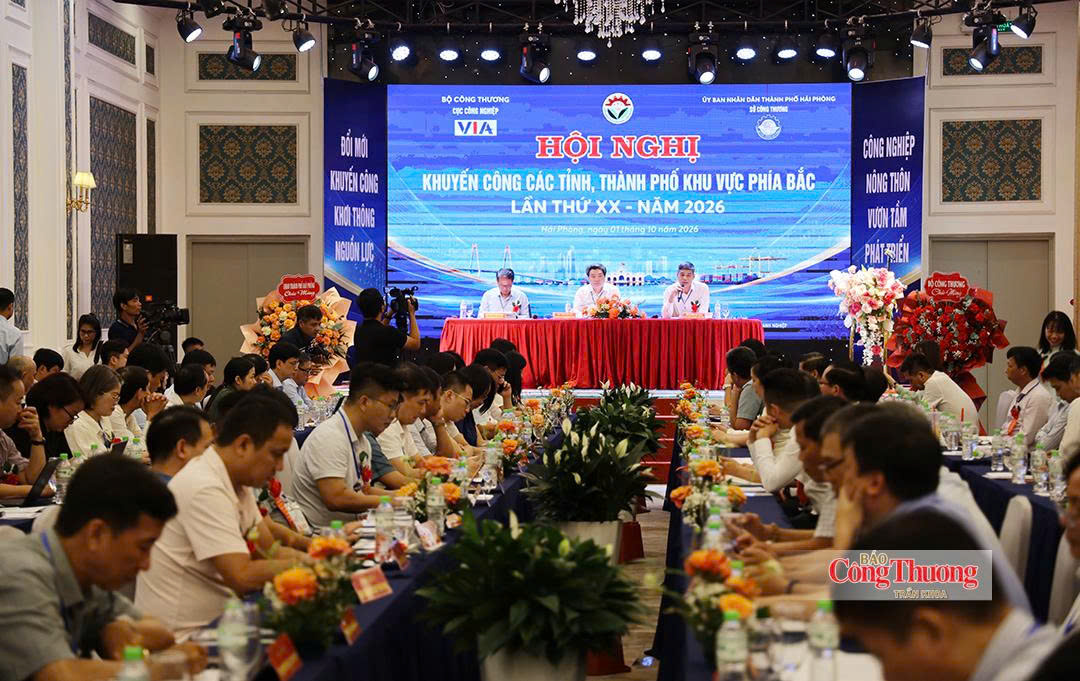
The 20th Industrial Promotion Conference for Northern Provinces and Cities in 2026 was held in Hai Phong City on October 1, with discussions focusing on renewing industrial promotion activities.
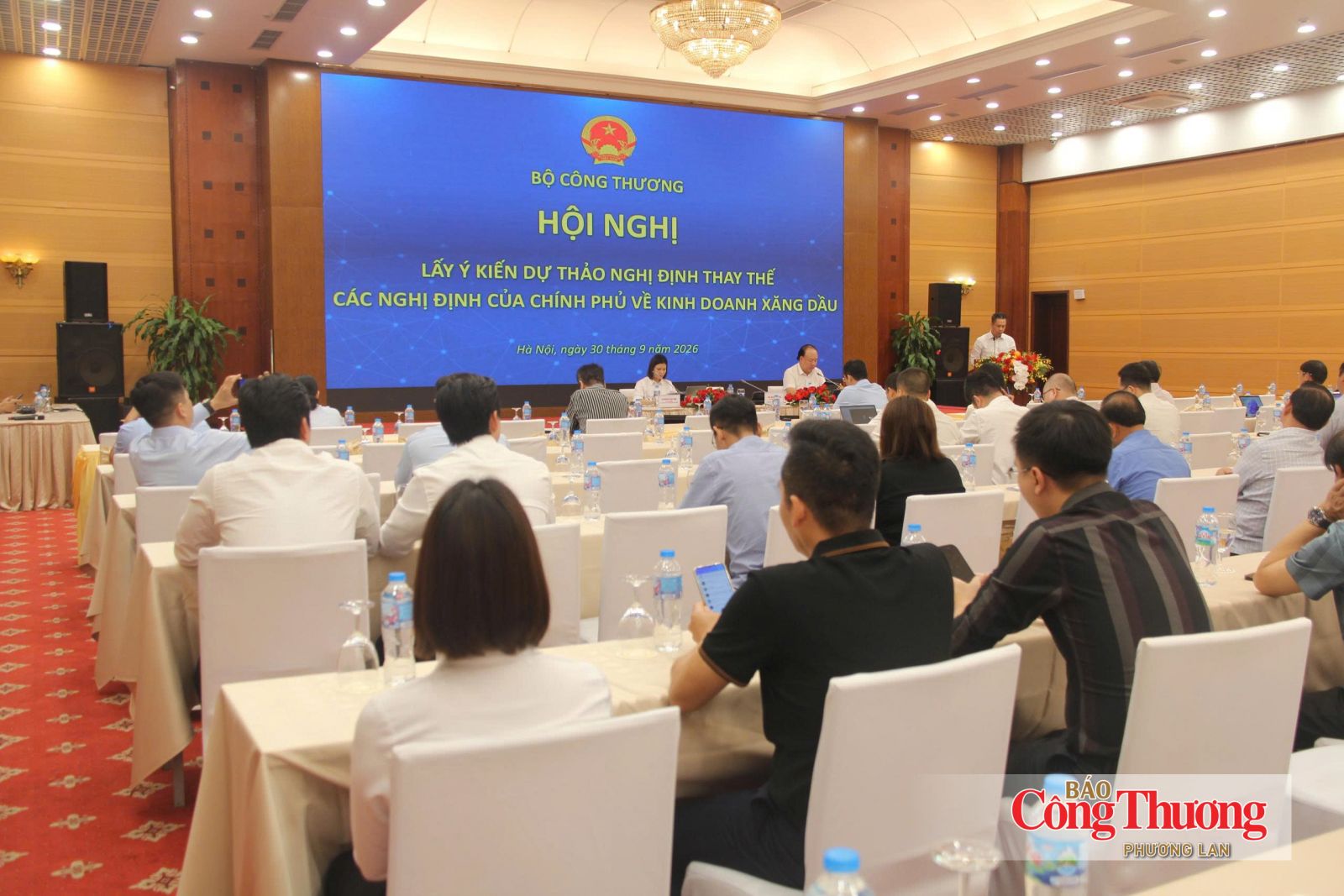
On September 30 in Ha Noi, the Ministry of Industry and Trade (MoIT) held a conference to gather broad feedback on a draft decree replacing the Government’s existing decrees on petroleum trading.