The arrival of lead-tier machine-tool manufacturers is reshaping Vietnam’s precision engineering sector, opening supply-chain opportunities while raising standards.
Pressure to raise standards across Vietnam’s domestic mechanical engineering ecosystem
The inauguration of Makino Vietnam’s manufacturing plant and High-Tech Center in Hung Yen in mid-December 2025 marked a significant milestone for Vietnam’s precision engineering sector. For the first time, a global machine-tool manufacturer positioned at the top of the value chain has chosen Vietnam as an assembly base signaling a substantive shift in production value chains that goes beyond a conventional foreign direct investment project.
A lead-tier enterprise enters Vietnam, creating momentum to reposition precision engineering.
Speaking with reporters from the Industry and Trade Magazine on the sidelines of the inauguration ceremony, Tran Duc Minh, Director of Makino Hung Yen Factory, said products currently manufactured in Vietnam are mainly supplied to the parent company in Japan for assembly or final completion. In the coming period, the company plans to gradually expand operations, with the long-term goal of producing complete CNC machines in Vietnam.
Notably, the localization rate for Makino products manufactured in Vietnam has already exceeded 80%, with a target of 90-95% in the near future. This creates clear opportunities for domestic mechanical enterprises to participate more deeply in global supply chains. However, becoming a qualified supplier requires local firms to meet stringent quality-control standards, covering everything from input materials and production processes to internal inspection systems, in full compliance with international technical requirements.
The decision by a lead-tier enterprise to establish production facilities in Vietnam does not merely add manufacturing capacity. It also raises expectations across the entire domestic precision engineering ecosystem, particularly in terms of technology adoption, management practices, and quality assurance.
At the sidelines of the roundtable “Solutions and Trends in Supply-Chain Manufacturing in the New Era,” Luong Duc Thu, Chairman of Autonach Mechanical Solutions Equipment JSC, noted that Vietnam is facing a major opportunity arising from the global supply-chain realignment. However, he stressed that such opportunities can only be seized if enterprises proactively transform themselves, starting with their internal capabilities. Synchronized investment in modern technologies, machinery, and equipment is a prerequisite for improving productivity and meeting increasingly demanding international standards.
Beyond capital investment, enterprises must also reorganize production models to become more flexible and responsive to supply-chain requirements. In this context, Autonach has developed two mass-production component factories, positioning itself to connect with global manufacturing networks.
Escaping the processing trap and building end-to-end supply capabilities
Vietnam’s precision engineering sector is now standing at a pivotal moment. The restructuring of global supply chains is no longer limiting growth to a domestic market of nearly 100 million people, but is opening access to international markets valued in the trillions of dollars.
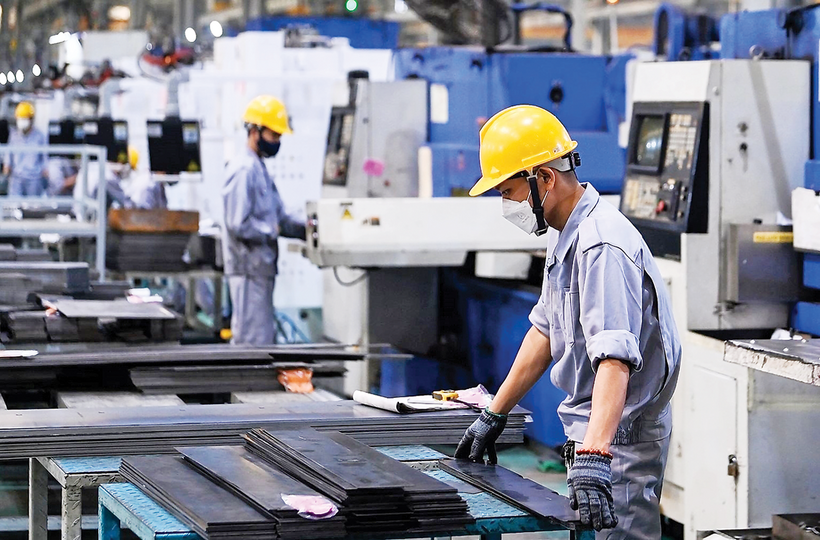
One of the sector’s most persistent bottlenecks, however, remains fragmented production. Many domestic enterprises continue to focus on low value-added, stand-alone processing activities. By contrast, multinational corporations increasingly require suppliers capable of delivering integrated, stable, and transparent end-to-end solutions, rather than individual components.
According to industry experts, the presence of lead-tier enterprises in Vietnam brings not only investment capital, but also new benchmarks in technology, quality management, and supplier development. This helps narrow technology gaps, reduce logistics costs, and creates opportunities for Vietnamese firms to directly participate in more complex component supply chains.
Truong Thi Chi Binh, Vice Chairwoman and Secretary General of the Vietnam Association of Supporting Industries (VASI), emphasized that order volumes in global supply chains far exceed those of the domestic market. Enterprises seeking to participate must undertake comprehensive reinvestment from technology and management to production organization. Stronger firms are likely to grow rapidly, while weaker ones may gradually lose market space.
This reality highlights that opportunities can only become growth drivers when domestic enterprises move beyond the “processing trap” and progressively establish positions within global value chains. The path forward, however, remains challenging. Many mechanical enterprises still face capital constraints when investing in high-precision machining, automation, and modern production lines. Meanwhile, shortages persist in high-quality human resources, particularly engineers capable of mastering five-axis machining, automation systems, and smart factory operations.
In this context, supply-chain linkage is becoming increasingly critical. Rather than operating in isolation, enterprises need to form production clusters that connect casting, CNC machining, and surface treatment within a unified value chain. According to Truong Thi Chi Binh, the ultimate objective is to transition from pure processing to OEM and ODM models, and eventually toward the production of complete component modules an essential step to retain higher value-added domestically.
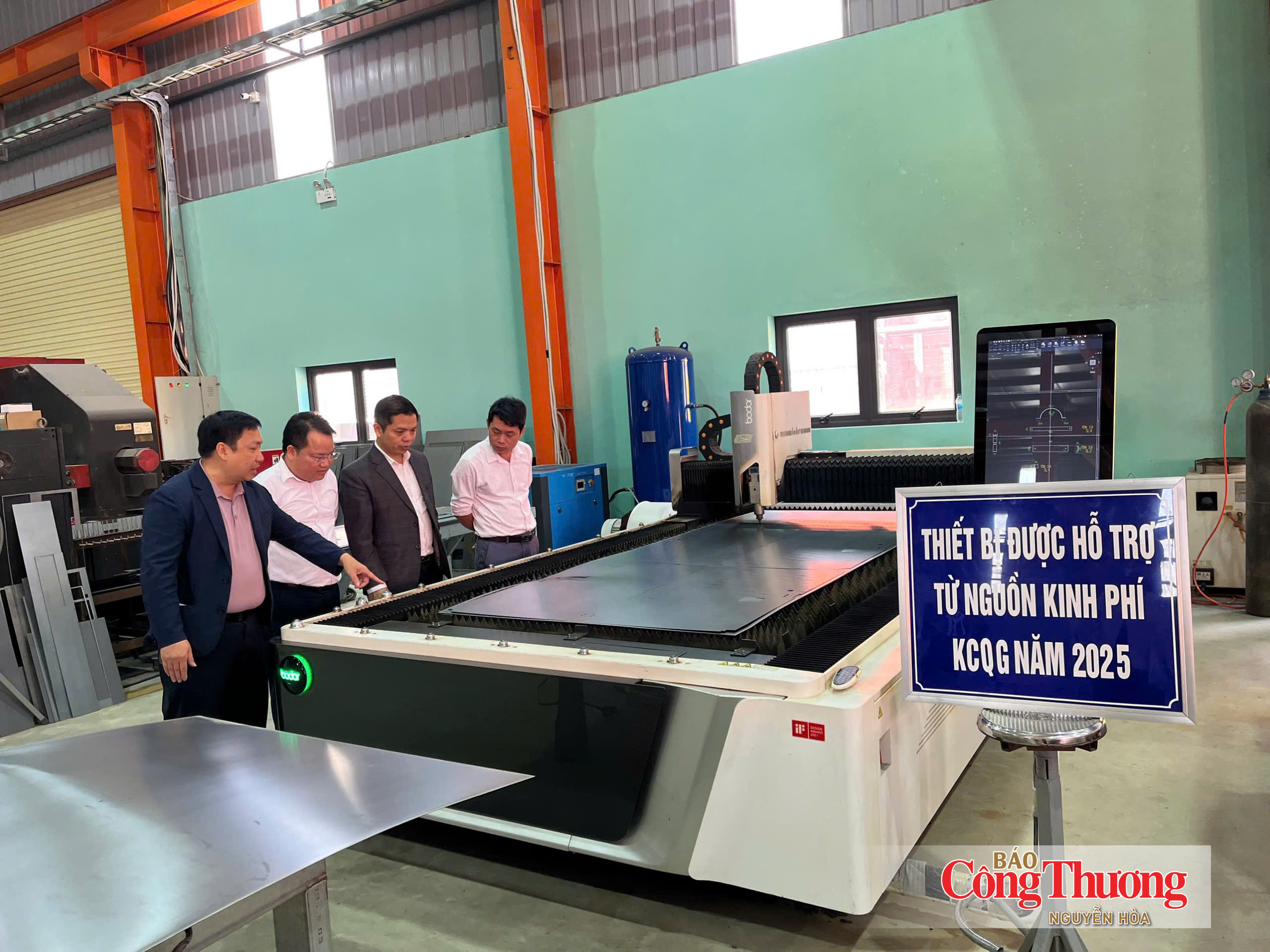
Alongside enterprise-level efforts, policy support and infrastructure development continue to play a vital enabling role. In recent years, the Ministry of Industry and Trade of Vietnam has implemented a range of programs to support the development of supporting industries, including tax incentives, workforce training, and the establishment of industrial support centers operating under “shared equipment” models. These initiatives allow enterprises to pilot production and conduct quality testing before committing to large-scale investment.
At the same time, the development of specialized industrial parks dedicated to supporting industries featuring synchronized infrastructure and reasonable costs is expected to create a more sustainable growth environment for Vietnam’s precision engineering sector in the coming years.
As the global economy accelerates its shift toward high-tech industries, precision engineering is emerging as a critical foundation for the development of semiconductors, renewable energy, and smart manufacturing equipment.
Technology innovation, resource and energy efficiency, and emissions reduction are becoming key priorities in many local industrial extension programs. From machinery support to the development of cleaner production models, industrial extension policies are helping bring sustainable production and consumption goals closer to rural industrial establishments.
The Grand Ho Tram has been named “Best Integrated Resort” at the 35th TTG Travel Awards 2026, marking its second consecutive win at the Asia-Pacific travel and hospitality awards.
New cooperation initiatives on grid digitalization, battery energy storage systems (BESS), technical capacity building and applications at power utilities are helping lay the groundwork for modernizing Viet Nam’s power system while strengthening knowledge sharing across Southeast Asia.
Northern localities are strengthening links in supporting industries, energy and logistics to build competitive value chains and create new growth drivers.
As Vietnam attracts growing manufacturing investment, companies are placing greater emphasis on operational readiness to ensure new factories can begin production efficiently.