Reviewing 100 years of Party leadership aims to distill key lessons, strengthen theoretical and practical foundations, and guide Vietnam’s development.
Reviewing 100 years of the Party’s leadership of Vietnam’s revolution must provide a comprehensive historical perspective and distill lessons of a law-like nature to guide national development over the next century.
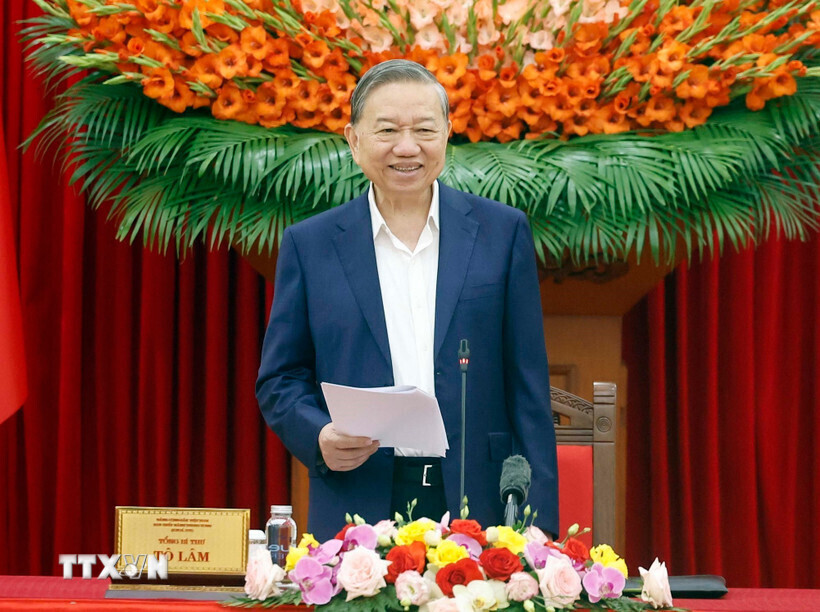
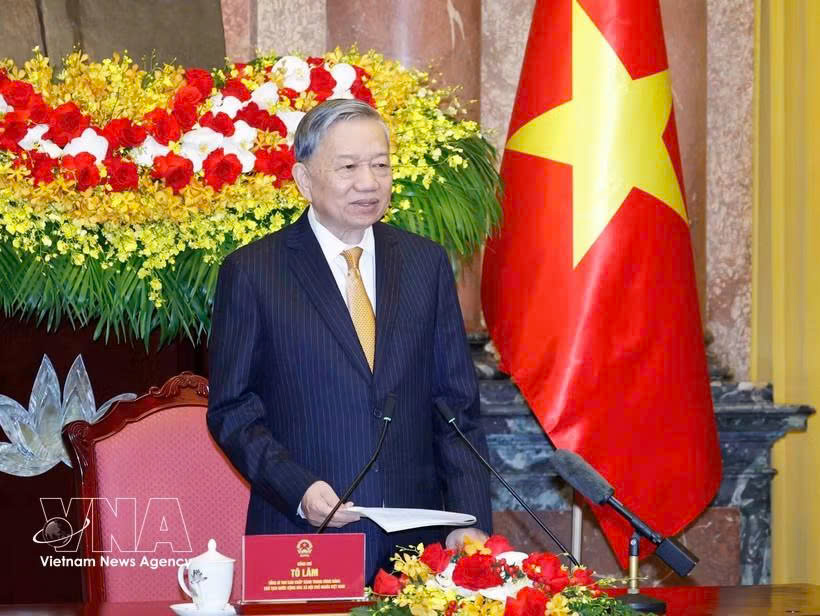
Party General Secretary To Lam delivers remarks. Photo: VNA
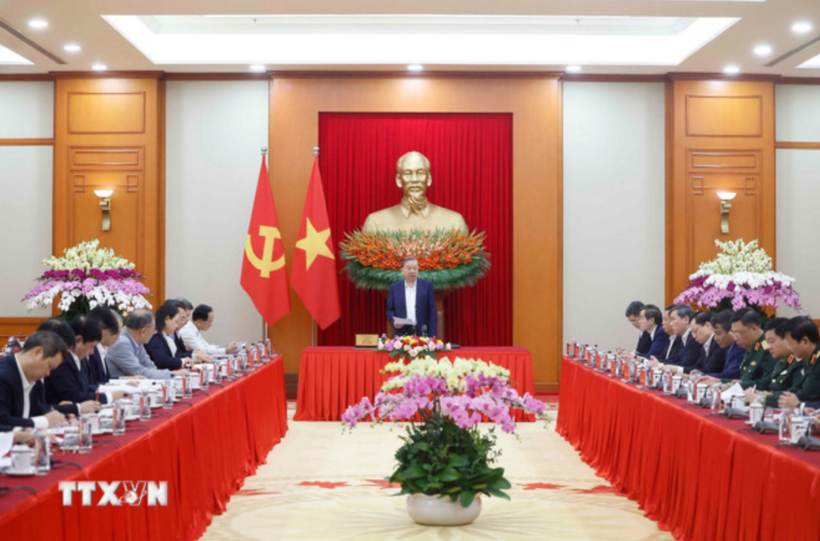
On March 4, at the Party Central Committee headquarters in Hanoi, Party General Secretary To Lam, head of the Steering Committee for the review of 100 years of the Party’s leadership of Vietnam’s revolution (1930 - 2030), orientations for national development over the next 100 years (2030 - 2130), and the 40-year review of the Platform for national construction in the transitional period to socialism, chaired a working session with editorial teams to implement review tasks.
Attendees included Politburo members, Secretariat members, Party Central Committee members, standing members of the Steering Committee, members of editorial teams, experts, scientists, and representatives of relevant agencies.
This was the first meeting since the Steering Committee for the two major reviews was established, reflecting a sense of urgency, seriousness, and scientific rigor, as well as a readiness to embark on a major task of the Party in the new period.
Overview of the meeting. Photo: VNA
At the meeting, representatives of the Steering Committee presented a summary of the draft schemes. Many comments were candid, responsible, and focused, proposing specific solutions, clarifying outstanding issues, and contributing to the completion of task assignments, plans, regulations, and review outlines.
Concluding the session, the General Secretary stressed that the 100th anniversary of the country under the leadership of the Communist Party of Vietnam and the 40-year implementation of the Platform for national construction in the transitional period to socialism are not merely milestones in time, but represent the length of a revolutionary journey marked by sacrifice, hardship, creativity, and development.
The 100-year review looks back at the entire course of the Party’s leadership of the nation, from the struggle for independence and national reunification to national construction and defense; from a centrally planned mechanism to comprehensive renewal; and from a poor, backward country to one with an increasingly elevated international standing.
The 40-year review of the Platform provides a scientific, comprehensive, and objective assessment of the realization of the Party’s strategic orientations during the transitional period. It offers an opportunity to further clarify the development model, achievements, shortcomings, limitations, causes, and lessons learned.
The General Secretary affirmed that these two reviews are closely interconnected. The 100-year review must offer a comprehensive historical view and distill lessons of a law-like nature of Vietnam’s revolution, but not serve as a condensed version of the History of the Communist Party of Vietnam, to guide national development over the next century.
The 40-year review of the Platform goes deeper into the theoretical and practical dimensions of the renewal period, a stage of turning-point significance for national development, and helps determine the point at which the transitional period concludes. This work is not only for commemorative purposes, but more importantly to prepare theoretical and practical foundations for strategic decisions in a new development stage, toward 2045 and beyond, with a vision to 2130. Therefore, it must be a broad political undertaking with participation from the entire political system, from central agencies to localities nationwide.
The General Secretary requested the Steering Committee to review the draft task allocation by thematic groups to ensure clear responsibilities, appropriate alignment with functions, capacities, and experience, and to avoid overlaps, omissions, or formality. The Steering Committee must serve as the central hub for coordination, orientation, inspection, and supervision of the entire review process. Alongside the central-level Steering Committee, consideration may be given to establishing similar bodies in localities and selected ministries and sectors.
He also emphasized the need to finalize outlines of review reports, develop guidelines, and build a common methodological framework, while formulating an overall plan for the entire process. Clear deadlines must be set for each phase, not only by quarter but even by month, and in peak stages, by week or day. All tasks must be reflected in specific, feasible plans with mechanisms to control progress and outputs.
Regarding the draft working regulations of the Steering Committee, he noted that these regulations are an important basis for ensuring close and effective coordination between the Steering Committee and editorial teams, among review groups, and between central and local levels. They must ensure the principle of democratic centralism, promote collective wisdom, and uphold individual responsibility.
On further refining the explanatory reports of the two review schemes, the General Secretary suggested that they serve as the overarching framework for all content. It is therefore necessary to review scope, subjects, and methods; clarify report structures; define major thematic axes; and orient approaches combining historical and logical perspectives, theory and practice, review and forecasting, while identifying final outputs.
Regarding working methods, he underscored the need to adopt scientific, modern, and effective approaches from the outset, including the application of information technology, development of digital databases, clear division and coordination among thematic groups, enhanced academic exchanges, and parallel implementation among review and synthesis teams. Democratic discussion must go hand in hand with disciplined communication, while ensuring confidentiality and accuracy of materials.
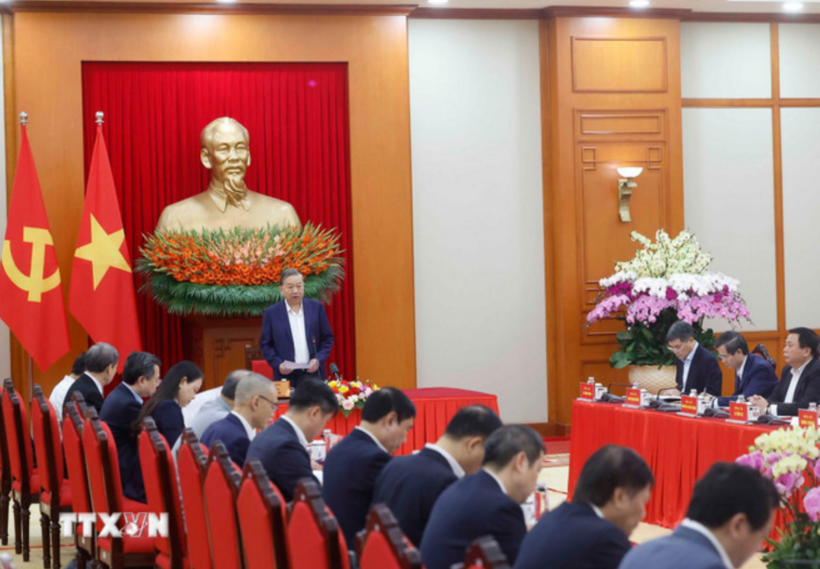
Party General Secretary To Lam delivers remarks at the event. Photo: VNA
He stressed the principles of seriousness, scientific rigor, objectivity, comprehensiveness, and new findings; combining organizational discipline with creative thinking; continuity with development; and review of the past with orientation for the future.
The Central Theoretical Council is a core force in the review process. In addition to its members, more experts, scientists, and historians should be mobilized. The workload is substantial, requiring close, synchronized, and scientific coordination between the Steering Committee and editorial teams, and between standing bodies and ministries, sectors, and localities.
With the Party’s tradition of unity, intellect, and resilience, the General Secretary expressed confidence that the Steering Committee and the two editorial teams will successfully fulfill their tasks, contributing to a review work of profound theoretical and practical value.
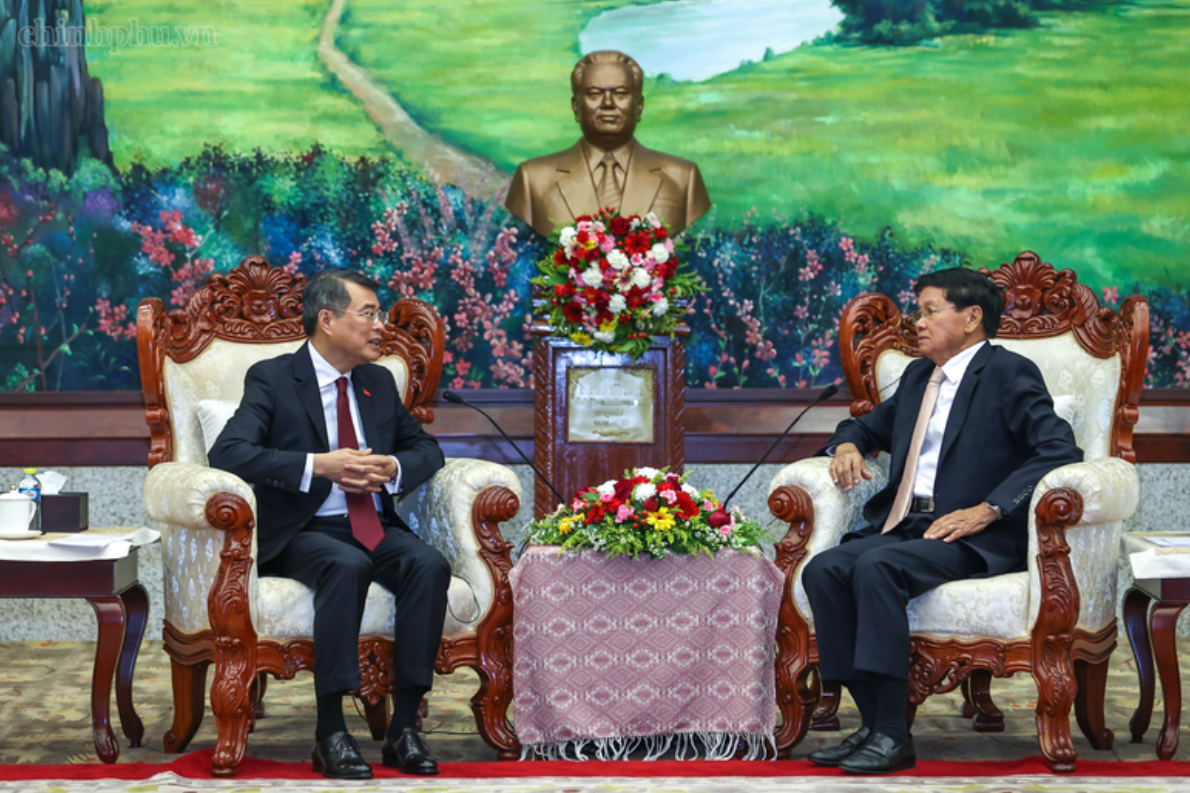
Prime Minister Le Minh Hung on October 8 paid a courtesy call on Lao General Secretary and President Thongloun Sisoulith in Vientiane as part of his on-going official visit to Laos.
The two sides expressed their delight at the positive developments in the bilateral relations in recent years, noting that there remains significant room for greater cooperation and complementarity, particularly in trade, investment and economic ties. They also held extensive discussions on strategic directions to further deepen and strengthen bilateral relations in a more substantive and practical manner.
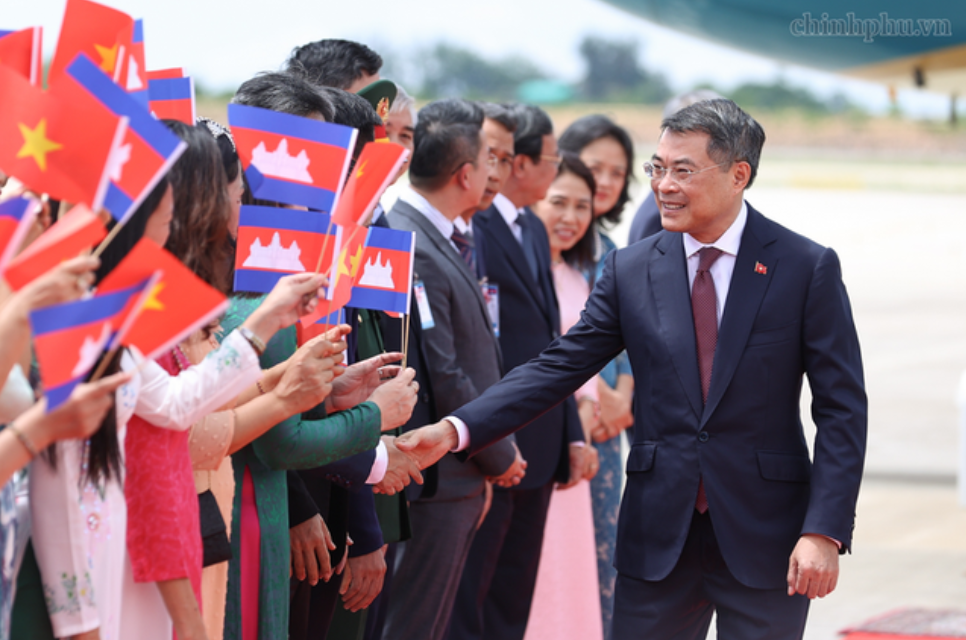
Prime Minister Le Minh Hung arrived in Phnom Penh on Friday afternoon, starting his two-day official visit to Cambodia at the invitation of Cambodian counterpart Hun Manet.
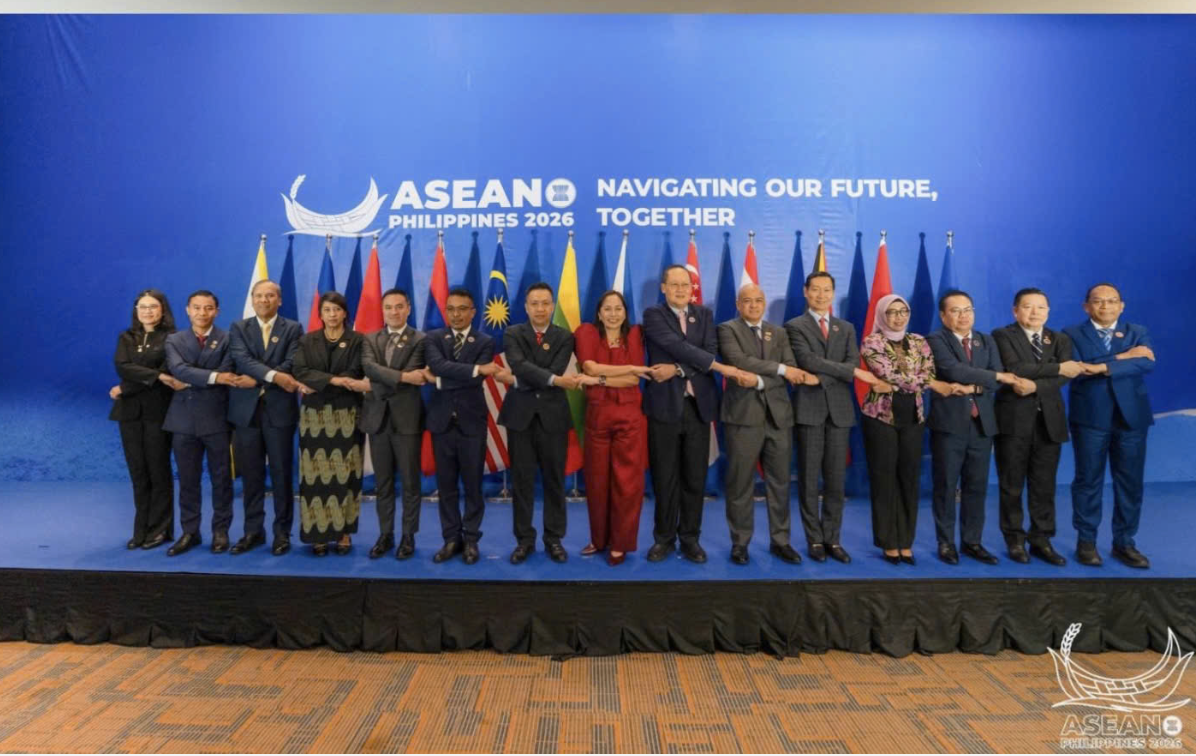
On 7 October 2026, the 44th ASEAN Ministers on Energy Meeting (AMEM 44) was held in Manila, the Philippines, under the chairmanship of Sharon S. Garin, Secretary of the Department of Energy of the Philippines. The meeting brought together energy ministers from ASEAN Member States, the Secretary-General of ASEAN, the ASEAN Centre for Energy, and representatives of ASEAN energy sector bodies and specialised networks. Deputy Minister of Industry and Trade Nguyen Viet Son led the Vietnamese delegati
General Secretary of the Communist Party of Viet Nam Central Committee and State President To Lam, his spouse, and a high-ranking Vietnamese delegation will pay a state visit to Russia and an official visit to France, and attend the International Space Summit in Paris from September 7 to 12.