The Prime Minister stressed stronger economic integration as a key driver for developing strategic sectors from science, technology to defense, security and culture.
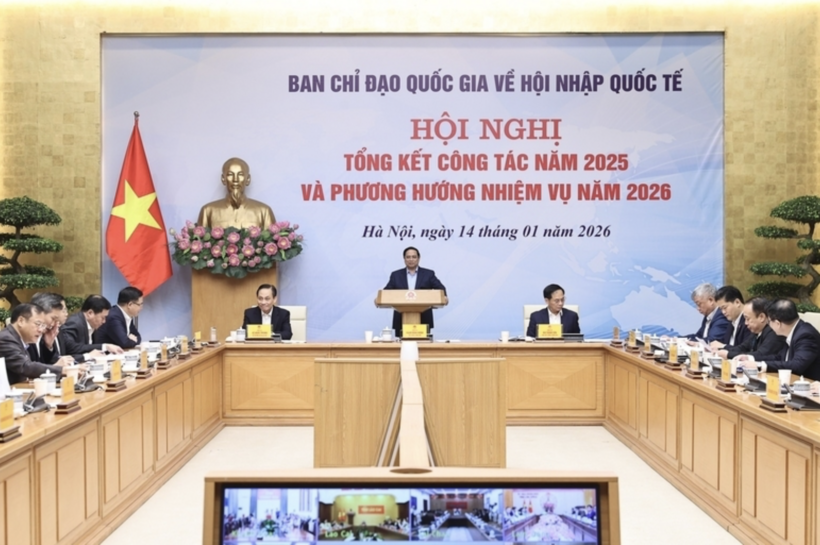
On January 14, Prime Minister Pham Minh Chinh, Head of the National Steering Committee for International Integration, chaired a conference reviewing the committee’s performance in 2025 and outlining tasks for 2026.
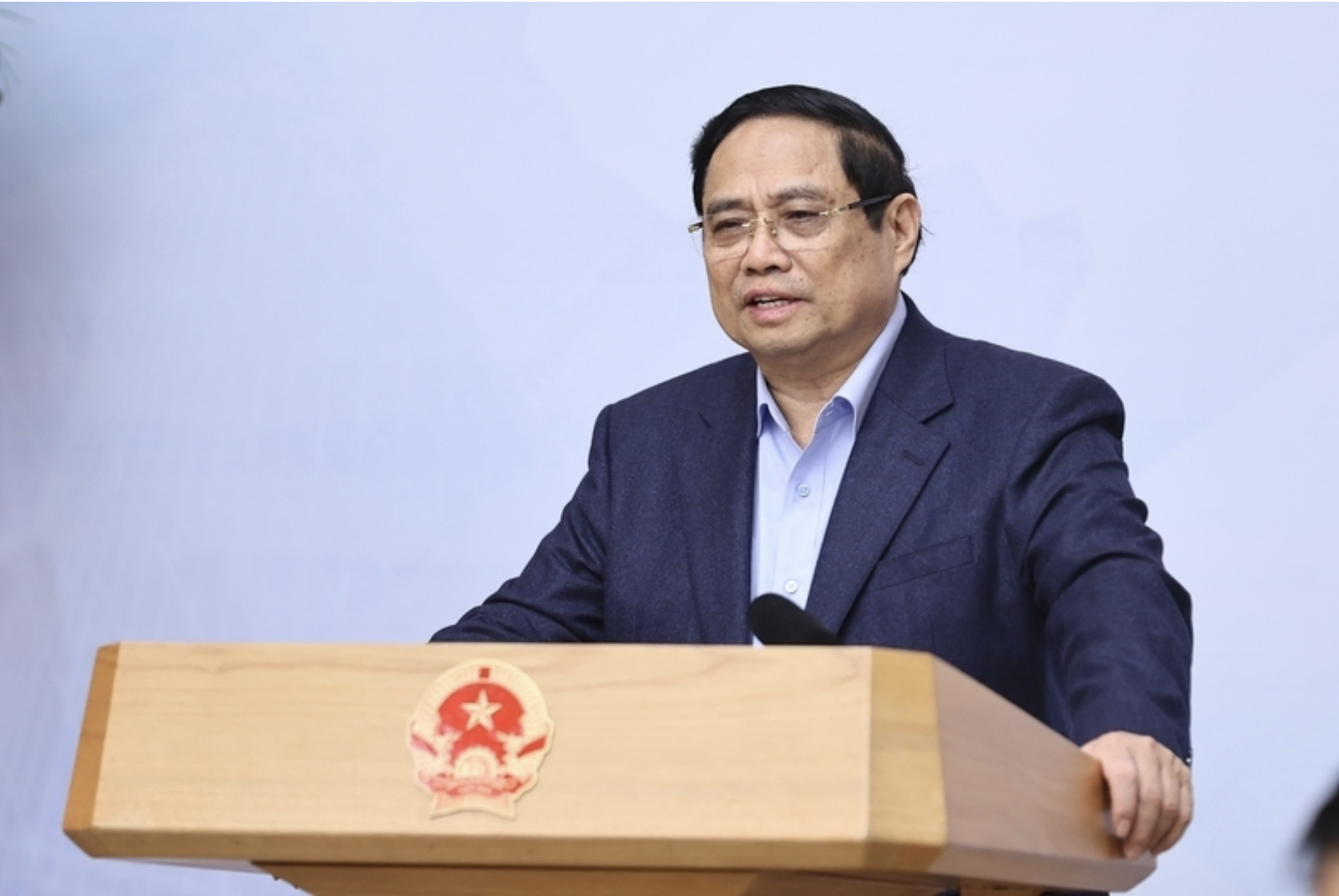
Prime Minister Pham Minh Chinh chairs the conference. Photo: VGP
Enhancing Vietnam’s position and credibility
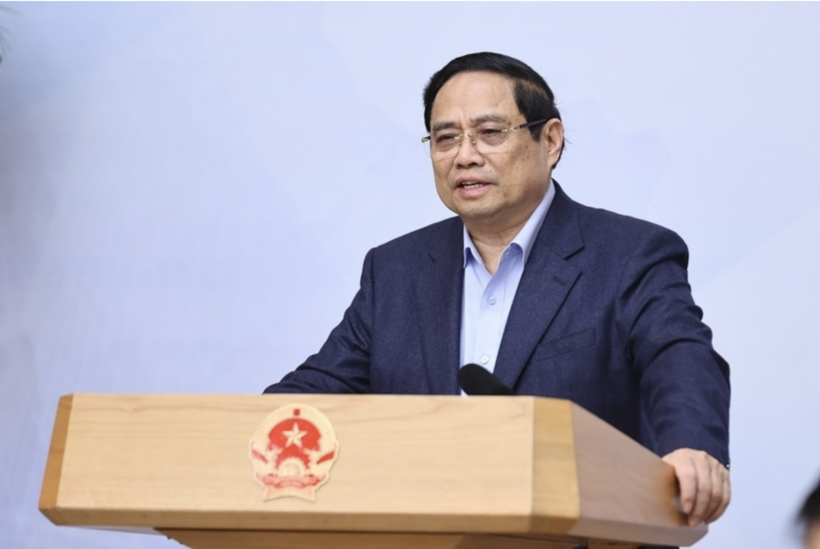
In his concluding remarks, Prime Minister Pham Minh Chinh highlighted key achievements in the implementation of Resolution No. 59-NQ/TW and Vietnam’s international integration efforts over the past period. He said international economic integration has enabled the country to swiftly adjust its development posture, adapt to external fluctuations, address challenges, seize opportunities and realize development objectives. Despite a global slowdown in trade and investment, Vietnam’s import-export turnover and disbursed foreign direct investment reached new record highs.
International integration in politics, defense and security has been implemented in a comprehensive and coordinated manner. Vietnam has played an increasingly proactive and responsible role across numerous international and regional forums, earning strong recognition and support from international partners and friends.
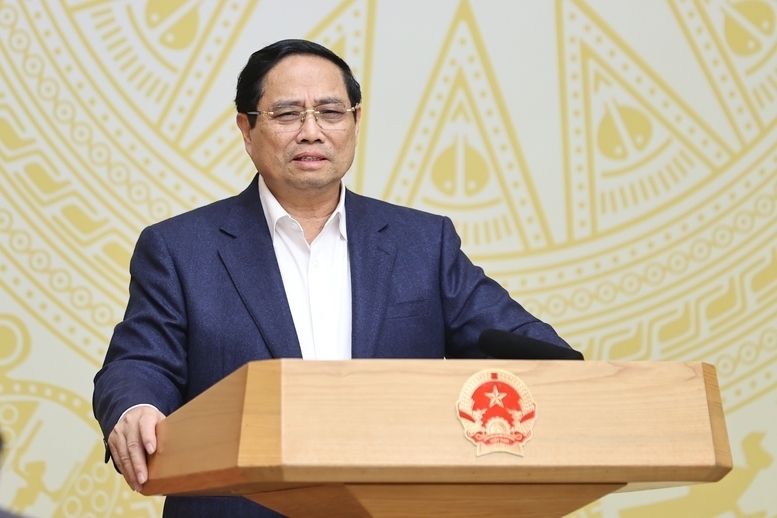
The Prime Minister outlines key achievements in implementing Resolution 59 and advancing international integration over the past year. Photo: VGP
In 2025, Vietnam proactively promoted and successfully hosted a number of major external events. Bilateral exchanges and cooperation, participation in United Nations peacekeeping operations, engagement in multilateral defense forums, and cooperation through mechanisms such as INTERPOL and ASEANPOL contributed to enhancing the country’s standing and mobilizing resources for national defense.
International integration in science and technology continued to play a leading role in mobilizing external knowledge and resources to support growth and economic restructuring, with a focus on high technology, artificial intelligence, semiconductor chips, high-speed rail and nuclear power.
These efforts have gradually laid the foundation for strengthening autonomy in core, source and dual-use technologies, serving innovation-driven development, national digital transformation, and the development of digital government and the digital economy.
International integration in culture, education, health care and sports has also been further promoted, creating intertwined interests with multiple partners and contributing to social security, human security and sustainable development.
Ministries, sectors and localities have taken a more proactive role in advancing international integration, signing numerous commitments and agreements that deliver tangible benefits. Many border localities have actively developed border and gateway economies, enhanced infrastructure connectivity and logistics, thereby consolidating peaceful and friendly borders while expanding development space.
Deepening substance, expanding scope
Drawing from practical experience, the Prime Minister outlined five key lessons, underscoring the comprehensive leadership of the Party and the unified management of the State; the importance of closely monitoring developments and strengthening strategic research and forecasting; the effective combination of domestic and international strengths; the promotion of solidarity and multilateral cooperation; and the enhancement of coordination across the entire political system.
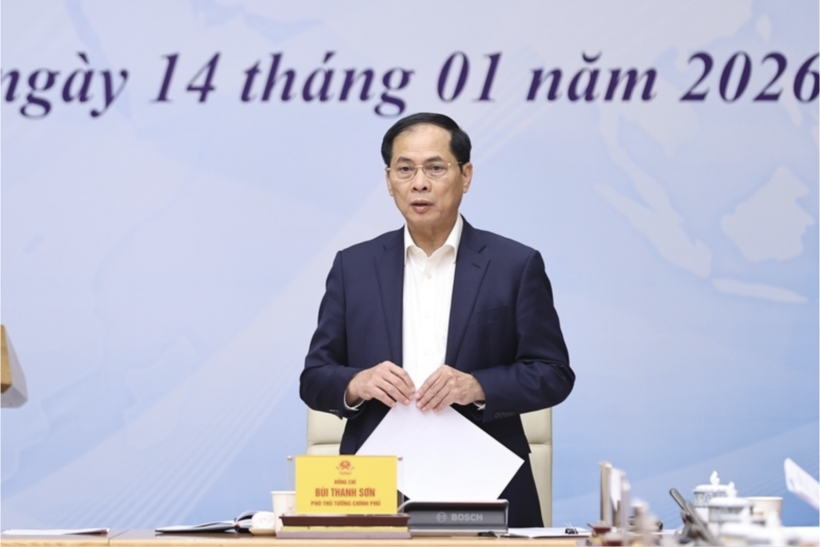
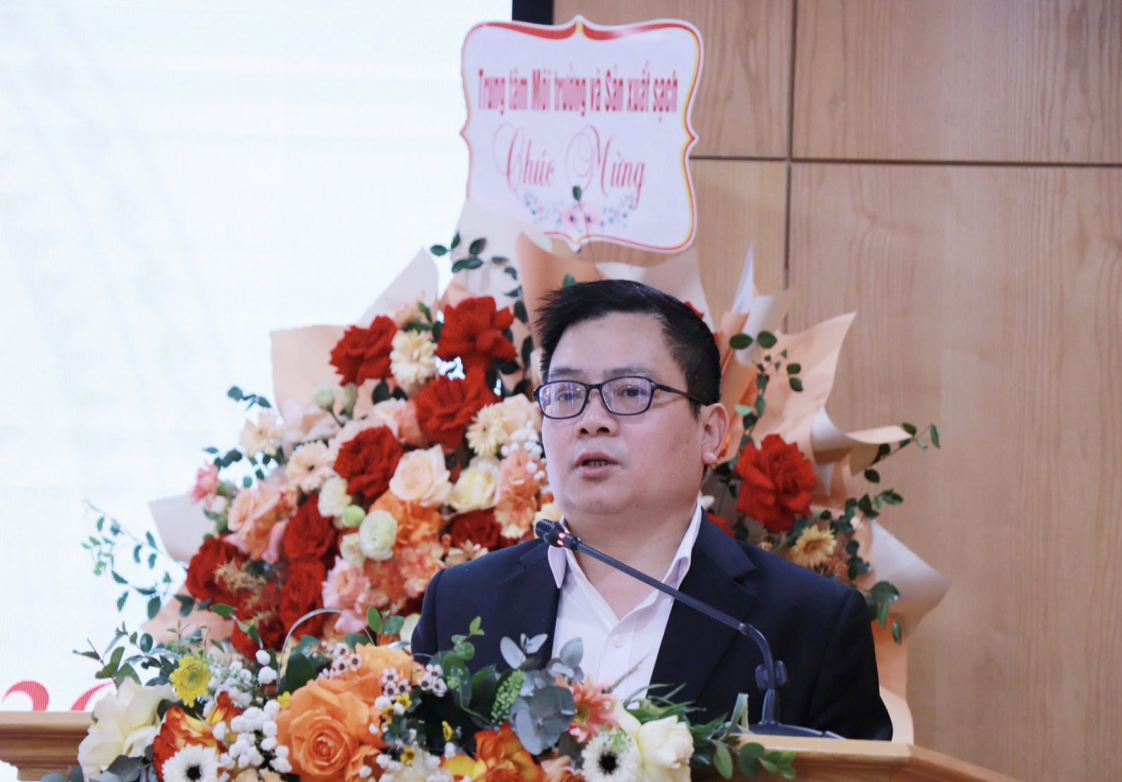
Deputy Prime Minister Bui Thanh Son delivers remarks. Photo: VGP
Noting that 2026 marks the first year of implementing the Resolution of the 14th National Party Congress, the Prime Minister called for a decisive shift in international integration from “expanding relations” to “improving quality and depth,” and from “participation” to “leading and shaping,” with a proactive, positive approach and flexible adaptation to evolving international conditions.
He affirmed that international integration is the cause of the entire population and the whole political system, with people and businesses at the center, as the main actors, drivers and resources. The overarching objectives are to enhance national capacity, position and credibility; strengthen strategic autonomy in international relations; and improve the material and spiritual well-being of the people.
The Prime Minister urged ministries, sectors and localities to focus on key tasks and continue renewing thinking on international integration. He called for stronger and higher-quality international economic integration to serve the development of strategic sectors, including science and technology, national defense and security, and culture.
He also emphasized the need to promote international integration in politics, defense and security in a deeper, more substantive and effective manner, strengthening coordination among foreign affairs, defense and security. At the same time, Vietnam should renew and accelerate international integration in science and technology, innovation and digital transformation; resolutely implement international commitments and agreements; and continue to strengthen the coordinating role of the National Steering Committee for International Integration to promptly address difficulties arising during implementation.
Over the 2021 - 2025 term, Vietnam and its partners signed a total of 927 commitments and agreements, with nearly 350 concluded in 2025 alone, significantly higher than in previous periods.
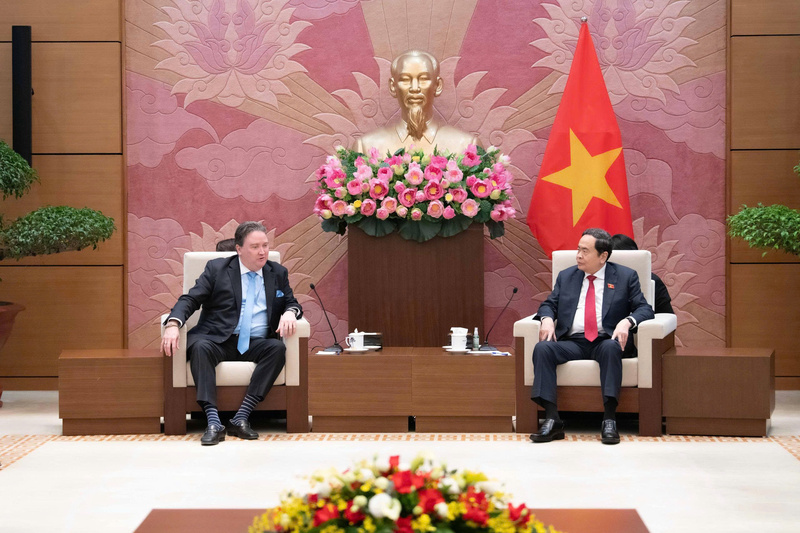
The Vietnam’s National Assembly pledged closer coordination with the US Congress to ensure cooperation mechanisms are implemented effectively and sustainably.
The Prime Minister stressed stronger economic integration as a key driver for developing strategic sectors from science, technology to defense, security and culture.
EU businesses remain upbeat on Vietnam as EuroCham’s Business Confidence Index hits a seven-year high pointing to stronger business and investment prospects in 2026.
On January 12 in Hanoi, the Vietnam Institute of Strategy and Policy for Industry and Trade organized a conference to review its 2025 work and deploy tasks for 2026.
EuroCham’s Q4 2025 BCI rose to 80 points, the highest in seven years, signaling a strong rebound in European business confidence and Vietnam’s solid growth outlook.
On January 12 in Hanoi, the Vietnam Institute of Strategy and Policy for Industry and Trade organized a conference to review its 2025 work and deploy tasks for 2026.
The Ministry of Industry and Trade reviewed progress and set key priorities to accelerate science, innovation and digital transformation under Resolution 57 in 2026.