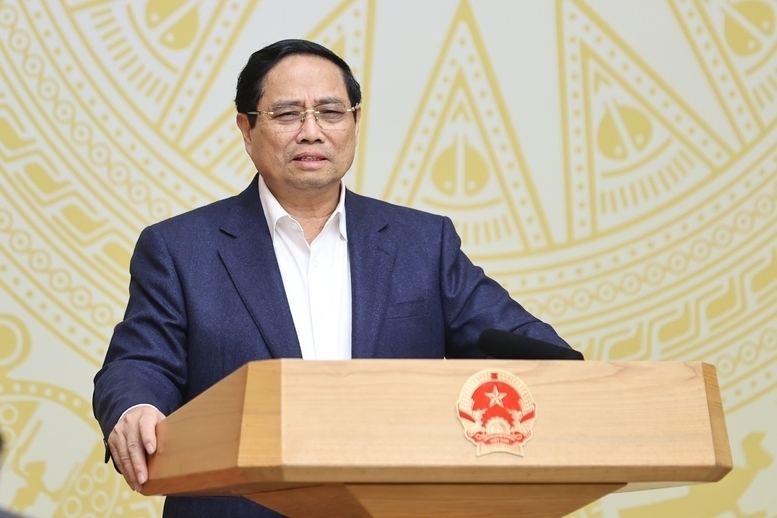
Prime Minister Pham Minh Chinh underscored data as a critical production resource for Vietnam’s development.
In his opening remarks, Phạm Minh Chinh highlighted the particularly important role of data, stressing that building national databases is a task of major significance for the country’s development.
The meeting was held in a spirit of urgency and determination in response to the country’s pressing requirements. The Party, the State, and the Government have identified a growth target of 10% or higher in the coming period to create momentum, capacity, confidence and a solid foundation for Vietnam to enter a new development phase.
To achieve this goal, Vietnam needs to tap new growth drivers such as the digital economy, green economy and circular economy, in which data, artificial intelligence and the data economy play a pivotal role.
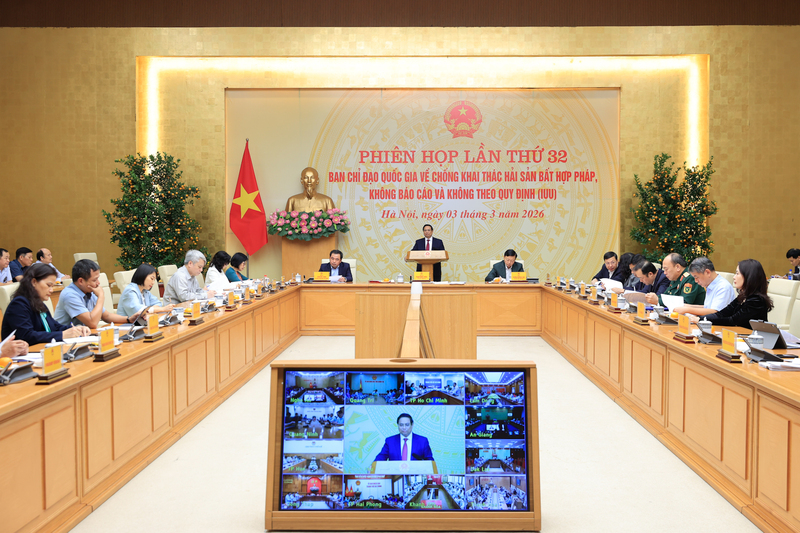
Prime Minister Pham Minh Chinh, Head of the National Data Steering Committee, chairs the Committee’s first meeting. Photo: VGP
The Prime Minister cited Politburo Resolution No. 57-NQ/TW on breakthroughs in science and technology development, innovation and national digital transformation. The resolution identifies the need to fully harness data potential, regard data as an important production resource, and promote the development of big databases, the data industry and the data economy. In recent times, the Government has directed ministries, sectors and localities to implement the resolution with urgency and a strong focus on action.
According to the Prime Minister, the world is witnessing extremely rapid data growth, with an average annual rate exceeding 25%, turning data into a highly valuable resource in the digital era. Vietnam has achieved many positive results in data development linked to digital transformation and the wave of artificial intelligence.
Some experts estimate that effective data governance combined with artificial intelligence could generate revenues of around USD 80 billion by 2030.
Alongside these achievements, the Prime Minister candidly pointed out limitations, including institutions and legal frameworks lagging behind practice; insufficient data connectivity and sharing among ministries, sectors and localities; low data quality and a lack of standardization. Data center infrastructure has yet to meet requirements, while shortages of high-quality human resources and risks to cybersecurity remain major barriers.
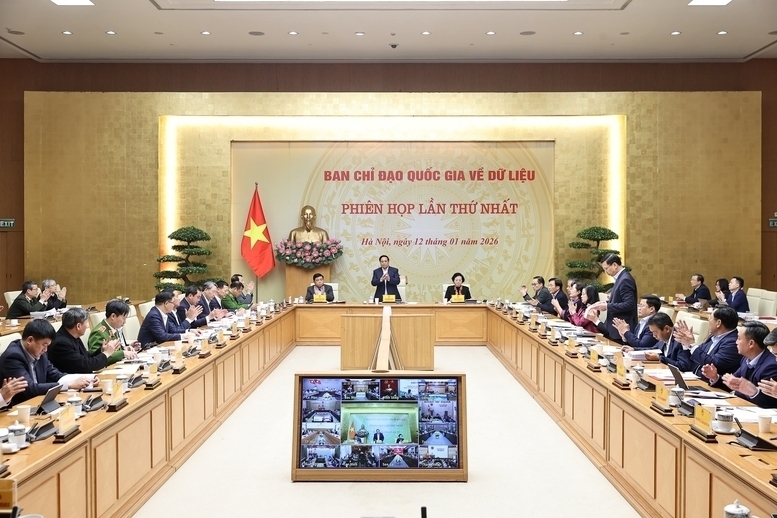
An overview of the meeting. Photo: VGP
The Prime Minister called on participants to focus discussions on analyzing and answering key questions: How to effectively and thoroughly address the issue of data being “accurate, sufficient, clean, live, unified, and shared” right from the source? How to break down the mindset of “data silos” and realize substantive and effective data connectivity and sharing? How to strike a balance between open data and the protection of personal data and national security?
He also raised broader issues, including what strategy is needed to form, build and develop a self-reliant artificial intelligence ecosystem imbued with Vietnamese identity and knowledge. How can the vast pool of Vietnamese-language data covering culture, arts, history, geography and law be mobilized to develop homegrown AI for Vietnamese people?
The Prime Minister urged participants to share global data development trends, draw lessons learned, and clearly identify key tasks and solutions for the period ahead.
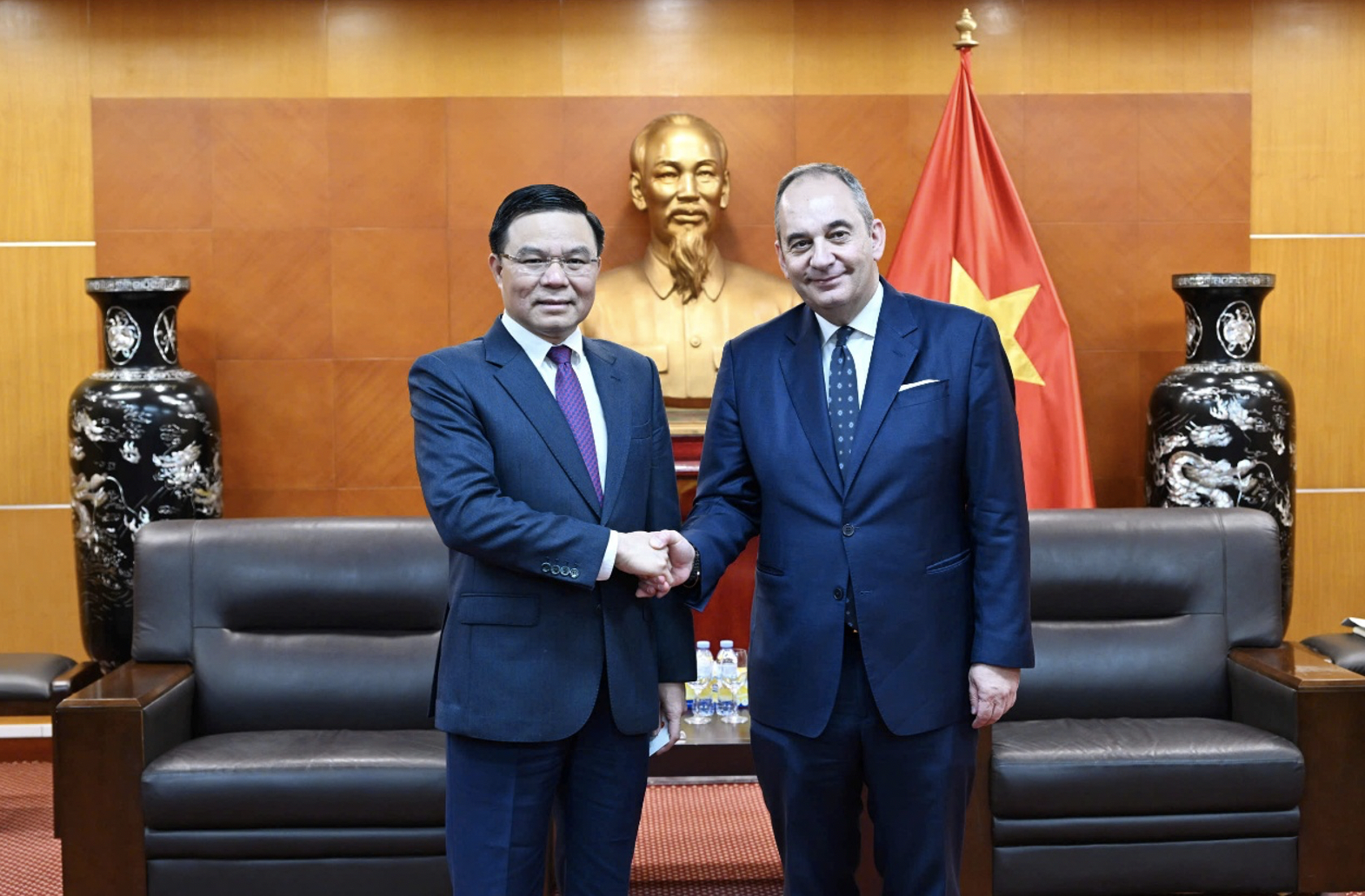
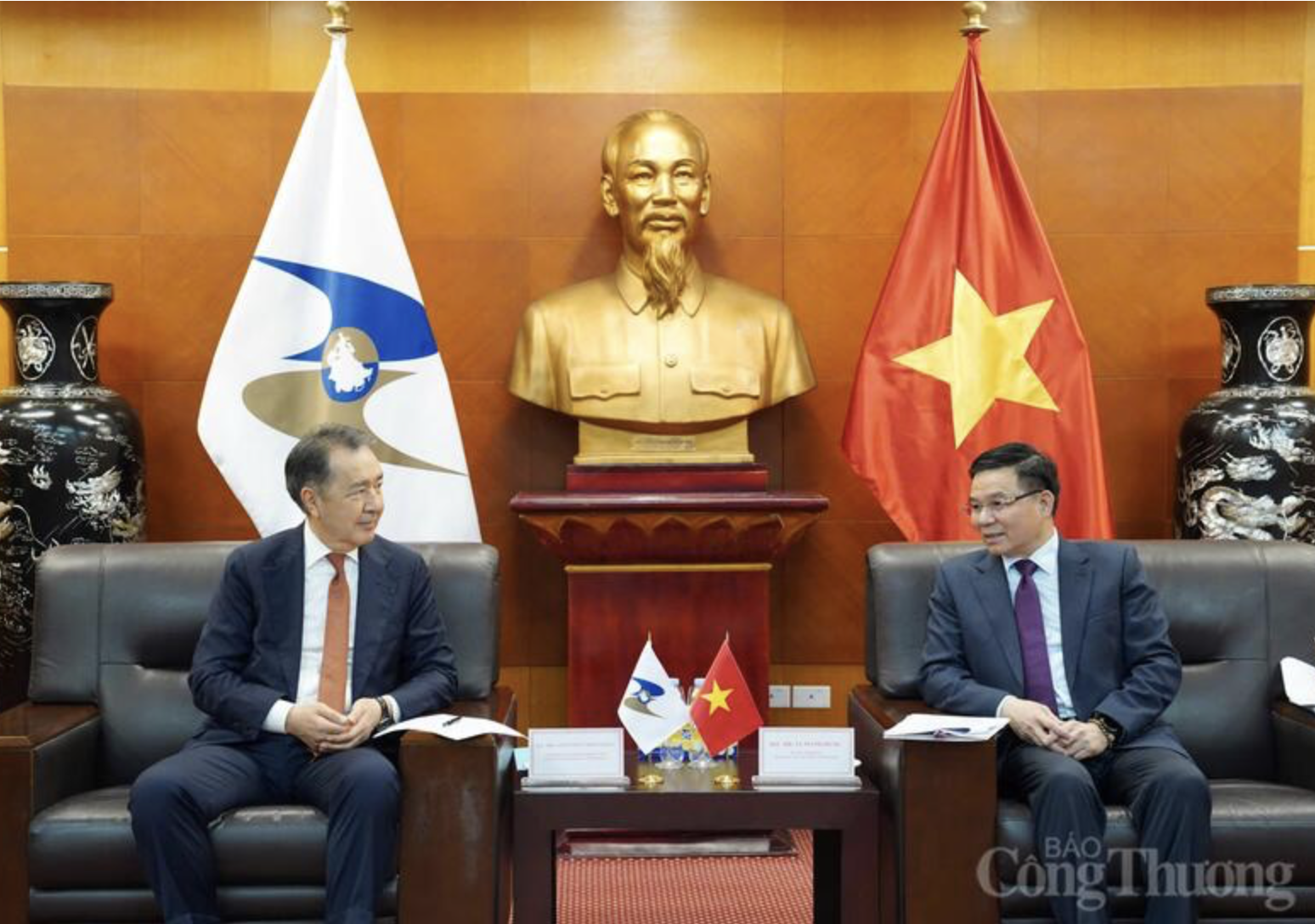
On the afternoon of March 3, 2026, at the headquarters of the Ministry of Industry and Trade, Acting Minister Le Manh Hung held a courtesy meeting with Ioannis Plakiotakis, First Vice President of the Hellenic Parliament.
As Vietnam enters a new development phase, voters expect the 16th National Assembly to improve legislative quality, oversight, and decision-making effectiveness.
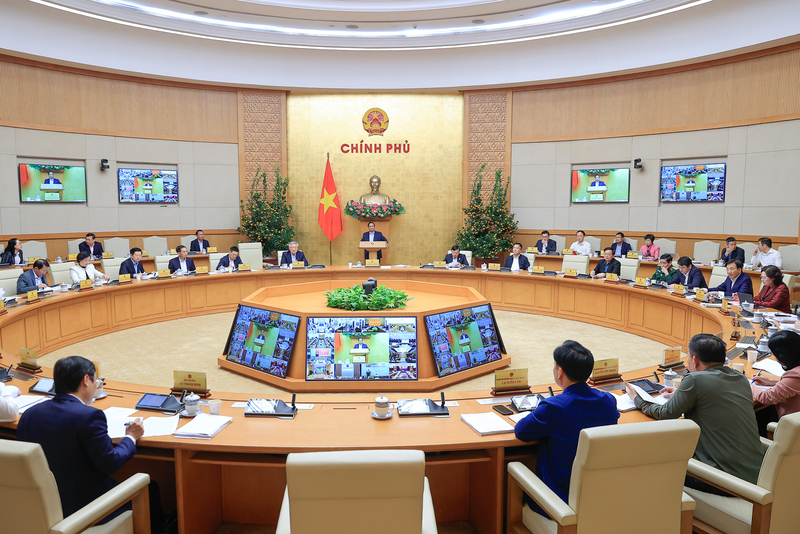
Amid mounting global volatility, the Prime Minister called for flexible policy scenarios and breakthrough measures to secure growth of 10% or higher in 2026.
On the afternoon of March 3, 2026, at the headquarters of the Ministry of Industry and Trade, Acting Minister Le Manh Hung held a courtesy meeting with Ioannis Plakiotakis, First Vice President of the Hellenic Parliament.
As Vietnam enters a new development phase, voters expect the 16th National Assembly to improve legislative quality, oversight, and decision-making effectiveness.
Amid mounting global volatility, the Prime Minister called for flexible policy scenarios and breakthrough measures to secure growth of 10% or higher in 2026.